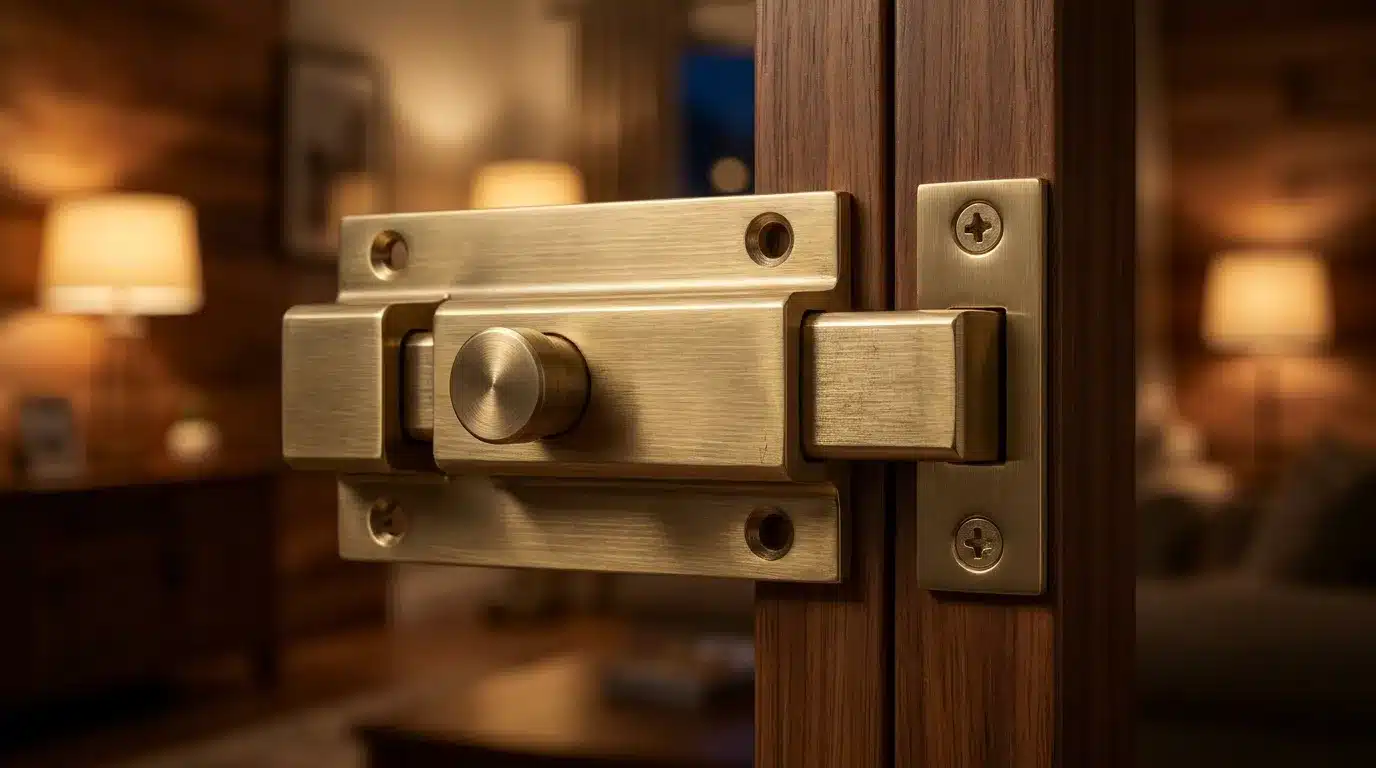
I used to think I was just a light sleeper, until I actually counted how many nights I woke up at 2 a.m. convinced I’d left the back door unlocked. My husband would find me standing in the hallway in the dark, checking the same lock for the third time that week. It took me embarrassingly long to realize the problem wasn’t my sleep, it was that I never had an actual system for checking my house before bed.
A floorboard creaks somewhere down the hall at 1 a.m. Your eyes snap open. You lie still, listening, trying to decide if that was the house settling or something you need to get up for.
If that scene sounds familiar, you’re not alone. A lot of homeowners spend their nights half-listening for trouble instead of actually sleeping. The good news is that this kind of edge-of-sleep anxiety usually comes down to one thing: an unfinished routine. When you don’t have a fixed way of locking down your house before bed, your brain keeps a running list of “did I check that?” questions, and that list is exactly what keeps you awake.
Most people focus their security efforts on the front door during the day. That matters too — if you haven’t already, it’s worth reading our guide on protecting your home from daytime break-ins, since burglary patterns shift depending on the hour. But nighttime is its own problem, with its own checklist.
Why the Basics Aren’t Enough
Locking the front door and calling it done is where most people stop. It feels like enough, but a determined intruder isn’t stopped by a single turned deadbolt — they’re stopped by a home that looks like too much trouble.
A few things quietly work against you here. Ad-driven marketing pushes expensive camera systems as the whole answer, when a $4,000 setup means nothing if a basement window is left cracked. Advice passed down from parents or neighbors is often decades old and doesn’t account for how modern break-ins actually happen. And it’s easy to develop blind spots — the garage door, a side gate, a window air-conditioning unit — simply because you walk past them every day without really looking.
Timing matters too. Law enforcement data shows that a large share of burglaries actually happen during the day, when houses are empty, but nighttime break-ins tend to be more deliberate and higher-stakes because someone is usually home. You can see the actual numbers for yourself on the FBI’s Crime Data Explorer, which tracks reported burglary trends across the country.
What This Does to Your Sleep
Living with unresolved security doubts has a cost that goes beyond one bad night.
You stop reaching deep sleep because part of your brain stays on watch. You get irritable with your family because you’re running on adrenaline and four hours of rest. A car idling outside for too long starts to feel like a threat instead of just a car. None of this is dramatic on its own, but it adds up.
Security isn’t really a feeling — it’s a set of physical actions you either did or didn’t do. The anxiety usually traces back to something specific and fixable: a window you’re not sure you latched, a porch light you forgot to turn on, a garage door you can’t quite remember locking. Close those gaps with a repeatable routine, and the worry has nowhere left to attach itself.
Here’s the walkthrough I use, broken into ten steps you can run through in about ten minutes.
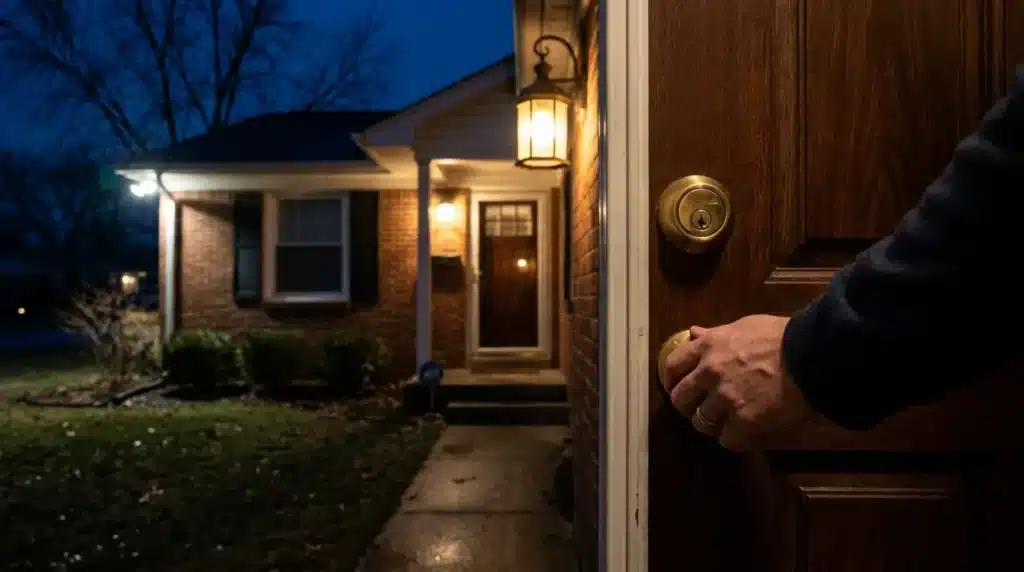
10 Steps for Your Nighttime Security Checklist
Step 1: Walk the Perimeter Before You Walk Inside
Start outside, not at your front door. Burglars scout a property before they commit to it, and what they’re looking for is evidence of neglect.
Glance around your yard, or pull up your camera feed if you have one. A ladder left against the house is basically an invitation to the second floor. A screwdriver or pry bar left on the patio table saves a thief the trouble of bringing their own. Bring loose tools inside or lock them in a shed before you head in for the night.
Step 2: Physically Check Every Entry Point
Don’t trust a glance from across the room — a door can look shut without being latched. Walk the house in the same order every night: touch each lock, turn each deadbolt, and give the door a pull to confirm it’s actually seated in the frame.
The garage side door. The interior door between your garage and kitchen gets skipped constantly because people assume the big overhead door covers it. It doesn’t — those doors are surprisingly easy to bypass with a coat hanger through the emergency release. Treat that side door exactly like your front door, every night. If you want the full breakdown, we cover it in how to lock down your garage door overnight and separately in securing the garage side door.
Ground-floor windows. These get left cracked for fresh air and forgotten. If you like sleeping with airflow, a window vent lock lets you crack it a few inches without giving up security — we go into more detail in how to secure your windows from the inside. Basement windows deserve extra attention since they’re low, often hidden by shrubs, and rarely checked; see our basement window security guide for specifics. If you’re in an apartment and can’t drill or install hardware, there are still solid renter-friendly options in apartment security without drilling holes.
Sliding glass doors deserve their own pass too, since a standard latch alone isn’t much of a barrier — our guide on securing sliding glass doors covers the cheap fixes that actually work.
If you’re heading out of town rather than just to bed, this checklist isn’t enough on its own — check our vacation security guide before you leave.
Step 3: Let Light Do Some of the Work
Darkness is what makes a break-in easier, so take that away.
Motion-sensor lights at the corners of your house work better than lights left on all night, because a sudden light snap is startling in a way a steady light never is. It signals that the house noticed them. Mount the fixtures high enough that they can’t be reached and unscrewed. If you’re weighing whether these actually deter anyone or if it’s just a marketing claim, we looked into it in do motion sensor lights actually deter burglars.
Inside, a smart plug or basic timer on one or two lamps in a common room does more than you’d think. A house that’s completely dark reads as empty. A little light through the curtains reads as occupied, and that small bit of doubt is often enough to send someone elsewhere — a version of the “fake presence” trick we detail in how to fake presence while you’re away.
Step 4: Clear the Hiding Spots in Your Yard
Look at your landscaping the way a stranger casing the house would. Thick bushes right under a window or beside your front door make a convenient place to wait unseen.
Keep shrubs trimmed back at least two feet from the house, and trim the bottoms so there’s a clear sightline to the ground beneath them. A tidy, visible yard doesn’t just look nicer — it removes cover, and it signals that someone here pays attention. There’s a longer rundown of yard-specific fixes in burglar-proofing your yard.
Step 5: Don’t Forget Your Digital Entry Points
Modern homes have more than physical locks to worry about. Smart locks, Wi-Fi cameras, and video doorbells are genuinely useful, but they’re only as secure as the network they run on.
Give your home Wi-Fi a strong, unique password, and keep your router’s firmware updated — the CISA home network security guide walks through the exact settings worth checking, including disabling remote management you don’t actually use. If a smart lock’s battery has ever died on you unexpectedly, it’s worth reading what to do when your smart lock battery dies before it happens at the worst possible moment, and if you’re still deciding between a traditional deadbolt and a connected lock, smart locks vs. deadbolts lays out the tradeoffs.
Keep your camera base stations and alarm panels out of view from the street, and make sure cameras are pointed at your own entry points, not into a neighbor’s window. We cover the placement details in securing your smart home cameras, and if your doorbell camera keeps missing the side gate or the porch corner, fixing doorbell camera blind spots is worth a look. Overall Wi-Fi and camera hygiene gets a fuller treatment in securing your home Wi-Fi and smart cameras.
Step 6: Listen to Your House Before You Sleep
Before heading to bed, take stock of what you can actually hear. A dishwasher running full blast plus a fan on high can easily drown out a window breaking downstairs.
If you use a white noise machine, keep the volume where you can still catch a smoke alarm or a door opening. You want to block out the neighbor’s dog barking, not your own ability to notice something’s wrong.
Step 7: Set Up Your Bedroom as a Last Line of Defense
A few small habits in your bedroom make a real difference if something does go wrong.
Keep your phone charging on the nightstand instead of in the kitchen, so you’re never hunting for it in an emergency. Keep a real flashlight in the drawer, since a phone flashlight drains the battery you might need for calling out. And keep your car keys nearby too — most fobs have a panic button, and a car alarm going off in the driveway is one of the loudest, cheapest deterrents you already own.
Step 8: Reinforce the Strike Plate (The Upgrade Most People Skip)
Here’s the part most homeowners never think about: your deadbolt is only as strong as the wood it’s screwed into.
Watch this 60-second fix in action before you try it yourself — it’s easier than it looks.
Pro tip from my own trial and error: I replaced my strike plate screws myself on a random Sunday afternoon, and it took less than five minutes with a screwdriver I already owned. I genuinely thought this kind of upgrade needed a locksmith, and I’m still a little annoyed at myself for waiting two years to do something that simple.
The strike plate — the metal piece mounted on the door frame — is usually held in with half-inch screws that barely reach past the trim. A solid kick can rip those screws straight out, and the deadbolt itself never actually fails; the frame does. Swap those short screws for three-inch versions, and they’ll reach through the trim and bite into the structural stud behind it. It’s a five-minute fix that turns a weak point into a non-issue. For the full walkthrough, see reinforcing your door against forced entry and our general guide to reinforcing your front door.
If you want to understand how locks are actually rated for this kind of resistance, the Builders Hardware Manufacturers Association publishes the ANSI/BHMA testing standards that grade deadbolts and strike hardware for exactly this kind of impact.
Step 9: Add a Portable Door Jammer for Extra Backup
A door jammer is a metal bar that braces against the floor and the door, using friction rather than a latch to hold it shut. It’s a cheap way to add a second layer, especially in older homes where the frame might already be a little soft.
They’re also useful for interior doors that don’t have locks at all, like a kid’s bedroom. If someone does make it past the front door, a jammer buys you time to call for help while they’re still working on getting through a second barrier.
Step 10: Have an Actual Plan, Not Just Locks
Locks only help if you also know what to do when something happens. Pick a room in your house that has a door you can lock and, ideally, a window you could get out of if needed. Talk through it with your family — who grabs the kids, who calls 911, who watches the hallway.
None of this needs to be elaborate. Having any plan at all keeps your brain from freezing when it matters, which matters more than the plan’s details.
Making the Routine Stick
A one-time security check doesn’t do much. The value comes from doing the same walkthrough, in the same order, every single night, until you don’t have to think about it anymore.
Every few months, go a step further and stress-test your hardware. Push on locked doors to check for play in the frame. Add a drop of silicone lubricant to sticky locks. Swap batteries in window sensors and motion lights before they die on you. Small maintenance now prevents a gap you won’t notice until it matters.
If you’re just getting your overall home security set up rather than fine-tuning it, our beginner’s guide to home security is a good starting point, and our general home security checklist covers the daytime side of things this article doesn’t.
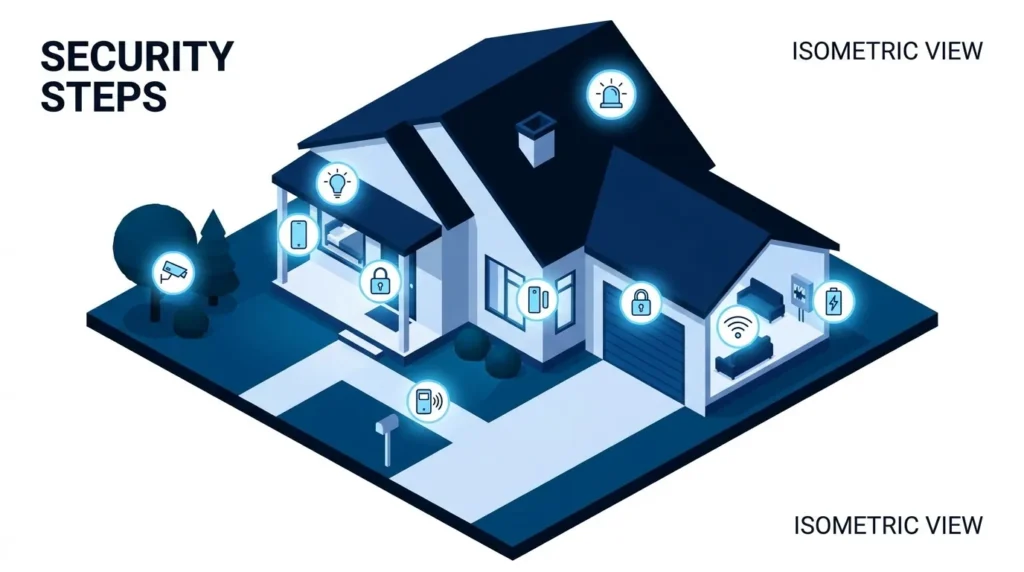
Five Mistakes That Undo All This Work
Hiding a spare key outside. Under the mat, in a fake rock, on top of the doorframe — thieves check all of these first. Leave a spare with a trusted neighbor instead.
Posting your travel plans online. “Home alone this weekend” or “leaving for a week” is information a stranger shouldn’t have. Post the vacation photos after you’re back.
Ignoring small windows. Bathroom and basement windows get skipped because they seem too small to matter, but a small hidden window is often the easiest entry point in the house.
Leaving tools in the yard. A ladder or a hammer left outside doesn’t just look careless — it hands a burglar the tool they need. Bring them in or lock them up every night.
Relying only on fake deterrents. A dummy camera with no wires fools almost no one who’s actually paying attention. Real hardware matters more than the appearance of it — we tested this exact question in do fake security cameras really work.
For extra peace of mind at home, it’s also worth knowing where you’d keep valuables if you ever needed a backup spot — see creative places to hide a safe in your house or, if a full safe isn’t in the budget, our low-budget safe room ideas.
Common Questions About Nighttime Home Security
Do I really need to check every window every night, or just the ones I use?
Every window, not just the ones you open. Ground-floor and basement windows get skipped the most because people assume they’re too small or too hidden to matter, but that’s exactly why they’re a common entry point.
Are motion-sensor lights actually better than leaving a porch light on all night?
Yes. A light that’s on all night blends into the background, but a light that suddenly switches on interrupts someone and signals that the house noticed them. A steady light doesn’t have that same effect.
How much does it cost to reinforce a strike plate?
Almost nothing. Three-inch screws cost a few dollars at any hardware store, and you likely already own the screwdriver you need. It’s one of the cheapest upgrades on this entire list.
Is a door jammer really necessary if I already have a deadbolt?
It’s not strictly necessary, but it adds a second layer that works differently than a lock. A jammer relies on floor friction, so even if someone gets past the deadbolt, they still have to fight through a second physical barrier.
What’s the single most overlooked entry point at night?
The interior door between the garage and the kitchen. People lock the front door out of habit but forget this one exists, even though it’s often easier to get through than a standard exterior door.
How long does this whole nightly routine actually take?
About ten minutes once you’ve done it a few times. It feels slow the first couple of nights, but it becomes fast and automatic once it’s part of your regular bedtime habit.
Sleep Easier Tonight
Once I built this routine into my actual bedtime, the difference was almost immediate. I stopped double-checking locks out of habit and started sleeping through the night again, and that alone made every single step worth it. If you take nothing else from this, just start with one step tonight, because that’s exactly how I started too.
You shouldn’t have to lie awake wondering if you locked the back door. Most of the anxiety around home security comes from uncertainty, not actual danger, and uncertainty is the one thing a fixed routine solves completely.
Pick three steps from this list and start tonight. Swap the strike plate screws, walk the perimeter once, or just commit to the same nightly path through the house. The rest tends to follow once you feel the difference it makes.
For more ways to build out your overall approach to home safety, our five essential tips for a securely life is a good next read. And if community-level prevention interests you, the National Crime Prevention Council has a solid home security checklist worth cross-referencing against your own.
Disclaimer: This article is for general informational purposes only and isn’t a substitute for professional security, legal, or law enforcement advice. Every home and situation is different, so consider consulting a licensed locksmith, security professional, or your local police department for guidance specific to your property.








3 thoughts on “Nighttime Home Security Checklist: 10 Tips to Sleep Safe”