The Night I Realized My Dog Flap Was an Open Invitation
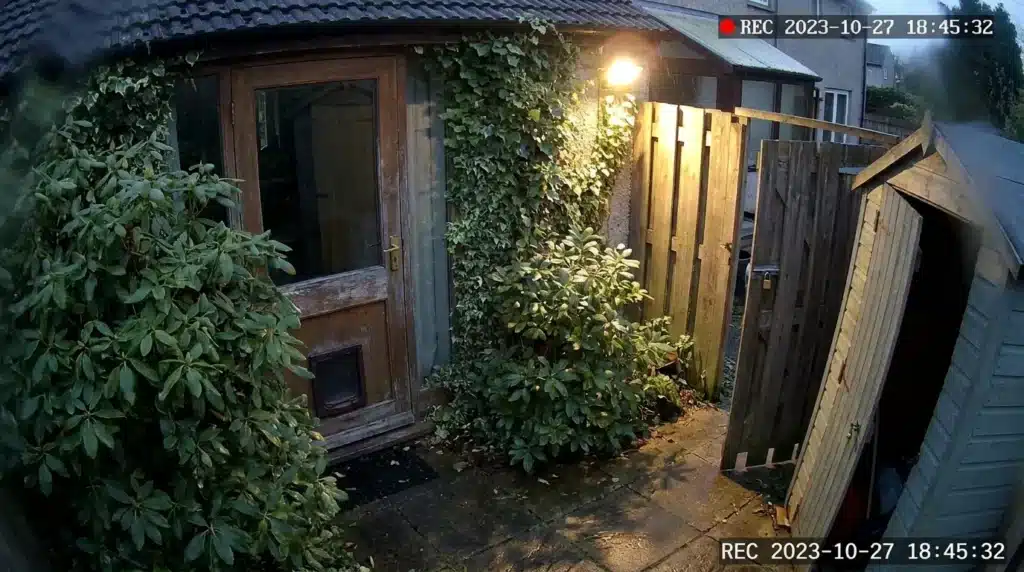
My dog loves running into the backyard whenever he pleases. But three months ago, I noticed faint scuff marks around the edges of the plastic flap on my rear entry door. Someone had clearly tried to push a tool through to reach the interior deadbolt. In that single moment, I realized my attempt to give my dog freedom had created a major blind spot in my home’s perimeter.
I felt violated, anxious, and deeply frustrated that I had unknowingly handed potential intruders a direct entry point.
That unsettling feeling followed me for weeks every time I locked up for the night.
I found myself checking the back door four or five times before going to sleep, wondering if the flap was clacking open in the wind or being pushed by a human hand.
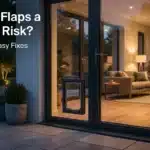
Many homeowners ask themselves the same question I did: are dog flaps a security risk, or am I just being paranoid? Once I started digging, I realized this exact stress is common, because a standard dog flap creates a real physical gap in your outer perimeter.
You want your dog to be comfortable, but you also want your family to stay protected while you sleep.
It is tough balancing pet convenience with actual physical protection, especially when standard flap designs lack proper locking hardware.
The constant worry that someone might reach through or send a small person inside ruins the peace of mind your home should provide.
Are dog flaps a security risk? 5 Hidden Vulnerabilities (And Practical Fixes)
Understanding how a dog flap creates an entry point is the first step toward fixing it without removing your dog’s access.
When you know the specific mechanical flaws intruders look for, you can upgrade your setup quickly and affordably.
The Reach-Through Hazard: Lever and Deadbolt Placement
The most common entry tactic involving a dog flap does not require a burglar to crawl through the opening.
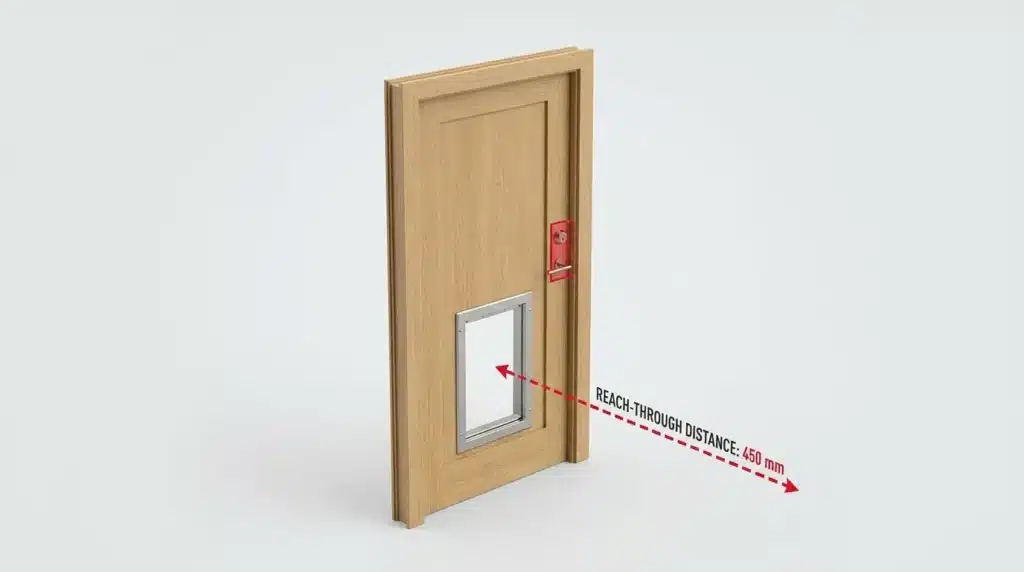
Intruders look for large flaps installed within 36 inches of a door handle or deadbolt lock.
They simply push the flexible rubber flap open with an arm or a curved hook tool to reach up and flip the manual lock.
If your deadbolt uses a simple thumb-turn mechanism on the inside, anyone reaching through can unlock your back door in less than ten seconds.
This risk increases significantly if your dog door is installed on a side garage entry or a hidden patio door.
To fix this, you need to ensure your locks require more than a simple reach to disengage, or move the flap further away from primary handles.
Upgrading your entry hardware is a proven way to stop reach-through attempts.
You can read our guide on how to reinforce your front door to see how stronger strike plates and physical barriers prevent forced entry around handles.
Dog Door Risk Assessment
| Vulnerability | Primary Hazard Level |
|---|---|
| Reach-Through Access | High (If within 36 inches of thumb-turn lock) |
| Unlocked Flap Panel | High (Allows small intruders or arm tools) |
| Standard Plastic Flap | Medium (Easy to cut, kick, or pry off) |
| Microchip RFID Flap | Low (Stays mechanically locked at all times) |
Unlocking Mechanics: How Intruders Use Wire Tools Through Flaps
Burglars do not always use their bare hands to breach a flap opening.
They often use coat hangers, specialized wire hooks, or long wooden poles inserted through the flexible vinyl flap.
These tools grab interior door levers, pull emergency release cords on sliding doors, or slide open nearby window latches.
Security researchers consistently point to rear and side doors as the entry points burglars prefer most, mainly because these areas offer far less visibility from the street than a front entrance.
When a rear door features a flexible flap, it eliminates the need for noisy glass breaking or heavy pry bars.
If your dog flap sits next to a glass panel or sliding system, check out our tutorial on how to secure sliding glass doors to block tool-based lever pulling.
Microchip RFID Flaps vs Standard Vinyl Flaps
A standard vinyl dog flap relies on weak bottom magnets to stay closed against the wind.
These magnets offer zero structural resistance against an adult pushing inward or outward.
Anyone can push a broom handle or crowbar right through the vinyl sheet without making much noise.
Microchip dog doors change this dynamic completely by using rigid composite materials and motorized deadbolts.
The exterior door remains physically locked twenty-four hours a day until your dog’s programmed microchip or collar tag comes within a few inches.
The locking pins engage directly into the outer frame, making the door as solid as a solid wood panel when closed.
Watch this practical video demonstration showing how smart entry sensors and reinforced flaps stop reach-through break-in attempts:
Comparison Matrix: Evaluating Dog Door Options
Choosing the right door style comes down to balancing physical strength, electronic features, and your overall home layout.
Here is how the most common choices stack up against each other in real-world home environments:
| Dog Door Style | Security Level | Average Cost | Physical Barrier Strength | Best Suited For |
|---|---|---|---|---|
| Standard Vinyl Flap | Very Low | $30 – $80 | Weak (Flexible PVC) | Interior rooms only |
| Slide-In Steel Panel | High | $100 – $200 | Strong (Heavy Steel) | Nighttime / Vacation lockup |
| Microchip RFID Smart Door | Very High | $150 – $350 | Very Strong (Motorized Pins) | External doors & exterior walls |
| Wall-Mounted Tunnel Door | High | $200 – $450 | High (Dual Locking Flaps) | Hidden side yards |
DIY Reinforcements: Quick Hacks for Existing Flaps
You do not need to replace your entire door structure to upgrade your home protection today.
Adding a sliding steel security plate behind your existing flap at night creates an instant physical wall.
These heavy-duty metal inserts slide down into thick side tracks and bolt into place with internal thumb screws.
Another effective fix is installing a secondary deadbolt that requires a key or double-action motion to turn.
Replacing short one-inch factory mounting screws on your dog door frame with three-inch stainless steel screws secures the entire unit directly into the door’s internal wooden studs.
Illuminating the area around your rear door is another instant deterrent against intruders tampering with your flap.
Review our analysis on do motion sensor lights deter burglars to position exterior lighting right above your dog door opening.
Pro Tip: When I first installed a metal slide-in cover on my rear flap, I kept forgetting to put it in place before heading to bed. I solved this by making it part of my dog’s evening feeding routine—as soon as his food bowl hits the floor at night, the steel security plate slides down and locks.
Critical Safety Checklist for Nighttime and Vacations
Running through a simple routine before you sleep or leave for a trip keeps your perimeter tight.
Here is a practical checklist to ensure your dog flap never becomes an entry point:
- Slide in the heavy steel or aluminum security cover panel before turning off the house lights.
- Verify that internal deadbolts near the flap are double-locked or fitted with key-operated guards.
- Check that exterior lights covering the patio door are clear of cobwebs and functioning properly.
- Ensure outdoor bushes near the dog door are trimmed below knee height to eliminate hiding spots.
- Make sure your yard perimeter is secured by reviewing these steps to burglar proof your yard.
After testing several setups on my own back patio over the past two years, I realized that security is not about making your home a fortress.
It is simply about eliminating easy shortcuts that make your house an attractive target compared to others on the block.
To maintain complete coverage across all your entry points before calling it a night, follow our comprehensive nighttime home security checklist to keep every door and window secured.
Pro-Grade Strategies to Fortify Your Dog Door Long Term
Securing a dog door requires thinking beyond simple surface locks.
If you want long-term reliability, you need a setup that resists physical force while staying convenient for daily family use.
Wall-Tunnel Installs vs Door Flaps: Structural Strength
Installing a dog flap directly into a solid exterior door weakens the core structure of that door panel.
A smarter approach used by many security-conscious homeowners is installing a wall-mounted tunnel door instead.
Wall tunnels are built by cutting through exterior siding, insulation, and interior drywall between two wall studs.
Because the tunnel is surrounded by heavy wood framing, it is far more stable than a hollow wood or composite entry door.
Double-flap wall systems create a dead-air space that improves insulation and prevents anyone from seeing directly into your living room.
Properly insulated wall penetrations with dual seals are known to reduce drafts significantly while offering far better structural integrity than a simple door cutout.
Wall Tunnel vs Door Flap Security
| Feature | Wall-Tunnel Install | Standard Door Cutout |
|---|---|---|
| Structural Integrity | Reinforced by Studs | Weakens Door Panel |
| Sightlines Into Home | Blocked by Tunnel | Direct View Inside |
| Lock Mechanism Options | Heavy Dual Plates | Light Magnetic Flap |
| Removal Difficulty | Extremely Hard | Moderate |
Integrating Contact Sensors with Home Automation
Modern home security relies heavily on smart sensors that alert you the moment a barrier is opened or tampered with.
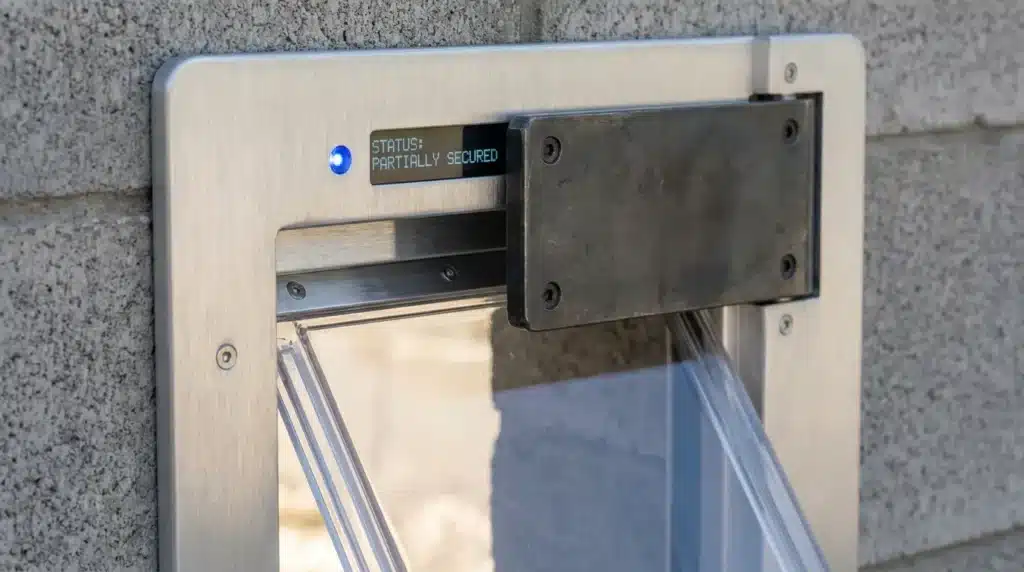
You can easily mount a wireless contact sensor on the frame of your dog door’s metal security plate.
When the metal plate is in place at night, the sensor stays closed.
If anyone attempts to slide or pry the plate upward while your alarm system is armed, the sensor breaks contact and triggers an immediate siren.
Pairing your rear patio area with connected equipment makes monitoring simple.
You can read our guide on how to secure home wi-fi smart cameras to set up instant motion alerts right above your rear entryway.
Smart Lock Backups and Mechanical Reliability
Electronic microchip flaps offer incredible convenience, but they rely on internal motors and small AA batteries.
If the battery drains completely while you are away, the locking pins might fail in either an open or locked position.
It is wise to choose smart flaps that feature a physical mechanical override key or a low-battery warning light.
Understanding how electronic locks behave during power drops helps you plan secondary protection.
Review our troubleshooting guide on what happens when a smart lock battery dies to keep your electronic hardware working smoothly.
If you are weighing electronic options against traditional hardware, our comparison of smart locks vs deadbolts breaks down physical resistance levels.
Pro Tip: Every three months, I wipe down the rubber gaskets on my dog flap with silicone spray and check the internal motor casing for dust. Taking five minutes for basic maintenance prevents the electronic locking latches from sticking open during cold weather.
Maintenance Schedule for Electronic Dog Doors
Electronic latches need regular care to maintain their physical resistance against forced entry attempts.
Dirt, pet hair, and moisture can build up in the bottom tracks, preventing the motorized deadbolts from sliding all the way into the frame.
- Monthly: Clean optical sensors and RFID readers with a damp microfiber cloth to ensure instant collar recognition.
- Quarterly: Test the physical resistance of the locking pins by pushing firmly against the flap from the outside.
- Bi-Annually: Replace internal AA batteries before the low-power indicator starts flashing.
- Annually: Inspect the mounting screws surrounding the outer frame and tighten any loose hardware into the door studs.
Maintaining outdoor entry points is an important part of overall property protection.
Check out our seasonal strategies in the anti package theft blueprint seasonal safety to secure your entire exterior yard.
Dangerous Oversights That Compromise Your Backyard Barrier
Many homeowners make simple installation mistakes that turn even high-end dog doors into easy targets.
Avoiding these common pitfalls makes it much harder for intruders to exploit your rear entry points.
Placing Dog Flaps Too Close to Interior Door Hardware
The most frequent mistake is installing a dog flap without measuring the distance to your primary door lock.
If a medium-sized flap is placed within arm’s reach of a standard thumb-turn deadbolt, you are relying entirely on the strength of a thin plastic sheet.
An intruder does not need to fit their entire body through the flap to open your door.
They simply cut the plastic sheet, reach an arm inside, and turn your lock handle in seconds.
Always measure at least 36 to 40 inches of clearance between the top of the dog flap and any interior lock handles.
If your door layout does not allow this distance, install a double-cylinder deadbolt that requires a key on the inside, or use a rigid metal sliding cover every single night.
Neglecting Backyard Sightlines and Overgrown Vegetation
Installing a secure dog door means very little if your backyard offers total privacy for an intruder to work undisturbed.
Tall bushes, unlit side walkways, and high privacy fences allow criminals hours to experiment with wire hooks or tools against your flap.
Home safety experts widely agree that maintaining clear sightlines around rear doors makes a property noticeably less appealing to anyone scouting for an easy target.
Keep bushes near your patio doors trimmed below knee level so neighbors or street cameras can easily see your rear entrance.
If you plan on heading out of town for a weekend, follow our complete guide to secure home during vacation to prepare your property before leaving.
Relying on Cheap Plastic Sliding Covers
Many budget dog doors come with thin plastic slide-in panels designed purely to keep out rain or cold drafts.
These plastic panels bend easily under pressure and can be kicked in with minimal force.
Replacing flimsy factory panels with heavy-gauge aluminum or steel security inserts adds real structural strength.
A solid metal plate held in place by steel side channels creates a real physical barrier that resists heavy impacts.
Common Mistakes and Fixes
| Common Mistake | Real-World Risk Level | Simple Solution |
|---|---|---|
| Flap Near Thumb-Turn Lock | High (Easy arm reach) | Upgrade to key-operated deadbolt or metal cover |
| Thin Plastic Cover Panel | High (Breaks under impact) | Replace with 16-gauge steel or aluminum panel |
| Overgrown Patio Bushes | Medium (Hides intruders) | Trim landscaping to maintain clear sightlines |
| Ignoring Low Battery Alert | Medium (Loses lock power) | Keep fresh AA batteries on a 6-month schedule |
Common Questions About Dog Flap Security
Are dog flaps a security risk?
Dog flaps can introduce a real security risk, mainly because they create an opening that lets someone reach through and unlock a nearby door handle or deadbolt. The risk depends heavily on flap placement, size, and whether it is left unlocked overnight, so it is manageable with the right hardware rather than something you have to accept as unavoidable.
Can an adult intruder actually crawl through a dog flap?
While extra-large dog doors designed for Great Danes or Mastiffs might allow a small adult to squeeze through, standard medium flaps are far too small for an adult body. However, intruders rarely try to crawl through unless the door is massive. Their main goal is reaching an arm inside to unlock nearby deadbolts or pull door handles.
Do microchip dog doors stay locked if the power goes out?
Most microchip dog doors run on independent AA or AAA batteries rather than main wall power. This means a home power outage will not affect the electronic locks or collar sensors. When the internal batteries eventually run low, most quality models automatically lock the flap from the outside while allowing pets to exit from the inside.
Will installing a dog flap affect my home insurance policy?
Installing a standard, unreinforced dog flap on a primary exterior door can sometimes raise questions during a burglary claim investigation if it was used as the entry point. However, using solid metal security covers, electronic RFID doors, or professional wall-tunnel installs demonstrates responsible home protection. It is always a smart idea to check with your insurance provider regarding specific entry hardware rules.
Where is the safest place to install a dog door?
The safest location for a dog door is inside an enclosed garage wall leading into a fenced dog run, rather than directly on a primary rear door facing the street or alley. If you must install it on a patio door, choose a wall location that is hidden from public view and far away from glass windows or main door handles.
How do I stop stray animals or raccoons from coming inside?
Standard magnet-only flaps allow any curious wild animal, cat, or stray dog to push their way into your kitchen. Upgrading to a microchip RFID door is the most effective solution because the exterior latch only disengages when your dog’s registered microchip is right in front of the sensor.
Your Action Plan for a Safe Home and Happy Dog
Securing your home does not mean you have to take away your dog’s daily freedom.
By replacing weak plastic flaps with electronic microchip doors, installing heavy metal slide-in panels at night, and keeping locks out of arm’s reach, you significantly lower the chance of a break-in.
Taking a few simple steps today gives your dog the yard access they love while keeping your family safe behind a solid barrier.
I used to worry every time I locked up my house for the evening, wondering if my rear door flap was a weak spot.
Once I added a solid steel cover and adjusted my outdoor lighting, I finally got my peace of mind back.
Take ten minutes tonight to check your rear door setup—a few small upgrades make a huge difference in keeping your home protected.
A quick heads-up before you start your project: I am just a fellow homeowner sharing what worked on my own patio door, not a professional locksmith or licensed contractor. Every door and home layout is a bit different, so if you are unsure about cutting into exterior walls or changing heavy lock hardware, it is always a great idea to check in with a local security installer to make sure your setup is rock solid.