The Day I Realized My Renovation Left My Front Door Wide Open
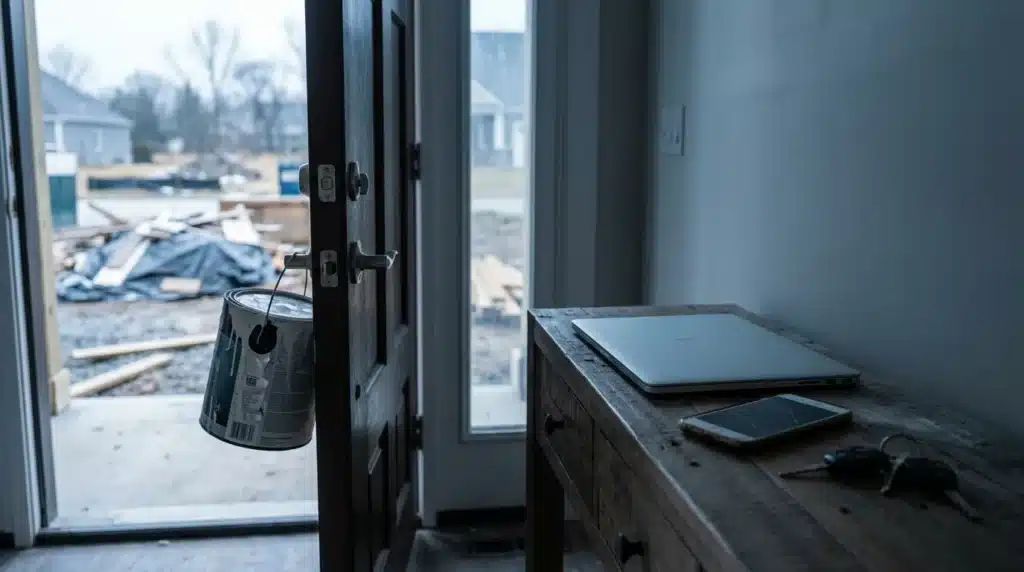
I still remember the first week of my kitchen remodel. My contractor’s crew showed up at seven in the morning, and by eight, my front door was propped open with a paint bucket. I walked past it three or four times before it hit me: anyone could just walk in. My laptop was sitting on the counter. My kids’ tablets were on the coffee table. My spare car key was hanging by the door, in plain sight.
I didn’t panic, but I did feel a small knot in my stomach that stayed there for weeks. I kept telling myself the crew was trustworthy, and honestly, they were. But strangers still came and went. Delivery drivers dropped off supplies. Subcontractors I’d never met walked through my hallway to use the bathroom. My “home” didn’t feel like mine anymore.
That’s when I started paying real attention to home security during a renovation, not just before or after one.
If you’re going through this right now, you already know the feeling I’m talking about. Your normal locking-up habits stop working the moment your house becomes a job site. Doors get left open for hours. Windows get removed entirely. Your alarm system gets disconnected because a wire got cut by accident.
On top of that, there’s a quieter stress most people don’t talk about. You start feeling like a guest in your own house. You second-guess where you left your wallet. You wonder if the new guy on the crew actually needs to know your garage code. That mental exhaustion is real, and it builds up faster than most homeowners expect.
Here’s what actually tends to go wrong during a renovation, and why it happens so easily.
Doors and windows stay open far longer than they should. Crews prop doors open to move materials, and by the end of the day, nobody remembers to close them properly.
Your usual security routine falls apart. If you normally arm your alarm at night, dust and construction debris can trigger false alarms, so many homeowners just switch the whole system off, sometimes for the entire project.
Strangers know your schedule. Delivery trucks, dumpsters out front, and open garage doors all signal to anyone passing by that your home is in an unusual, vulnerable state.
Valuables end up out in the open. Rooms get shuffled around, closets get emptied, and items that used to be tucked away are suddenly sitting on a table in a room full of people you don’t know well.
None of this means your contractor is doing anything wrong. It just means a renovation temporarily breaks the normal rhythm that keeps your home safe, and most people don’t think about rebuilding that rhythm until something feels off.
Building a Security Routine That Actually Survives a Renovation
The good news is that you don’t need to hire a security guard or live in fear for the next two months. You just need a few habits and tools that work with the chaos instead of against it.
Start With a Walkthrough Before Work Begins
Before the first hammer swings, walk through your home like a stranger would. Look at every entry point: front door, back door, garage side door, and any window that’s about to be removed or replaced.
Ask yourself what someone could grab in under sixty seconds if they wandered in unnoticed. That answer usually surprises people.
Pro Tip: I made the mistake of assuming my contractor would automatically lock up at the end of each day. He didn’t, because nobody had actually agreed on it. Once I brought it up directly and put it in writing as part of our daily routine, the problem disappeared completely. A five-minute conversation saved me weeks of worry.
Set Clear Access Rules With Your Contractor
You don’t need to be pushy, just clear. Ask your contractor a few simple questions before work starts:
- Who exactly will have access to the house each day?
- Will the crew lock up when they leave, even for lunch breaks?
- Is there a single point of contact if something feels off?
Most professional contractors expect these questions and will respect you more for asking them.
Rethink Your Locks Before You Rethink Anything Else
If your renovation involves any exterior door work, this is the moment to consider a smart door lock instead of relying on spare keys that get passed around a crew. You can set temporary codes for specific days and simply delete them once the project wraps up. If you’re weighing which option fits a construction schedule best, this comparison of smart locks vs deadbolts breaks down the real difference in everyday use.
If your budget doesn’t stretch to a smart lock right now, at minimum, reinforcing your front door with a stronger strike plate takes less than an hour and makes forced entry noticeably harder.
Here’s a quick myth I believed for way too long:
| Myth | Reality |
|---|---|
| “My contractor’s insurance covers any theft.” | Most contractor insurance covers their tools and liability, not your personal belongings inside the home. |
| “A renovation makes my home look too messy to target.” | Open doors, dumpsters, and visible tools often signal an easy, distracted household to opportunistic thieves. |
| “I’ll just turn my alarm system back on when it’s done.” | Weeks without an active system is a long gap; most systems can be adjusted, not fully disabled, during work. |
Keep Your Cameras Working Through the Dust
Construction dust is brutal on camera lenses and doorbell sensors. If your doorbell camera keeps missing motion or giving you blurry footage mid-renovation, it’s worth checking whether dust buildup is the actual cause before assuming the device is broken. This guide on fixing doorbell camera blind spots walks through exactly that.
If you’re renovating a room near your garage, don’t forget that entry point too. A propped-open garage during work hours is one of the most overlooked gaps, and securing your garage side door is a small fix that closes a big hole.
Here’s a short video that shows exactly how a professional protects a home mid-renovation, worth watching before your next work day starts.
Create a “Renovation Safe Zone” for Valuables
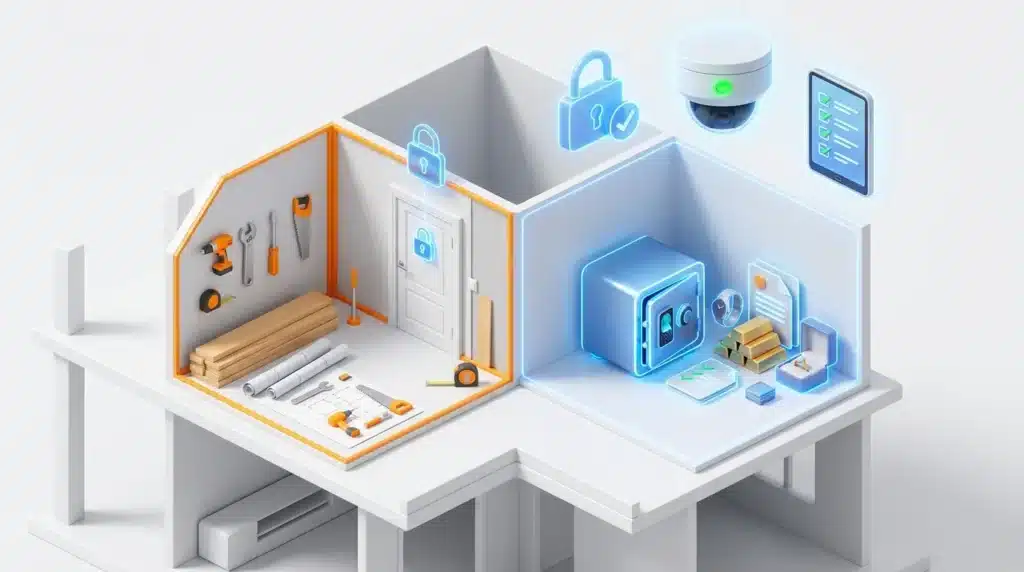
You don’t need a full safe room, but you do need one space that stays locked and off-limits to the crew. A spare bedroom, a locked closet, or even a portable lockbox works.
If you’ve been putting off setting up something more permanent, this is actually a good moment to explore creative places to hide a safe in your house, since you’re already rearranging furniture anyway.
According to the U.S. Environmental Protection Agency’s renovation safety guidelines, locking gates and doors during off-hours and clearly marking work areas with signage or barrier tape are basic, expected practices on any active job site, not just a “nice to have.”
A Simple Daily Checklist That Takes Two Minutes
Print this out or save it on your phone. Run through it every evening once the crew leaves for the day.
- Front and back doors locked
- Garage door fully closed, not just “down enough”
- Any temporarily removed windows covered and secured
- Valuables returned to your locked safe zone
- Alarm system re-armed, if it’s safe to do so
- Tools and ladders stored, not left as an easy way to reach a second-floor window
This routine takes less time than making a cup of coffee, and it removes almost all the guesswork.
Don’t Forget Digital Access Too
Renovations often mean giving out your Wi-Fi password to contractors so they can look up product specs or communicate with suppliers. If you’ve shared it, set up a separate guest network so your main devices and smart home cameras stay isolated from anyone using a temporary login.
It sounds like a small thing, but I learned this one the hard way when I realized half my crew had been using my main network for weeks, right alongside my security cameras and smart locks.
Once your renovation wraps up, don’t just relax completely. It’s worth doing one more full walkthrough, similar to your first one, to make sure every temporary code is deleted, every window seal is solid, and your home has fully returned to its normal, secure rhythm.
Making Your Renovation Security Habits Stick Past Week One
Here’s something nobody tells you before a renovation starts: the first few days, you’re careful. You check the locks. You watch the crew. Then week three hits, and you’re exhausted, and the checklist starts slipping.
That’s normal. But it’s also exactly when most security gaps open up.
The trick is to make security automatic, not something you have to remember. Automatic beats willpower every single time, especially when you’re already tired from living around dust and noise.
One thing that helped me more than anything else was setting a recurring phone reminder for the exact time the crew usually left each day. Five minutes later, my alarm buzzed, and I did my walkthrough without even thinking about it. It stopped being a chore and just became part of my evening.
If you’re using a smart lock, check the access logs weekly, not just when something feels wrong. Most apps show you exactly who entered and when. I started doing this on Sunday nights, right before the new work week began, and it took less than two minutes.
Motion-activated lighting is another one people underestimate. It’s not just for nighttime intruders. During a renovation, motion lights around your property also make it obvious to neighbors and passersby that someone is near your home after hours, which adds a layer of visibility you don’t get with a dark, quiet house. If you haven’t looked into it yet, this breakdown of whether motion sensor lights actually deter burglars is worth a few minutes.
Talk to your neighbors before the project even starts. This sounds old-fashioned, but it works better than almost any gadget. A quick conversation like, “Hey, we’ve got contractors coming in and out for the next few weeks, here’s what their truck looks like,” turns your neighbors into an extra set of eyes without you having to ask for anything formal.
According to guidance from the National Crime Prevention Council, informal neighborhood awareness remains one of the most effective, low-cost deterrents against opportunistic property crime, precisely because it relies on familiarity rather than technology.
Rotate your temporary access codes regularly, especially if your project involves multiple subcontractors coming and going on different schedules. A code that was only meant for the electrician shouldn’t still work a month later when the painters show up.
If your renovation includes work near windows, this is also the right time to double check that any windows not currently being worked on are properly sealed. A lot of homeowners assume the untouched parts of the house are automatically safe, but shared hallways and open floor plans mean vulnerabilities can spread. This guide on how to secure windows from the inside is a quick, practical read if you haven’t checked yours recently.
Where Homeowners Usually Slip Up Without Realizing It
I want to be honest with you about something. Most of the security mistakes I made during my own renovation weren’t dramatic. They were small, boring, everyday slip-ups that added up over time.
The biggest one? Assuming trust replaces process.
Just because you like your contractor doesn’t mean every single person on their crew has been fully vetted by you personally. Subcontractors change. Day laborers get brought in for a single job. You might meet three new faces in one week and never see them again. Liking your main contractor is not the same as knowing everyone who has access to your home.
Another mistake that catches people off guard is leaving the garage door opener inside a vehicle that’s parked outside during work hours. If that car isn’t locked, and it often isn’t during a busy renovation day, someone now has a direct path into your home that bypasses every other precaution you’ve taken.
People also forget about mail and packages. A renovation often means extra deliveries: tile, fixtures, hardware, appliances. Boxes pile up on the porch, which signals to anyone driving by that packages are sitting unattended. If this has been an issue for you, it’s worth reading through this anti-package theft blueprint, since a lot of the same principles apply during a busy renovation month.
Here’s a mistake that’s less about theft and more about safety: leaving your alarm system fully disabled for the entire project instead of just adjusting the sensitivity. Many modern systems let you exclude specific zones, like a room under construction, while keeping the rest of the house monitored. Turning the whole thing off is often a shortcut people take out of frustration, not necessity.
“I didn’t think anyone would actually target a house with a dumpster and scaffolding out front. Turns out, that’s exactly what caught someone’s attention.” This is something I heard from a neighbor two streets over, and it stuck with me. A messy exterior doesn’t scare people away. Sometimes it does the opposite.
Not updating your home inventory is another quiet mistake. If something does go missing during a chaotic renovation month, it’s incredibly hard to prove what you had if you never wrote it down or photographed it. A five-minute phone video walking through each room before work begins can save you enormous headaches later.
Finally, don’t ignore your mailbox. Renovations sometimes mean new contracts, invoices, and paperwork with personal information moving through your mail more than usual. If you haven’t reviewed this recently, securing your mailbox against identity theft is a small step that pairs well with everything else you’re already doing.
Common Questions About Home Security During a Renovation
Is it safe to live in a house while renovating?
For most projects, yes, as long as you set clear boundaries with your crew and keep valuables secured. The risk usually isn’t the renovation itself, it’s the gaps in your normal routine that open up around it.
How do I protect my home from theft during a renovation?
Lock away valuables in one dedicated space, set clear access rules with your contractor, and keep entry points like garages and side doors closed even during short breaks. Small, consistent habits matter more than any single gadget.
Should I install security cameras before starting a renovation?
It’s a smart move if you don’t already have them. Cameras placed at entry points give you a clear record of who came and went each day, which is especially useful once multiple subcontractors are involved.
What should I lock away before contractors start work?
Focus on small, high-value items: jewelry, electronics, important documents, spare keys, and anything with personal information on it. If it fits in a bag and someone could walk out with it unnoticed, it belongs in your locked space.
How do I keep pets and kids safe during a home renovation?
Keep them out of active work zones entirely, and make sure exterior doors are never left open unattended, since a distracted crew member can easily forget a door was propped open. A separate, closed-off room away from the work area works well for both safety and peace of mind.
Your Home, Your Rules, Even Mid-Renovation
A renovation can feel like you’ve temporarily handed your house over to strangers, but you’re still the one in charge here. Every habit in this guide takes minutes, not hours, and together they close almost every gap a busy job site creates.
I won’t pretend my own renovation was stress-free, because it wasn’t. But once I built these small checks into my routine, that constant background worry finally faded. I stopped feeling like a guest in my own home and started feeling like myself again, just with a bit more sawdust around.
If you’re in the middle of a renovation right now, pick one thing from this guide and do it today, even if it’s just moving your laptop into a locked room. Small actions like that add up faster than you’d expect, and your future self will thank you for it.
Disclaimer: This article is for general informational purposes only and does not replace professional security, legal, or insurance advice. Always consult a licensed security professional or your contractor directly regarding specific safety measures for your property.