The Day I Realized My Mailbox Was an Open Door for Thieves
I still remember the morning I found my mailbox door hanging open, even though I never leave it that way. My heart dropped when I noticed my new checkbook was gone. I stood there on my driveway, coffee in hand, trying to figure out what else was missing. My hands were actually shaking a little as I called my bank. That one open mailbox door turned into three weeks of phone calls, fraud alerts, and constant checking of my credit report. I never thought a simple metal box by the curb could cause so much stress in my life.
If this sounds familiar, you are not alone. Mail theft is one of the quietest crimes out there, and it hits people when they least expect it.
Here is what makes it so painful:
- You often don’t know your mail was stolen until days or weeks later.
- Bills, tax documents, and bank statements sitting in your mailbox are basically a paper trail to your entire financial life.
- Once someone has your name, address, and account numbers, they can open new credit lines in your name.
- The clean-up process — calling banks, freezing credit, filing police reports — can eat up hours of your week for months.
- The worst part is the feeling that your own home, the place that’s supposed to feel safe, has a weak spot you never noticed.
That last point is the one that stuck with me the most. My mailbox sat right there every single day, and I never once thought about locking it. It felt like leaving a spare key under the doormat and forgetting about it.
The good news is that this problem is very fixable. You don’t need to spend a fortune or hire a security company. You just need the right habits and the right hardware, and I’m going to walk you through exactly what worked for me.
Building a Mailbox That Thieves Actually Avoid
Once I got over the shock of my own mail theft experience, I went down a rabbit hole learning everything I could about how thieves actually operate and how to stop them. Here’s what I found, broken down into steps you can start today.
Swap Your Standard Mailbox for a Locking One
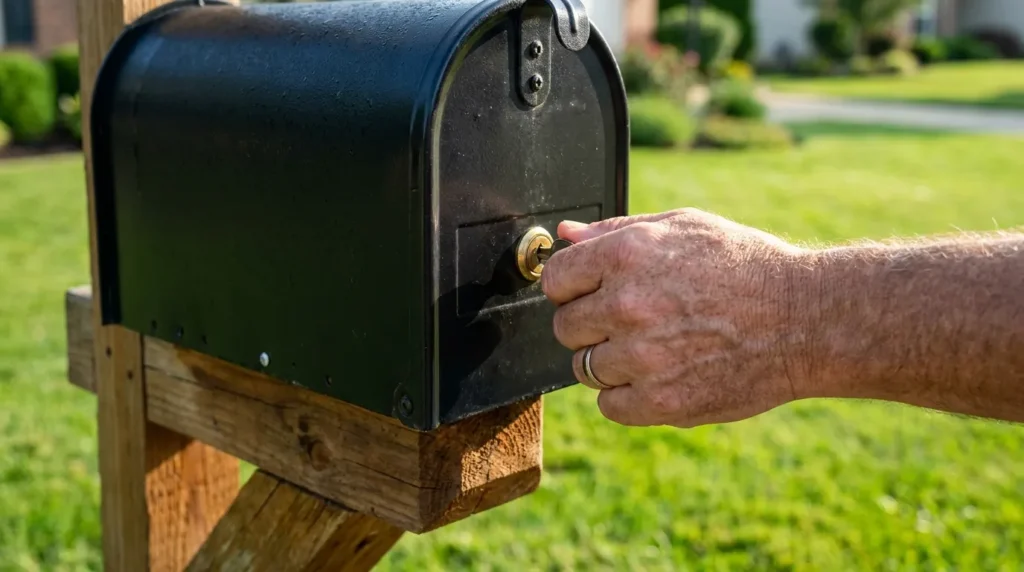
The single biggest change I made was replacing my old flip-top mailbox with a USPS approved locking mailbox. Standard mailboxes have almost no real protection — anyone walking by can open the door and grab whatever is inside.
A locking mailbox with a narrow slot means mail can go in, but nothing can come out without a key. This one change alone stops the most common, low-effort type of theft: someone just walking up and helping themselves.
Pro Tip: When I first bought a locking mailbox, I picked the cheapest model I could find, and the lock jammed within two months. I learned the hard way that spending a little more on a solid, tested lock mechanism saves you a lot of frustration later. Now I always check reviews specifically about the lock’s durability before buying anything.
Watch the Clock, Not Just the Box
Mail thieves often work on a schedule. They know your mail carrier’s approximate delivery time, and they circle back after it, sometimes within the hour. Try to check your mailbox as soon as possible after your regular delivery time.
If you work long hours, consider asking a trusted neighbor to grab your mail on days you know you’ll be late. It sounds small, but reducing the “window of opportunity” is one of the most effective free strategies you have.
Stop Outgoing Mail From Becoming a Target
Here’s something a lot of people miss: thieves don’t just want your incoming mail. Outgoing mail sitting in your box with the little red flag up is basically an invitation, because it often contains checks, bill payments, or even signed documents.
Instead of using your mailbox for outgoing mail, drop it directly into a USPS blue collection box or hand it to your carrier in person. This one habit closes a gap that most people never even think about.
Here’s a quick visual walkthrough that shows how thieves target outgoing mail and how a locking mailbox stops it.
Add a Camera Aimed at Your Mailbox
A basic mailbox security camera setup doesn’t need to be complicated. Even an affordable wireless camera pointed at your curb can act as a strong deterrent, since most mail thieves avoid anything that can catch their face on video.
Pair this with a simple sign that says the area is monitored, similar to how you might already use a fake presence setup to deter burglars while you’re away. The psychology is the same — visible deterrence often stops a crime before it starts.
Know the Warning Signs Before Real Damage Happens
Catching identity theft early can save you months of cleanup. The Federal Trade Commission’s guidance on warning signs of identity theft points to unexpected bills, calls about debts that aren’t yours, or missing mail that normally arrives on schedule as some of the clearest early signs that someone may be using your personal details to open new accounts, file taxes, or make purchases in your name.
I now check my free credit report every few months, and I set up alerts on my bank accounts. It takes maybe ten minutes total, and it gives me real peace of mind.
Myth vs Reality: Mailbox Security
| Myth | Reality |
|---|---|
| “My neighborhood is safe, so mail theft won’t happen to me.” | Mail theft happens in all types of neighborhoods, including quiet suburban streets. |
| “A locked front door is enough protection.” | Your mailbox sits outside your home’s security perimeter and is often completely unprotected. |
| “Shredding old mail is enough.” | Shredding helps, but it doesn’t stop theft of mail that hasn’t reached you yet. |
| “Only checks and cards are worth stealing.” | Even a simple bank statement gives a thief your name, address, and account number. |
Quick Mailbox Security Checklist
- [ ] Install a USPS approved locking mailbox
- [ ] Collect mail as soon as possible after delivery
- [ ] Never leave outgoing mail with the flag up overnight
- [ ] Use a USPS blue collection box or hand mail to your carrier
- [ ] Add a camera pointed at your mailbox area
- [ ] Check your credit report every few months
- [ ] Sign up for informed delivery notifications from USPS
If you’re also working on protecting the rest of your property, it helps to look at your entry points as a full system rather than one box at a time. Many of the same principles apply — for example, reinforcing your front door closes an easy access point the same way a locking mailbox does.
Package theft is another piece of the same puzzle. If porch pirates are also a concern in your area, our guide on preventing package theft pairs well with the mailbox habits above, since both crimes often happen at the exact same time of day.
For renters in apartment buildings, mailbox rows are usually shared, which changes the approach slightly. Our breakdown of apartment package theft prevention protocols covers what to do when you don’t control the mailbox hardware yourself.
Why This Actually Matters Long-Term
The U.S. Postal Inspection Service actively investigates mail theft cases because it remains one of the more common ways identity thieves get their first piece of personal information, and a single stolen envelope can quickly turn into a much bigger identity theft or financial fraud case once a thief has enough personal details to open accounts.
That single sentence is why I stopped treating my mailbox like a harmless metal box and started treating it like the front door of my financial life.
If you’re setting up a broader home security routine, it’s worth reviewing your whole approach from the ground up. Our beginner’s guide to home security is a solid next step once your mailbox is locked down, since it walks through the rest of your home’s weak points in the same practical way.
Small, consistent habits are what actually stop identity theft before it starts. A locked mailbox, a quick daily check, and a habit of dropping outgoing mail at a secure location will handle the vast majority of the risk — no expensive security system required.
Looking back, I realize my old mailbox habits were built on assumptions I never questioned. I assumed my street was too quiet for anyone to bother. I assumed my mail carrier’s timing didn’t matter. I assumed a thin metal door was protection enough. None of that was true, and I only learned it the hard way.
You don’t have to learn it the hard way too. Start with just one change from this guide today, whether that’s locking your mailbox or checking it earlier in the day. Add the next step tomorrow, and the one after that next week. Within a month, your mailbox will go from being your home’s weakest point to one of its strongest.
Turning a One-Time Fix Into a Lifetime Habit
Locking your mailbox is a great start, but the real win comes from making mail security part of your normal routine. Think of it the same way you think about locking your car — you don’t remember to do it because you’re scared, you do it because it’s automatic.
Here’s how to make that happen with your mailbox too.
Set a recurring reminder on your phone for your carrier’s usual delivery window. This small nudge trains your brain to treat mail collection the same way you treat picking up your kids or taking out the trash — a task that just happens, without you thinking twice about it.
Rotate your mailbox key the same way you’d rotate a house key if you moved into a new place. If a previous tenant, contractor, or old roommate ever had access, a fresh lock cylinder closes that gap completely.
Do’s and Don’ts for Long-Term Mailbox Security
- Do ask a trusted neighbor to grab your mail during vacations instead of letting it pile up.
- Don’t assume a “vacation hold” through USPS is optional — it’s one of the easiest free tools you have.
- Do shred any mail with your name, address, or account numbers before tossing it.
- Don’t leave shredded documents in a clear bag on the curb; bag them inside regular trash.
- Do pair your mailbox habits with the rest of your home’s security routine, like checking that your Wi-Fi and smart camera setup is actually working, not just installed.
Here’s a real scenario worth thinking about. Imagine you’re heading out of town for two weeks. Your mailbox fills up fast, and a stuffed mailbox is basically a sign to anyone walking by that nobody’s home.
Pausing your mail delivery, or having someone you trust collect it daily, removes that signal completely. It’s a five-minute task that protects both your identity and your entire house, similar to the way securing your home before a vacation protects everything else you own.
Layered security beats a single fix every time. A locked mailbox stops one type of thief. A camera stops another. A vacation hold stops a third. Together, they cover almost every angle a criminal might try.
One more advanced habit worth building: check your mail carrier’s typical route pattern. If you notice your mail consistently arrives late, or your carrier changes without notice, reach out to your local post office. Irregular delivery patterns sometimes create extra opportunities for theft, and reporting it early keeps your route accountable.
It also helps to think about your mailbox the same way you’d think about a lock on any smart lock versus a traditional deadbolt — the strength of the system depends on the weakest part, not the strongest. A brand-new locking mailbox paired with a habit of leaving it unlocked “just for today” defeats the whole purpose.
If you share a driveway or a mail cluster box with neighbors, talk to them about watching out for each other’s mail too. A quick text like “hey, did you get mail today?” costs nothing and builds a small neighborhood safety net that most thieves want no part of. Criminals tend to avoid areas where people are paying attention to each other, the same way they avoid homes with visible cameras or active dogs.
Consider adding your mailbox check to whatever nighttime routine you already use to lock up your house. If you already run through a nighttime home security checklist before bed, tacking on “mailbox locked, no mail sitting out” takes only a few seconds and closes one more loop before you turn in for the night.
Where People Go Wrong (And Why It Costs Them)
I’ve talked to a lot of people who thought they were being careful, only to find out later they had a huge blind spot. The most painful part is that these mistakes are almost always avoidable.
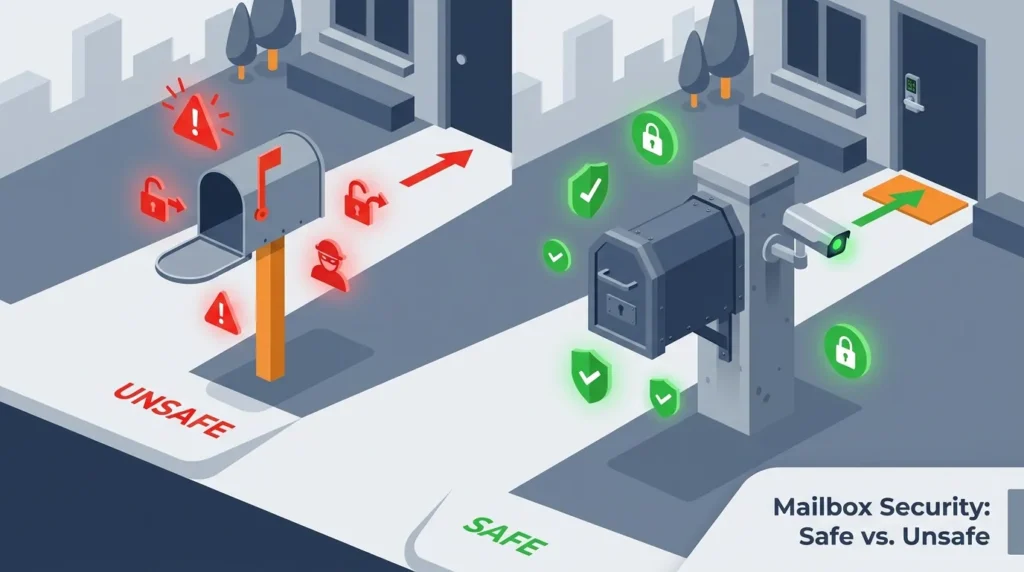
One of the biggest mistakes is treating a locking mailbox like a “set it and forget it” purchase. People install one, feel safe, and then stop paying attention to anything else. But a lock only stops one entry method — it doesn’t stop someone intercepting mail before it even reaches your box, and it doesn’t stop digital identity theft that starts from a stolen bill.
Another common misstep is leaving mail sitting for days at a time. I get it — life gets busy. But every extra day your mail sits outside is another chance for someone to grab it. A stack of unopened mail is basically a folder of your personal information, left outside for anyone to flip through.
People also tend to underestimate how much damage a single stolen document can cause. A single utility bill has your name, address, and account number. That’s often enough for a thief to start a fraudulent application somewhere else, using your identity as the foundation.
Ignoring your credit report is another expensive habit. Many people wait until something feels wrong before checking it, but by then, the damage is usually already done. Checking regularly, even when nothing seems off, is what catches problems early instead of months later.
Here’s one more mistake that surprised me: assuming your mailbox is only a mail theft issue. In reality, a mailbox that’s easy to access can also signal to a burglar that your home is worth targeting, since it often reveals your schedule and whether anyone’s watching. Weak entry points tend to travel together — if your mailbox is exposed, it’s worth checking whether your sliding glass doors or garage door have similar gaps.
Finally, some people install a locking mailbox but keep using the same basic key across multiple things — their shed, their mailbox, even a spare house key. If one key is ever lost or copied, everything tied to it becomes vulnerable at once. Keeping your mailbox key separate and unique closes that risk completely.
Common Questions About Mailbox and Identity Protection
How do I make my mailbox more secure?
The fastest fix is switching to a locking mailbox with a narrow mail slot, so mail can go in but nothing can come out without a key. Pair that with collecting your mail soon after delivery, and you’ve covered most of the risk.
Can someone steal your identity with your mail?
Yes, and it happens more often than most people realize. A single stolen bank statement or pre-approved credit offer can give a thief enough information to open new accounts in your name.
How do you stop mailbox thieves?
Locking hardware, faster collection times, and a visible camera all work together to make your mailbox a much harder target. Most thieves look for the easiest option available, so removing the “easy” part is usually enough to send them elsewhere.
What are three warning signs of identity theft?
Watch for bills you never signed up for, calls about debts that aren’t yours, and mail that suddenly stops arriving when it normally would. Any one of these on its own is worth a closer look at your accounts.
How do thieves actually steal mail from a mailbox?
Most of the time, it’s as simple as walking up and opening an unlocked door, sometimes right after your carrier leaves. Some thieves also follow mail trucks or specifically target outgoing mail with the red flag raised, since it often contains checks or payments.
Your Mailbox, Your Peace of Mind
Protecting your mailbox isn’t about living in fear of what might happen. It’s about closing one simple gap so you can stop thinking about it altogether.
Every habit in this guide takes minutes, not hours. Lock the box, check it early, drop outgoing mail somewhere secure, and glance at your credit report every so often. That’s really the whole system.
I started this journey standing in my driveway holding an empty checkbook slot and a lot of frustration. Now I don’t even think about my mailbox anymore, because I know it’s handled. My mail sits behind a lock, my outgoing payments go straight into a secure box, and I check my credit without dread instead of panic.
You can get to that same place faster than you think. Pick one change from this guide and do it today — even something as small as locking your mailbox tonight. The rest will follow naturally once that first habit sticks.
Disclaimer: This article is for general educational and informational purposes only and does not constitute legal, financial, or professional security advice. For guidance specific to your situation, please consult your local postal authority, law enforcement agency, or a licensed security professional.