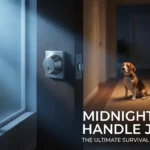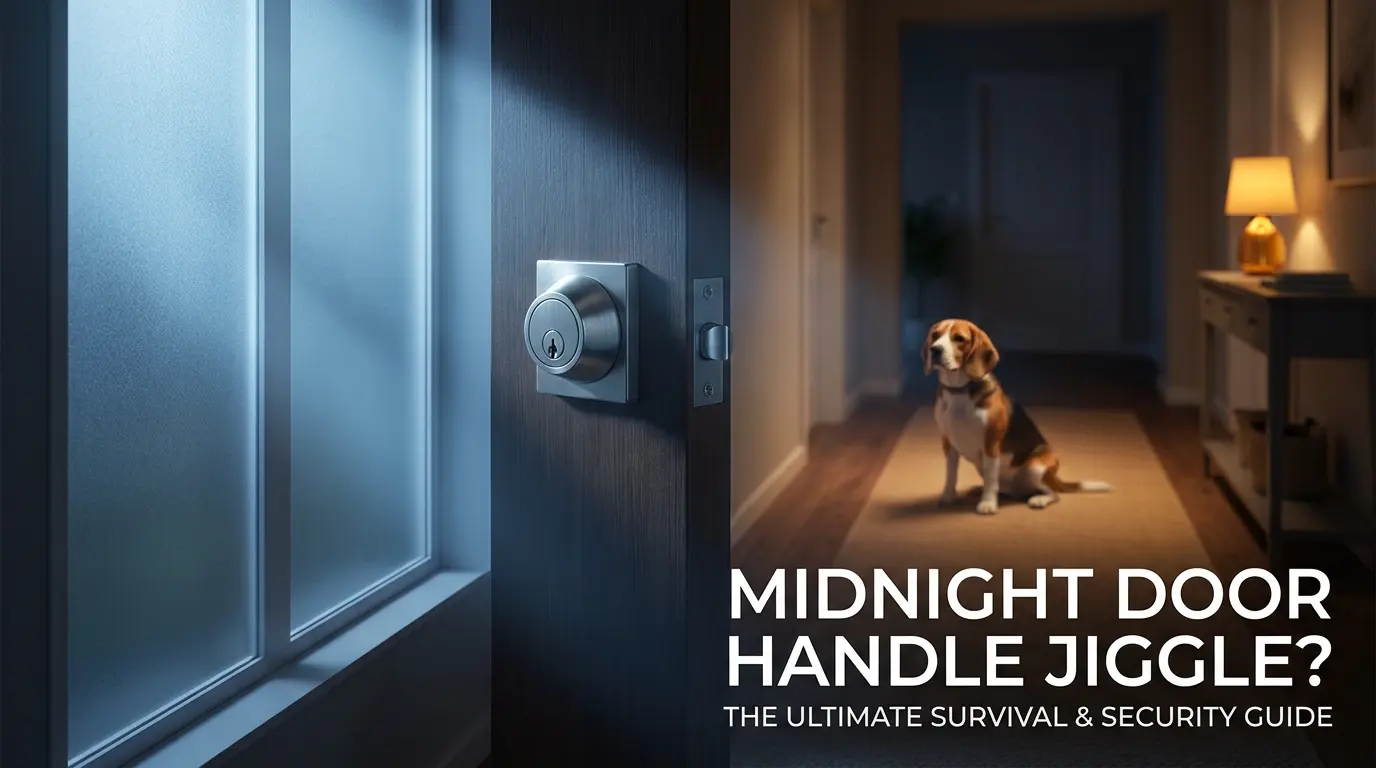
Biscuit, my Beagle, sat up and growled at the front door around 1 a.m. last spring. I grabbed my phone, checked the Ring app, and watched someone jiggle the handle before walking off toward the driveway. My hands were shaking before I’d even gotten out of bed.
Quick Answer: If someone tries your door handle at night, don’t call out or open the door. Quietly confirm every door and window is locked, move to a room you can lock from the inside, and call 911 with your address and a description of what you heard or saw. Never go outside to confront them — let the police handle it.
What Does It Mean If Someone Tries Your Door Handle at Night?
It usually means someone is checking whether your home is an easy target. Security researchers call this “casing,” and a jiggled handle is one of the simplest ways to test if a door is unlocked without making noise or drawing attention.
It doesn’t automatically mean a break-in is coming. But front doors are still the most common way burglars actually get inside — they’re used in 34% of home break-ins, more than windows or back doors, according to national burglary data compiled by The Zebra. That’s exactly why a stranger testing your handle at night is worth taking seriously.
What Should You Do Right Away If Someone Tries Your Door Handle at Night?
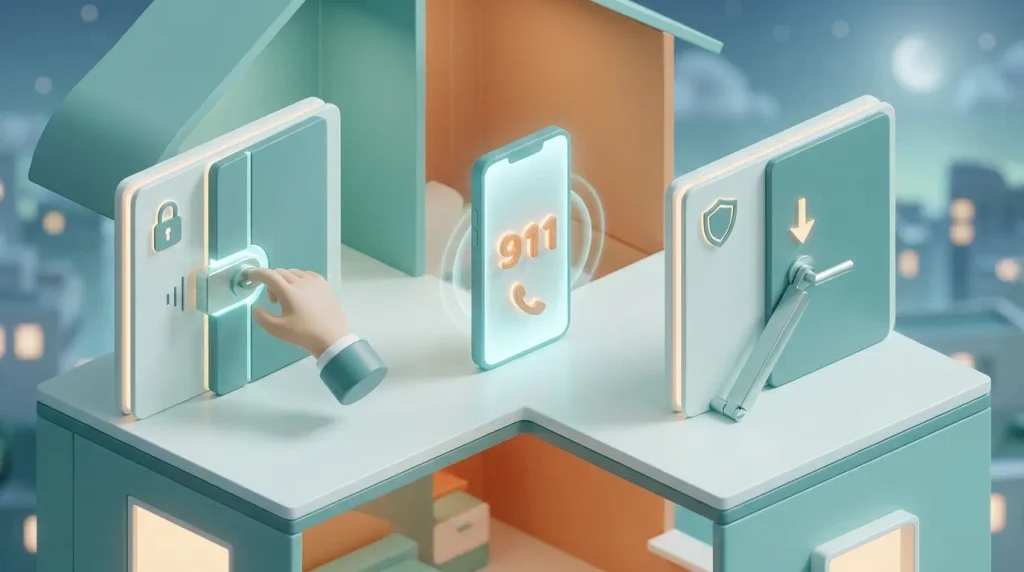
Move through these steps in order. Each one takes less than a minute, and together they buy you real safety while help is on the way.
- Stay quiet. Don’t yell “who’s there,” turn on the porch light immediately, or open the door to check. Staying silent keeps the person from knowing exactly where you are inside the house.
- Check your locks fast. Walk to your front door, back door, side door, and any ground-floor windows. Confirm the deadbolt is thrown, not just the handle lock, since a handle lock alone can be forced open in seconds.
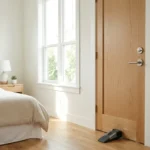
- Add a backup barrier. If you own a portable door bar or brace, wedge it under the doorknob now. A $20–$30 door bar can hold against several hundred pounds of force, buying extra time.
- Move to a room you can lock. Get your family into a bedroom or bathroom with a working interior lock. Keep the light off so you’re harder to see from outside.
- Call 911 and give specifics. Say clearly: “Someone just tried my front door handle and I’m home.” Give your address, which door, and a description of any person or vehicle you saw.
- Stay away from windows. Don’t peek outside to check if they’re gone, especially with a light on behind you. Wait for the responding officer to knock and identify themselves.
Here’s the thing — none of these steps require special equipment. They work with what most people already have in the house.
Bold intro: Watch a real walkthrough of how to check and reinforce your locks in under two minutes.
How Can You Tell Someone Is Casing Your House?
A single jiggled handle is one data point. A pattern of behavior is a bigger warning sign. The Tustin Police Department’s guide to suspicious activity specifically lists people going into a yard or checking doors as classic casing behavior worth reporting.
Watch for:
- The same unfamiliar car circling your street more than once in a night
- Someone walking your property line or driveway after dark without a clear reason
- Repeated knocking at odd hours with a vague excuse (survey, wrong address, “checking the meter”)
- A handle being tried on more than one door, not just the front
If you notice two or more of these in the same week, it’s worth tightening up your front door security before it becomes something bigger.
Quick Test vs. Real Threat: How to Judge What You Heard
| What You Notice | Likely Harmless | Likely Worth Reporting |
|---|---|---|
| A single soft click at the door | Wind, a settling house, a package delivery | Handle actually turns or rattles |
| One unfamiliar car passing | Someone turning around, a delivery driver | Same car circles more than twice |
| A knock, then silence | A neighbor or mistaken address | Knocking on multiple doors, no one answers when you speak up |
| Noise near a side gate | A cat, raccoon, or wind-blown item | Footsteps, then handle-testing sounds at a door |
Nighttime Door Security Checklist
- Deadbolt (not just the handle lock) engaged on every exterior door
- Ground-floor windows locked, including ones in guest rooms
- Motion-sensor light installed near the front entry
- A charged phone kept in the bedroom overnight
- A working flashlight within reach, not just a phone light
- Family agreed on a “safe room” ahead of time, not decided in the moment
What Security Experts Won’t Tell You
A lot of people assume a loud dog or a “Beware of Dog” sign is enough to stop someone testing your door. Biscuit growling didn’t stop the person at my door from trying the handle — it just gave me a heads-up sooner. A dog is a good early warning system, but it’s not a substitute for a solid deadbolt and a locked door.
Another common assumption: security cameras alone scare people off before they even touch the door. Cameras are useful for identifying someone after the fact and for catching blind spots your doorbell camera might be missing, but a determined person may still test a handle even with a camera in view, especially if it’s dark or the camera isn’t obviously visible.
Why Do Burglars Test Door Handles at Night?
Most people looking to break in aren’t after your specific house — they’re looking for the easiest one on the block. A door that’s already unlocked means no noise, no broken glass, and no tools needed.
Night testing also works in their favor because most households are asleep and less likely to notice a quiet check of the handle. It’s quick, quiet, and gives them information without any real risk if they simply walk away when the door doesn’t give.
How Do You Stop Someone From Testing Your Door at Night?
Upgrade the hardware. A Grade 1 or Grade 2 deadbolt with a 1-inch throw bolt is significantly harder to force than a standard doorknob lock. If you’re not sure whether a smart lock or a traditional deadbolt is the safer choice for your home, compare both before you buy.
Add layered lighting. A motion-sensor light near the entry does two things: it startles anyone testing a handle, and it makes you aware something triggered it. Motion-sensor lights measurably deter burglars compared to a porch light left on all night, since a sudden change in light draws more attention than a light that’s always on.
Secure the room you’d retreat to. Pick one room now — ideally a bedroom with a solid door and working lock — and set it up as your go-to safe space. Here’s a full nighttime home security checklist if you want to build this out room by room.
Reinforce doors that see less attention. Side doors and garage entry doors often get skipped when people upgrade security. If your bedroom door itself doesn’t lock well, look at ways to secure a bedroom door from the inside as an extra layer.
Should You Call 911 or the Non-Emergency Line?
Call 911 if the attempt is happening right now, if someone is pushing or forcing the door, or if you feel unsafe in any way. Dispatchers would rather take an unfounded call than miss a real one — multiple police department advisories make this point directly: don’t worry about being embarrassed if it turns out to be nothing.
Use the non-emergency line if the person is already gone and you just want it on record, or if you’re reporting a pattern you’ve noticed over several nights rather than something happening in the moment.
Frequently Asked Questions
Does a door handle jiggle mean a break-in?
Not automatically. It usually means someone checked if the door was unlocked and left when it wasn’t. It’s still worth reporting, especially if it happens more than once.
Should I call 911 if someone tries my door?
Yes, if it’s happening in the moment and you’re home. Give your address, the door involved, and any description you have, then stay on the line if the dispatcher asks you to.
How do I stop people from testing my door at night?
A solid deadbolt, a motion-sensor light at the entry, and a locked side or garage door remove most of the easy targets a person is looking for. None of these guarantee a home is untouchable, but each one makes yours a harder, slower option than the house next door.
Is it normal to hear noises at night that aren’t a break-in?
Yes. Wind, settling houses, and neighborhood animals cause plenty of the noises people worry about. The comparison table above can help you judge whether what you heard needs a call to police or not.
A Ten-Minute Walk-Through Tonight
I did my own version of this after the night Biscuit alerted me — walked the house room by room, checked every lock, and moved a spare door bar into the bedroom closet. It took less than ten minutes and made the next few nights a lot easier to sleep through.
If you haven’t checked your own locks room by room recently, tonight’s a good night to do it. Got a story about a close call at your own door? Drop it in the comments — it might help someone reading this figure out what they’re dealing with.