The Day I Realized My “Safe” Spot Wasn’t Safe At All
I used to keep my safe in my bedroom closet, tucked behind a stack of sweaters, and I genuinely believed nobody would think to look there.
Then I read a police report about a break-in two streets over from my house, and the officer quoted in the article said the closet was the very first place they checked, every single time.
My stomach dropped a little. I wasn’t hiding my safe. I was storing it in the most predictable spot in the entire house.
That night I walked through my own home with fresh eyes, trying to think like someone who breaks into houses for a living. I opened my closet, my dresser drawers, even lifted my mattress, and I realized I had basically built a checklist for a burglar without meaning to.
I wasn’t alone in this mistake, and you probably aren’t either. Most of us pick a hiding spot because it’s convenient for us, not because it’s actually hard for a stranger to find.
That gap between “feels hidden” and “is actually hidden” is exactly what this guide is here to close.
Living with a false sense of security is its own kind of stress, even if you don’t notice it every day. You tuck your jewelry box in the same drawer every night and tell yourself it’s fine, but some small part of your brain still checks the lock on the front door twice before bed.
For a lot of people, this worry gets worse after hearing about a break-in nearby, even one that didn’t touch their own house. Suddenly you’re replaying every hiding spot in your head, wondering which ones a stranger would find in under a minute.
Parents worry about family heirlooms that can’t be replaced. Others worry about cash they keep on hand for emergencies, or important documents like passports and birth certificates that take weeks to reissue if they go missing.
Some people tell me they’ve started avoiding conversations about vacations or new purchases with people outside their close circle, simply because they’re not confident their valuables are actually out of sight.
That kind of quiet vigilance shouldn’t be the price of keeping your things safe. A few smart changes to where and how you hide your valuables can hand you back that peace of mind, without turning your house into a fortress.
Smart, Overlooked Spots to Hide a Safe Where It Actually Stays Hidden
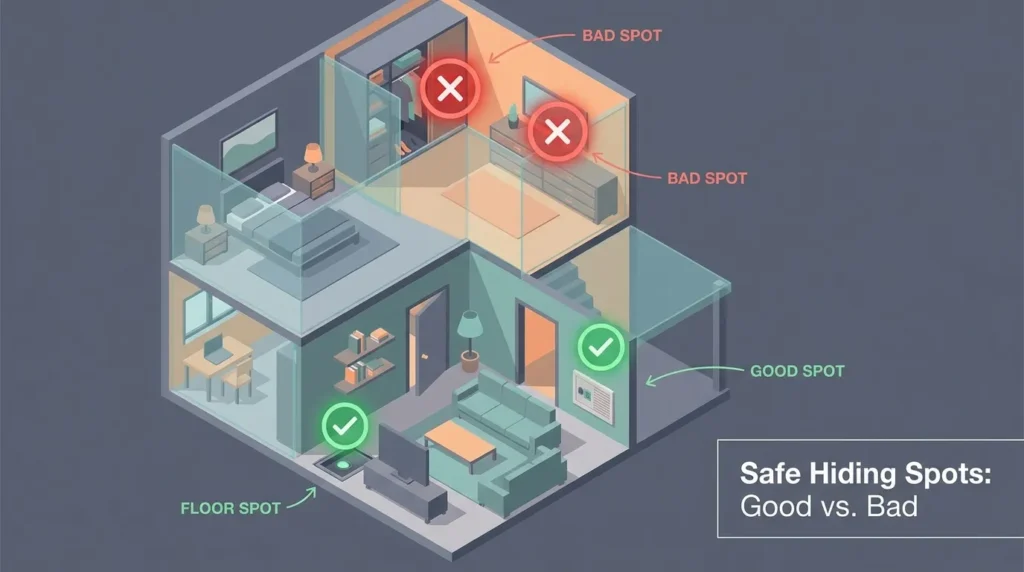
Why the Bedroom Closet and Top Drawer Are the Worst Choices
Before we get into where to hide your safe, it helps to understand why the obvious spots fail.
Burglars work fast, usually spending only a few minutes inside a house, so they head straight for the rooms and spots people use most predictably. The master bedroom closet, the top dresser drawer, and the nightstand are at the very top of that list.
If your safe or your hidden valuables are sitting in any of these three spots right now, that’s the first thing worth changing, even before you read the rest of this guide.
Homeowner resources from groups like InterNACHI, the association of certified home inspectors, point out that predictable hiding spots fail for a simple reason: burglars have seen the same layout in hundreds of other homes, so they already know exactly where to look.
Hiding a Safe Behind a False Wall Panel
A safe built into the wall, behind a false panel or a piece of art, blends into the room instead of standing out inside it.
This works because most burglars are scanning a room quickly, looking for anything that looks like a safe or a lockbox. A flat panel that matches the wall color, or a piece of art with a hinge behind it, doesn’t register as a hiding spot at first glance.
If you’re handy, this is a weekend project between two wall studs. If not, a locksmith or a handyman can usually install one in an afternoon.
I made the mistake of installing my first wall safe without checking for wiring behind the drywall first, and I ended up patching a small hole I didn’t need to make. My pro tip now is simple: always check for pipes and wiring with a stud finder before you cut into any wall.
The In-Floor Safe: Hidden Right Under Your Feet
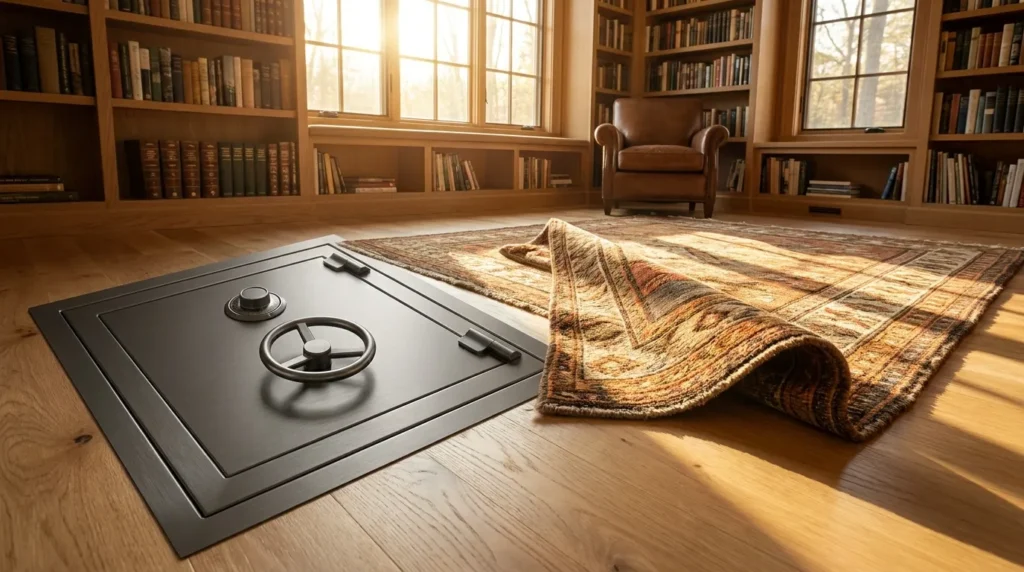
Floor safes sit below the surface, usually under a rug, a piece of furniture, or a section of flooring that lifts or unscrews.
Because they’re bolted into concrete or subflooring, they’re also far harder to simply carry away, which matters more than most people realize. A safe that isn’t fireproof or bolted down can be picked up and taken whole, valuables and all.
This is one of the strongest options for anyone storing cash, jewelry, or a firearm, since it combines being hidden with being physically difficult to remove.
Watch This Before You Choose a Hiding Spot for Your Safe
This short video walks through exactly which hiding spots professional burglars check first, and which ones they almost always skip.
Vent Safes and Other Diversion Tricks
A hidden vent safe looks like a normal air vent cover but opens to reveal a small storage compartment behind it.
These work well for smaller items like cash, spare keys, or jewelry, since they blend into a part of the room nobody thinks to search. Diversion safes take this even further, disguising themselves as everyday objects like a soda can, a book, or a household cleaning product.
If you go this route, spread your valuables across two or three different diversion spots instead of one. That way, even if someone stumbles onto one hiding place, they don’t walk away with everything.
Fireproof Safes for the Documents You Can’t Replace
Not everything you’re protecting is about theft. Passports, birth certificates, property deeds, and insurance papers are just as vulnerable to fire and water damage as they are to a break-in.
A small fireproof, waterproof safe kept in an inconspicuous spot solves both problems at once. Look for one rated to survive at least thirty minutes at high heat, which is usually enough time for a fire department to respond.
Checking your homeowner’s coverage matters here too. The Insurance Information Institute’s guidance on valuables coverage is worth a quick read, since many standard policies cap reimbursement for jewelry and cash far lower than people expect.
Choosing a Safe That’s Actually Built to Resist Forced Entry
Not every metal box labeled “safe” is built the same way. Some are little more than a locked filing cabinet, while others meet real forced-entry and fire ratings.
Look for a certification from a recognized testing body, since UL Solutions’ independent safety testing standards are one of the most trusted benchmarks for both fire resistance and burglary resistance in the safe industry.
Pairing a hidden location with a certified, well-built safe gives you two layers of protection instead of relying on secrecy alone.
Once your safe is chosen and hidden well, the rest of your home’s security matters just as much. A well-hidden safe behind a weak side gate or an unlocked sliding door doesn’t do much good, which is exactly why I put together a guide on protecting the weak spots in your backyard that pairs naturally with everything covered here.
If you travel often, your hiding spots need to hold up over longer stretches too. My guide on keeping your home looking occupied while you’re away covers the small daily habits that keep a house from looking like an easy target, safe or no safe.
Locking Down the Safe Itself, Not Just Where It Sits
Hiding a safe well is only half the job. If someone does stumble onto it, the lock itself needs to actually hold up.
A cheap key lock can be picked or pried in seconds, while a certified combination or biometric lock buys you real time. If you’re weighing your options for any lock in your home, not just a safe, my comparison of smart locks versus traditional deadbolts breaks down which type actually resists forced entry better, and the same logic applies when picking a safe’s locking mechanism.
Bolt your safe down whenever the option exists, even a smaller one. A safe that isn’t anchored to the floor or a wall stud can simply be carried out the door, which defeats the purpose of a heavy-duty lock entirely.
Spreading Your Valuables Instead of Stashing Everything in One Place
Putting every valuable item you own into a single safe feels efficient, but it also means a single lucky find empties your entire stash.
Split your valuables across two or three hiding spots instead of one. Keep everyday cash and lower-value jewelry in a diversion safe, while your most important documents and heirlooms go into a bolted-down floor or wall safe.
This same layered thinking applies to your whole home, not just your valuables. My beginner’s guide to home security walks through building that kind of layered protection room by room, starting with the basics and building up from there.
Check on your hiding spots on a regular schedule too, especially before and after any trip. My nighttime home security checklist is something I now run through every evening, and it takes less than five minutes once it becomes a habit.
None of these changes require tearing your house apart. A vent safe takes an afternoon. A floor safe is a weekend project. Even just moving your current safe out of the bedroom closet costs nothing but a little effort, and it closes one of the biggest gaps most homes have.
Taking Your Safe Strategy to the Next Level
Once your safe is hidden and bolted down, a few extra habits keep that protection working for years instead of just the first few months.
Rotate what you tell people, and how much. Even close friends and extended family don’t need to know exactly where your safe sits or what’s inside it. The fewer people who know the details, the smaller the chance that information slips out at the wrong moment.
Keep a written or photographed inventory of what’s inside your safe, stored somewhere separate from the safe itself, like a cloud drive or an email to yourself. If you ever do need to file an insurance claim, having photos and serial numbers ready speeds up the process by weeks.
Test your own hiding spot the way a burglar would. Once a year, walk through your house and try to find your own safe without knowing exactly where you put it. If it takes you less than a minute, it’s not hidden well enough.
Think about access, not just secrecy. A safe that’s brilliantly hidden but takes fifteen minutes to reach isn’t practical if you need something from it during an emergency, like a passport during a sudden trip or documents during a medical situation.
Consider a smart safe with app-based alerts if your budget allows for it. These notify your phone the moment the safe is opened, which means you’ll know immediately if someone accesses it while you’re away, rather than finding out days later.
Pair your safe with basic home monitoring, even if it’s a modest setup. A camera covering the hallway or room where your safe sits adds a second layer of protection, catching movement even if someone does eventually find the hiding spot. My guide on setting up smart cameras with a reliable home Wi-Fi connection covers exactly how to keep that footage from dropping out when it matters most.
Change your hiding spot occasionally if your safe is small enough to move. A diversion safe that’s sat in the same spot for years starts to blend into your own routine so much that you barely register it, which also means anyone who’s spent time in your home might not either. A fresh spot every so often keeps things unpredictable.
Avoid posting photos of expensive purchases, jewelry, or cash on social media, even privately. It sounds unrelated to hiding a safe, but broadcasting what you own is often the first step that puts your home on someone’s radar in the first place.
Think about timing too, not just location. Moving valuables into a new hiding spot right before a big trip, rather than the night before you leave, gives you time to test that the spot actually works under real conditions. Rushing this step is how people end up with a safe that’s technically hidden but practically impossible to reach when they’re already running late.
Finally, don’t let your safe become the only line of defense. It should sit inside a home that’s already reasonably secure, with locked doors, working lights, and windows that latch properly. A hidden safe inside an easy-to-enter house still leaves your valuables at risk long before anyone finds the safe itself.
The Mistakes That Turn a Hidden Safe Into an Easy Target
Even a well-chosen hiding spot can fail if a few small habits creep in over time.
The most common one is telling too many people where the safe is, usually with good intentions. A contractor, a house sitter, or a new friend hears about it in passing, and suddenly the “secret” location isn’t much of a secret anymore. The safest hiding spots are the ones only one or two trusted people actually know about.
Buying a safe that looks impressive but isn’t rated for fire or forced entry is another quiet trap. A heavy-looking metal box without real certification can still be pried open in minutes by anyone with basic tools, giving you confidence you haven’t actually earned.
Choosing a safe that’s small enough to carry is a mistake people don’t realize until it’s too late. If your safe isn’t bolted to the floor or a wall stud, a burglar doesn’t need to crack it on the spot. They can simply take the whole thing and work on it later, somewhere safe for them.
Forgetting to update your hiding spot after a renovation or a move is surprisingly common too. People install a wall safe, then years later forget it’s even there when new carpet or a new piece of furniture covers the exact spot, making access nearly impossible in an emergency.
Letting the concealment slip is another slow failure. A picture frame that’s supposed to hide a wall safe gets left slightly crooked one too many times, or a fake vent cover doesn’t sit flush after the last time it was opened. Small details like this are exactly what a careful search would notice.
Overloading a single safe with everything valuable you own remains one of the biggest risks. If someone does find it, whether through bad luck or a tip from someone who shouldn’t have known, you lose everything at once instead of just part of it.
Ignoring maintenance is another quiet mistake. Combination locks can drift out of calibration, batteries in electronic locks die without warning, and hinges on wall panels can loosen over time. A safe you haven’t opened in a year might not open smoothly when you actually need it to. Test the lock every few months, the same way you’d test a smoke detector.
The fix for nearly all of these mistakes comes down to the same habit: check your setup every few months, the same way you’d check smoke detector batteries. A quiet system that quietly fails is far riskier than one you actually test.
Quick Answers About Hiding a Safe at Home
Where should I never put a safe in my house?
Avoid bedroom closets, top dresser drawers, and nightstands, since these are the first spots burglars check. Also skip bathrooms and kitchens near water sources, since moisture can damage both cash and important documents over time.
Where do burglars usually look first for hidden valuables?
They head straight for bedrooms, since that’s where most people store jewelry and cash out of habit. Master bedroom closets, dresser drawers, and under the mattress are the most predictable spots in almost every home.
What is the safest place to keep jewelry at home?
A bolted-down floor or wall safe outside the bedroom is generally safest, especially one rated for both fire and forced entry. For pieces with real sentimental or financial value, a bank safety deposit box is still worth considering alongside your home safe.
How can I keep cash safe at home without using a bank?
Split your cash across a certified fireproof safe and one or two smaller diversion spots, rather than keeping it all in one place. Avoid obvious spots like a cookie jar or a sock drawer, since these are common enough that burglars check them out of habit.
Is it worth having a safe in the house at all?
Yes, especially for documents and items you need quick access to, like passports, spare cash, or family heirlooms. A safe won’t replace a bank vault for your most valuable items, but it fills the gap for everything you need closer to home.
Should I tell family members where my hidden safe is located?
Tell at least one trusted person, in case of an emergency where you’re unavailable. Keep the circle small, and avoid mentioning the exact location in front of guests, contractors, or anyone outside your immediate household.
A Safer Home Starts With One Small Move Today
You don’t need to buy an expensive safe or rebuild a wall this weekend to make real progress here.
Start with the one change that matters most: get your valuables out of the bedroom closet and the top drawer, today if you can. That single move closes the biggest gap most homes have, and it costs nothing.
From there, add one layer at a time. A better lock this month, a bolted-down location next month, a fireproof upgrade whenever your budget allows.
I moved my own safe out of that closet the same week I learned how predictable it was, and I haven’t looked back since. My hope is that you make that same small move today, not next month, because it genuinely takes less time than you’d expect.
Disclaimer: This article is intended for general educational and informational purposes only and does not replace advice from a licensed locksmith, security professional, or insurance agent. Safe selection, installation, and homeowner’s insurance coverage vary by location and provider, so please consult a qualified professional before making significant changes to how you store or protect your valuables.