Why Your Porch Keeps Getting Hit
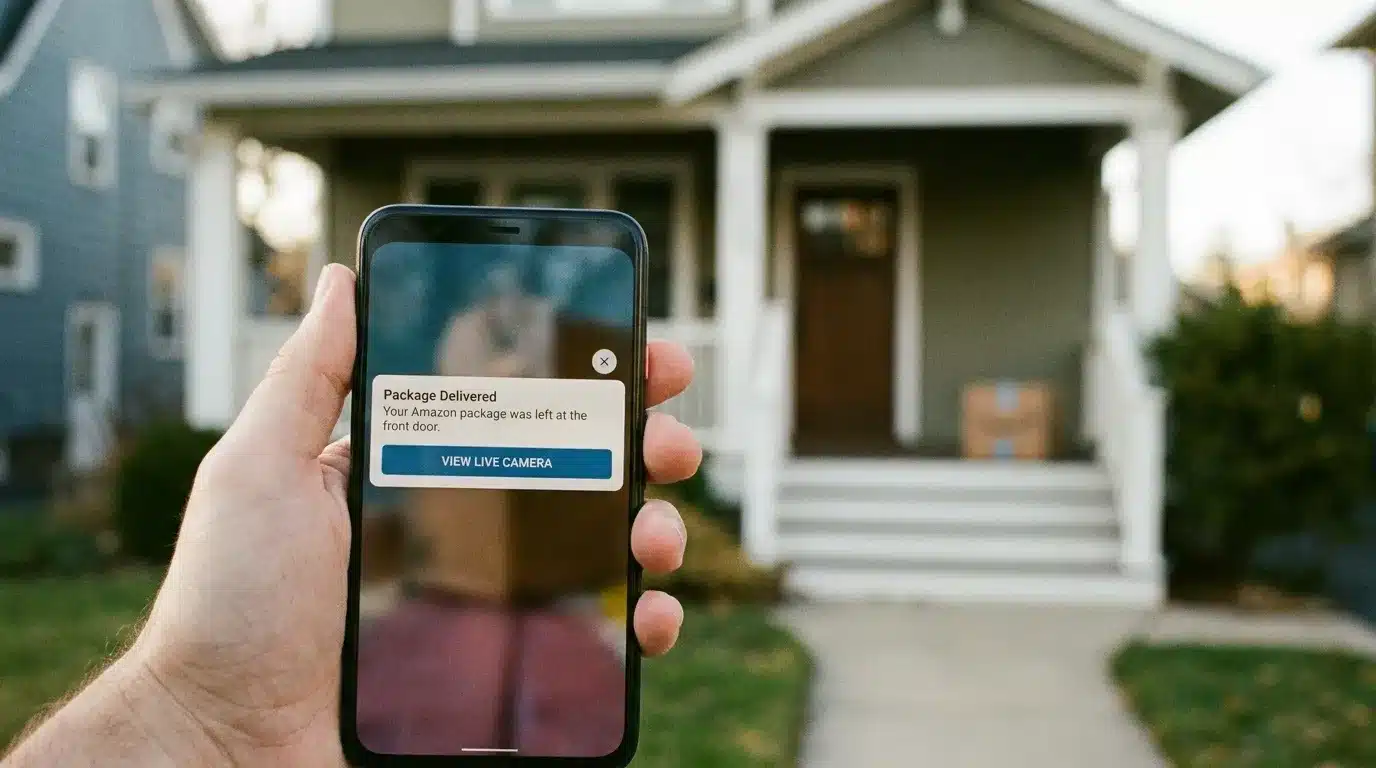
More than 250,000 packages go missing from doorsteps every single day in the U.S. I learned that number after it happened to me. A $60 gift for my mother sat on my porch for eleven minutes before it vanished, and my video doorbell caught the entire thing on camera. The footage didn’t bring the package back. That’s the moment I stopped trusting one doorbell camera to do all the work. I spent the next few months testing hidden drop spots, lockboxes, and delivery tricks to see what actually worked. This guide is everything that passed the test.
Quick answer: The fastest way to stop package theft is to remove the porch from the equation. Hide the drop spot from street view, mount a motion camera at the right height, reroute high-value items to a locker or pickup point, and use a bolted-down lockbox for everyday deliveries. Two or three of these together cut your risk far more than any single gadget on its own.
What Losing a Package Actually Costs You
Money isn’t the only thing on the line here. A single stolen box drags a specific kind of stress into your day, and it tends to stick around.
- You start refreshing the tracking app during meetings, just in case.
- You hesitate before ordering anything over $50, even things you genuinely need.
- You look twice at a car slowing down near your driveway.
- You second-guess neighbors you’ve lived next to for years, even though the person who took your package probably drove in from somewhere else.
These small worries add up quickly, turning your own front step into a source of low-grade anxiety. Fixing the porch fixes the feeling, not just the box count.

Where Porch Pirates Actually Look Before They Grab a Box
Why Do Some Porches Get Targeted More Than Others?
Visibility is the single biggest factor. A crime-script study of unattended package theft published in Criminal Justice Studies found that stolen packages were overwhelmingly visible from the street and taken during daylight hours, not at night. Thieves aren’t breaking in. They’re driving past at low speed, scanning for a box they can reach in under ten seconds.
That single fact changes how you should think about defense. A porch that can’t be seen from a moving car stops most of this before it starts.
How Do You Hide a Package From the Street Without Confusing the Driver?
Set custom delivery instructions in your Amazon, FedEx, or UPS account. Ask the driver to leave items behind a planter, inside a porch nook, or past a side gate — somewhere a car passing at 20 miles an hour genuinely can’t see.
A few specifics that made a real difference for me:
- Use a labeled bin, not a random hiding spot. A plain plastic tote with “Deliveries Here” taped to the lid gets trusted by drivers and ignored by anyone driving past, because it doesn’t look like it holds anything valuable.
- Keep the spot within 10 feet of the front door. Drivers are working against a delivery quota, and instructions that add too many extra steps get skipped more often than you’d think.
- Recheck the spot every season. I trimmed a bush back in the spring and didn’t notice my “hidden” bin was suddenly visible from the sidewalk until a neighbor mentioned it.
I’ll admit my first attempt at this failed. I picked a spot that was technically hidden from the street but also hidden from the driver, so packages started getting left at the curb instead. It took two rounds of adjusting the instructions before drivers actually used the spot I wanted.
How High Should You Mount a Porch Camera?
Mount it around 8 feet up, angled slightly downward. That height keeps the camera out of easy reach while still catching faces instead of just the tops of heads.
A camera alone only records a theft — it doesn’t stop one. Pairing it with motion-activated lighting adds a startle effect: a porch that suddenly lights up the second someone steps onto it feels watched, even when nobody’s home. Research on why motion sensor lights deter burglars backs this up — sudden brightness interrupts a thief’s routine long enough to change their mind. If your camera has two-way audio, use it. A simple “Can I help you?” the moment someone approaches turns an anonymous porch into a monitored one, and most people leave the second they realize a real person is on the other end.
Watch this before you mount anything: This quick walkthrough shows the blind spots that trip up most first-time camera installs, and it’s worth five minutes before you drill a single hole. If your setup is already in place, it’s worth checking for common doorbell camera blind spots before you rely on it for evidence.
What’s the Fastest Way to Take the Porch Out of the Equation Completely?
For anything expensive, skip the porch entirely. Amazon Hub Lockers and carrier pickup points require a personal code to open, which makes them nearly impossible for a stranger to access. The U.S. Postal Inspection Service specifically recommends requesting signature confirmation on higher-value shipments, so the item never gets left unattended in the first place.
If your workplace has a staffed mailroom, route big purchases there instead of home. I now send anything over $150 to a locker automatically, no exceptions, after losing a laptop to a five-minute window between delivery and pickup. While you’re locking down deliveries, don’t forget your actual mailbox is a target too — securing your mailbox against identity theft matters just as much as protecting the porch, since stolen mail often carries far more personal information than a stolen box.
Is a Lockbox Worth Buying, or Is a Cable Lock Enough?
It depends on how often you order online. Here’s how the two most common physical barriers stack up against each other:
| Method | Cost | Setup Effort | Best For |
|---|---|---|---|
| Hidden drop spot | Free | 5 minutes | Everyday, lower-value packages |
| Motion light + camera | $50–$200 | 1–2 hours | Ongoing deterrence, evidence if theft happens |
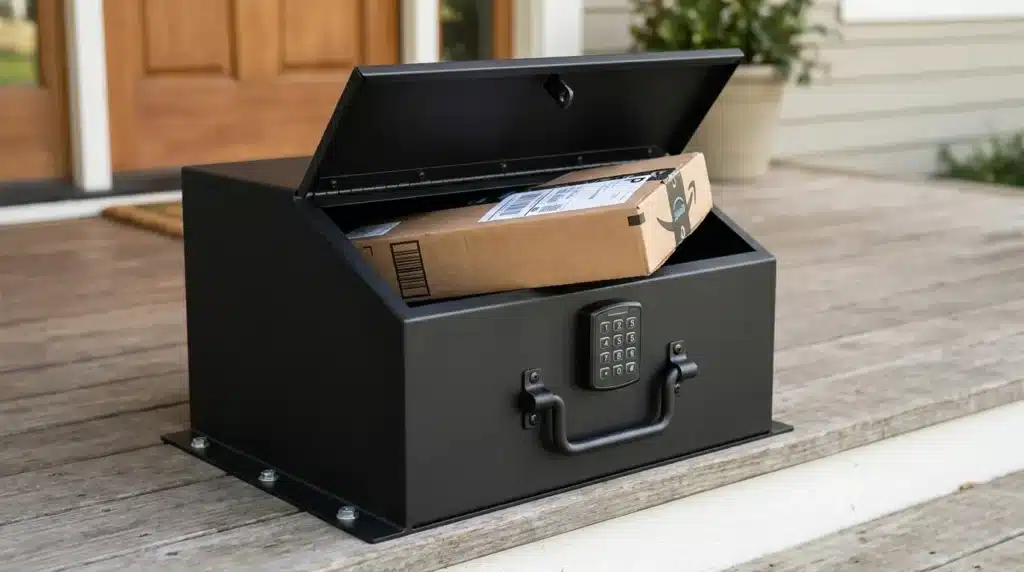
| Bolted lockbox | $80–$250 | One afternoon | Frequent deliveries, higher-value items |
| Cable lock | $15–$40 | 15 minutes | Renters, apartments, budget setups |
| Locker or pickup point | Free | Ongoing habit | Electronics, jewelry, anything irreplaceable |
A lockbox works because it removes the thief’s ability to simply pick up and walk away with the box, not because it hides anything. Bolt it through the porch floor into a joist, not just the decking — a box that can be lifted off in one motion isn’t much better than no box at all. If a full lockbox isn’t in the budget yet, a heavy-duty cable lock looped through the package and a railing post stops the grab-and-run crowd completely, even though it won’t survive someone with bolt cutters and time to spare.
Can You Get Deliveries Off the Porch Entirely?
Yes, and this is the one change that stopped nearly all of my losses at once. Some carriers now offer in-garage delivery, where a verified driver gets a one-time code to open your garage door a few inches, slide the package inside, and the door locks again automatically. The box never sits outside long enough for anyone to see it.
This only works if your garage door opener supports smart access, so check that before you count on it — and make sure the garage itself is locked down overnight, since a smart delivery feature is only as safe as the door it’s opening. If it doesn’t, a smart lock on a side door or mudroom entrance does the same job for a lower cost, since you can grant a driver temporary access without handing out a permanent key.
Setting this up takes about twenty minutes the first time. After that, every delivery follows the same pattern: code sent, door opens, package placed, door locks, notification sent to your phone. There’s no porch step in that sequence at all. Just make sure whatever camera or lock app you’re using sits on a secured home Wi-Fi network, since a weak router password undoes most of what a smart lock is supposed to protect.
Why Does This Keep Happening in the Same Neighborhoods?
Thieves work by opportunity, not by targeting specific households. A car passes down a street once, notes which porches have visible boxes, and circles back within the hour if nothing changes. Streets where even one or two houses look hard to hit tend to see less activity overall, because the driver moves on to easier blocks instead of testing each house individually.
That’s part of why a hidden drop spot protects more than just your own delivery. A porch that gives a thief nothing to look at removes one more reason to slow down on your street in the first place.
A Mistake Worth Avoiding
I bought a lightweight lockbox during my first attempt at fixing this and never bolted it down. A thief picked up the entire box, gift and all, and walked off with it in under a minute. A security tool only works if it’s actually anchored to the house — otherwise you’ve just handed someone a slightly heavier box to carry.
Quick Checklist Before Your Next Delivery
Run through this before you hit “confirm order” on anything valuable:
- Delivery instructions updated with a hidden drop spot
- Camera angle actually covers the drop zone, not just the door
- Signature confirmation requested for anything over $100
- Tracking notifications turned on so you know the moment it’s close
- A backup plan (neighbor, coworker, locker) if you can’t be home
Special Warning for Holiday Package Theft
Package theft complaints tend to climb once holiday shopping ramps up, since more boxes sit outside for longer stretches during that stretch. If you’re traveling during that window, the same habits you’d use to secure your home during vacation — holding mail, faking presence, alerting a neighbor — apply directly to deliveries too.
Running this checklist becomes even more worth the thirty seconds it takes once that season starts, and pairing it with a nighttime home security routine covers the hours when porches are most exposed. Scammers also ramp up fake “missed delivery” text alerts around the same time, so don’t click a tracking link you didn’t request — go straight to the retailer’s site instead.
Making Your Setup Hold Up After the First Month
Security.org’s national survey found that apartment residents get hit by package theft roughly 3.5 times more often than people with a private porch. That gap comes down to one thing: shared entry points that nobody personally owns.
A house has one porch and one responsible party. A building lobby has dozens of residents and, often, nobody checking the camera footage at all.
That’s the piece most guides skip. Buying the right gear solves maybe half the problem. Keeping it working, and adapting it as your building or block changes, solves the rest.
How Do You Stop Package Theft in an Apartment or Shared Building?
Ask your building manager about a designated, camera-covered package room instead of unit-by-unit lobby delivery. Buildings that switch to a locked package area report far fewer thefts than ones using an open lobby, because the box is no longer sitting somewhere dozens of strangers can reach it.
If your building doesn’t have one yet, a few smaller habits close most of the gap:
- Never hold the door for someone you don’t recognize. Tailgating into a secure building is one of the most common ways a stranger gets access in the first place.
- Report a broken lobby latch the same day you notice it. A door that doesn’t fully close is functionally an open door.
- Use a no-drill camera mount on your own unit door. Most renters can get a clear view of their hallway without touching the wall or losing a deposit — the same approach covered in apartment security setups that skip drilling holes works just as well for a delivery-focused camera.
- Grab packages the same day they arrive. Boxes left overnight in a lobby sit through the exact hours when building staff usually isn’t around.
I started doing the “grab it same day” habit after a neighbor mentioned she’d lost two packages that sat in our lobby past 9 PM. Neither of us had thought about it as a pattern until we compared notes.
Does Pointing Two Cameras at the Same Spot Actually Help?
Yes, more than most people expect. A single camera has a blind spot the moment someone approaches from an angle it wasn’t built to cover. Two cameras with overlapping fields of view close that gap almost completely, since a person dodging one lens usually walks straight into the other.
This setup also protects the cameras themselves. If someone tries to disable or cover one unit, the second one records exactly who did it, which turns a broken camera from a dead end into evidence.
How Often Should You Actually Check Your Own Setup?
Set a repeating reminder, because “I’ll check it eventually” rarely happens on its own. A workable cadence looks like this:
- Monthly: Wipe camera lenses and motion sensors clean. Dust and spider webs quietly ruin footage quality long before you notice.
- Weekly: Test any motion alarm or chime to confirm it’s still loud enough to hear from inside.
- Quarterly: Walk your own porch or hallway like a stranger would, checking whether your “hidden” drop spot is still actually hidden.
- Before any trip: Set the USPS Hold Mail service, or the equivalent from your carrier, so nothing piles up while you’re away.
A dead battery or a bush that’s grown back over your camera’s view can undo months of good habits in a single week. The maintenance takes less time than the shopping trip that got you the package in the first place.
Does a Neighborhood Buddy System Actually Reduce Theft?
Yes, and it costs nothing beyond a group chat. When two or three neighbors agree to watch for each other’s deliveries, the effective coverage of your street multiplies without anyone buying new hardware.
Here’s how a simple version works in practice:
- Share your rough delivery windows with one or two neighbors you already trust, using whatever carrier tracking app you’re already checking.
- Agree on a signal, even something as basic as a text saying “package’s on your porch, grabbing it for you,” so nobody assumes someone else already handled it.
- Return the favor without being asked. The system falls apart fast if it only runs one direction.
- Share camera footage of anything suspicious, not just theft in progress. A car that circles the block twice is worth a heads-up even if nothing gets taken that day.
A street where two or three houses are actively watching becomes noticeably less appealing to drive past slowly. Thieves are working on a tight time budget, and a block that feels observed costs them more time than it’s worth.
5 Mistakes That Make Your Porch an Easy Target
Most people who lose a package weren’t careless. They did three or four things right and one thing wrong, and that one thing was enough.
Posting a photo of a new item the same day it arrives is one of the biggest culprits. A geotagged photo tells anyone browsing your profile that something valuable just showed up at a specific address, and it takes seconds for that information to reach the wrong person.
Leaving the original box out for trash pickup is another quiet giveaway. A TV or laptop box sitting at the curb, logo facing the street, tells every car that drives by exactly what’s now inside your house. Breaking the box down and turning it inside out takes under a minute and removes that signal completely.
Trusting a fake or dummy camera gives you the feeling of protection without any of the actual benefit. A closer look at whether fake security cameras really work explains why experienced thieves can often spot one within seconds, whether it’s a blinking light with no wiring behind it or a housing that’s clearly too light to hold real hardware. A single working camera does more than five convincing fakes.
Leaving a tracking slip visible in your car or mailbox hands a would-be thief a schedule. It tells them exactly what’s arriving and roughly when, which is information they’d otherwise have to guess at.
Falling into a “set it and forget it” mindset undoes gear that would otherwise work fine. A camera installed once and never checked again, a lockbox left unbolted “for now,” or delivery instructions that were never updated after a move — these gaps don’t cause problems immediately, which is exactly why they’re so easy to ignore until the day they do.
None of these mistakes guarantee a theft will happen. What they do is significantly raise the odds, by handing a thief information or opportunity they wouldn’t otherwise have. Closing them doesn’t cost much beyond a few minutes of attention.
Quick Answers to Package Theft Questions People Search For
Does a Ring or video doorbell actually stop package theft?
Not by itself, but it changes the odds. A visible doorbell camera makes a thief think twice, since most people committing this kind of theft want to avoid being recorded, but the camera only records what happens rather than physically stopping it.
Will Amazon or another retailer replace a package that’s confirmed stolen?
Often, yes, though it’s usually offered as a courtesy rather than guaranteed by policy. Filing a police report and saving your camera footage speeds up the process and gives the retailer something concrete to act on.
Are package lockboxes worth buying for a single-family home?
For anyone who orders online regularly, yes. A bolted-down lockbox in the $80–$250 range typically pays for itself within a year or two just by preventing one or two losses.
Do porch pirates come back to the same house more than once?
They often do, especially if the first attempt worked without any resistance. A property that looks unprotected tends to get treated as a repeat option rather than a one-time opportunity.
Is it safe to give delivery drivers hiding instructions through the carrier app?
Yes. Most major carriers let you set custom delivery notes, and drivers generally follow them as long as the spot is still easy and quick to reach.
Do motion-activated lights make a real difference at night?
They do. Sudden brightness interrupts a person’s routine and removes the cover of darkness they were counting on, which is often enough to send them looking for an easier target.
Your Porch, One Small Habit at a Time
You don’t need a five-thousand-dollar setup to stop losing packages. You need two or three of these habits, done consistently, and a system for checking on them every few months instead of once and never again.
I still order things online just as often as I did before any of this happened to me. The difference now is that a stolen package feels like the exception again, not something I brace for every time a delivery truck turns onto my street.
Pick one change from everything you just read and set it up today. The next “Delivered” notification you get should feel like good news again, not a countdown to an empty porch.
I’m just a homeowner who got tired of losing packages and started paying closer attention, not a licensed security professional. Before you bolt anything into a porch, a railing, or a garage door, it’s worth a quick call to a local locksmith or handyman to make sure the installation is right for your specific setup.