
The Night My Sliding Window Latch Just Gave Up
Most people think a locked window means a safe window. My own sliding bedroom window taught me otherwise, and it happened on an ordinary Tuesday night, not during some big storm or dramatic moment.
I heard a soft scrape against the track around 1 a.m. My dog started growling low, the kind of growl she only makes when something outside isn’t right. I grabbed my phone flashlight and found the window pushed open about two inches, with the factory latch bent sideways like it was made out of foil.
Nobody got inside that night. My dog scared them off before the gap got wide enough. But I spent the rest of the week pulling on every window in my house, and I was genuinely shocked at how little force it took to pop most of them open.
That scare didn’t end when the sun came up. It changed how I felt in my own home for weeks.
Here’s what nobody warns you about after something like this happens:
- You start double-checking the same lock three or four times before bed, and it still doesn’t feel like enough.
- You lie there listening for sounds you never used to notice — the house settling, a branch against the siding, wind against the glass.
- You feel silly telling friends or family, because “nothing actually happened,” even though your body doesn’t seem to know that.
- You start researching security systems that cost more than your monthly rent, because the fear makes expensive solutions feel reasonable.
The frustrating part is that most of the advice out there points you toward big, costly upgrades. What actually stopped my window from being a repeat target cost less than a takeout dinner, and I didn’t need to call anyone to install it.
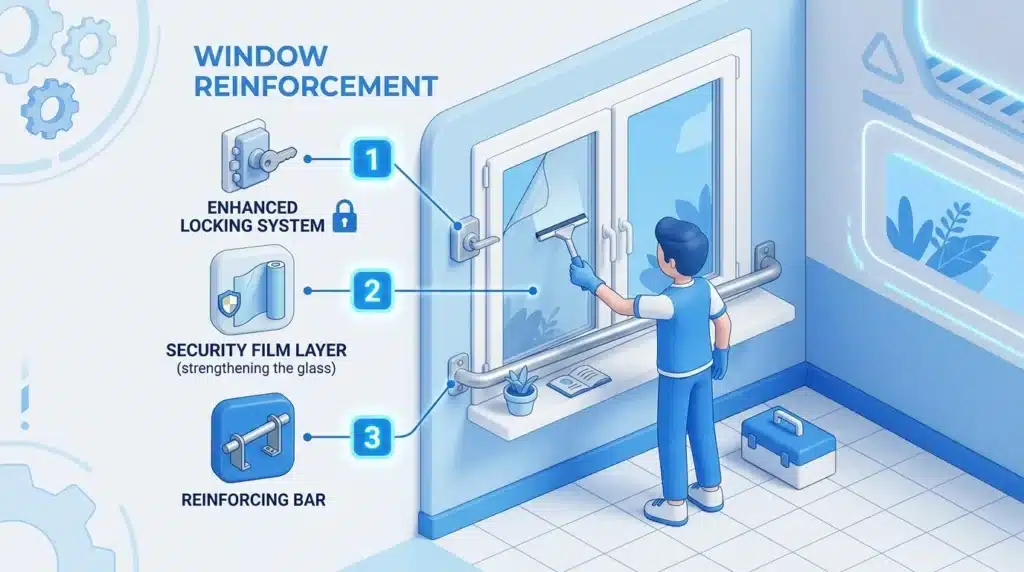
What Actually Stops a Sliding Window From Being Forced Open
A factory latch on a sliding window is designed to keep the window closed, not to survive someone pushing on it from outside. Most of them are stamped from thin metal, and they only engage a small hook barely wider than a fingernail.
Once that hook bends or slips, the window rolls open with almost no resistance. This is exactly what happened to mine, and it’s the same failure point locksmiths see over and over on sliding windows and patio doors.
The fix isn’t a stronger lock. It’s a physical block that stops the window from moving at all, regardless of what happens to the latch.
What a Charley Bar Actually Is
A charley bar is a hinged metal rod that mounts across the bottom track of a sliding window or sliding glass door. One end stays bolted to the frame on a hinge. The other end swings up and drops into a small catch bracket mounted on the opposite side of the track.
Once it’s down, the window is mechanically blocked from sliding, even if someone breaks the latch completely. There’s no lock to pick and no mechanism to jiggle open, because a charley bar isn’t a lock in the traditional sense — it’s a bar.
Most charley bars for standard residential windows are rated to resist well over 150 pounds of push force before flexing. For comparison, a hard kick or shoulder-check typically transfers far less force than that directly through the track, since most of the energy is absorbed by the frame and glass first.
Charley Bar vs. Other Common Window Fixes
Here’s how a charley bar stacks up against the other methods people usually try first:
| Method | Cost | Blocks Sliding? | Renter-Friendly? | Install Time |
|---|---|---|---|---|
| Factory latch (stock) | $0 | Weak | Yes | N/A |
| Wooden dowel in track | $3 – $8 | Yes | Yes | 2 minutes |
| Charley bar | $10 – $25 | Yes (fixed, hinged) | Mostly (2 small screws) | 15 minutes |
| Window track lock (clamp-style) | $10 – $20 | Partial | Yes | 10 minutes |
| Full sensor/alarm system | $150+ | No (alerts only) | Depends on model | 1+ hours |
A wooden dowel does almost the same job for less money, which matters if you’re renting and can’t put screws in the frame. The trade-off is that a dowel has to be manually placed every time you close the window, while a charley bar stays mounted and just flips down.
What You’ll Need Before You Start
- Cordless drill with Phillips screwdriver bits
- Tape measure and a pencil
- A charley bar window kit (comes with the bar, hinge bracket, and catch bracket)
That’s the whole list. No specialty hardware and no trip to a locksmith.
Installing a Charley Bar Without Calling Anyone
Measure the track before you buy. Close your window fully and measure the length of the bottom track from the frame to where the sliding panel sits. Most residential charley bars are adjustable between 20 and 48 inches, but checking first saves you a return trip to the store.
Mount the hinge bracket first. Position it flush against the fixed side of the frame, about half an inch above the track floor, and secure it with the short screws included in most kits — usually 3/4-inch wood screws.
Mark and mount the catch bracket. With the bar swung down and resting in the track, mark exactly where the far end lands on the sliding panel’s frame, then screw the catch bracket into that spot.
Test it under real pressure. Close the window, drop the bar into place, and push on the sliding panel with real force from the inside — the way an intruder would from outside. If the bar flexes or pops out of the bracket, the screws usually need to go into a slightly thicker section of the frame.
I ended up moving my catch bracket about an inch to the left after my first test, because the original spot lined up with a hollow section of the vinyl frame instead of the reinforced part behind it. That five-minute adjustment made a noticeable difference in how solid the bar felt.
A two-minute video makes the bracket alignment step much easier to visualize than any written description:
A Quick Checklist for Tricky Situations
Not every window is a standard sliding window in a ground-floor bedroom, so a few situations deserve extra thought:
- Bedroom windows used as a fire exit: Choose a charley bar that flips up with one motion and no tools — never one that needs a key or a separate release.
- Older aluminum-frame windows: Check for a reinforced strip behind the vinyl or aluminum before drilling; hollow sections won’t hold screws under real pressure.
- Rental units: Ask your landlord about a charley bar model that clamps on rather than screws in, since some kits use adhesive-backed brackets instead.
- Basement or ground-floor windows facing an alley: Pair the charley bar with security film on the glass itself, since a blocked track won’t stop someone who breaks the pane instead.
- Sliding glass patio doors: The same hardware works, but you’ll want the longer bar sizes made for door-width tracks rather than window tracks.
According to guidance from the National Fire Protection Association, any window used as an emergency exit needs to open fully without keys, tools, or special knowledge in an emergency — which is exactly why a charley bar’s one-motion flip-up design matters more than a bolted or keyed alternative for bedroom windows.
Basement and ground-floor windows deserve extra attention here too, since they’re statistically the ones burglars target first when a home’s main entry points look reinforced.
Making the Charley Bar Part of Your Routine, Not a One-Time Fix
A charley bar only works if it’s actually down when you’re not in the room. That sounds obvious, but it’s the single biggest reason people install one and still end up vulnerable months later.
Set a habit trigger instead of relying on memory. Tie the bar to something you already do every night — locking your front door, turning off the porch light, or setting an alarm. Attach the action to an existing routine and you won’t forget it during a busy week.
Track hardware loosens over time, especially in homes with big temperature swings between seasons. Check the catch bracket screws every few months and snug them back up if the bar feels like it’s dropping slightly off-center instead of landing flush.
If you live somewhere with real winters, pay attention to how the bar performs once the frame contracts in cold weather. A bar that fit snugly in July can sit slightly loose in January, and that gap is exactly what someone testing your window from outside would notice first.
Pair the charley bar with a visual deterrent, not just a physical one. An intruder scouting for an easy target from outside can’t see the bar itself, but a small window decal noting the home has reinforced window security often does enough to make them move on before they even try the latch. A small stick-on vibration sensor near the frame adds a second layer here too — it won’t stop anyone physically, but it gives you a heads-up the moment someone starts testing the window.
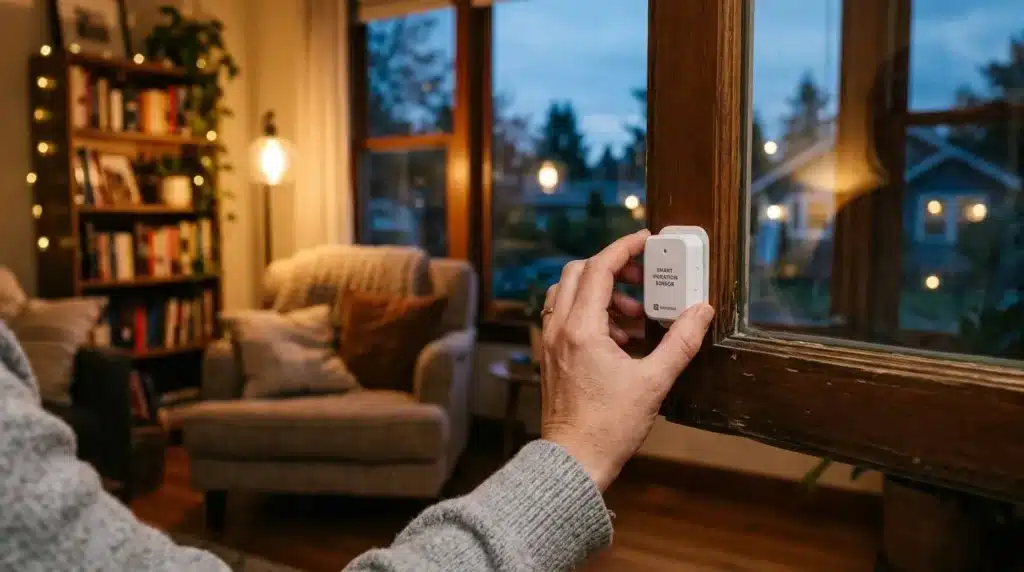
For side or alley-facing windows where nobody would hear you test the lock, it helps to walk through your whole property the way a would-be intruder scouting weak entry points would. Look at your own sliding windows from the outside occasionally, not just the inside.
One thing I didn’t expect: once I started checking my charley bar as part of my nightly routine, I found myself noticing other small security gaps around the house I’d been ignoring for months. A habit like this tends to make you more observant everywhere, not just at that one window.
If your home has a mix of window types — some sliding, some casement, some older double-hung — a charley bar only solves the sliding-window problem. For the rest, comparing lock types across your whole house at the same time saves you from tackling window security one window at a time over several weekends.
Where People Get This Wrong (Even After Buying the Right Hardware)
The most common mistake isn’t skipping the charley bar altogether. It’s buying one, installing it once, and never testing it under real pressure.
A charley bar that’s been mounted but never stress-tested is a false sense of security. You won’t know if the screws are biting into solid frame material or hollow vinyl until someone actually pushes hard against the window — and you don’t want that first real test to happen during an actual break-in attempt.
Here’s a scenario I hear about often: a homeowner installs a charley bar on the main bedroom window but forgets the guest room slider entirely, because it’s rarely used. Burglars don’t know or care which room matters more to you. An unlocked or unblocked window is an equal opportunity, regardless of which room it leads into.
Overtightening the mounting screws is another quiet problem. If you crank the screws down too hard into a vinyl frame, you can crack the material around the screw hole, which weakens the exact spot that’s supposed to hold under pressure.
Do’s and don’ts worth keeping in mind:
- Do test the bar with real force after installing it, not just a light tap.
- Do check both ends of the bar — the hinge side loosens just as often as the catch side.
- Don’t assume a charley bar replaces the need to lock the window’s factory latch too; use both together.
- Don’t install the bar and skip the other windows in the house because “that one felt more urgent.”
- Don’t treat a charley bar as something that makes a break-in impossible — it significantly reduces the chance of a quick, quiet entry through that window, which is what most opportunistic intruders are counting on.
The last point matters more than it sounds like it should. No single piece of hardware completely protects a home, and treating any one fix as a finish line is how people end up skipping the rest of their security checklist. A charley bar is one strong layer, not the whole wall.
According to the National Crime Prevention Council, most residential burglars are looking for a fast, low-risk entry point rather than a specific house, which is exactly why a visibly reinforced window often gets skipped in favor of an easier target next door.
Common Questions About Charley Bar Window Locks
Does a charley bar work on windows that aren’t sliding?
No, a charley bar is built specifically for the horizontal track of sliding windows and sliding glass doors. For double-hung or casement windows, a pin lock or a track clamp is a better match for how those windows actually move.
Can a charley bar be removed easily in an emergency?
Yes, a properly installed charley bar flips up with one hand motion and doesn’t need a key. That’s exactly why it’s considered safe for bedroom windows used as a fire exit, unlike keyed alternatives.
Will installing a charley bar affect my home insurance?
It depends on your provider, but some insurers do offer small discounts for documented security upgrades. It’s worth asking your agent directly, since policies and what counts as a qualifying upgrade vary quite a bit between companies.
How is a charley bar different from a regular window lock?
A regular lock relies on a small latch mechanism that can be picked, jiggled, or broken. A charley bar is a physical bar blocking the track itself, so there’s no small mechanism for anyone to manipulate from outside.
Do I need one on every window, or just the ground floor?
Ground-floor and easily reachable windows should be the priority, but don’t skip windows near porches, trees, or balconies on upper floors. Those are often overlooked precisely because homeowners assume height alone keeps them safe.
What if my window track is an unusual size?
Most hardware stores carry adjustable charley bars that extend or compress to fit tracks between roughly 20 and 48 inches. For anything outside that range, a cut-to-fit wooden dowel is a reliable backup that works on almost any track width.
Your Sliding Window Doesn’t Have to Be the Weak Link
Look at the full picture here for a second. You started this because a factory latch that’s supposed to protect you can be popped open in seconds, and that’s a genuinely unsettling thing to realize about your own home.
A charley bar closes that specific gap for less money than most people spend on a single grocery run. It’s not a complete security system, and it’s not meant to be one — it’s one solid, physical layer that removes the easiest way in.
Combine it with the other small habits we’ve covered — testing it under pressure, checking the screws each season, and not skipping the windows that feel “less important” — and you’ve closed one of the most commonly exploited gaps in an average home.
I installed mine on a random Sunday afternoon with a screwdriver I already had in a kitchen drawer, and it’s still the fifteen minutes of home security work I feel best about. Start with the window that worries you most, and let that first one build the momentum to do the rest.
You don’t need a big renovation or a new alarm contract to feel steady in your own home again. Sometimes the fix really is that small, and that’s a genuinely good thing to know.
I’ll be upfront about something before you head to the hardware store: I’m sharing what worked on my own windows, not offering advice as a locksmith or security professional. If your frame material looks unusual, feels damaged, or you’re just not sure what you’re working with, it’s worth having a local locksmith take a quick look before you start drilling.









1 thought on “Charley Bar Window: The $5 Fix Burglars Can’t Bypass”
Comments are closed.