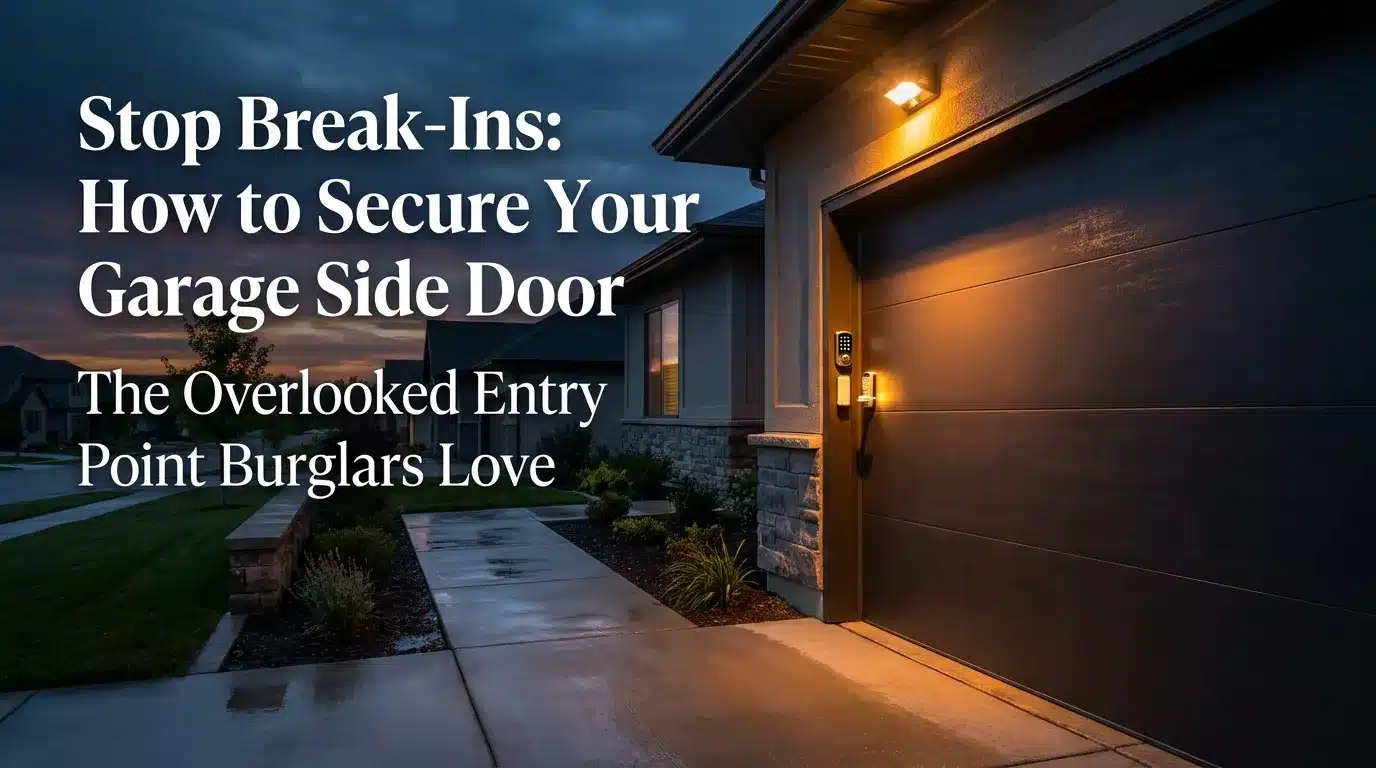
The Door I Never Thought About Until It Was Too Late
I have to be honest with you. For almost three years, I locked my front door every single night without fail. I checked my windows. I even set my alarm system before bed like clockwork.
But my garage side door? I never gave it a second thought.
It sat there, tucked around the side of my house, half-hidden behind a bush, with a cheap knob lock that came with the house when I bought it. I figured nobody would even notice it was there.
Then one morning, I found scratch marks near the handle. Someone had tried to get in. They didn’t succeed, but that moment changed how I thought about home security completely.
That door was my blind spot. And if you’re reading this, there’s a good chance it’s yours too.
Here’s the thing about garage side doors. They’re often the least protected entry point on the whole house, yet they lead straight into your garage, and from there, straight into your home. Most garages connect directly to a kitchen, laundry room, or hallway. One weak lock is all that stands between a stranger and your family.
People don’t lose sleep over their front door anymore. Ring cameras, smart locks, and visible security signs have made front doors feel like a solved problem. But side doors get ignored. They’re out of sight, out of mind, and burglars know it.
- You feel a small knot in your stomach every time you leave for vacation, wondering if you locked that side door.
- You’ve told yourself “I’ll fix it later” more times than you can count.
- You’ve seen the local crime alerts on your neighborhood app and quietly wondered if your garage door is next.
- You want your kids to feel safe walking through that door after school, without you having to think twice.
That daily background worry is exhausting. You shouldn’t have to feel unsettled in your own home because of one overlooked door. The good news? Fixing this doesn’t take a contractor, a huge budget, or a weekend of work. It takes a plan, and that’s exactly what I’m going to walk you through.
Building a Garage Side Door That Actually Holds Up
Before you buy anything or change a single lock, you need to understand what makes a door secure in the first place. It’s not just about the lock. It’s about the whole system working together.
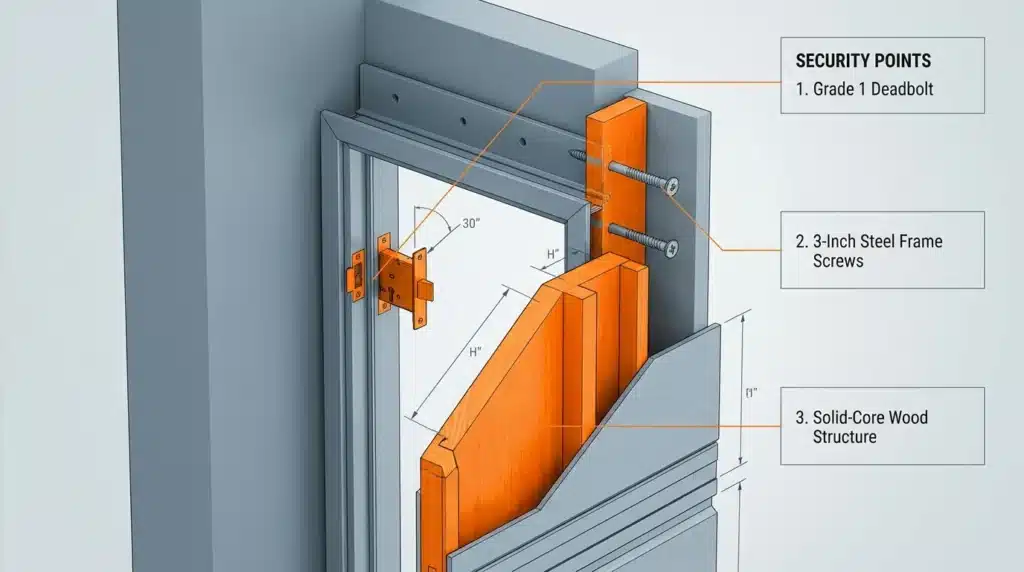
Most garage side doors fail for three reasons: a weak lock, a hollow or thin door, and a frame that isn’t reinforced. Fix all three, and you’ve turned your biggest blind spot into one of the strongest points of entry in your home.
Start With the Lock, Not Just Any Lock
A standard doorknob lock is not a security lock. It’s a privacy lock, meant to keep a door closed, not to stop someone determined to get in.
You need a deadbolt, full stop. Look for a Grade 1 or Grade 2 deadbolt rating, which you’ll find on the packaging. According to the Insurance Information Institute, homes without deadbolts on secondary entry points are statistically more likely to experience a break-in through that exact door.
If you already have a deadbolt on your front door but skipped the side door, reinforcing your front door taught me one thing I carried straight into fixing my garage: every exterior door deserves the same level of protection, not just the one visitors see first.
I made this mistake myself. I put a nice deadbolt on my front door and figured that was “good enough” for the house overall. It wasn’t. My garage side door sat there with its cheap knob lock for years because I never connected the two in my head.
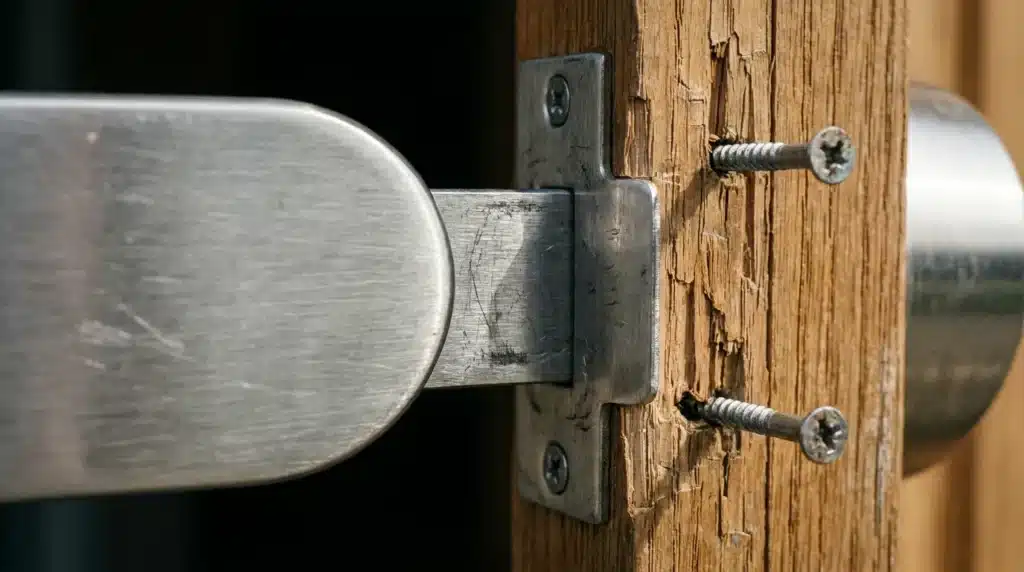
Pro Tip: When I finally installed a deadbolt on my side door, I realized the screws that came with it were tiny, barely over half an inch long. A burglar could kick that door in with one solid hit. I swapped them for 3-inch screws that reach into the actual wood stud, not just the door frame trim, and that one change made a bigger difference than the lock itself.
Choosing Between a Smart Lock and a Traditional Deadbolt
This is where a lot of homeowners get stuck. Do you go high-tech or stick with something simple and mechanical?
| Feature | Traditional Deadbolt | Smart Lock |
|---|---|---|
| Cost | Lower upfront cost | Higher upfront cost |
| Power dependency | None | Needs batteries |
| Remote access | Not possible | Yes, via app |
| Ease of installation | Simple DIY job | Slightly more involved |
| Best for | Budget-conscious homeowners | Families who need remote monitoring |
If you’re torn between the two, this breakdown on smart locks vs deadbolts goes deeper into which one actually holds up better under real-world testing.
Reinforce the Frame, Not Just the Door
Here’s something most people don’t know. A door can have the strongest deadbolt on the market and still get kicked open in seconds if the frame around it is weak.
The strike plate, that small metal piece the deadbolt slides into, is usually held in place with tiny screws. A firm kick can rip it right out of the frame.
Replace those short screws with 3-inch versions that anchor into the wall stud. You can also add a reinforced strike plate kit, which spreads the impact force across a wider area of the frame instead of one small point.
The Federal Trade Commission’s home safety resources note that forced entry through weak door frames remains one of the most common ways intruders get into homes, even when the lock itself is decent quality.
Don’t Forget the Door Material
If your garage side door is hollow-core (lightweight and mostly made of thin material with air inside), it’s a liability. A hollow door can be kicked or even punched through.
Solid-core wood or steel doors resist force far better. If replacing the whole door isn’t in your budget right now, a door reinforcement kit or steel security plate can add a layer of protection without the full cost of a new install.
This connects to something I learned while working on my windows too. In my guide on securing windows from the inside, the same idea kept coming up: the weakest material in the chain is where intruders focus their effort. Your side door is no different.
Light It Up
Burglars avoid attention. A dark, hidden side door gives them exactly the cover they want.
Install a motion-sensor light directly above or beside your garage side door. It doesn’t need to be expensive. Even a basic $20 model creates enough of a deterrent to make someone think twice.
Watch how a simple lighting change can transform a vulnerable entry point into one that actually discourages intruders before they even try the handle.
Add a Camera With a Clear View
A camera pointed at your garage side door does two things. It records evidence if something happens, and it often stops trouble before it starts, since most people avoid doing anything shady when they know they’re being filmed.
If you’re setting this up alongside your existing home network, my post on securing your home Wi-Fi for smart cameras walks through how to keep that footage private and away from hackers, which matters just as much as the camera itself.
Myth vs Reality: Garage Side Doors
Myth: “My garage door opener is enough security. If that’s locked, my side door doesn’t matter.”
Reality: Automatic garage doors can be forced open or bypassed with tools that are shockingly easy to find online. Your side door needs its own independent security, not a false sense of safety borrowed from the big door.
Myth: “Burglars only target front doors because that’s the main entrance.”
Reality: Side and back doors are targeted more often specifically because they’re hidden from street view. Privacy works both ways. It hides you from neighbors, but it also hides intruders from anyone who might notice them.
Your Quick Garage Side Door Security Checklist
- [ ] Replace the knob lock with a Grade 1 or Grade 2 deadbolt
- [ ] Swap short screws for 3-inch screws in the strike plate and hinges
- [ ] Add a reinforced strike plate to the door frame
- [ ] Check if your door is solid-core; reinforce or replace if hollow
- [ ] Install a motion-sensor light near the door
- [ ] Add a camera with a clear view of the entry point
- [ ] Trim any bushes or plants blocking the view of the door
- [ ] Test the door and lock together, not just individually
If your garage connects to other vulnerable points around your property, it’s worth taking a wider look. My ultimate home security guide for beginners covers how each entry point works together as one system, not isolated fixes.
And if burglars are already casing your yard before they even reach the door, burglar-proofing your yard is worth reading next, since landscaping and sightlines play a bigger role in prevention than most people realize.
The Habits That Keep a Secure Door Actually Secure
A good lock is only the beginning. What you do after installation matters just as much as the hardware itself.
I learned this the hard way. I installed my deadbolt, felt proud of myself, and then didn’t think about that door again for almost a year.
Big mistake. Locks wear down. Screws loosen from constant use. Weather changes the way wood doors sit in their frames.
Set a reminder every three months to physically test your garage side door. Push on it. Wiggle the handle. Check if the deadbolt slides smoothly or feels stiff. A door that’s hard to lock is a door people start leaving unlocked out of pure annoyance.
That’s actually one of the sneakiest ways security habits fall apart. Not because someone stops caring, but because the door itself becomes a hassle to use properly.
Keep a small log of who has keys or codes to that door. Contractors, dog walkers, old roommates. If you can’t name everyone who has access, you don’t really have control over that entry point anymore.
I keep a simple note on my phone. Nothing fancy, just names and dates. When someone moves out or a service ends, I re-key the lock or change the code. It takes fifteen minutes and it’s saved me from that nagging “who else could get in” feeling more than once.
Rotate your smart lock code every few months if you’re using one. The same code sitting unchanged for years is a code that’s had plenty of time to get shared, guessed, or seen over someone’s shoulder.
Trade groups like the Associated Locksmiths of America recommend treating access codes the same way you’d treat a password. Change it, don’t reuse it across devices, and never make it something obvious like your street address or birth year.
Here’s a scenario worth thinking through. Say you hired a landscaper for the season. They had your gate code and knew your side door well because they used it to grab the hose or borrow tools. Season ends, you never talk to them again, but the code stays the same for two more years.
That’s not paranoia. That’s just an open door with extra steps.
Walk your property once a season and look at your garage side door the way a stranger would. Is it hidden by overgrown bushes? Is the motion light bulb burned out? Is there a spare key hidden somewhere predictable, like under a mat or a fake rock?
I did this exercise last fall and found my “hidden” spare key sitting under a planter that had been in the exact same spot for three years. Anyone watching the house for even a week would’ve spotted the pattern.
Small check-ins like this cost you almost nothing in time, but they’re what separate a door that’s secure on paper from a door that’s secure in practice.
Where Good Intentions Quietly Fall Apart
I want to talk about something that doesn’t get discussed enough. It’s not the big obvious mistakes that hurt people. It’s the small ones that feel harmless in the moment.
Propping the door open “just for a minute.” Maybe you’re carrying groceries in from the car, or moving boxes from the garage. That one minute turns into five, and suddenly your secured door is wide open with nobody watching it.
I’ve done this more times than I want to admit. It only takes one bad moment for that habit to cost you.
There’s also the trap of buying the security hardware and never actually finishing the install. A deadbolt sitting in its box in a drawer protects nobody. I know people who bought a reinforced strike plate, got halfway through installing it, got distracted, and left the job unfinished for months.
Relying on a single layer of protection is another quiet risk. Maybe you got the great lock but skipped the lighting. Or you added a camera but the door itself is still hollow-core and flimsy. Security works in layers, and skipping even one layer leaves a real gap that someone determined enough will find.
Something else worth being honest about: posting your vacation plans or new security upgrades on social media can undo a lot of good work. I’ve seen neighbors post “finally got our new alarm installed!” along with photos showing the exact brand and placement. That’s useful information handed to anyone paying attention, including people who don’t have good intentions.
According to the National Crime Prevention Council, burglars often study patterns before acting, watching when people leave, how long they’re gone, and which doors get used the least. A door that looks untouched and slightly neglected sends a signal, even if you don’t mean for it to.
Ignoring the small warning signs is probably the costliest mistake of all. Scratch marks near a lock. A door that suddenly doesn’t close as smoothly as before. Footprints in dirt near a side entrance. These things feel small enough to brush off, but they’re often the first clue that someone tested your defenses and is thinking about coming back.
I brushed off scratch marks once, telling myself it was probably just a delivery person or a curious animal. Looking back, I should’ve taken it as the wake-up call it actually was.
None of these mistakes make you careless or bad at this. They’re just easy to fall into because life gets busy and a garage side door isn’t something most people think about every day. Once you know where the gaps usually show up, they’re simple to close for good.
Common Questions About Garage Side Door Security
How do I secure a garage side door on a tight budget?
Start with the cheapest, highest-impact fix: longer screws in your existing strike plate and hinges. A basic motion-sensor light and a solid deadbolt together usually cost less than a nice dinner out, and they cover most of what a burglar looks for before trying a door.
What type of lock is best for a side garage door?
A Grade 1 or Grade 2 deadbolt is your best bet for pure strength. If you want remote access and activity alerts, a smart lock adds convenience, but don’t skip the deadbolt rating just to get smart features.
Should a garage entry door have a deadbolt?
Yes, absolutely. A doorknob lock alone is not built to resist force, and your garage side door deserves the same protection as your front door since it leads to the same house.
Can burglars open garage doors easily?
Automatic garage doors can sometimes be bypassed with tools that are surprisingly easy to get, which is exactly why your side door needs its own independent lock and can’t rely on the main garage door for protection.
How to stop thieves from getting into your garage?
Combine a strong deadbolt, a reinforced door frame, good lighting, and a clear view of the entry point. Thieves look for the easiest target on the block, and a well-lit, clearly protected side door pushes them toward someone else’s house instead.
Is a hollow-core door safe enough for a garage entry?
Not really. Hollow-core doors can be kicked or punched through fairly easily. A solid-core wood or steel door, or at least a reinforcement kit on your existing door, closes that gap without needing a full replacement.
You’ve Already Done the Hard Part
Here’s what I want you to walk away with. That garage side door isn’t some impossible security problem. It’s a handful of small, fixable weak points that most homeowners simply never think to check.
You now know more about this than most people who’ve lived in their homes for decades.
A stronger lock. A reinforced frame. Better lighting. A little bit of routine attention every few months. That’s genuinely the whole plan, and none of it requires a big budget or a contractor.
I still think about those scratch marks on my old side door sometimes. It wasn’t a fun moment, but it pushed me to actually fix something I’d been ignoring for years. If reading this does that same thing for you today, even just tackling one item off that checklist this weekend, then it’s already done its job.
You don’t need to do everything at once. Pick one step. Do it today. The rest can follow.
Disclaimer: This article is for general educational purposes only and does not replace professional advice from a licensed locksmith, security contractor, or law enforcement agency. Home security needs vary by property, location, and individual risk factors, so consider consulting a qualified professional for a personalized assessment of your home.