The Night My Basement Window Made Me Rethink Everything
I still remember standing in my basement at eleven at night, staring at that little window above the washing machine. I had just watched a video about how easy it is to pop open an old basement window latch, and my stomach dropped. I walked over, gave the frame a little push, and it wobbled. That’s it. No alarm, no resistance, nothing.
My basement window sat low to the ground, half hidden by a bush, and completely out of sight from the street. I remember thinking, “Anyone could kneel down right here and nobody would see a thing.” That was the moment I stopped ignoring the one part of my house I had never really looked at twice.
I grew up thinking front doors and garage doors were the main worry. My basement window never crossed my mind until that night. I checked every window in my house after that, and the basement ones were, by far, the weakest link.
If any of this sounds familiar, you’re not alone.
Why This Small Window Causes So Much Worry
Basement windows sit close to the ground, often tucked behind bushes or fences, which means nobody driving or walking by can see them. That privacy is great for you on a normal day, but it works just as well for someone who doesn’t belong there.
Here’s what tends to happen once people notice this weak spot in their home:
- They stop feeling relaxed at night, especially when a family member is home alone.
- They avoid the basement altogether, even for laundry or storage, because it feels exposed.
- They lose sleep over “what if” scenarios, replaying worst-case situations in their head.
- They feel guilty for not thinking about it sooner, especially after hearing about a break-in nearby.
That last one hit me hard. I felt almost embarrassed that I had spent years locking my front door twice while my basement window just sat there, unlatched half the time. It’s a strange kind of stress, worrying about a part of your home you can barely see from the yard.
The good news is that this window is also one of the cheapest and fastest parts of your home to fix. You don’t need a full renovation. You need the right approach.
Locking Down Your Basement Windows, One Layer at a Time
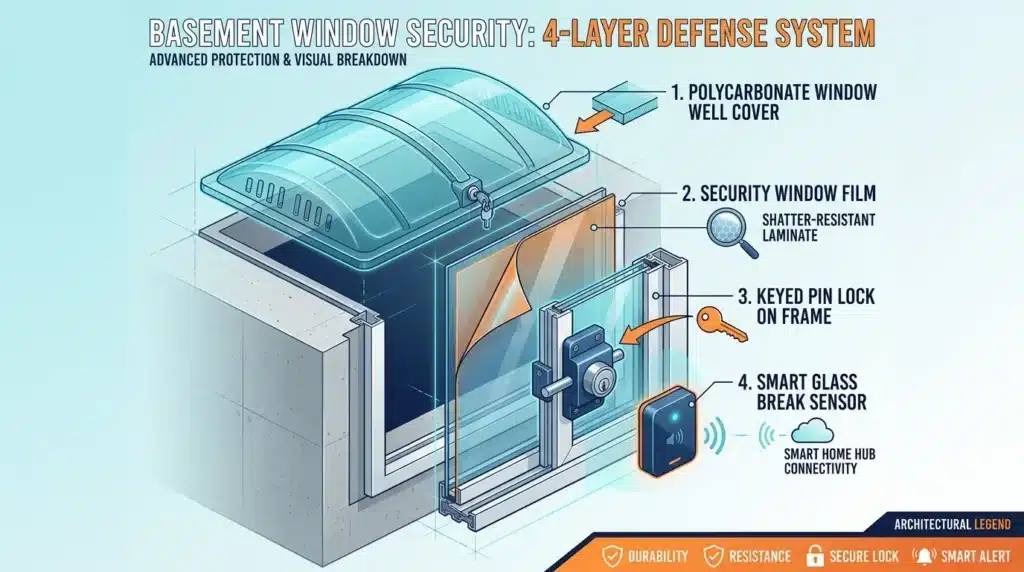
I like to think about basement window security in layers, kind of like a jacket, a sweater, and a coat. Each layer adds a little more protection, and together they make a break-in far less likely.
Start With the Frame and Latch
Before buying anything fancy, check the basics. Old basement windows often have thin, bent, or painted-shut latches that look locked but really aren’t.
What to do:
- Push and pull on the window from the inside. If it wiggles, the frame or latch needs work.
- Replace old sash locks with keyed versions so the window can’t be forced open even if the glass breaks.
- Add a simple pin lock, which is a small hole drilled through the frame where a metal pin slides in to stop the window from sliding open at all.
This step alone stops a lot of casual attempts, since most break-ins happen when someone finds a window that opens with barely any effort.
Add Security Bars or a Window Well Cover
If your basement window sits in a window well (that little dug-out area outside), a lockable window well cover is one of the smartest upgrades you can make. It blocks physical access to the window entirely while still letting light in.
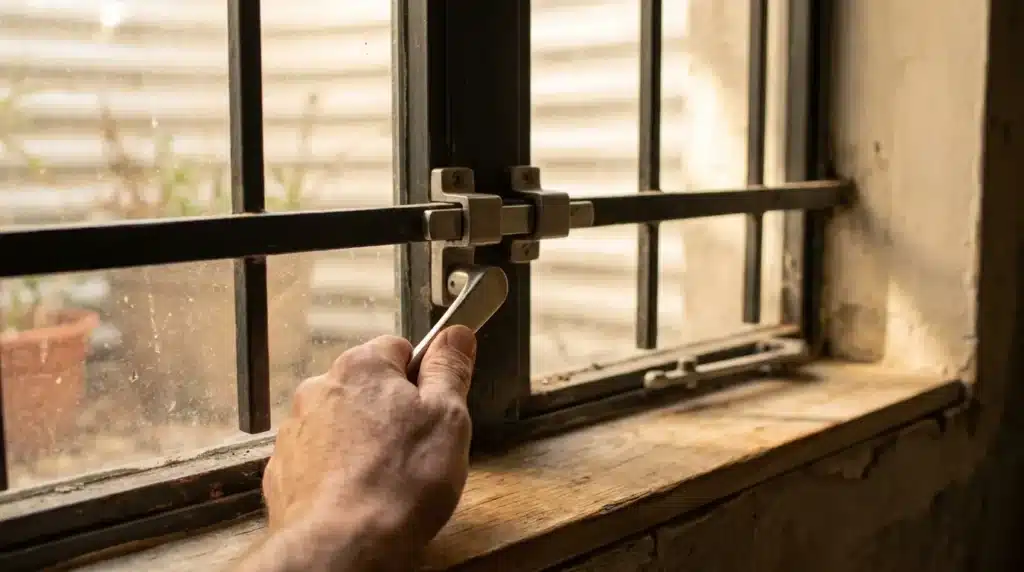
For windows without a well, removable security bars work well. Look for the kind with an inside quick-release mechanism, which is required in most areas for fire code reasons since basement windows often double as an escape route.
Pro Tip: I made the mistake of installing fixed bars with no release lever on my first basement window, and my local fire inspector flagged it during a routine home safety check. I had to redo the whole thing. Now I always double-check that any bars or grilles I add can be opened from the inside in seconds, because a basement window is sometimes the only backup exit in an emergency.
Apply Security Window Film
Security film is a thin, tough layer applied directly to the glass. It won’t stop someone from hitting the window, but it holds the glass together after impact, so instead of a clean break, they’re stuck pulling at a sheet of shattered glass that won’t budge. That extra time and noise is often enough to make someone give up and leave.
According to the International Code Council, basement windows that also serve as emergency exits need to stay easy to open from inside no matter what security upgrades you add, so film is a good option since it doesn’t block the opening mechanism.
Add a Glass Break Sensor or Window Alarm
Even with a strong latch and film, a loud alert can be the difference between someone poking around and someone running off. Battery-powered glass break sensors are cheap, stick on with adhesive, and don’t need any wiring.
Pair this with your existing setup. If you already have a smart home security system with cameras, most brands sell basement-specific sensors that sync straight into the same app you already check every day.
Here’s a quick side-by-side of your main options:
| Upgrade | Cost Level | Best For | Fire Exit Friendly |
|---|---|---|---|
| Pin lock / keyed sash lock | Low | Stopping the window from opening | Yes |
| Window well cover | Medium | Wells and ground-level windows | Yes (lockable, removable) |
| Security bars with release lever | Medium | Extra visible deterrent | Yes, if lever included |
| Security window film | Medium | Slowing down forced entry | Yes |
| Glass break sensor | Low | Alerting you fast | Yes |
Don’t Forget What’s Outside the Window
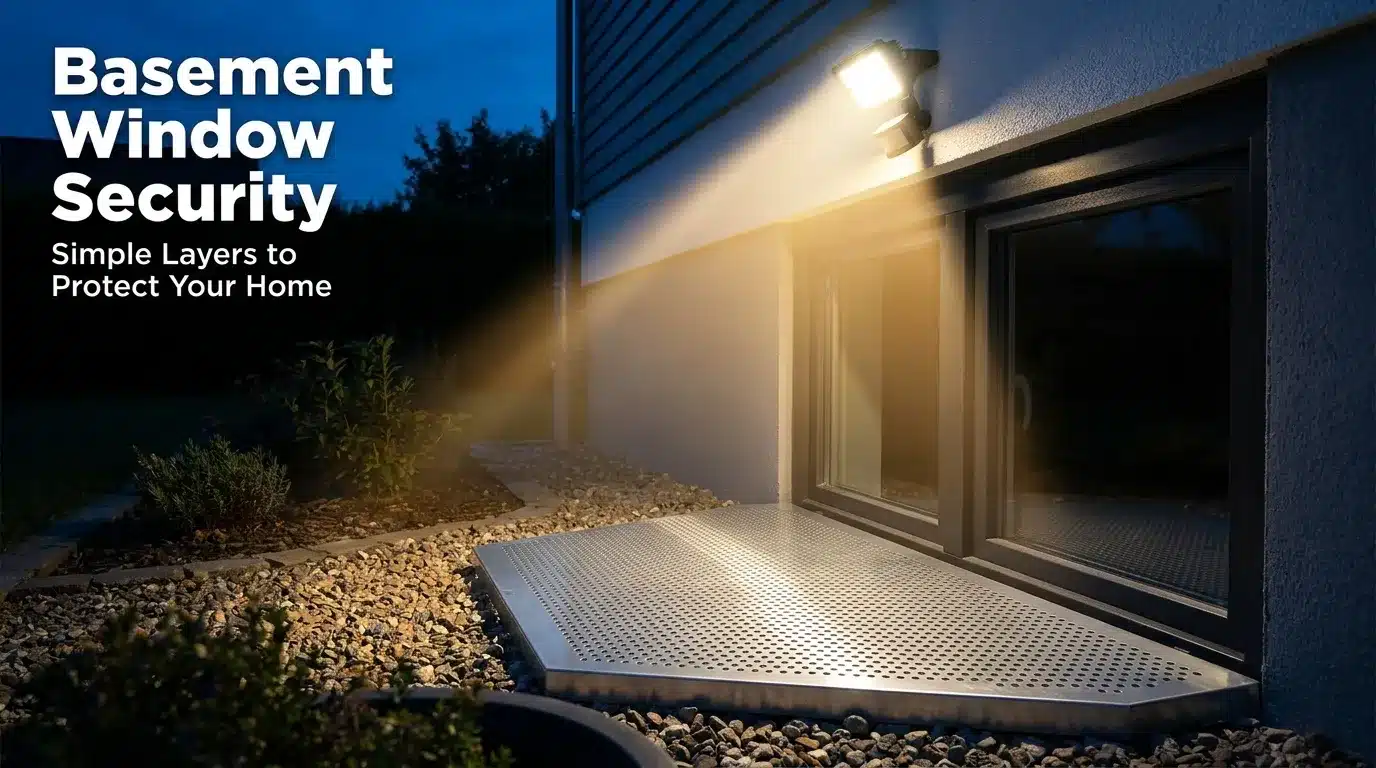
A basement window with great locks but a dark, hidden yard is still a soft target. A motion-sensor light near the window removes the cover of darkness that makes someone comfortable trying anything in the first place.
I also trimmed back the bush that used to hide my window. It felt strange at first, like I was giving up privacy, but a visible window with a light is far less appealing to break into than a hidden one. If you’re working on the rest of your property too, this step-by-step guide to securing your yard covers lighting, fencing, and sightlines in more depth.
Here’s the quick truth: most break-ins are about opportunity, not skill. Someone testing doors and windows down your street is looking for the easiest one, not the toughest challenge. Every layer you add moves your home further from that “easy” category.
Want to see this in action before you start buying supplies?
A Simple Checklist Before You Start
Before you spend a dollar, walk your basement window and check off what’s already true:
- Window latch is metal, keyed, and doesn’t wiggle
- Window well (if you have one) has a secure, lockable cover
- Bars or grilles, if installed, have a fire-safe release from inside
- Bush or clutter outside the window has been trimmed back
- A light source covers the window area at night
- You’ve told at least one household member how the release mechanism works
If you checked fewer than three of these, your basement window is likely an easy target right now. That’s not meant to scare you. It’s meant to point you toward exactly where to start.
Data from the Insurance Information Institute shows that a large share of burglars enter through a window rather than a door, which is exactly why this small, easy-to-forget spot deserves the same attention as your front entrance.
Once your basement window is solid, it’s worth checking how it connects to the rest of your home’s defenses. A window latch means little if your garage door is left unlocked overnight, or if your front door relies on a weak lock while the basement gets all the attention. Home security works best when every entry point gets the same level of care, not just the ones you see every day.
If your basement window doubles as your main worry when you travel, pairing these upgrades with a fake-presence routine while you’re away adds another layer that works even when you’re not home to check the locks yourself.
I’ll be honest, fixing my basement window didn’t take a weekend of hard work. It took one trip to the hardware store and about two hours on a Saturday. What changed was how I felt walking past it at night. That wobble I felt months ago is gone, and so is the knot in my stomach every time I did laundry after dark.
The Habits That Keep Your Windows Safe for Years, Not Weeks
Buying the right hardware is only half the job. I learned that the hard way when I installed a great pin lock on my basement window and then forgot about it for two years.
A security upgrade only works if you actually use it. That sounds obvious, but I can’t tell you how many homes I’ve walked through (my own included) where a good lock sits unused because it’s slightly annoying to reach.
Here’s what actually keeps these upgrades working long term.
Build a Two-Minute Habit, Not a One-Time Fix
Pick one night a month, maybe the night you take out the trash or do laundry, and walk past every basement window. Push on the frame. Check the latch. Look at the well cover.
This takes less time than brewing a cup of coffee. I do mine on the first Sunday of the month, right after I check my smoke detectors, since I’m already in “safety mode” that day anyway.
Pro Tip: I keep a small sticky note inside my laundry room door that just says “check windows.” It sounds almost silly, but that tiny reminder has caught a loose latch twice in the past year, both times before it became a real problem.
Rotate Your Deterrents
Burglars often case a street more than once before choosing a target. A porch light that’s always on, or a sticker that’s been on the same window for years, starts to blend into the background.
Small changes keep your home looking active and watched:
- Move a motion light’s sensitivity setting once in a while.
- Swap where you park a bike or leave a ladder in the yard.
- Add a fresh security decal if the old one is faded or peeling.
None of this takes real money. It just takes a little attention every few months instead of one big push and then nothing.
Connect the Dots With Smart Tech
If you already run a smart home security system, your basement window sensor shouldn’t sit alone in a separate app. Group it with your other alerts so a triggered basement sensor pushes the same kind of urgent notification as your front door camera.
I made this mistake early on. My basement sensor was on a cheap standalone app that I checked maybe once a week. Once I linked it into my main security app, I actually started paying attention to it the way I should have from day one.
Teach Everyone in the House the Plan
A secure window means nothing if nobody in your home knows how the release mechanism works during a real emergency. Walk your kids, your partner, or your roommate through it once.
Ask them to open it themselves, not just watch you do it. Muscle memory matters far more than a verbal explanation when someone is stressed or scared.
Where Good Intentions Quietly Go Wrong
I want to be honest about something. A lot of the basement window “fixes” I see online actually create new problems, and I almost made a couple of these mistakes myself.
Sealing the window shut completely is probably the biggest one. I get the logic. If it can’t open, nobody can get in through it. But if that window is also your emergency exit and a fire starts upstairs, you’ve just trapped yourself in the one room built to help you escape.
This isn’t a small technicality. Building safety groups like the International Code Council require basement bedrooms and living spaces to keep at least one window that opens fully for exactly this reason.
Adding bars without a release lever is a close second. It looks tough from the outside, and it is tough, which is exactly the problem when you’re the one trying to get out in a hurry.
There’s also a quieter mistake that doesn’t involve hardware at all: treating the basement window as a “someday” project. I did this for over a year. I told myself I’d get to it eventually, right up until the night I actually tested that latch and felt it wobble.
Every month that window sits unfixed is a month it stays the easiest way into your home. It doesn’t take a burglar with special tools to notice a weak window. It takes someone glancing at it from the sidewalk and seeing an opportunity nobody else has bothered to close off.
One more habit worth dropping: relying only on the window itself and ignoring the door leading down to the basement. Even a locked window means less if the basement door up into your home has a flimsy latch. If you haven’t looked at your front door’s lock strength recently, it’s worth a quick check while you’re already in “fix it” mode.
And don’t skip the outside view. A window can be perfectly locked and still sit behind three feet of overgrown shrubs, giving someone all the privacy they need to work on it without being seen. Pair your window upgrades with a quick look at your nighttime home security checklist so lighting and visibility get the same attention as the hardware.
Common Questions About Basement Window Security
Are basement windows really a common way burglars get in?
Yes, and they’re often chosen specifically because they’re hidden from the street. A window tucked behind bushes or below eye level gives someone privacy to work without being noticed by neighbors.
Do I need to replace my basement windows to make them secure?
Not usually. Most homes just need better locks, a window well cover, or security film rather than a full window replacement. Replacement only makes sense if the frame itself is rotted, cracked, or too old to hold any hardware properly.
Is security film enough on its own?
Security film helps a lot, but it works best paired with a strong lock. Film slows someone down after they’ve already tried to break the glass, while a good lock stops them from opening the window in the first place.
Will bars on my basement window make my home look like a fortress?
Modern removable bars and grilles come in slim, low-profile styles that barely stand out from the outside. Most neighbors won’t even notice them unless they’re looking closely, and they still work perfectly as a visible deterrent.
How much does it usually cost to secure a basement window properly?
A solid setup with a pin lock, window film, and a glass break sensor often costs less than a nice dinner out for two. The window well cover or security bars are usually the biggest expense, and even those stay reasonable compared to a full security system overhaul.
What should I do first if I only have one weekend to work on this?
Start with the lock and latch, since that’s the cheapest fix and stops the most casual attempts. From there, add the window well cover or bars if your budget allows, and save the glass break sensor for whenever you’re ready to expand your smart home setup.
A Simple Action Plan for This Weekend
Here’s exactly how I’d tackle this if I were starting from scratch today.
Saturday morning: Walk every basement window in your home. Push, pull, and note which ones wiggle or feel weak.
Saturday afternoon: Head to the hardware store for pin locks, keyed sash locks, or a window well cover, depending on what your walk-through showed you.
Saturday evening: Install what you bought. Most of these upgrades take fifteen to thirty minutes per window, even if you’ve never done this kind of project before.
Sunday: Trim back any bushes or clutter blocking the window from view, and check that your outdoor lighting actually reaches that spot at night.
That’s it. No contractor, no huge budget, no waiting weeks for someone else’s schedule to line up with yours.
I still think about that wobbly latch sometimes, mostly because it reminds me how close I came to just letting it slide for another year. My basement doesn’t feel like a weak spot anymore. It feels like just another part of my home that I’ve actually looked after, the same way I look after my front door or my car.
If you take one thing from this, let it be this: go check that window today, not next weekend. You already know which one I mean. The five minutes it takes to test it is nothing compared to the peace of mind you get once you know it’s actually solid.
Disclaimer: This article is for general informational purposes only and isn’t a substitute for advice from a licensed locksmith, contractor, or fire safety inspector. Building and fire codes for window locks, bars, and egress requirements vary by location, so check with your local authority before making permanent changes to any window that also serves as an emergency exit.