I remember the first night I brought my baby home from the hospital. I walked through my front door and suddenly felt like every corner of my living room was full of hidden dangers I had never noticed before. It hit me then that having a simple lock on the door wasn’t enough to keep my whole world safe, and that’s when I started building this protection plan for my own family.
We often look at our four walls and feel a sense of total peace. You lock the doors, shut the windows, and assume your family is protected. But as a safety professional, I have to ask: Is your sanctuary truly secure?
Most people mistake “security” for just a locked door. In reality, modern safety is about identifying the silent risks that we often overlook in our daily rush. It is about those small gaps that could lead to life-changing accidents. If you have ever felt a sudden jolt of worry about a child or an aging parent at home, you know exactly what I mean.
The struggle to find a real solution is heavy because most families do not have a structured plan. They rely on luck or scattered advice from the internet. This lack of a Professional Blueprint leads to:
- Living with a constant state of “what if” which leads to chronic stress and exhaustion.
- Feeling overwhelmed by the sheer number of modern risks, from digital threats to physical hazards.
- Losing confidence in your ability to keep your environment truly safe for your children and seniors.
- Wasted money on security gadgets that provide a false sense of security but do not fix core issues.
This emotional toll can affect your sleep and your confidence as a caregiver. You feel like you are always waiting for the next thing to go wrong. It stops you from fully enjoying your time with your family.
You deserve to move from a state of worry to a state of total confidence. Your home should be your sanctuary, not a source of stress. This guide provides the strategic roadmap you need to build a fortress of protection around your loved ones. We are not just giving you tips; we are providing a proven blueprint for a secure life.
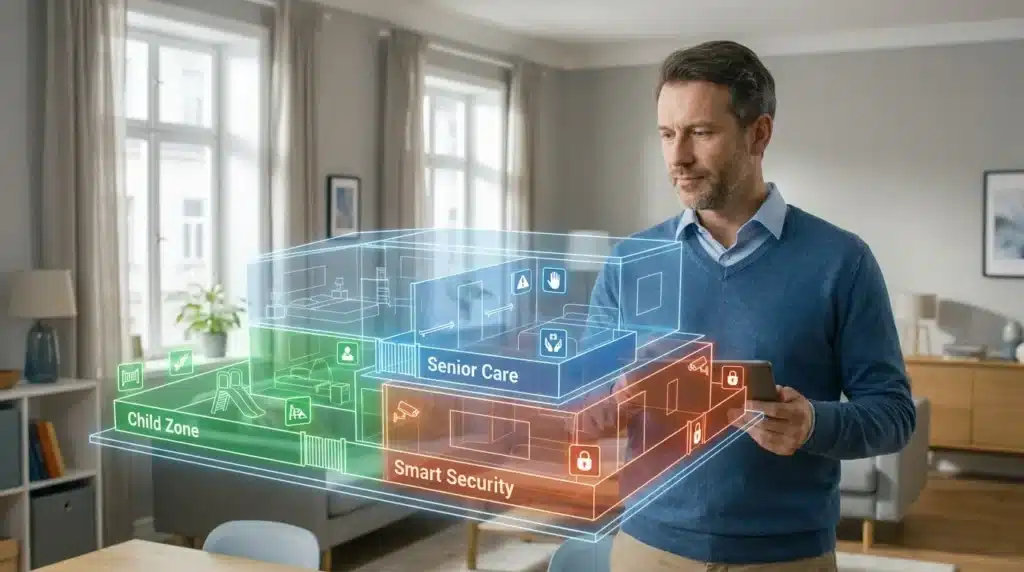
The Multi-Layered Blueprint for Family Security
To build a truly safe home, you have to look at it through different lenses. What is safe for an adult might be a major risk for a toddler or an elderly parent. Preparation is the only way to replace anxiety with confidence.
Zone 1: Child Protection Protocols
Securing the Environment for the Early Years
Children are born with a natural desire to explore every inch of their surroundings. They do not have a sense of height, heat, or sharpness. To them, a heavy bookshelf is a ladder, and a colorful bottle under the sink is a new toy.
This curiosity is a key part of their growth, but it requires us to be their first line of defense. The first step in any family safety plan is a deep audit of your living space. You have to get down on the floor and look at the room from your child’s perspective.
Small items like coins or loose buttons can become choking hazards in seconds. Using a professional child-proofing your home safety checklist is the most effective way to ensure you haven’t missed these tiny but dangerous details. Unsecured TVs or sharp table corners can cause serious injuries during a simple game of tag.
As your child starts to move more, the risks expand outside the nursery. Water safety is a topic that every parent must take seriously. The National Safety Council points out that drowning is a leading cause of accidental death for young children.
If you have a backyard pool, you must have layers of protection. Learning how to keep kids safe around pools is about more than just watching them; it’s about fences, alarms, and early swimming lessons.
Teaching Awareness and Independence to Growing Kids
As children reach school age, we have to start building their internal security system. This is a delicate balance. You want them to be aware and alert, but not afraid of the world.
The old lessons about “strangers” have changed. We now know that teaching kids to just avoid people they don’t know is not enough. Most people are helpful, but children need to know how to spot tricky behaviors.
By teaching your kids modern stranger danger tips, you empower them to trust their own gut feelings. This builds their confidence and keeps them safe when they are at the park or walking home.
Eventually, they will want to stay home alone for short periods. This is a big step for both the parent and the child. However, you should never rush this process. Verify that they have the basic skills to handle a power outage or an unexpected knock at the door.
Following a 9-step home alone safety readiness guide can help you decide if they are truly ready for this responsibility. Teaching them how to use a basic first aid kit is a great way to build their self-reliance.
Zone 2: Senior Health and Mobility Security
Preventing Falls and Enhancing Home Accessibility
Family safety is also about our aging parents and grandparents. Many seniors want to stay in their own homes for as long as possible. This aging in place is wonderful for their mental health, but it requires a different lens.
Physical changes in balance and vision can make a familiar house feel like a maze of risks. A loose rug or a dimly lit hallway can lead to a life-changing fall. The World Health Organization notes that falls are a major cause of injury-related deaths among seniors worldwide.
This is why a senior falls at home safety guide is a key part of your family blueprint. Adding grab bars in the bathroom and removing clutter from walking paths can preserve their independence.
Make sure all stairs have solid handrails on both sides. Good lighting is also a major factor in preventing accidents. Motion-sensor lights in the bathroom and hallways can make a huge difference during the night.
Professional Medication Management at Home
Another key area is the management of health and medicine. It is very easy to lose track of doses or mix up bottles. This can lead to dangerous health complications or accidental overdoses.
Keeping an organized and secure home pharmacy is essential. Using a medication safety home guide helps you keep these items secure while ensuring seniors get exactly what they need.
Always keep medications in their original containers to avoid confusion. If you have children in the house, use a locking box for all prescriptions. According to the Mayo Clinic, checking expiration dates every six months is a key habit for health security.
Zone 3: Neutralizing Invisible Domestic Threats
Identifying and Securing Common Household Toxins
We often bring items into our homes that we assume are safe. Cleaning supplies, garden chemicals, and even certain indoor plants can be highly toxic if they are swallowed or touched.
The Centers for Disease Control and Prevention (CDC) reminds us that thousands of accidental poisonings happen every year. Most of these involve small children who cannot distinguish between a cleaning product and a juice box.
You should take a morning to find these hidden toxins. Moving these items to high shelves or locking them behind child-proof latches is a simple step that saves lives. Identifying the 10 common household poison hazards in your pantry allows you to build a chemical-safe environment.
Always keep the number for the National Poison Control Center in your phone. Post it on your refrigerator so guests or babysitters can find it quickly. Early action is the most important factor in surviving a poisoning emergency.
Zone 4: Mastering External Access and Vetting Protocols
Professional Standards for Vetting Contractors and Help
Building a safe home is not just about the people living inside. It is also about the people you allow to enter your private space. Trust is a wonderful thing, but in a professional safety blueprint, trust must always be verified.
I once made the mistake of hiring a repairman just because he was the cheapest option, only to realize I knew nothing about his background once he was already inside my home. Now, I never let a stranger past my porch without checking their ID and calling at least two of their past clients first. It was a big lesson for me that saved me from a lot of future worry.
Many homeowners hire people for repairs, cleaning, or specialized tasks. When you bring someone into your house, you are giving them access to your layout, your valuables, and your schedule. Choosing the wrong person can lead to security gaps or even physical danger for your family.
One of the biggest mistakes people make is hiring based on price alone. A cheap quote often means the person is skipping background checks or insurance. Learning how to vet a contractor is a fundamental step in home management. You should always ask for a physical address, a business license, and at least three recent references.
Screening for Trusted Childcare and Babysitters
The same level of care is required for the people who care for your children. Your babysitter is responsible for your most precious family members. You need a system to ensure they are prepared for any situation.
Following a professional process on how to vet a babysitter helps you look past a friendly face to find someone who is truly capable. Conduct a detailed interview in your home. This allows you to see how they interact with your children in their natural environment.
Always check at least two or three references from other families. Ask specifically about their punctuality and how they handle stressful moments. Verify their identity by asking for a government-issued ID.
Zone 5: Crisis Response and Emergency Mastery
The Art of Practical Home Fire Escape Drills
Preparation is what keeps a crisis from becoming a disaster. Most people have a general idea of what to do in a fire, but a general idea fails in the middle of thick smoke and heat. Real safety comes from muscle memory, not just a mental plan.
Fire moves with incredible speed. You often have less than two minutes to get everyone out safely once an alarm sounds. Teaching your family how to run home fire escape drills is the most effective way to save lives.
You should practice these drills twice a year and at different times of the day. Make sure your children know how to stay low to the floor where the air is cleaner. Teach them how to feel a door for heat before opening it. When your family practices these steps together, panic is replaced by action.
Check out this expert guide from Safe Kids Worldwide below! It shows exactly how a real family practices their fire escape blueprint, making it much easier for you to start your own drills this weekend.
Developing a Resilient Emergency Communication Plan
What happens if a disaster strikes while your family is in different locations? Cell phone networks often become overloaded or fail during a major crisis. A professional blueprint must include a communication strategy that does not rely on a single device.
Designate an out-of-town contact person that everyone in the family can call. It is often easier to make a long-distance call than a local one when lines are busy. Every family member should memorize this person’s phone number or keep it on a physical card in their wallet.
Pick two meeting spots for your family. One should be right outside your home for immediate emergencies like a fire. The second should be a specific landmark outside your neighborhood in case you cannot return to your street.
This kind of preparation reduces panic. When everyone knows where to go and who to call, they stay calmer. This clarity of thought is what allows people to make safe decisions during a high-stress event.
Maintaining Your Professional Blueprint Over Time
A blueprint is not a piece of paper that you look at once and then put in a drawer. It is a living strategy that must grow as your family changes. Your home environment is dynamic, and your safety measures must keep up with that change.
Think of your safety plan like the maintenance of a high-performance car. You do not wait for the engine to fail before you check the oil. Professional safety management is about finding small issues before they turn into major emergencies.
The Psychology of a Proactive Safety Mindset
Most people fall into a mental trap called “optimism bias.” This is the belief that bad things only happen to other people. In the world of security, this is the most dangerous mindset you can have. It leads to laziness and missed details.
A proactive mindset is about being realistic, not being afraid. It means looking at your house and asking, “If I were a hazard, where would I hide?” When you change how you think, you start to see risks that others completely ignore.
This mental shift helps you stay calm during a crisis. Because you have already thought about the “what if” scenarios, your brain does not panic. You move from a state of worry to a state of readiness, which is the ultimate goal of this entire blueprint.
Involve your spouse and older children in this way of thinking. Do not just tell them the rules; explain the logic behind them. When everyone understands the purpose of a protocol, they are much more likely to follow it when you are not around.
Monitoring External Weak Points and Digital Vulnerabilities
Your sanctuary has two types of borders: physical and digital. Both need your regular attention to stay secure. A professional blueprint looks at the exterior of the house just as closely as the interior.
Walk around the outside of your property once a month. Look for overgrown bushes that could hide an intruder. Check that your motion-sensor lights are working and that your house number is clearly visible from the street. If an ambulance needs to find you in the dark, every second spent searching for your address is a second lost.
The digital side of your home is just as important in the modern age. Every smart device you own is a potential entry point for a cyber threat. Securing your home Wi-Fi with a strong, unique password is a non-negotiable step for family protection.
Always use two-factor authentication for your security cameras and baby monitors. According to the Federal Bureau of Investigation (FBI), keeping your software updated is your best defense against hackers. A digital breach can be just as traumatic as a physical break-in, so treat your passwords with the same care as your house keys.
Building a Professional Maintenance Schedule
Consistency is what makes a safety plan work over the long term. You need a recurring schedule to check your physical hardware. Without a routine, it is too easy to forget that a smoke detector battery is three years old.
Set a reminder on your phone for a “Safety Saturday” once every month. During this time, test every alarm in the house. Check that your fire extinguishers are not expired and that your first aid kit is still fully stocked.
Check the locks on your windows and doors to ensure they have not become loose or jammed. If you have a second-story escape ladder, take it out and make sure it still unfolds correctly. These small actions build a culture of safety that protects your family’s future.
Evaluating Your Household Success
How do you measure if your blueprint is working? It is not just about the lack of accidents. It is about how confident and prepared every person in your house feels.
Every six months, sit down with your family and talk about the plan. Ask your kids if they remember the meeting spot for a fire. Ask your seniors if they feel comfortable using the grab bars or if they need more lighting in certain areas.
Use these conversations to update your blueprint. As kids grow taller and seniors face new health challenges, your plan must adapt. Evaluating your success is a continuous loop that keeps your sanctuary truly secure year after year.
“Safety is a journey of a thousand small steps. Each check you perform and each talk you have is a layer of armor for the people you love.”

Extending the Shield: Pets and Global Travel Security
The people in your house are your priority, but your blueprint should also cover your pets and your life outside the home. True security means being prepared no matter where you are or who you are with.
Comprehensive Safety for Furry Family Members
Pets are an inseparable part of the modern family. However, they face many of the same household risks as toddlers. Because they cannot tell you when they feel sick or in danger, you must be their voice.
Check your yard for gaps in the fence where a pet could escape or a wild animal could enter. Many common garden plants, like lilies or azaleas, are toxic to cats and dogs. The American Society for the Prevention of Cruelty to Animals (ASPCA) provides a full list of toxic items you should remove from your home.
Establishing a routine for pet safety at home is the best way to prevent accidental poisonings or injuries. Keep human foods like chocolate and onions far away from their reach. A secure home for your pets reduces the stress and high costs of emergency vet visits.
Protecting Your Personal Belongings During Travel
When you leave your sanctuary for a vacation, your risks change. You are in unfamiliar places and often carrying your most valuable items. Thieves look for distracted travelers in busy airports and train stations.
Airport security is not just about what is in your bags; it is about keeping your bags from being stolen. Luggage theft can happen in a heartbeat while you are checking a flight board or helping a child. Learning how to protect luggage from airport theft is a skill every global traveler needs.
Always use TSA-approved locks to keep your bags secure during transit. Use bright, unique tags so you can easily spot your bag on a crowded carousel. The Transportation Security Administration (TSA) recommends keeping all medications and expensive electronics in your carry-on bag at all times.
Steering Clear of Silent Security Killers
Even with a professional plan, small mistakes can create large gaps in your defense. Knowing what NOT to do is just as important as knowing what to do. Here are the five biggest pitfalls that can ruin your family’s security:
- Sharing vacation plans on social media: Posting your countdown to a trip tells everyone that your house will be empty. This is an invitation for burglars. Wait until you return home to share your travel photos and stories.
- Over-relying on smart technology: A camera is a great tool, but it cannot stop a person from entering an unlocked window. Technology is a support for physical security, not a replacement for it.
- Neglecting the “Close Calls”: If a child almost falls or a pet almost eats a toxin, do not just feel relieved. A close call is a warning sign that your blueprint has a weakness you need to fix immediately.
- Trusting labels without checking facts: Just because a product says “child-safe” does not mean it is right for your home. Always perform your own audit of toys, tools, and chemicals based on your family’s specific needs.
- Hiring help in a rush: Bringing a stranger into your home is a major security event. Never skip the vetting process because you are in a hurry. Taking the time to check references is a small price to pay for your family’s safety.
Family Protection Roadmap: Your Questions Answered
What should I do if my senior parent refuses to let me install grab bars?
Focus the conversation on independence rather than age. Explain that these tools help them stay in their home longer and prevent a fall that could take away their mobility. Sometimes seeing a professional fall prevention guide can help them understand the risks.
How can I get my children excited about fire drills?
Turn it into a game or a challenge. Use a stopwatch to see how fast the whole family can get to the meeting spot. Reward everyone with a small treat after a successful drill to build positive memories around a serious topic.
Is it safe to let my child stay home alone if we have a security camera?
A camera is helpful, but it does not replace the child’s ability to solve problems. Ensure they can handle basic emergencies, like a power outage or a strange visitor, without your help. Use a readiness guide to test their skills before leaving them for the first time.
What is the best way to secure my medications if I don’t have a locking cabinet?
You can purchase a portable medication lockbox that fits inside a normal cabinet. This keeps the pills out of reach and organized. Always keep the key or code separate and never leave it in a place where children can find it.
How do I handle a contractor who refuses to show their license?
Do not allow them into your house. A professional who is proud of their work will always be happy to show their credentials. Refusal is a major red flag that indicates they may not be insured or legally allowed to perform the work.
Building a Legacy of Protection and Peace
Creating a secure life is one of the most rewarding tasks you will ever take on. It is about providing a space where your family can grow and flourish without the shadow of worry. This blueprint is your roadmap to that goal.
We have explored every layer of protection, from the physical walls of your home to the digital security of your life. The key is to keep learning and keep adapting. Safety is not a destination; it is a lifestyle that you build every single day.
Start your first official blueprint audit this weekend. Look at your home with the eyes of a professional and pick one zone to improve. Whether it is checking a fence or vetting a new worker, every action you take matters.
Your sanctuary is within your reach. You have the knowledge and the strategy to build a fortress of protection. Focus on the joy of knowing your family is secure and let that be your motivation. A safer future for your loved ones starts with the choices you make today.
Starting this journey changed the way I feel every time I tuck my family into bed at night. You don’t have to change every single thing today, but making just one small upgrade right now will give you the peace you deserve. Go ahead and take that first step—your future self will thank you for it!
Safety Disclaimer: The information provided on Securely Life is for informational and educational purposes only. Every family and home environment is unique, and safety needs can vary based on location, family age, and specific risks. While we strive for professional accuracy, we recommend consulting with local law enforcement, fire departments, or certified safety professionals for specific emergency planning. Securely Life is not liable for any injuries, property damage, or losses resulting from the use of the advice found in this roadmap. Always follow local safety regulations and professional medical advice.