Imagine a quiet afternoon at home. Your toddler is playing in the next room while you quickly answer a phone call. Suddenly, you hear a strange rattling sound coming from the bathroom.
You rush in to find your child holding an open bottle of bright red pills. Your heart stops instantly. Those pills look just like the gummy candies they love so much.
This is a nightmare that thousands of parents face every single year. According to data tracked by Healthline, home accidents often happen in places we consider completely safe. Our household medicine cabinets can quickly become one of the most dangerous spots if left unsecured.
Medication is meant to heal us, but in the wrong hands, it can be a silent threat. We carry these items into our homes every day without a second thought. This risk is why experts emphasize building protective habits, similar to implementing a structured 5 essential tips for a securely life plan.
Without a clear system, we leave a door open for accidents that can change lives forever. Taking simple steps today protects your loved ones from preventable emergency room visits.
“A secure home pharmacy is not just about locks and keys. It is about creating a controlled environment where dangerous medication mistakes are almost impossible to make.”
Why Most Home Medicine Plans Fail
Many families try to be safe, but they often rely on the wrong information. They follow old habits that might actually make things worse. Here is why people struggle to find the right solution:
- Most people believe that “child-resistant” caps are “child-proof,” which is a dangerous mistake according to Wikipedia safety guidelines.
- We often store medicine in the bathroom, not realizing that heat and steam can ruin the pills.
- Many parents think that putting a bottle on a high shelf is enough to stop a curious climber. However, comprehensive child-proofing your home safety checklist routines show that children always find a way to climb higher.
- There is a major lack of clear advice on how to handle old or expired pills safely.
- Busy schedules lead us to leave dangerous prescription bottles on the kitchen counter “just for a minute.”
- People often mix different pills in one bottle to save space, which causes massive, dangerous confusion.
- We tend to trust our memory instead of writing down exact dosages and daily tracking schedules.
How Unsafe Habits Drain Your Mental Peace
Living in a home where medicines are not secured creates a constant, low-level stress. You might not notice it every single day, but it actively affects your confidence as a caregiver.
- You feel a sharp spike of anxiety whenever a guest or a child goes near the medicine cabinet.
- The clutter of old bottles makes you feel disorganized and overwhelmed by your family’s health needs.
- You worry that an elderly relative might take the wrong dose because the labels are unclear. This is a significant risk factor, much like managing hazards to ensure preventing senior falls at home safety guide compliance.
- The fear of a “what if” scenario keeps you from feeling truly relaxed in your own living space.
- Losing track of expensive prescriptions leads to financial stress and missed doses.
- A messy home pharmacy makes it incredibly hard to act quickly during a real medical emergency when every single second counts.
The Reality of Medication Accidents in the Home
The truth is that our homes are filled with powerful chemicals that we call medicine. We treat them as everyday items, like toothpaste or soap. However, even a common pain reliever can be very dangerous if a child eats too many.
Curiosity is a natural part of growing up. Kids want to explore every drawer and taste every new thing they find. They don’t see a warning label; they see a shiny bottle with colorful treats inside.
Adults are also at risk when safety rules are ignored. Taking the wrong pill in the middle of the night because the bottles look identical happens more often than we think.
This is not about being a bad parent or a careless person. It is about the fact that we live in a world where we are always distracted by daily chores.
Our brains are not designed to be perfect 100% of the time. That is why we need a physical system that works even when we are tired or busy.
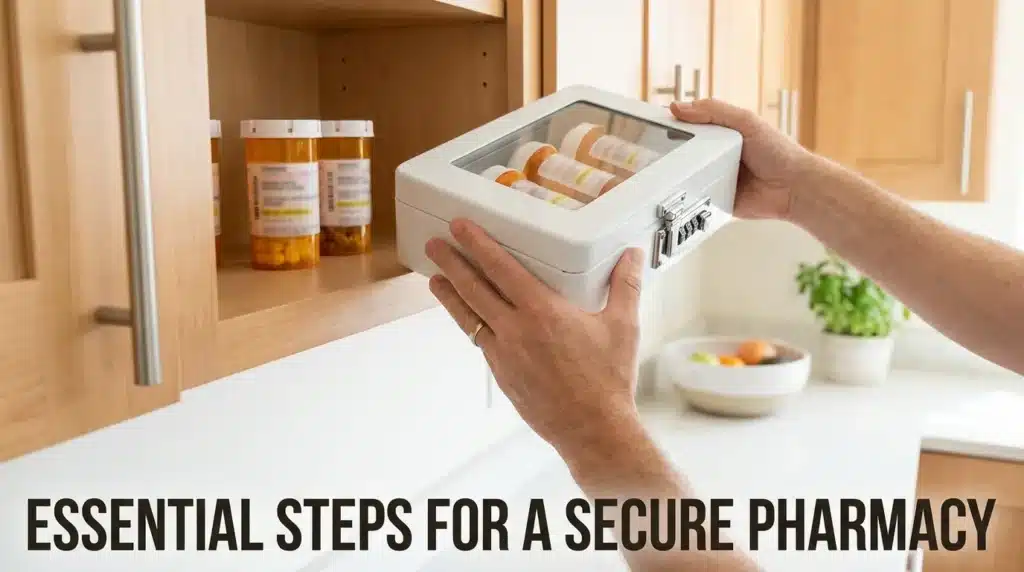
The Essential Steps to Secure Your Medication
Step 1: Choosing the Perfect Storage Environment
The first thing you must do is stop storing medicine in the bathroom immediately. I know this sounds strange because we traditionally call it a medicine cabinet.
However, bathrooms are actually the worst place for your pills. The heat from your shower and the heavy moisture in the air can quickly break down the active ingredients.
Think of a pill like a tiny sponge. It can soak up the humidity, which makes it lose its strength or even go bad long before the official expiry date.
Instead, look for a cool, dry place. A kitchen cabinet away from the hot stove or a dedicated shelf in a linen closet works much better for safety.
You want a place that stays at a steady room temperature all year round. Make sure this new spot is high up and completely out of sight.
Once you find a dry spot, clear it out completely. Wipe down the shelf and make sure there is no dust. Starting with a clean space helps you stay organized from day one.
Step 2: Implementing a High-Level Locking System
Keeping pills on a high shelf is a good start, but it is not a complete solution. Kids are amazing climbers, and they will use chairs or open drawers to reach what they want.
You need a physical barrier that requires an adult’s help to open. I highly recommend using a lockable medicine box or a small household safe.
You don’t need something heavy or expensive. A simple plastic box with a combination lock or a manual key will work perfectly to keep kids out.
This box acts as a secure speed bump. Even if a child reaches the high shelf, they cannot get into the medicine. It gives you those extra few minutes to stop them.
If you have teenage children, this step is even more critical. It prevents them from accessing powerful prescription medications without your direct knowledge.
Keep the key or the lock combination in a secret place where only adults can find it. Do not leave the key hanging on a hook next to the box.
If you have daily medications that you must take, use a locked pill organizer. This keeps your daily doses ready but prevents anyone else from touching them accidentally.
Step 3: Organizing for Total Clarity
Mistakes happen when we are in a massive rush. If you have five white bottles that all look identical, you might grab the wrong one in the dark.
You need to organize your home pharmacy so that everything is incredibly easy to identify. Keep every single medicine in its original container at all times.
Do not move pills into blank jars or plastic bags. The original bottle has the exact name, the correct dose, and the clear expiry date printed on it.
If the print is too small, use a thick black marker to write the person’s name on the bottle. For example, write “DAD’S HEART PILLS” in large, clear letters.
Group your medicines by their specific use. Put all the cold and flu items in one bin and the first-aid items in another to save time.
Always keep the specific dosage cup or syringe that came with the medicine. Don’t use a regular kitchen spoon to measure liquid doses because they are not accurate.
Check your medicine stash every few months. If you find something that is past its date, set it aside for safe disposal right away.
The Science of Why Proper Storage Matters
When a chemist creates a medicine, they test how it reacts to the outside world. They find that most chemicals stay stable only in very specific conditions.
When we ignore these storage conditions, the medicine can actually change form. If a pill gets too hot, the active ingredients might completely stop working.
This means that when you take it for a severe headache, it won’t help you. You might then take a dangerous second dose, which could lead to an accidental overdose.
Moisture can also cause pills to crumble or grow hidden mold. You might not see the mold with your naked eyes, but it can still cause stomach pain or allergic reactions.
Light is another major enemy of medication. Many bottles are amber or brown to block out the sun’s rays. Leaving these bottles on a sunny windowsill weakens the contents.
Teaching Your Family About Medicine Safety
Education is just as important as a physical lock and key. You should talk to your kids openly about what medicine is and why it requires special rules.
Never call vitamins candy to get them to take them. When you call medicine candy, you are telling the child that it is something fun, sweet, and tasty.
If they find the bottle later, they will think it is a treat. Always call it medicine and explain that it is only for when people are sick.
Tell them that medicine is only for grown-ups to give. This sets a clear safety rule that the child should never touch a medicine bottle on their own.
If you take daily pills, try not to take them in front of very young children. Kids love to copy what their parents do and might imitate you later.
Make safety a regular part of your conversation. Just like teaching modern stranger danger tips to keep them secure outside, teaching them indoor boundaries saves lives.
Preparing for the Unexpected Guest
Safety plans often fail when we have weekend visitors. You might keep your own home safe, but what about the items your guests carry inside?
A grandparent or a family friend might have powerful prescription medicine inside their purse or coat pocket. When guests arrive, offer to put their bags in a high, safe place.
You don’t have to be rude; just say you want to keep the coat area tidy. This simple trick prevents a child from finding a stray pill at the bottom of a guest’s handbag.
Many people carry loose pills in their pockets. Remind your visitors that you have small children and ask them to keep their medications secured during their stay.
This is especially critical during holidays or big family gatherings. With more people in the house, there are more chances for a bottle to be left out on a table.
Using Technology to Assist Your Safety Plan
We live in an age where our smartphones can help us stay highly organized. You can use simple tracking apps to log your medication schedule accurately.
This digital record prevents you from taking a double dose because you forgot if you took your pill or not. Set a daily smartphone alarm for every family member.
A strict routine makes it less likely that you will leave a bottle sitting out on the counter. You can also take clear photos of your prescription labels.
Keep these images in a dedicated folder on your phone. If there is ever an emergency, you can show the doctor exactly what medication everyone is taking.
Technology is a great tool, but it should never replace physical lockboxes. Together, they create a double layer of reliable protection for your entire home.
Professional Strategies for a Worry-Free Home
Now that you have the basics of locking and organizing, it is time to look at expert-level safety habits. These small changes help you stay ahead of potential accidents.
One of the most ignored parts of home safety is how we get rid of old pills. Most people just throw them in the kitchen trash or flush them down the toilet.
This is actually a very dangerous habit. If you throw pills in the trash, a pet or a curious child can easily dig them out later.
If you flush them, the chemicals can pollute the local water supply. Instead, you should look for an official drug take-back program in your community.
Many local pharmacies and police stations have special secure drop-off boxes. These boxes are the safest way to remove unwanted medicine from your home permanently.
If you cannot find a take-back location, use the mixing method. Take the pills out of their bottle and mix them with used coffee grounds or kitty litter.
Put this mixture in a sealed plastic bag before throwing it in the trash. This makes it impossible for a child or animal to accidentally eat the discarded medicine.
Managing Your Medicine While Traveling
Safety practices should not stay behind at home when you go on a family trip. Many accidents happen in hotel rooms because our normal routines are broken.
When you travel, always keep your medicine in your carry-on bag, never in checked luggage. This keeps the pills at a safe temperature and under your direct control.
Once you arrive at your hotel, find a secure storage spot immediately. Do not leave your suitcase open on the floor where a toddler can reach into the side pockets.
Use the high shelves in a closet or a room safe if one is available. If you are staying with family who do not have children, remind them about your safety rules.
They might be used to leaving their pills on the nightstand. A gentle reminder can prevent a tragedy. Most people will be happy to move their items to a higher spot.
Long-Term Habits for a Safer Pharmacy
To keep your family safe for years to come, you need a system that lasts. I highly recommend doing a dedicated Medicine Audit every few months.
This is a specific time to check every single bottle in your house. Look at the expiry dates on every package and discard anything that is past its prime.
Check the labels to make sure they are still readable. If a label is fading, you might misread the dose in the dark. Cover the label with clear tape to protect it.
Update your emergency contact list during these regular audits. Make sure the number for Poison Control is saved in every adult’s phone and posted on the fridge.
Educate your teenagers about the dangers of sharing medicine. Many teens think it is okay to give a friend a prescription pill for a headache, which is highly dangerous.
If you hire outside help to watch your children, make sure they know these protocols too. Learning how to vet a babysitter includes checking if they understand basic medication safety and home guidelines.
By making these audits a regular habit, you prevent the clutter that leads to mistakes. Just like running routine fire escape drills for kids, consistency is your best defense against accidents.
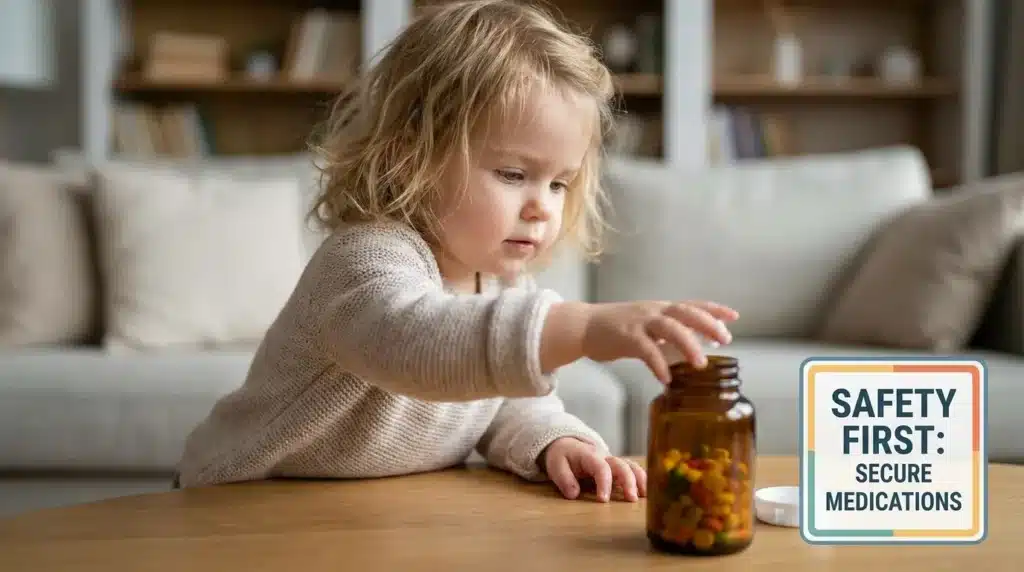
Common Pitfalls That Can Lead to Tragedy
Even the most careful parents can make mistakes when they are tired or busy. Knowing these common traps will help you stay one step ahead of danger:
1. Trusting the Child-Resistant Label Too Much
Many people think that a child-resistant cap is a magic shield. In reality, these caps are only designed to be difficult for a child to open for a few short minutes.
Many toddlers can figure out how to squeeze and turn a cap surprisingly fast. Never rely on the bottle alone; always keep the medicine locked away securely.
2. The “Just for a Second” Mistake
You might leave a bottle on the counter while you go to get a glass of water. In those few seconds, a child can grab the bottle and run away.
Always put the cap back on and put the bottle away immediately. It only takes a single moment for a child to swallow something dangerous.
3. Storing Pet Medicine Near Human Medicine
Many pet medications look exactly like human pills. If you keep them in the same drawer, it is very easy to grab the wrong bottle in the dark.
This can lead to dangerous drug interactions or accidental poisoning. Always keep your pets’ medicine in a separate container far away from your own.
4. Not Talking to Grandparents or Babysitters
Visitors often carry medicine in their purses or bags. They might not realize that your child can easily unzip a bag and find what is inside within seconds.
Always ask guests to keep their bags in a high, locked room or a safe closet. Don’t be shy about asking; it is always better to be safe than sorry.
5. Treating Vitamins Like They Aren’t Medicine
Vitamins can be just as dangerous as prescription pills if a child eats too many. Iron supplements, in particular, are a leading cause of childhood poisoning.
Keep your vitamins locked up just like your strongest medications. Never tell a child that a vitamin is candy just to get them to eat it.
The Consequences of Ignoring These Warnings
If these common mistakes are not fixed, the results can be devastating. Accidental poisoning can lead to long hospital stays, intensive care, and permanent organ damage.
Beyond the physical danger, there is severe emotional trauma. No parent wants to live with the heavy guilt of an accident that a simple lock could have prevented.
Your daily mental peace is also at risk. When your home environment is not secure, you are always on edge, watching every single move your child makes.
Your Most Frequently Asked Questions
Where is the single safest place to store my meds?
The safest place is a locked box kept on a high shelf in a cool, dry room like a bedroom closet or a kitchen cabinet away from the sink.
Can I throw expired liquid medicine down the drain?
No, you should not pour medicine down the drain. It can harm the environment. Mix it with coffee grounds in a sealed bag and put it in the trash.
What if I don’t have a lockable box right now?
Until you can get one, use a high cabinet that your child cannot reach even with a chair. However, a physical lock is the only way to be 100% sure.
Is it safe to keep medicine in the refrigerator?
Only do this if the label specifically says to. If you use the fridge, keep the medicine in a locked plastic container so children don’t touch it while looking for snacks.
What is the first thing I should do if my child eats a pill?
Do not wait for them to look sick. Call Poison Control or emergency services immediately. Have the bottle with you so you can tell them exactly what was swallowed.
A Brighter and Safer Future for Your Family
Taking control of your home pharmacy is a powerful act of love. It shows that you value your family’s health and safety above everything else in the world.
You don’t have to do everything at once. Start by moving your medicine out of the humid bathroom today. Tomorrow, you can buy a small lockbox and organize your bottles.
Every small action builds a strong wall of protection around your loved ones. You will feel a deep sense of pride as you look at your secure medicine cabinet.
Remember, you have the power to prevent accidents and create a true sanctuary for your children to grow up in safely. Start your home medicine audit tonight.
General Disclaimer: The information provided in this guide is for informational purposes only. It is not a substitute for professional medical advice, diagnosis, or treatment. Always seek the advice of your physician regarding the storage of specific medications. In case of a medical emergency or suspected poisoning, contact your local emergency services or Poison Control Center immediately.