Many of us rely on buses and trains to get to work or school every single day. While these mass public transport systems are generally safe, the feeling of vulnerability is very real for many passengers. You might find yourself constantly looking over your shoulder or gripping your bag tighter when someone sits too close.
This daily stress can turn a simple commute into a source of deep anxiety and worry. It is not just about the physical danger, but the mental weight of feeling unsafe in a public space. We all want to get from point A to point B without feeling like a target for theft or harassment.
When you feel exposed, the city feels much larger and more threatening than it actually is. This sense of unease can ruin your morning before you even arrive at your office or classroom. You deserve to feel secure while moving through your community, yet many people struggle to find that peace of mind.
Why Common Safety Advice Often Fails Commuters
Most people try to stay safe, but they often follow advice that is either outdated or too broad to be useful. According to security frameworks from the Transportation Security Administration, here are some reasons why people still feel at risk despite their best efforts:
- Many people believe that staying on their phone is a good way to “look busy,” but it actually makes them an easy target for phone snatchers.
- Travelers often rely on the presence of security cameras, but cameras only record crimes and do not always prevent them from happening in the moment.
- Generic advice tells you to “be aware,” but it rarely explains how to scan a crowd without looking suspicious or making yourself stand out.
- Commuters often think sitting at the very back of a bus is safer, while experts suggest this is often the most isolated and dangerous spot.
- People often ignore their “gut feeling” because they do not want to seem rude to others, which leads them to stay in uncomfortable situations.
The Hidden Impact on Your Mental Well-being
Constantly worrying about your safety on the train or bus does more than just make you nervous. It has a lasting effect on your overall quality of life and your confidence.
- The constant state of “high alert” leads to mental fatigue, making you feel exhausted before your workday even begins.
- Feeling unsafe can make you avoid certain routes or times of day, which limits your freedom and your ability to enjoy the city. This can become an issue unless you follow proper night shift worker safety commuting tips.
- When you lose trust in your environment, your self-confidence drops, and you may start to feel powerless in other areas of your life.
- The fear of a bad encounter can cause physical symptoms like a racing heart, sweaty palms, and increased stress levels every single day.
Understanding the Modern Transit Environment
The world of public transport is always changing, and the risks we face today are different than they were a decade ago. We now deal with more digital distractions and sophisticated types of petty crime targeting our handheld technology.
It is not just about physical strength or knowing how to fight back; it is entirely about smart prevention. Most criminals look for the “path of least resistance,” meaning they want a victim who is heavily distracted and unaware.
If you can show that you are alert and prepared, you are much less likely to be bothered. This is not about being paranoid, but about being strategically prepared by practicing a comprehensive situational awareness personal safety guide.
Many regular commuters feel they are just “lucky” they haven’t faced trouble yet. But transit safety should never be a matter of pure luck. It must be a direct result of the daily habits you build every time you step onto a platform.
We need to shift our focus from being afraid to being empowered through structured knowledge. When you know exactly what to look for and where to sit, the fear begins to fade away.
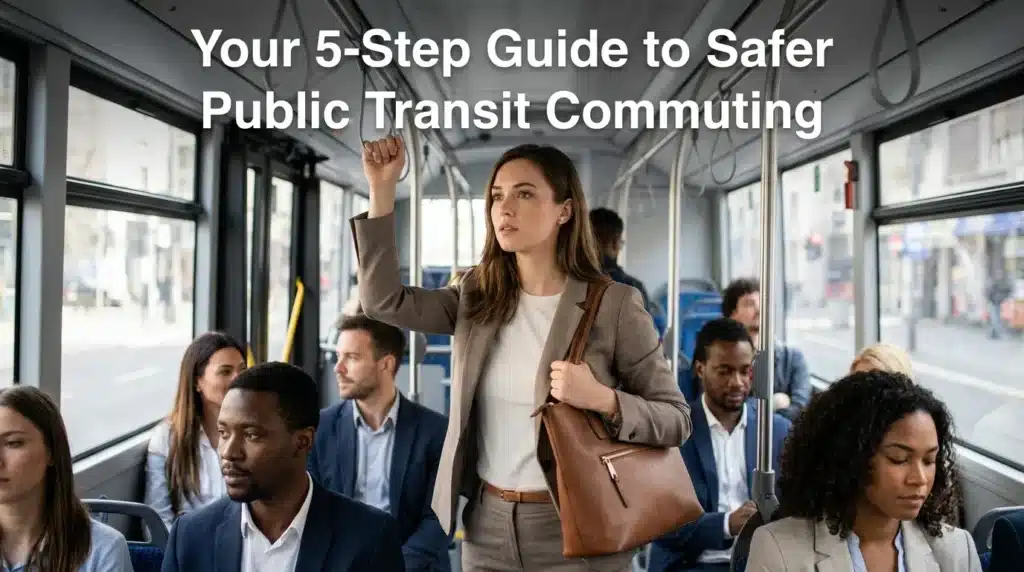
Your 5-Step Guide to Safer Public Transit Commuting
Now that we understand the transit reality, let’s look at some practical steps you can take. These are simple changes that anyone can implement starting today to practice proactive public transport safety tips.
Step 1: Planning Your Journey Before You Leave the House
Safety starts before you even reach the bus stop or the train station. If you look lost or confused, you instantly look more vulnerable to those watching the crowd.
Always check your route in advance. Use an app to know exactly when your bus or train is coming so you don’t have to wait around. Standing alone at a deserted stop for twenty minutes is something you should try to avoid whenever possible.
Keep your phone charged. Your phone is your lifeline to help, but it is also a huge distraction. Make sure you have enough battery, but keep the device hidden in your pocket or bag while walking and waiting.
Dress for easy movement. Make sure your footwear allows you to walk quickly if needed. If you carry a bag, choose one with a secure zipper and wear it across your body rather than just over one shoulder.
Carry a “dummy” wallet if necessary. If you travel in high-risk areas, keeping a small amount of cash in an old wallet offers peace of mind. This way, if you are ever pressured, you can hand that over and keep your real valuables completely hidden.
Step 2: Mastering the Art of Situational Awareness
Situational awareness sounds like a complex term, but it is actually very simple. It means knowing exactly what is happening around you and who is near you at all times.
Avoid using noise-canceling headphones. While you might love your music, blocking out the sound of the world is dangerous on public transport. You need to be able to hear footsteps, announcements, or someone approaching from behind.
If you must listen to something, keep the volume low or only use one earbud. This allows you to stay relaxed while still remaining connected to your physical environment.
Practice the “scan” technique. Every time you get on a train or bus, take five seconds to look around. See who is sitting where, identify the closest exits, and look for the emergency alarm or assistance button.
Trust your instincts immediately. If someone makes you feel uncomfortable, do not try to rationalize it. Your brain picks up on small cues that your conscious mind might miss. If you feel uneasy, move to another carriage immediately or get off at the next well-lit stop.
Step 3: Choosing the Safest Spot on the Vehicle
Where you sit or stand can make a massive difference in your safety level. You want to be in a place where you are highly visible to the driver or near groups of people.
On a bus, sit near the driver. The front of the bus is usually the safest area because the driver can see what is happening in the rearview mirror. Criminals are much less likely to cause trouble directly under the nose of the operator.
On a train, look for the “active” carriages. Avoid the very first or very last cars if they are completely empty. Try to find a carriage with several other passengers, preferably families or multiple commuters.
Stay away from the doors during station stops. A very common crime is the “snatch and run.” A thief waits for the doors to open, grabs a phone from someone sitting near the door, and jumps out just as the doors close.
If you are standing, try to lean against a wall or a partition. This prevents anyone from getting behind you and gives you a clear view of the entire space.
Step 4: Handling Unwanted Attention Calmly
Sometimes, despite your best efforts, someone might try to talk to you or bother you. The key here is to remain calm but completely firm.
Use “The Neutral Stare.” If someone is staring at you, do not look down at your feet. Briefly look them in the eye to show you see them, then look away calmly. This shows you are not a passive or frightened target.
Create a physical barrier. If someone is standing too close, use your bag or an umbrella to create some personal space. You can easily stand up and move to a different area without making a scene. If the situation escalates into persistent tracking, it helps to understand how to safely handle street harassment guide tactics.
Have a firm “script” ready. If someone asks for money or tries to start an uncomfortable conversation, a simple “No, sorry” delivered with a firm voice is usually enough. You do not owe anyone your time or an explanation.
Know where immediate help is. Every modern train has an emergency handle or a button to talk directly to the driver. Do not be afraid to use these systems if you feel you are in immediate danger.
Step 5: Protecting Your Digital and Physical Belongings
Theft is the most common crime on public transport networks. Thieves are usually looking for high-value items that are easy to grab and hide quickly.
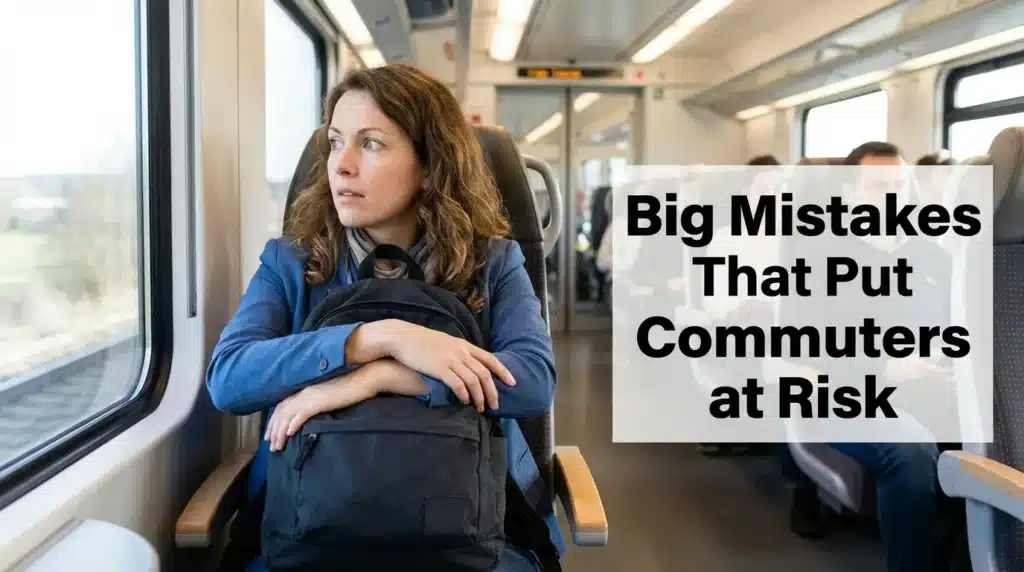
Never leave your bag on the floor. If you are sitting, keep your bag on your lap with your arms over it securely. If you are standing, keep your backpack in front of you instead of on your back where you cannot see the zippers.
Be careful with your mobile tech. If you are using a laptop or a tablet, be aware of who can see your screen. It is often better to wait until you are in a secure building before pulling out expensive personal electronics.
Keep your phone out of sight near exits. As mentioned before, the “grab and go” at train stations is very common. If you need to check a map, do it while the train is moving between stations, not while it is stopped at a platform.
By following these small steps, you build a shield of safety around yourself. You don’t have to be a security expert; you just have to be smarter than the person looking for an easy target. It’s a fundamental part of establishing 5 essential tips for a securely life.
Taking Your Personal Security to the Next Level
Staying safe on a bus or a train is about more than just watching your pockets. It is about how you carry yourself and how you read the environment around you.
Once you master the basic habits, you can start using advanced strategies to stay even safer. These methods are used by security experts to avoid trouble before it even starts.
You do not need special training to do this. You only need to change how you think about your daily commute and your physical presence in public spaces.
The Power of Your Body Language
The way you stand or sit sends a strong message to everyone around you. Criminals and pickpockets actively look for people who look weak, tired, or lost.
Keep your head up and shoulders back. When you walk with purpose, you look like a person who knows exactly where they are going. This alone can make a thief choose a different target.
Avoid the “Victim Look.” This happens when someone is hunched over their phone or looking blankly at the ground. Instead, keep your eyes at eye level and scan the transit area naturally.
You want to look alert but not paranoid. A calm, steady gaze shows that you are aware of your surroundings and ready to react instantly if something happens.
Using Reflective Surfaces as Secret Tools
One of the best secrets for train safety is using the carriage windows as mirrors. When it is dark outside, train windows become highly reflective surfaces.
“Watch the reflection behind you. You can see who is standing behind you or if someone is moving toward you without turning your head. This gives you a massive tactical advantage.”
If you see someone acting strangely in the reflection, you can move away before they even get close. It is a silent way to stay informed without drawing any attention to yourself.
This trick also works at bus stops with glass shelters. Always use these reflective surfaces to keep a 360-degree view of your surrounding world.
The Strategy of “Planned Transitions”
The most dangerous part of any journey is often the “transition.” This is the exact moment you move from the bus to the street, or from the train to the platform.
Be ready before you arrive. Do not wait until the bus stops to put your bag on or find your keys. Have everything completely ready at least one minute before your stop.
When the doors open, walk out with a clear direction. If you feel like someone is following you off the vehicle, do not go straight home.
Instead, walk toward a bright shop or a group of people. Changing your pace or crossing the street can help you figure out if someone is actually following you or just walking the same way.
Building Long-Term Safety Habits
Safety is not a one-time act; it is a lifestyle. To stay safe in the long run, you must make these defensive actions a part of your daily routine.
Vary your routine slightly. If you take the exact same bus at the exact same minute every day, you become highly predictable. Try to vary your timing or the train door you enter by just a little bit.
Connect with your transit community. If you see the same regular commuters every day, a simple nod or “hello” can build a sense of shared safety. People are more likely to help someone they recognize.
Keep your gear well maintained. Make sure your bags have strong straps and working zippers. A broken bag is an open invitation for pickpockets to reach inside and take your belongings.
Big Mistakes That Put Commuters at Risk
Even people who think they are being safe often make simple mistakes. These errors can turn a normal ride into a dangerous situation very quickly.
The Trap of Being Too Polite
Many people feel “mean” if they move away when someone uncomfortable sits next to them. They worry about hurting a stranger’s feelings.
Your personal safety is always more important than being polite. If someone makes you feel uneasy, stand up and move immediately without giving an explanation or saying sorry.
Falling Asleep on Public Transit
It is tempting to take a nap on a long train ride home after work. However, this is one of the most dangerous things you can do on transit.
When you sleep, you have zero situational awareness. Your phone can be easily taken from your hand, or your bag can be opened without you feeling a thing.
Displaying High-Value Items Near Doors
We often see people holding the latest expensive smartphone right next to the train doors. This is exactly what “snatch and grab” thieves actively look for.
They wait for the chime of the closing doors, grab the phone, and jump out just as the doors lock. Put your phone away before the train or bus stops.
Using Both Earbuds at High Volume
Music makes a commute go faster, but it also creates a dangerous safety bubble. Always keep at least one ear completely free to hear announcements or approaching footsteps.
Not Knowing Where the Emergency Tools Are
Most people have no idea how to use the emergency tools. Locate the help intercom button immediately every time you enter a new carriage.
Common Questions About Transit Safety
Is it safer to stand or sit on a crowded bus?
If the bus is very crowded, standing near the driver is often safer than sitting at the back. When you stand, you can move away more easily if someone bothers you without getting boxed in.
What should I do if I think someone is following me?
If you think you are being followed, do not go to a quiet area. Go straight to a busy place like a grocery store or a café, and notify a member of staff or security immediately.
How can I protect my bag in a crowded train station?
In a dense crowd, wear your backpack on your front. This keeps all zippers in your direct sight and prevents pickpockets from accessing your bag behind your back.
Are late-night trains actually dangerous?
Late-night trains have fewer people, which increases isolation risks. Always sit in the carriage closest to the driver or guard during night hours and avoid empty cars.
Should I carry tools like pepper spray for protection?
Check your local jurisdiction laws before carrying protective sprays. A great alternative is a legal, high-decibel personal alarm. For more secure options, review this comprehensive guide on legal self-defense tools for personal safety.
Taking Control of Your Daily Journey
Safety is not something that just happens to you; it is something you actively create. By using these public transport safety tips, you transition from a passive passenger to an empowered, prepared traveler.
Start small by choosing a better seat tomorrow or putting your phone away one stop early. These tiny, consistent adjustments grow into powerful habits that protect your peace of mind for years to come.
Disclaimer: This article is for informational purposes only and does not constitute professional security or legal advice. Laws regarding self-defense and transit regulations vary by location. Always follow the instructions of transit staff and local law enforcement in emergency situations. The author and publisher are not responsible for any incidents that may occur while using public transportation.