Imagine your home late at night while everyone is sleeping. It is quiet, dark, and peaceful. Suddenly, a loud smoke alarm starts screaming through the dark hallways.
For most parents, this is the ultimate nightmare. Your heart races just thinking about it, wondering if your kids would even wake up or know exactly what to do.
According to the National Fire Protection Association, fire moves faster than most people expect. In fact, a small flame can become life-threatening in less than two minutes.
Without a clear plan, absolute panic takes over. In a panic, scared children often hide under beds or in dark closets. This is why we must discuss the reality of fire safety today.
Why Many Families Fail to Prepare Properly
Most parents want to keep their kids safe, but life gets busy. We often think that a fire won’t happen to us. This leads to common mistakes that put families at risk.
- Many parents assume their children will automatically wake up to the sound of a smoke detector. This is a common oversight, much like forgetting basic tips for a securely life in other areas of home safety.
- Some families have a plan in their heads but never actually practice it on the floor.
- People often rely on a single exit, forgetting that fire might block the main door.
- Parents sometimes wait until their kids are “older” to discuss fire safety, leaving younger children vulnerable.
- There is a lot of confusing advice online that makes the process feel overwhelming for a busy mom or dad.
- We often forget to check if the window locks are too stiff for a child to open.
- Many families do not have a designated meeting spot outside, leading to chaos during an evacuation.
The Mental Burden of Being Unprepared
Living with the “what if” can be heavy. It stays in the back of your mind every time you light a candle or turn on the stove. This lack of preparation hurts your peace of mind.
- The constant worry that your kids don’t know the escape routes creates silent stress.
- You might feel guilty for not having a solid plan while seeing other safety tips on social media.
- Uncertainty makes you feel less like the protector your children need you to be.
- The fear of the unknown can make you feel helpless in your own home.
- Seeing news stories about house fires can trigger deep anxiety because you know you aren’t ready.
Facing the Truth About Child Safety
We need to understand that children see the world very differently than adults. To a young child, a house fire is not just hot; it is blindingly dark, loud, and incredibly smoky.
Even hero firefighters in their large suits and heavy masks can look like terrifying monsters to a scared toddler. If we don’t teach them beforehand, children will simply follow their basic survival instincts.
“Hiding is the single most dangerous thing a child can do during a house fire. We must replace their natural fear with a clear, simple, and practiced escape plan.”
A practiced plan successfully turns a potential victim into a confident survivor. It provides your child with the exact tools needed to stay calm when their entire world feels like it is falling apart.
By practicing fire escape drills for kids, you are not scaring them. You are giving them a true superpower. You are giving them the priceless gift of knowing exactly how to save their own lives.
6 Simple Steps to Build a Fire-Safe Home
Now that we understand the high stakes, let’s look at how to fix this. You do not need to be a certified safety expert to protect your household. You just need a clear, step-by-step method.
I am going to show you how to build a plan that works for your specific home. We will break this down into 6 actionable steps you can start implementing right now, this very afternoon.
Step 1: Mapping Every Possible Exit
The first step is to grab a piece of paper and a pen. Sit down with your kids on the floor and draw a basic map of your home. This does not need to be a perfect piece of art.
Clearly mark every door and every window in every single room. For each room, you must identify two separate ways out. Usually, this will be the main door and a window.
Talk to your kids about what to do if the door is hot. Show them how to check the door safely using the back of their hand. If it feels hot, they must immediately use the second exit.
If you live in a multi-story home, look closely at the windows. Do you own a reliable emergency escape ladder? If so, show your kids exactly where that ladder is kept.
If you don’t have a ladder, discuss how to signal for help from an open window. Teach them to wave a white cloth or use a bright flashlight to show arriving firefighters where they are located.
Step 2: Mastering the Smoke Alarm Sound
Many children sleep right through the sound of a standard smoke alarm. This is a proven scientific fact. Their growing brains are often in a deep sleep state that naturally ignores high-pitched beeps.
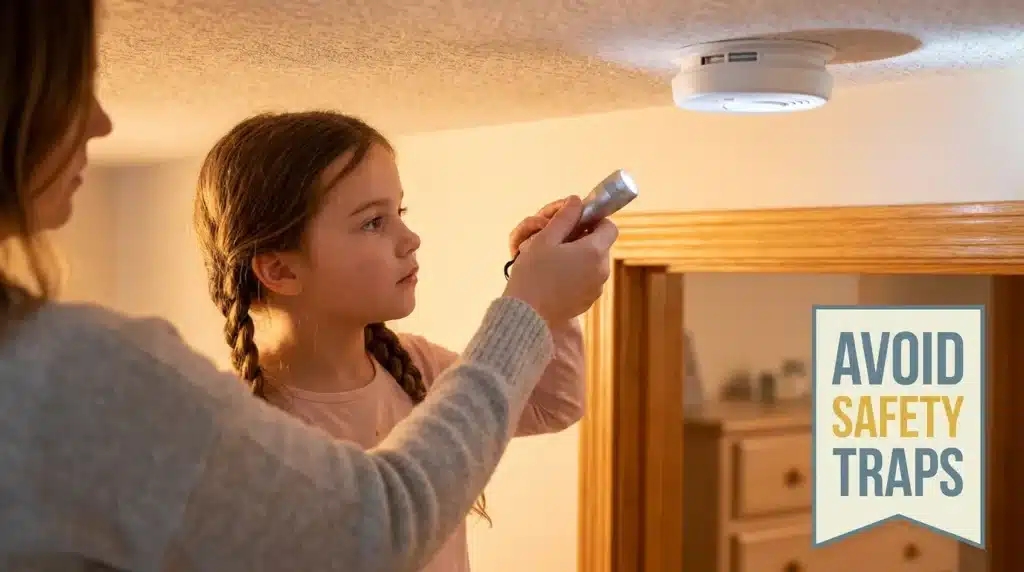
You need to make sure your kids know exactly what that alarm sound means. Press the test button on your alarm while they are fully awake in the room.
Ask them directly, “What is that sound?” and “What do we do when we hear it?” Turn it into an engaging game so they don’t feel afraid during the process.
Tell them that the alarm sound is simply the house loudly telling them to “Wake up and get out!” You should perform this audio test at least once a month.
Try running a “surprise” drill during the day while they are playing. See how fast they stop what they are doing and look to you for the next safety step.
Later, you can try a planned night drill. Let them know it is coming beforehand so they don’t get traumatized. The ultimate goal is to build muscle memory, not to cause panic.
Step 3: Choosing a Safe Meeting Spot
Once everyone successfully exits the house, where exactly do they go? This is a crucial part that many families completely forget. You need a permanent meeting spot at a safe distance.
Good ideas include a big tree, the neighbor’s mailbox, or a permanent streetlight. Just like establishing rules for a modern stranger danger situation, this spot must be non-negotiable.
Tell your kids, “No matter what happens, we all meet at the big oak tree.” This explicit rule prevents terrified parents from running back into a burning building to look for a child who is already safely outside.
Practice walking from the bedrooms straight to that designated meeting spot. Make it a fun race to see who can get there the fastest while maintaining safety protocols.
Remind them constantly that once they reach the meeting spot, they never go back inside. Not for a favorite toy, not for a family pet, and not for a smartphone.
Step 4: The Art of the Low Crawl
In a residential fire, the cleanest air is always found near the floor. As noted by safety experts on Wikipedia, rising toxic smoke carries dangerous chemicals that cause severe dizziness quickly.
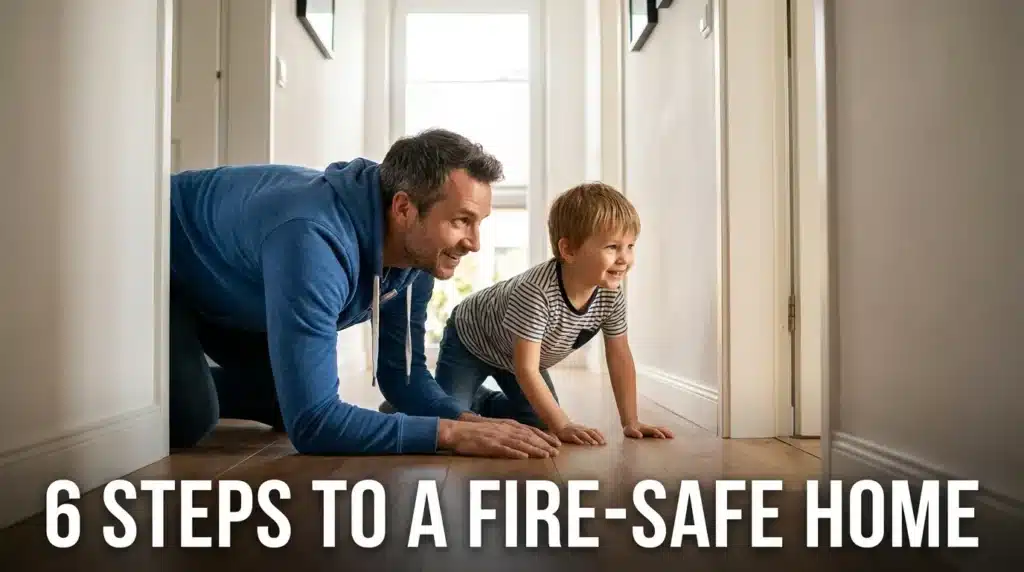
Teach your children to “get low and go.” They should practice crawling efficiently on their hands and knees. This vital posture keeps their nose and mouth away from the thickest layer of smoke.
You can make this drill fun by hosting a “tunnel race” down the hallway. Place lightweight blankets over dining chairs to create a low tunnel for them to crawl through.
Explain clearly that they need to keep their head down. This is the absolute best way to see where they are going when a room is filled with gray or black smoke clouds.
Show them how to follow the baseboards of the wall carefully with their hand. This physical guide helps them find the exit door even if they cannot see anything directly in front of them.
Step 5: Handling Closed Doors Safely
Interior doors are an excellent shield against active fire. They can successfully hold back dangerous flames and toxic smoke for a surprisingly long time.
However, kids must know how to interact with doors during an escape. Teach them to never just throw a door open blindly. They must use the back of their hand to touch the door handle and the top crack.
If the surface feels hot, the fire is raging right on the other side. They must keep that door firmly shut and immediately pivot to their secondary exit route.
If the door is completely cool, they should open it very slowly while staying low. They must be ready to slam it shut instantly if they see thick smoke or fire in the hallway.
This simple physical check can save them from walking directly into a dangerous flashover. It is a tiny habit that makes a massive difference in survival rates.
Step 6: What to Do if You Are Trapped
Sometimes, despite your best planning, both exits might be completely blocked. This is a scary thought, but children need to know there is always hope if they act smart.
Teach them how to effectively seal the room. They can use clothes, towels, or bed blankets to stuff the open cracks under the door. This simple barrier keeps harmful smoke out.
If there is a source of water in the room, they should wet the cloths first. After sealing the door, they should go directly to the window and stay there securely.
Instruct them never to hide under the bed or inside closets. When you are child proofing your home, teaching open visibility during emergencies is absolutely critical.
Explain gently that firefighters are trusted friends. Even if they look scary in their masks and oxygen tanks, they are there exclusively to help.
Show them online videos of firefighters in full emergency gear. Let them hear the actual sound of the breathing regulator so they aren’t surprised by the deep “Darth Vader” noise during a rescue.
Making Drills a Family Tradition
The best way to maintain family safety is to make these emergency drills a regular, predictable part of your yearly calendar. Do not frame it as a scary talk.
When you change the batteries in your home smoke alarms, that is the perfect time for a quick drill. When you complete seasonal spring cleaning, check the window locks together.
The more you practice, the more natural the evacuation feels. Your kids will actually start to feel proud of their safety knowledge, feeling empowered and secure inside their own home.
Remember, the ultimate goal is not to live your life in fear. The goal is to be so highly prepared that fear has no room to grow. You are building a protective shield around your family.
Creating a Kid-Friendly Safety Kit
While the escape drill is primarily about movement, having a few basic tactical items ready can help. You don’t need an expensive bag; just place the basics near the exits.
Keep a small, working flashlight in every single child’s nightstand to help them see through dark smoke. Provide loud whistles for younger children to blow if they are trapped and cannot yell.
Always keep a pair of shoes right under the bed so they don’t cut their feet on broken glass during an escape. Additionally, post a colorful “Safety Chart” on the fridge showing the map you drew.
These small additions help children feel like they have an important mission. When a child has a clear job to do, they are far less likely to freeze up or cry during a crisis.
Talking to Your Kids About Firefighters
As mentioned before, firefighters can look very intimidating to a young mind. Their protective gear is heavy, and their voices sound deeply distorted through a breathing regulator.
Tell your kids that firefighters are like brave space explorers for the house. They wear those big suits exclusively to stay safe while they look for you in the dark.
If a firefighter enters the room, the child should loudly shout, “I am over here!” or wave their flashlight. Encourage your kids to never run away from a firefighter in uniform.
If possible, visit a local fire station as a family. Most firefighters love to show kids their gear up close. Seeing the mask in a happy setting completely removes the terrifying mystery.
Preparing for Different Times of Day
Home fires don’t just occur late at night. You should practice what to do if a fire starts while the children are hanging out in the playroom or helping in the kitchen.
What if you are in the shower when the alarm sounds? What if an older sibling is babysitting alone? Talk through these diverse real-life scenarios carefully.
Ask your kids, “If the alarm goes off right now while we are watching a movie, what do we do?” Let them proudly lead the way out to the meeting spot.
When they get the steps right, shower them with praise. High-fives and enthusiastic verbal encouragement go a long way in making family safety feel like a massive win.
This approach builds a healthy culture of awareness without making anyone jumpy. It’s entirely about being smart and proactive, not about being scared.
Leveling Up Your Family’s Fire Readiness
Now that you have the basic home map and the meeting spot ready, it is time to look at a few advanced safety techniques to keep skills sharp.
One of the best ways to test your escape plan is the “Blindfold Challenge.” In a real structure fire, thick smoke can make it completely impossible to see your own hand.
Ask your kids to close their eyes or use a soft cloth to cover them. Then, ask them to find their way safely from their bed to the bedroom door just by feeling the walls.
This exercise teaches them to rely on touch rather than sight. It builds a different kind of valuable muscle memory that is incredibly useful when room visibility drops to zero.
You can also introduce the “Two-Minute Timer.” Most residential home fires become completely deadly very quickly. Setting a digital timer for 120 seconds makes the drill feel exciting.
Tell your kids that the goal is to get from their beds to the outside meeting spot before the timer dings. This drill teaches them that speed is absolutely everything in an emergency.
Keeping the Safety Habit Alive for Years
A fire drill is not a one-time event. It is a vital safety routine, just like preventing drowning through continuous backyard pool safety supervision.
To keep the drills fresh, try changing the simulated “starting point” of the fire. One day, tell them the kitchen is blocked. The next time, tell them the main hallway is full of smoke.
This variation forces your kids to think quickly on their feet. It effectively prevents them from just mindlessly following a routine without actually evaluating the structural danger.
You should also review your exit plan whenever you rearrange furniture or change bedrooms. If you buy a large new bookshelf that partially blocks a window, your route just changed.
Make it a household tradition to check your smoke alarms on the first day of every season. When you hear that loud test beep, it is time for a quick practice run.
By making safety a regular part of your family life, it completely stops being scary. It simply becomes another normal thing you do to take care of each other, like buckling a seatbelt.
Secrets of Expert Fire Safety Planning
According to fire safety experts at Ready.gov, implementing a structured “buddy system” is highly recommended if you have multiple young children in the home.
If you have an older child, teach them how to systematically help a younger sibling exit. However, make it very clear that the adult remains the primary helper during a crisis.
If the older child cannot find the younger one quickly, they must exit the building immediately. Never let a child think it is their job to go back into a burning room.
“A child’s only job during a home fire is to get to the outside meeting spot. Parents and firefighters will handle the rescue. No one ever goes back inside.”
Another expert secret is to practice drills with the lights completely turned off. Most residential fires happen at night, and sudden pitch darkness can be incredibly disorienting for a child.
Doing a drill in the dark helps them locate window latches and door handles purely by touch. It successfully takes away the fear of the dark and replaces it with confidence.
Lastly, teach your kids how to wave a bright cloth or a flashlight at the window. If they are stuck in a room, this is how they signal their exact location to rescue teams.
Big Mistakes That Can Put Your Family in Danger
Even with the best parenting intentions, small mistakes can lead to big problems. One of the biggest errors parents make is ignoring the family pets during planning.
Children love their dogs and cats like siblings. During a real fire, a child might dangerously try to find a hiding cat instead of immediately leaving the house.
You must explain to your kids that firefighters are experts at finding pets. A child’s only job is to save themselves. Pets have natural instincts that help them escape or find safe pockets.
Another common mistake is failing to inspect window screens and old locks. Sometimes, screens are completely stuck, or locks are far too tight for a child’s small hands to operate.
Go around your house today and try to open every single window. If you struggle to open it, your child definitely will. Fix these mechanical issues now before an emergency occurs.
Some families also forget to practice their backup exit. They always go out the front door during drills. If the fire is near the front door, the kids might get confused. Always ensure they know how to climb out of a window safely.
Finally, never assume that a child will wake up to a smoke alarm. Many kids sleep so soundly that they won’t hear the noise. Your plan must include an adult designated to wake up the kids. This level of supervision is as essential as knowing how to vet a babysitter before leaving your children home alone.
Protecting Your Children from Common Traps
Many parents think that fire safety is just about avoiding the flames. But toxic smoke is the real killer in the vast majority of home emergencies.
If you don’t teach your kids to stay low, they will breathe in toxic fumes. This can cause them to pass out in just a few seconds. Another trap is the natural “closet reflex.”
When kids are scared, they naturally want to hide in small, dark, familiar places like closets or under beds. Firefighters find children trapped in these spots far too often.
You must repeat this message like a mantra: “Never hide, always get outside.” Make sure they know that hiding makes it much harder for rescue teams to locate them.
Staying in plain sight near a window is always the safest choice if trapped. Lastly, don’t let the drill become too playful. While it should be engaging, kids need to know that a fire is a serious matter.
Balance the fun of the drill with a serious conversation about why we practice. This balance ensures they take the drill seriously when the alarm actually sounds for real.
Simple Answers to Your Safety Questions
How often should we really do a fire drill?
You should practice at least twice a year. However, doing it once every few months is even better to keep the safety skills fresh in your child’s mind.
What if I live in a high-rise apartment building?
Never use the elevator during a fire. Teach your kids to use the stairs exclusively. Also, take time to learn where the building’s fire alarms and manual pull stations are located. This is just as vital as knowing how to protect luggage or staying alert in other unfamiliar public environments.
My child is a very heavy sleeper. What should I do?
Assign a specific adult to be the designated “waker.” This person’s absolute first job is to get the kids out of bed and moving toward the exit. Don’t wait for them to wake up on their own.
Is it okay to have a fire extinguisher in the house?
Yes, but only adults should ever operate it. Teach your kids that their only job is to run away, not to fight the flames. Fire extinguishers are strictly for small, contained fires.
What should my child do if their clothes catch fire?
Teach them the classic “Stop, Drop, and Roll” method immediately. They should cover their face with their hands and roll back and forth on the ground until the flames are completely out.
Your Path to a Safer and Happier Home
Taking the time to prepare your kids for a fire emergency is one of the best things you can do as a parent. It proves to them that you care deeply about their safety and that you operate as a team.
When everyone knows the plan, the whole house feels significantly more peaceful. You won’t have to worry about the scary “what ifs” anymore because you have done the necessary work.
Start today by drawing that basic map on a simple piece of paper. Walk through the house with your kids this evening and point out the exits. Much like systematic preventing senior falls, proactive home modifications and planning save lives.
Make it a positive experience that builds their self-reliance. You are teaching them a critical life skill that they will carry with them forever. The best time to prepare was yesterday, but the second best time is right now.
Grab a reliable flashlight, test your alarms, and host your very first drill tonight. You will sleep much better knowing your family is ready. Your kids will feel like true heroes because they know exactly how to stay safe and stay smart.
Disclaimer: This article provides general safety information and is not a substitute for professional fire safety advice. Always follow the specific guidelines of your local fire department and national safety organizations. Home fire safety equipment, such as smoke alarms and ladders, should be maintained and tested according to the manufacturer’s instructions. Use your best judgment when practicing drills to ensure the physical and emotional well-being of your children.