Imagine saving your hard-earned money for months to book that dream trip. You finally arrive in a beautiful, exotic country, feeling absolutely thrilled.
You are excited to see the sights and taste the local food. But suddenly, everything goes wrong in a split second.
You spend your entire vacation locked in a tiny, cramped bathroom. Instead of seeing famous landmarks, you are staring at hotel walls.
You feel weak, cold, and completely alone. The pain in your stomach is sharp, intense, and constant.
This is the terrifying reality of food poisoning abroad. It is not just a small temporary illness; it is a disaster that completely steals your time and joy.
But you do not have to cancel your plans or live in constant fear. By following 7 crucial, research-backed food safety steps, you can confidently explore local cuisines without risking your health.
Expert Medical Fact: According to global health alerts monitored by the World Health Organization (WHO), contaminated meals and untreated regional water remain the primary culprits behind severe traveler illnesses worldwide.
Why Finding the Right Food Safety Advice is So Hard
Many travelers try to be extremely careful, but they still end up getting sick. This often happens because they follow bad advice or common internet myths.
Many people firmly believe that drinking a shot of strong alcohol kills dangerous bacteria in the stomach. In reality, it only irritates your digestive lining further.
Some travelers think that busy restaurants are always safe. However, high turnover does not automatically guarantee clean kitchens or hygienic staff.
People often trust “hidden” risks like ice cubes or fresh salads. These are frequently washed in local tap water without your knowledge.
Is It Food Poisoning or Just Travel Stomach? How to Tell
Many tourists confuse general jet lag exhaustion or exotic spice adjustment with actual food-borne illness. True food poisoning symptoms usually strike aggressively within 2 to 6 hours after consumption.
If you experience sudden projectile vomiting, a high-grade fever, and severe abdominal cramping, you are likely dealing with bacterial pathogens.
The internet is full of conflicting stories that make you feel confused and overwhelmed. Travelers often forget that their bodies are simply not used to the local bacteria in different regions.
Relying only on hand sanitizer is a massive mistake. Alcohol-based gels do not kill every type of aggressive stomach germ.
To fully secure your journey from unexpected disasters, you must also understand how to avoid common tourist scams abroad, which frequently involve unhygienic, overpriced food traps.
The Mental and Emotional Toll of Being Sick Abroad
Getting sick in a foreign land does more than just hurt your physical body. It directly attacks your mind and your overall confidence.
You feel incredibly vulnerable and scared because you are far away from your own trusted doctor. Dealing with foreign hospitals and language barriers creates massive stress.
The fear of getting sick again makes you afraid to try any new or local foods. You might also feel guilty for ruining the trip for your friends or family.
Furthermore, the financial worry of unexpected medical bills can weigh heavily on your mind during the trip. You completely lose the sense of adventure that made you want to travel.
This is why learning a comprehensive solo travel safety guide for beginners is essential before launching into any international destination.
The Airport Transit Trap: Staying Safe Before You Land
Your food safety strategy must begin long before you reach your hotel room. Airport buffets and pre-packaged airplane meals often sit in temperature danger zones for extended periods during unexpected flight delays.
Always opt for pre-packaged, dry snacks or freshly prepared, piping-hot meals at busy airport terminals. Skipping questionable seafood or mayonnaise-based wraps at the transit lounge can save your entire vacation from an early disaster.
A Professional Look at the Reality of Travel Sickness
Food poisoning is a serious threat that can happen to anyone. It does not matter if you stay in a five-star luxury hotel or a cheap backpacker hostel.
Aggressive bacteria like E. coli, Salmonella, and Norovirus do not care about your budget. They are completely invisible and can hide in the most delicious-looking meals.
When you get sick abroad, your whole world stops instantly. You might need to find a pharmacy in a busy city where you do not speak the local language.
You have to explain your severe symptoms while feeling dizzy and dehydrated. This is physically, mentally, and emotionally draining.
Most travelers think they are perfectly safe if they avoid “street food.” However, statistics show that hotel buffets are often more dangerous.
Food that sits out for hours at the wrong temperature is a massive breeding ground for germs. If you do not have a clear plan, you are taking a huge risk.
You need a strategy that goes beyond just luck. You need to understand how food is prepared and how water is treated to avoid food poisoning while traveling safely.
By taking total control of your health, you can protect your hard-earned vacation. You can ensure that your memories are about the beautiful sunset, not about the hospital.
To establish a solid foundation for your overall security on the road, check out these 5 essential tips for a securely life.
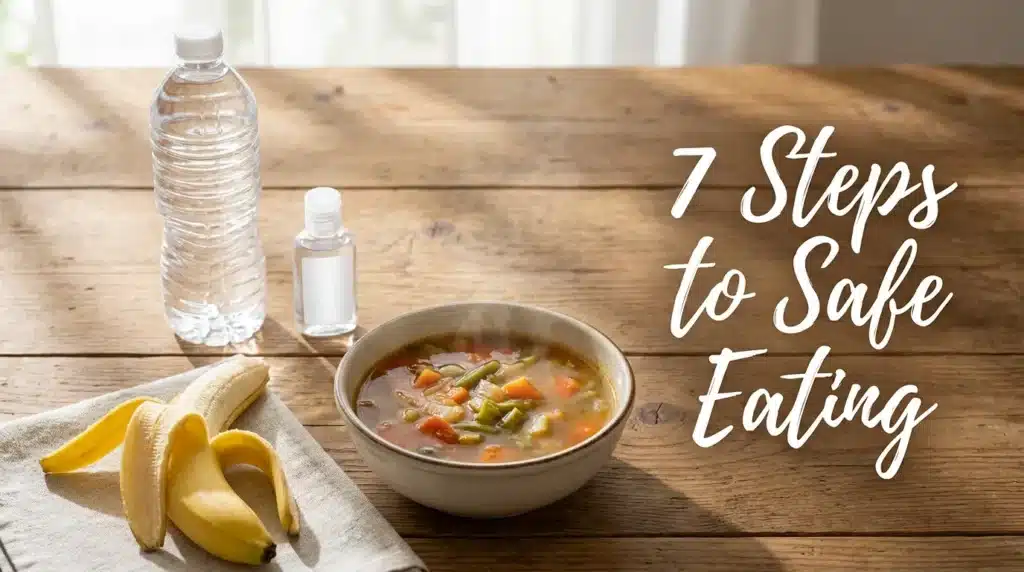
Your 7-Step Guide to Eating Safely Anywhere in the World
Staying healthy while you travel is a practical skill you can easily master. It is about making small, smart, and calculated choices every single day.
Here are the 7 crucial steps you should strictly follow to keep your stomach happy and your vacation disaster-free.
Step 1: Learn the Secrets of Safe Street Food
Street food is one of the best parts of traveling. You do not have to avoid it completely to stay safe; you just need to be highly observant.
Always look for stalls that have a high volume of local customers. If the local families are eating there, the food turnover is fast and fresh.
Watch the cook very carefully before you buy anything. Do they use the same bare hand to touch raw meat and then handle paper money? If they do, move away.
You want to see the food being cooked right in front of you at a very high heat. It should be piping hot when it is served to you.
Heat kills most of the bacteria that cause illness. Avoid any food that has been sitting in the sun for a long time.
Step 2: Master the Rules of Drinking Water
Water is the most common way to get sick abroad. In many countries, the tap water contains bacteria that your body cannot handle.
This does not just apply to drinking water. It also applies to subtle hazards like ice cubes and fresh fruit juices.
Always stick to factory-sealed bottled or filtered water. Before you buy a bottle, check the plastic seal on the cap carefully.
Some dishonest sellers refill old bottles with tap water and sell them again. If the seal is broken, do not buy it.
Be very careful with ice in your drinks. Ice is almost always made from local tap water, and melting ice will quickly contaminate a safe beverage.
Modern smart travelers no longer rely solely on guesswork. Carrying portable UV water purifiers or chemical water testing strips allows you to verify water safety in seconds.
Step 3: Practice Advanced Hand Hygiene
Most people think hand sanitizer is enough. It is a great tool, but it is not a perfect solution for all pathogens.
Some germs, like Norovirus, are not easily killed by alcohol-based gels. The best way to protect yourself is to wash your hands with soap and warm water.
Do this before every single meal and after you touch anything in a public space. If you are in a place with no sink, use a wet wipe first.
This helps remove the physical dirt from your skin. Then, you can safely use your alcohol-based hand sanitizer.
Try to avoid touching your face or your mouth with your hands. Local currency is one of the dirtiest things you will handle.
Think about how many people have touched that paper money before you. Wash your hands immediately after handling cash and before you pick up a sandwich.
If you are exploring busy urban areas via public transit, utilizing ride sharing safety apps vs local taxis can help minimize unnecessary physical contact with dirty shared surfaces.
Step 4: Be Careful with Fresh Fruits and Vegetables
We often think that salads and fruits are the healthiest choices. While traveling, however, they can actually be quite risky.
This is because they are often washed in local tap water. If the water is contaminated, the salad is contaminated too.
A good golden rule to remember is: Boil it, cook it, peel it, or forget it. Stick to fruits that have a thick skin that you can peel yourself.
Bananas, oranges, and mangoes are great choices. Avoid pre-cut fruit salads that have been sitting in a bowl of melting ice or water.
If you really want vegetables, choose cooked ones. Steamed or fried vegetables are much safer than a raw side salad, saving you from days of intense pain.
Step 5: Understand the Risks of Dairy and Meat
Undercooked meat is a major cause of severe food poisoning. When you order meat, always make sure it is completely well-done.
This is not the time to experiment with rare steaks. You want to ensure that the internal temperature was high enough to kill any parasites.
Dairy products like milk and cheese can also be tricky. In some regions, dairy is not pasteurized, carrying very dangerous bacteria.
If you are unsure, it is better to avoid dairy entirely until you are in a place where you fully trust the source.
Be cautious with seafood as well. Shellfish like mussels and clams can soak up dangerous toxins from the water. If they are not perfectly fresh, skip them.
Step 6: Prepare a Travel Health Kit Before You Leave
You should always have a solid backup plan in case you do get a little sick. Don’t wait until you are feeling weak to find a pharmacy.
Pack a small kit with oral rehydration salts (ORS). These help your body stay hydrated when you are losing vital fluids.
Dehydration is the biggest danger of food poisoning. You should also carry some basic medicine for an upset stomach after consulting your doctor.
Pack your kit and medical documents safely in your room by following a reliable hotel room security locking guide to protect your essentials.
Step 7: Listen to Your Gut Feeling
Sometimes, your natural instincts are your best defense on the road. If a restaurant looks dirty, or if the food smells strange, do not eat it.
It is better to be a little bit hungry for an hour than to be severely sick for an entire week.
Do not feel pressured by others to try something that makes you feel uneasy. Your health is the most important part of your journey.
Smart Strategies for Eating Safely in Any Country
Many travelers think that avoiding the local water is enough to stay safe. However, seasoned explorers know that the secrets are much more detailed.
You have to think like a local but act with the caution of a trained scientist. One great secret is to watch the timing of your meals.
Try to eat when the locals eat at busy markets. This ensures that the food has been freshly prepared and has not been sitting around for hours.
When food sits at room temperature, it enters what experts call the bacterial danger zone. By eating during peak hours, you guarantee freshness.
The Buffet Trap and How to Navigate It
You might feel safer eating at a hotel buffet than at a street stall. In reality, buffets can be some of the riskiest places for your stomach.
Food often sits in large trays for a long time without enough heat to kill germs. If you must eat there, choose items at the very back of the tray.
These are usually the hottest and freshest parts of the dish. Also, look for visible steam rising from the food as a sign of active safety.
Avoid communal serving spoons as much as you can. Hundreds of people touch those handles every hour, and not all of them wash their hands.
Protecting Your Gut Before the Flight
A great long-term strategy is to prepare your body before you even leave home. Many experts recommend taking a daily probiotic for at least two weeks.
Think of it as training an army for your stomach. When you arrive in a new place, your gut flora is already strong and ready.
This does not make you completely invincible, but it gives you a much better chance of fighting off minor bacterial bugs.
You should also keep taking these probiotics throughout your entire trip. This consistency helps your body adjust to the different spices and cooking styles.
The Hidden Risk of Utensils and Plates
Sometimes it is not the food that makes you sick, but the plate it is served on. If a restaurant washes dishes in contaminated tap water, bacteria stay on the surface.
When hot food is placed on that wet plate, the bacteria can transfer to your meal. Always carry a small pack of sanitizing wipes with you.
If you see a wet plate or a fork that looks slightly damp, give it a quick wipe yourself before eating.
Using your own reusable travel cutlery is an even better idea. You know exactly how clean they are because you washed them yourself with safe water.
Learn how to safely hide cash and passports while traveling along with your valuable personal utensils to prevent common travel illnesses.
Emergency Action Protocol: What to Do If Hit by Illness
When food poisoning strikes in a foreign country, panic is your worst enemy. Follow this structured medical response matrix immediately to manage your symptoms safely:
| Timeline | Immediate Action Required | What to Strictly Avoid |
|---|---|---|
| Hour 1 – 3 | Stop eating solid foods completely. Sip small amounts of purified water mixed with Oral Rehydration Salts (ORS). | Do NOT take anti-diarrhea pills immediately; your body needs to flush out the toxins naturally. |
| Hour 4 – 12 | Rest in a cool room. Monitor your temperature. Start the BRAT diet (Bananas, Rice, Applesauce, Toast) only if vomiting stops. | Avoid dairy, caffeine, alcohol, and heavily seasoned or oily local dishes. |
| After 24 Hours | If blood appears in stool, or if high fever and dehydration persist, seek immediate medical care at a local clinic. | Do not attempt to push through the pain or travel to remote areas without a doctor’s clearance. |
Mistakes That Can Ruin Your Entire Trip
Even very careful travelers make mistakes that lead to a bad stomach. These errors usually happen when we are tired or too comfortable.
Trusting “Filtered” Water in Open Containers: One of the biggest mistakes is drinking water from a pitcher on a table. Always ask for a sealed bottle of water and open it yourself.
Using Tap Water to Brush Your Teeth: This is a very common way that travelers accidentally swallow bacteria. Always keep a bottle of safe drinking water next to your toothbrush.
Thinking Expensive Means Safe: Many people believe that eating at a fancy, expensive restaurant guarantees food safety. A high price tag does not always mean the kitchen is clean.
Ignoring the “Ice Cube” Rule in Drinks: As the ice melts into your drink, it releases bacteria. Always ask for your drinks without ice to remain completely secure.
Being Too Brave with Local Flavors Too Fast: Your digestive system is already stressed from travel. Start with simple, cooked foods for the first day or two to let your body adjust gradually.
Common Questions About Traveling and Food Safety
Can I eat salads if I am at a 5-star hotel?
Even in luxury hotels, salads can be risky because they are washed in local water. If the hotel does not specifically state they use purified water, it is better to avoid raw greens.
Is it safe to drink hot tea or coffee made with tap water?
Generally, yes, because the water is boiled to make these drinks. Boiling water is the most effective way to kill pathogens. Just make sure it reached a rolling boil.
What should I do first if I start feeling sick?
The first and most important step is to stay hydrated. Start drinking clean water mixed with oral rehydration salts immediately and avoid solid food for a few hours.
Does spicy food kill the bacteria that cause food poisoning?
This is a popular myth, but it is not true. While some spices have mild antibacterial properties, they are not strong enough to kill dangerous germs like E. coli.
Is street food always more dangerous than restaurant food?
Not necessarily. Street food is often cooked at very high temperatures right in front of you, which kills germs. In a restaurant, the kitchen is completely hidden from view.
Your Journey Toward a Healthier Adventure
Staying healthy while traveling is not about living in fear. It is about being a smart and prepared explorer. When you take these small steps, you protect your memories.
Start by preparing your gut before you leave and packing a basic health kit. Follow the simple rules of heat and hygiene to enjoy the amazing world of international food safely.
Take charge of your safety today and get ready for the best trip of your life with total confidence. Happy and healthy travels to you as you explore this wonderful world!
Disclaimer: The information provided in this article is for educational and informational purposes only. It is not intended as a substitute for professional medical advice, diagnosis, or treatment. Always seek the advice of your physician or another qualified health provider with any questions you may have regarding a medical condition. Never disregard professional medical advice or delay in seeking it because of something you have read on this blog.