The $19 Camera That Almost Talked Me Out of Real Security
A few years back, I stood in a hardware store parking lot holding a $19 dummy camera, genuinely debating if this was all I needed. My budget was tight that month, and the box promised a blinking red light and a “realistic design.” I remember thinking, if it just makes a burglar nervous, isn’t that enough? I bought two, screwed them under my eaves that weekend, and told myself I was covered. It took a break-in two houses down, with the homeowner later finding out the thief had circled her property twice before choosing the place with no visible wiring, for me to start questioning what I’d actually installed.
That question turned into months of digging through research, talking to people in the security industry, and honestly, feeling a little embarrassed about my $19 decision.
So let’s answer this the way I wish someone had answered it for me back then, honestly, without a sales pitch attached.
Q: Do fake cameras stop crime at all? Sometimes, yes, especially with someone acting on impulse.
Q: Do they stop a burglar who’s done this before? Rarely, and often they backfire.
Q: Is that risk worth the money you’d save? That’s exactly what we’re about to work through together.
Here’s the part that’s hard to sit with. A fake camera only works if nobody ever looks closely. And the moment someone does look closely, whether it’s a repeat offender casing your street or just a curious neighbor, the illusion doesn’t just fail. It can tell them something worse: that you cared enough to look protected, but not enough to be protected.
That thought alone changes how people feel about their own front door:
- A quiet unease sets in every time you leave for vacation, knowing your “security system” isn’t actually recording anything.
- Guilt creeps up for renters and budget-conscious homeowners who chose the cheaper option and now wonder if they made the wrong call.
- Confusion takes over when every blog seems to say something different, some swearing fake cameras work great, others calling them a total waste of money.
- A false sense of calm can be the most dangerous outcome of all, since you stop taking other precautions once you feel protected.
Myth vs. Reality Myth: “A fake camera looks exactly like a real one, so it works exactly like a real one.” Reality: Most experienced burglars aren’t fooled by appearance alone. They look for missing wiring, unrealistic mounting height, or the total absence of a brand name, details a rushed installation often misses.
The good news is you don’t need to guess your way through this decision anymore. Let’s look at what actually influences whether a camera, real or fake, changes a criminal’s mind.
What Actually Goes Through a Burglar’s Mind at Your Front Door
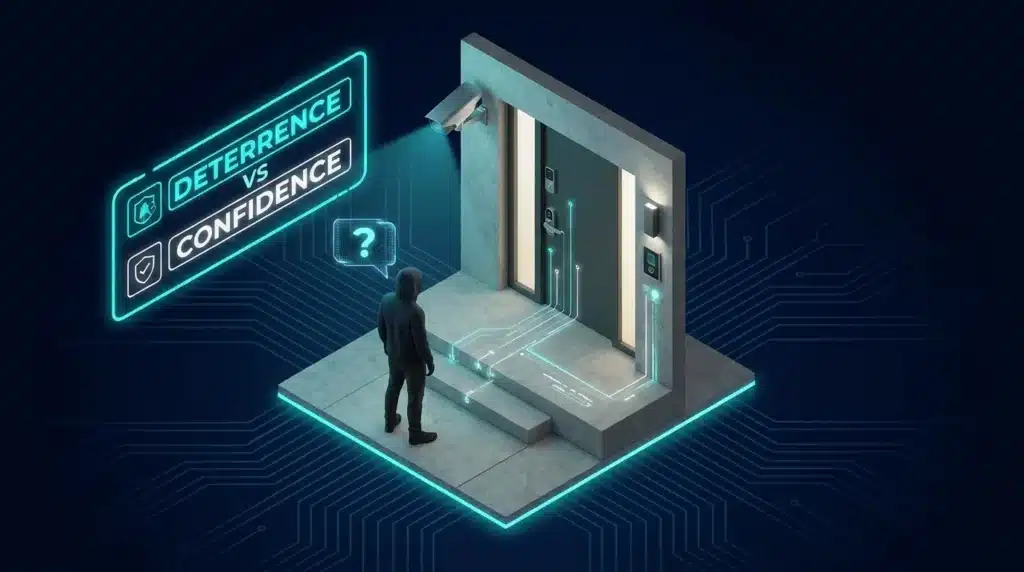
Here’s something most people never think about: deterrence isn’t really about the camera itself. It’s about the doubt the camera creates in someone’s head.
This idea has a name in criminology circles: natural surveillance, one of the core principles of Crime Prevention Through Environmental Design (CPTED). Researchers describe it as designing a space with few advantages for a perpetrator, since surveillance equipment placed visibly makes people aware they might be watched. That single sentence explains almost everything about why cameras work when they do.
The catch? That doubt only holds up if it feels believable. A convincing fake creates the same doubt as a real camera, for a while. An unconvincing one does the opposite, it removes doubt entirely and replaces it with confidence.
The Numbers Behind the Doubt
Research from the security industry backs this up with real figures. According to one widely cited home security study, homes with visible surveillance cameras are significantly less likely to be targeted for a break-in compared to homes without any cameras at all.
But visibility alone isn’t the full story. Signage, lighting, and overall upkeep of a property all stack together to build that sense of doubt in a burglar’s mind. This is exactly why we always recommend pairing any camera setup, real or fake, with the broader habits covered in our guide to creating the illusion of an occupied home while you’re away. One camera rarely does the job alone.
Real vs. Fake: A Side-by-Side Look
Here’s how the two options actually compare once you strip away the marketing language:
| Feature | Real Security Camera | Fake / Dummy Camera |
|---|---|---|
| Deters opportunistic crime | Yes | Sometimes |
| Deters experienced burglars | Yes | Rarely |
| Provides evidence after a break-in | Yes | No |
| Upfront cost | Higher | Lower |
| Requires Wi-Fi or wiring | Often | Rarely |
| Risk of “false sense of security” | Low | Moderate to High |
| Insurance or liability considerations | Minimal | Can create gray areas |
Pro Tip: When I finally replaced my dummy cameras, I didn’t buy the most expensive system I could find. I picked one mid-range camera with clear night vision and put it right at eye level by my front door, since that’s the spot people actually glance at before deciding whether to knock or move on. That one change told me more about my property’s activity than both fake cameras combined ever did.
How to Actually Spot a Fake Camera (Before a Burglar Does It for You)
If you already have dummy cameras up, or you’re weighing whether to install one, here’s what gives them away instantly:
- No visible wiring or mounting hardware that matches how real cameras are typically installed.
- Cheap, lightweight plastic that flexes or rattles when tapped, unlike weatherproof housing on real units.
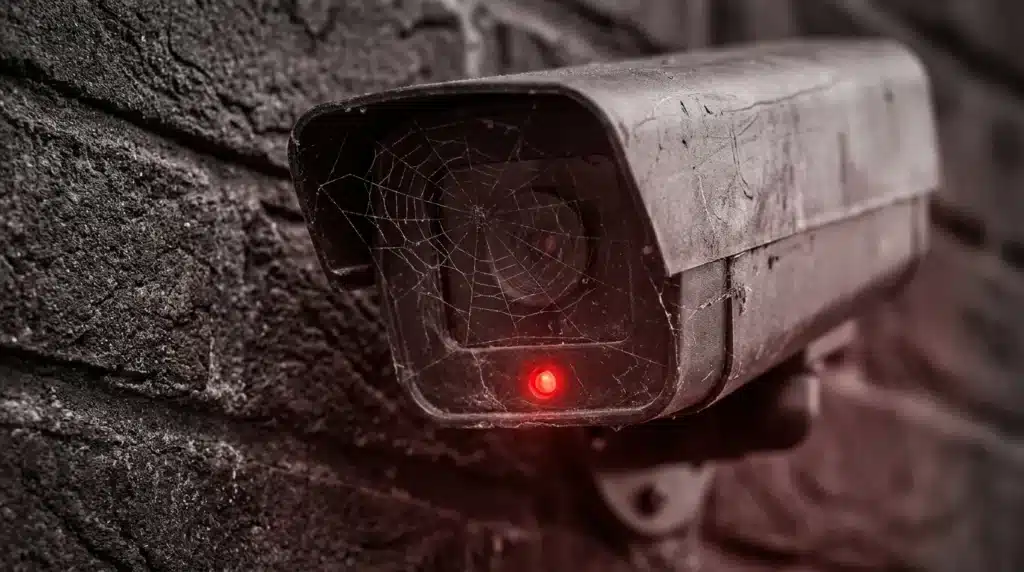
- A constantly blinking red light, which real cameras rarely use since it would just alert people to exactly where the lens is pointed.
- Unrealistic placement, like an indoor-style camera mounted outside with no weather sealing at all.
- Missing brand markings, which experienced burglars specifically look for since most legitimate camera brands are recognizable.
Want to see these tells identified in real time? This walkthrough shows exactly how quickly a trained eye can separate a real camera from a convincing fake.
The Legal Gray Area Nobody Warns You About
This part surprised me the most during my research. Fake cameras are legal to own almost everywhere in the US, but that doesn’t mean they’re risk-free.
Legal analysts have pointed out that dummy cameras can expose property owners to liability, since fake cameras don’t just trick would-be criminals, they can also trick staff, guests, or family members into a false sense of security.
Picture this scenario: a delivery driver gets confronted on your porch, assumes the “camera” recorded the incident, and later finds out there’s no footage at all. That gap between what people believed and what actually existed is exactly where legal trouble tends to start, especially for landlords, small business owners, or anyone hosting guests through a rental platform.
If a fake camera is part of your setup, pairing it with genuinely secured entry points matters even more. Our breakdown of reinforcing your front door against forced entry and our comparison of smart locks versus traditional deadbolts are good next steps if you’re building a layered approach rather than relying on one single deterrent.
Where a Fake Camera Actually Earns Its Place
None of this means fake cameras are worthless. They genuinely have a role, just a smaller one than the packaging suggests.
They work best as a supplement, not a substitute. A few situations where they can pull real weight:
- Covering a blind spot on your property where a real camera isn’t in the budget yet
- Adding visible “eyes” to a shed, garage, or side yard alongside your main system
- Reinforcing the overall impression created by your yard’s burglar-proofing setup, like trimmed hedges and motion lighting
Used this way, a fake camera becomes one small piece of a bigger picture instead of the whole plan resting on a $19 gamble, the same one I made all those years ago.
If you’re starting your home security setup from scratch, our beginner’s guide to home security walks through how all these pieces, real cameras, lighting, locks, and yes, the occasional dummy camera, fit together into one system instead of a patchwork of guesses.
We’re not done yet. In the next part, we’ll cover the specific mistakes that make fake cameras backfire, the honest answer on whether they’re actually illegal in certain situations, and a simple decision guide to help you figure out exactly what your home actually needs.
Getting More Mileage Out of Every Deterrent You Own
Once I understood why fake cameras work sometimes and fail other times, I stopped thinking about mine as a single decision. I started thinking about it as one piece of a bigger system.
Here’s what actually keeps that system working over time, not just for the first week after installation.
Give Your Fake Camera a “Job” It Can Actually Do
Don’t ask a dummy camera to do a real camera’s job. Ask it to do a supporting job instead.
Place it where a real camera would be too expensive or impractical to run wiring, like a detached shed, a back fence line, or a side gate. Let your actual system cover the entry points that matter most, front door, driveway, garage.
This pairing approach lines up closely with what we cover in our guide to securing your garage door overnight, where layering cheap deterrents with a few solid, real protections does more than either one alone.
Match the “Wear” of a Real Camera
Here’s something almost nobody mentions. Real cameras age. They collect dust, fade slightly in the sun, and sit at heights that make sense for actual coverage.
A pristine, shiny fake camera mounted at an odd angle practically announces itself. Every few months, check that your dummy unit still looks like it belongs there, not like it was bolted on as an afterthought last weekend.
Pro Tip: I started treating my fake camera maintenance the same way I treat my smoke detector checks, same day, every few months. Once I noticed the “LED” had gone dull and looked dead from the sidewalk, which honestly probably did more harm than having no camera at all. Now it’s part of my regular walk-through, right alongside checking my nighttime home security checklist.
Stack Doubt, Don’t Rely on One Trick
Burglars weigh risk against reward before they ever touch a doorknob. A single fake camera adds a small amount of doubt. Combined with other signals, that doubt compounds fast.
A short list of what stacks well together:
- Motion-activated lighting near entry points
- A visible alarm system sign, even a basic one
- A well-maintained yard that signals someone is actively present
- One real camera at the main entrance, paired with fake units elsewhere
This is the exact logic behind why we recommend planning your setup before you travel, not after. Our guide on securing your home during vacation walks through how to combine these layers so your home reads as occupied and watched, even when it isn’t either.
Know When It’s Time to Upgrade
If you’re leaning on fake cameras purely because of cost, it’s worth knowing that entry-level real smart cameras have gotten a lot more affordable. Many now connect straight to your existing Wi-Fi setup, which we cover in detail in our piece on securing your home Wi-Fi and smart cameras.
Even one real camera at your most vulnerable entry point, backed by a couple of well-placed fakes elsewhere, tends to outperform an entire property covered in dummy units. Coverage matters less than credibility. One believable eye beats five obvious fakes every time.
Where This Plan Quietly Falls Apart
I want to walk you through how this usually goes wrong, because I’ve watched it happen to people who had good intentions the entire way.
It usually starts small. Someone buys a fake camera, feels a wave of relief, and stops thinking about their home’s security at all. That relief is the actual danger here, not the camera itself.
The most common trap is treating a fake camera as a finish line instead of a first step. Once it’s mounted, people mentally check the box labeled “security” and move on. Meanwhile, the side gate is still unlocked, the porch light burnt out three months ago, and nobody’s noticed.
Another mistake creeps in over time rather than all at once. The camera fades, the mount loosens, a spiderweb builds up across the lens. A neglected fake camera doesn’t just stop working as a deterrent, it starts working against you, quietly telling anyone paying attention that nothing here has been checked in a long while.
There’s also an emotional trap tied to guests and family. Some homeowners never mention that a camera is fake, not to roommates, not to visiting family, not to a babysitter watching the kids for the evening. If something happens and someone assumed they were being recorded for their own safety, that gap between belief and reality can turn into a genuinely painful conversation, on top of whatever incident already occurred.
And then there’s the mistake of matching the wrong camera to the wrong home. A budget dummy camera on a house that clearly has a high-end alarm system and smart lighting looks jarring, almost like a mismatched puzzle piece. Experienced burglars notice inconsistency faster than almost anything else, since it suggests corners were cut somewhere important.
None of these mistakes come from bad intentions. They come from treating a $19 decision like it settles a much bigger question.
Common Questions About Fake Security Cameras
Do fake cameras flash like real ones?
Many do include a blinking red LED to mimic a real camera, but this can actually work against you. Real cameras rarely blink constantly, so an always-flashing light is one of the easiest tells that give a fake camera away.
How long do the batteries last in a fake security camera?
Most battery-powered dummy cameras run anywhere from a few months to about a year, depending on how often the LED cycles. A dead blinking light is worse than no light at all, so it’s worth checking every few months.
Is it illegal to install a dummy camera at my home?
No, dummy cameras are legal to own and install in all 50 states with no permits required. The legal risks tied to fake security cameras come from misrepresentation, not ownership, so problems only show up if someone relies on false claims about what the camera actually does.
Can I point a camera at my neighbor’s yard?
Generally, no, and this applies to both real and fake cameras. Most areas expect surveillance devices to stay focused on your own property, so aim yours at your entry points, not over the fence line.
What’s the best type of fake camera to buy if I want it to look convincing?
Look for one with realistic weatherproof housing, a recognizable mounting bracket, and a subtle, occasional light rather than a constant blink. A model that closely copies a real, well-known camera design tends to hold up better under a closer look.
How can you tell if a camera is fake just from the sidewalk?
Watch for a lack of visible cabling, an oddly clean or lightweight housing, or a mounting height that doesn’t match typical camera placement. Seasoned criminals approaching a property will often spot dummy equipment on close inspection, and this can sometimes create the opposite effect of what the homeowner intended.
Your Move Starting Tomorrow
Here’s the honest takeaway after all of this. A fake camera isn’t a scam, and it isn’t a guarantee either. It’s a small tool that works best when it’s part of something bigger, not the whole plan by itself.
If you already have one up, give it a quick check this week. Is it clean? Is it mounted at a realistic height? Does it still look like something worth pausing for?
If you’re starting from scratch, don’t put all your trust in a single $19 box the way I once did. Add one real layer, whether that’s a light, a lock upgrade, or a single genuine camera at your front door, and let your fake units support that, not replace it.
I look at my own front porch differently now than I did back then. My setup isn’t expensive, but it’s honest, every piece is doing a job I actually understand. That shift, from hoping something looks protected to knowing it actually is, made a bigger difference to how I sleep at night than any single camera ever could.
Disclaimer: This article is for general informational and educational purposes only and does not constitute legal advice. Laws around surveillance devices, signage, and liability can vary by state and municipality, so consult a licensed attorney or your local authorities before relying on fake or real security cameras for legal compliance. Securely Life is not liable for any loss, damage, or legal outcome resulting from actions taken based on this article.