I still remember the sudden wave of panic hitting my chest while sitting in a tiny, beautiful café far away from home. My throat started to feel tight right after I took a bite of a local pastry that, unbeknownst to me, contained hidden peanuts. I desperately tried to flag down the waiter to ask for a hospital, but my mind went completely blank. I kept pointing to my throat and gasping, but the kind staff just looked confused and offered me a glass of water. In that terrifying moment, I realized I had packed everything perfectly—except the basic words needed to save my own life.
That specific incident completely changed the way I look at international vacations. We spend months planning the perfect itinerary and booking the best hotels. We buy expensive travel insurance and pack the perfect outfits.
Yet, we completely ignore the language barrier until a crisis actually happens. This oversight leaves everyday travelers exposed to unnecessary risks.
When you do not speak the local language, a minor hiccup can instantly turn into a full-blown nightmare. Just think about the sheer anxiety of not being able to protect your family in an unfamiliar environment.
You might feel a constant, low-level stress ruining your peace of mind while exploring a new city. You worry about what might happen if your child suddenly gets sick in the middle of the night.
You stress over how you would explain a stolen wallet to a local police officer who only speaks Spanish or French. The inability to communicate basic needs creates a heavy mental burden.
It takes away the joy of discovering a new culture and replaces it with hidden fear. We constantly worry about unknown variables.
- What if someone gets injured on a hike?
- How do we report a dangerous situation in our rental home?
- What if a stray dog bites us on the street?
These questions keep us awake at night. We end up overthinking every single step we take outside the hotel room. The truth is, relying purely on hand gestures in a real crisis simply does not work.
When adrenaline rushes through your body, your ability to think creatively completely shuts down. This makes it incredibly hard to act quickly and protect your loved ones.
The Science of Panic and Communication
When a sudden crisis hits, your brain goes into survival mode. The amygdala takes over, and logical thinking takes a back seat.
This biological response makes it nearly impossible to use a translation app quickly. Your hands shake, your vision narrows, and you drop your phone.
According to research on language barriers in emergency medical settings, the inability to communicate symptoms rapidly leads to dangerous delays in treatment. You cannot afford to waste ten minutes typing sentences into a digital translator when someone is hurt.
This is exactly why memorizing a few basic words is not just a nice idea, but a strict safety requirement. You want those words to become muscle memory.
You need to be able to shout for help without thinking about grammar or pronunciation.
Why English Is Not Always Enough
Myth vs. Reality: The Global English Fallacy
- The Myth: Everyone speaks a little bit of English nowadays, especially in tourist areas.
- The Reality: While hotel clerks might speak English, the first responders, local pharmacists, and average pedestrians often do not.
If you wander just two blocks away from the main tourist square, the language barrier becomes a massive wall. You must take control of your own safety by preparing in advance. Understanding a solid international travel security protocol means acknowledging these language gaps and filling them before you board your flight.
Breaking Down the Essential Categories
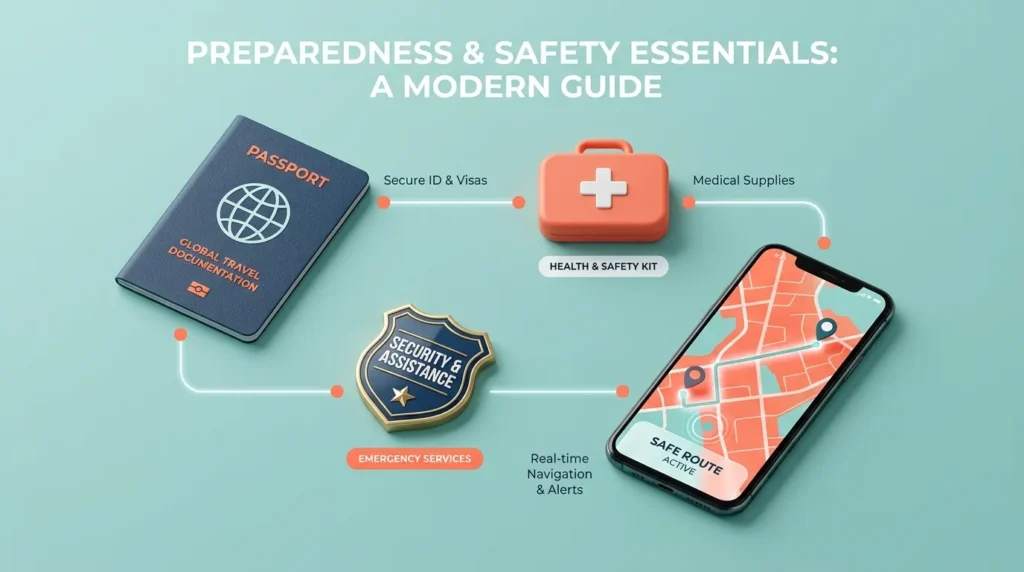
To make learning easier, we should categorize our communication needs based on the type of threat. You do not need to become fluent. You just need to know enough to get the right attention immediately.
Let us walk through the most common scenarios you might face. We will look at exactly what you need to convey when things go sideways.
Category 1: Medical Urgencies and Health
The most terrifying situations always involve health. When someone is in pain, seconds matter.
You need to know how to ask for a doctor, an ambulance, or a pharmacy. Knowing the local word for “hospital” is your first line of defense.
You also must learn how to say words like “pain,” “heart,” “allergy,” and “bleeding.” If you have specific medical conditions, write down the exact translation of your condition on a physical card.
Keep this card in your wallet at all times. This simple step is a huge part of handling a medical emergency abroad without losing precious time.
Watch This Before You Pack Your Bags:
Before we move on to handling local authorities, take a minute to watch this incredibly helpful breakdown of basic survival phrases. This video covers exactly how to pronounce emergency words without feeling awkward.
Category 2: Navigating Crime and Security
Unfortunately, tourists are often targeted by opportunistic criminals. Pickpocketing and bag snatching happen in major cities every single day.
If someone steals your passport, you need to know how to shout for the police. You must learn the local equivalent of “Help,” “Stop,” and “Thief.”
Yelling these words in the local language alerts bystanders much faster than yelling in English. It shows locals exactly what is happening and prompts them to assist you.
Once you are safe, you have to file a report. Knowing how to ask for the police station is essential for recovering your items and getting insurance payouts.
This proactive approach is your best tool for dodging common tourist scams and dealing with the aftermath effectively.
Pro Tip for Your Next Trip
I once downloaded a massive language pack on my phone, thinking I was completely prepared for a trip to rural Italy. When my rental car broke down, I realized my battery was completely dead and my digital translator was useless. Now, I always carry a small, waterproof notebook with my printed emergency phrases tucked inside my left shoe. It sounds crazy, but physical backups will save you when technology inevitably fails.
Category 3: Dealing with Accommodation Hazards
We often assume our vacation rentals are completely safe. However, safety standards vary wildly across different countries.
You might check into a beautiful apartment only to find exposed wiring near the shower. You might notice a strong smell of gas coming from the kitchen stove.
In these moments, you have to contact your local host immediately. You need the vocabulary to explain why you feel unsafe.
Learning how to report electrical hazards abroad could literally prevent a fire. The National Fire Protection Association frequently highlights how unrecognized electrical faults are leading causes of residential fires worldwide.
If you notice weird sparks, you need to know the words for “fire,” “danger,” and “electricity.”
Similarly, many decorative plants in tropical rentals are highly poisonous. Knowing how to communicate about reporting toxic indoor plants in a foreign language is incredibly helpful if a child touches something dangerous.
Even securing your belongings requires clear communication. You might need to ask the front desk to fix a broken latch, which falls right in line with securing your hotel room doors.
Category 4: The Safety of Those Left Behind
Sometimes the emergency is not happening to you, but back at your own house. Many of us use smart technology to monitor our homes while we are oceans away.
Imagine sitting in a cafe in Tokyo and getting a smartphone alert from your home security system. You see an issue on your camera, and you need to call a local friend or a pet sitter who happens to speak a different language.
You need to know how to rapidly text or speak phrases like “check the house” or “call the police.”
If you are traveling with your furry friend, the risks multiply. Dogs love to explore, and they might eat something toxic on a foreign street.
Learning foreign language phrases for pet food poisoning is something few people think about. Yet, animal poison control experts at the ASPCA note that quick intervention is the only way to save a poisoned pet. You must know how to ask for a veterinarian immediately.
Even something as modern as a smart door lock emergency phrases for international trips can be handy. If your rental’s smart lock fails and locks you out in the freezing cold, you need to explain the digital malfunction to a local locksmith.
How to Memorize Without Overwhelming Yourself
You do not need to spend hours on language apps trying to become a fluent speaker. Your goal is strictly survival communication.
The best method is focusing on short, impactful words rather than full, grammatically correct sentences. People will understand your panic even if your grammar is entirely wrong.
The Rule of Three
When trying to learn new words, focus on three main categories: Danger, Health, and Directions.
Under “Danger,” memorize the words for help, police, and fire.
Under “Health,” memorize doctor, hospital, and pain.
Under “Directions,” memorize where, embassy, and phone.
If you only learn these nine words, your chances of navigating a crisis improve drastically. It gives you a baseline of confidence.
The Core List: 19 Emergency Phrases You Must Learn
To make things incredibly easy for you, I have compiled the ultimate list of 19 specific phrases you need to translate and memorize before your flight. I have broken them down into three critical categories:
Category A: Medical & Health Emergencies
- 1. “I need a doctor immediately.” (Crucial for sudden illness).
- 2. “Where is the nearest hospital?” (Best for directing a taxi).
- 3. “Please call an ambulance.” (When the patient cannot be moved).
- 4. “I am allergic to [peanuts/shellfish/penicillin].” (Write this one down on a physical card).
- 5. “I am having severe chest pain.” (Or point to the area of pain).
- 6. “Where can I find an open pharmacy?” (For minor issues or quick medications).
- 7. “I need medicine for food poisoning.” (Essential for unexpected stomach bugs).
Category B: Crime, Security & Urgent Danger
- 8. “Help me, please!” (The most universal cry for assistance).
- 9. “Call the police right now.” (Use this if you witness or experience a crime).
- 10. “Stop! Leave me alone!” (Perfect for aggressive scammers or pickpockets).
- 11. “My wallet/passport has been stolen.” (Needed when reporting to local authorities).
- 12. “Fire! Everyone get out!” (Vital for Airbnb or hotel evacuations).
- 13. “I am being followed, can I stay here?” (A life-saving phrase to use in a local shop).
Category C: Navigation, Accommodation & Family Safety
- 14. “Where is the United States Embassy/Consulate?” (Your ultimate safe zone).
- 15. “I am lost, can you help me find this address?” (Keep your hotel card ready with this).
- 16. “I need to make an urgent phone call.” (If your phone is dead or stolen).
- 17. “There is a dangerous gas/electrical issue in my room.” (For vacation rental safety).
- 18. “Is this tap water safe to drink?” (Prevents accidental illness).
- 19. “Where is the nearest emergency veterinarian?” (An absolute must-know if traveling with your pet).
Pro Tip: Do not try to learn the entire sentence if it feels too hard. Just translating the main bold words (Doctor, Police, Fire, Allergy, Embassy) into the local language will be enough to save your life.
Practicing in the Mirror
It sounds a bit silly, but saying these words out loud before your trip builds muscle memory. You need to get used to the shape of the words in your mouth.
When you practice, try to simulate a bit of urgency. Say them loudly and clearly.
If you are following solo travel safety guidelines, you have no one else to rely on. Your voice is your only alarm system, so you must know how to use it.
Physical vs. Digital Backups
| Backup Method | Pros | Cons |
| Translation Apps | Extensive vocabulary, audio pronunciation | Requires battery, can be slow to type in a panic |
| Printed Flashcards | Always accessible, never runs out of battery | Can get wet or lost if not protected properly |
| Memorization | Instant access, hands-free, eye contact maintained | Prone to memory blanks during high adrenaline |
The smartest strategy involves combining all three methods. Memorize the top five words for instant reactions. Keep a printed card in your pocket for complex medical terms.
Use your phone as a backup for deep conversations with doctors once the initial panic settles. Having a phrases to know when traveling abroad pdf downloaded for offline use is a great modern safety net.
Environmental and Daily Safety
Emergencies are not always dramatic events like robberies. Sometimes, an emergency is extreme dehydration because you got lost in a rural village.
You need to know how to ask for clean, bottled water. This connects directly to checking local water quality and knowing when it is safe to drink from the tap.
If you cannot read the warning signs on a public beach or a hiking trail, you are walking blind. Learning to recognize the local written words for “Danger,” “Do Not Enter,” or “Non-Potable Water” is a passive form of communication that saves lives.
If you get lost, knowing how to ask for the United States Embassy can be a game-changer. The U.S. Department of State highly recommends knowing how to direct a taxi driver to your nearest consulate in their native tongue.
The embassy is your ultimate safe haven, but you have to know how to get there first. A map is great, but verbal directions to a driver are much faster.
Taking a few minutes to write down these specific navigational phrases will make you feel incredibly secure. It is like carrying a hidden shield in your backpack.
Beyond Basics: Advanced Strategies for Instant Communication
You already know that memorizing a few words is better than knowing nothing at all. But when you are traveling with your family, you want a communication strategy that runs deeper than a basic vocabulary list.
You need systems in place that work effortlessly even when your brain freezes. Real safety is about creating backup plans for your backup plans.
One of the smartest things I ever started doing was creating a dedicated “crisis card” for every single country I visit. I do not just write down the translation for “hospital” on a random piece of paper.
Instead, I write down a fully localized emergency script. For example, if I am going to Spain, the card clearly states, “I am an American tourist, I need emergency medical help, please call 112.”
Handing this card to a passing stranger is much faster than trying to pronounce the words correctly while panicking. This small card removes the burden of speaking entirely.
Leveraging Local Sympathy
When you are in a tight spot, your body language speaks much louder than your actual words. Do not just shout a translated phrase while standing perfectly still.
If you need a doctor, point to your chest or the area of pain while making direct eye contact with one specific person. Shouting “Help” to a large crowd often causes the bystander effect, where everyone assumes someone else will step in.
Instead, lock eyes with the nearest shopkeeper or a mother walking with her kids. Hand them your pre-written phrase card. People are naturally inclined to help a distressed traveler, but you have to give them clear instructions on what you need them to do.
This human element is a core part of staying safe as a digital nomad, where you constantly rely on the kindness of local strangers.
The Hidden Danger in the Kitchen
We rarely think about our Airbnb kitchens as danger zones until something goes terribly wrong. You might cook a lovely dinner, pack away the leftovers, and wake up violently ill the next morning.
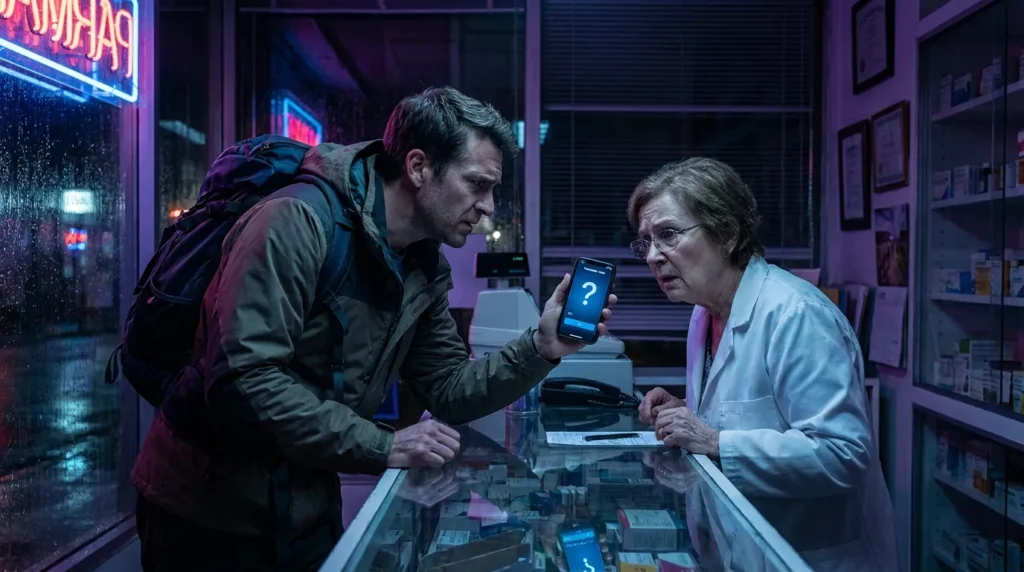
If you suspect severe food poisoning from local ingredients, you cannot afford to waste time. You need to know how to explain to a local pharmacist exactly what you ate and how you feel.
The Centers for Disease Control and Prevention clearly states that early hydration and communicating symptoms to local health professionals are the main keys to recovering quickly.
Learning the local words for “vomiting,” “fever,” and “stomach pain” will get you the right medication instantly. This proactive step helps you avoid serious food poisoning complications and gets you back on your feet faster.
Smart Tech Requires Smart Explanations
In our modern world, we travel with expensive laptops, drones, and smart gear. We even leave our pets at home under the watchful eye of a pet camera.
If your home security app alerts you to a break-in while you are in Paris, calling your local police department in the US can be surprisingly tricky due to international dialing restrictions. You often have to call a non-emergency number, and sometimes your VoIP connection fails.
In these moments, you might need to run to a hotel concierge and ask them to help you dial an international line. Knowing how to ask, “Please, I need to make an urgent international call, my house is being robbed,” in the local language is incredibly specific but immensely helpful.
The same goes for local transportation. If an Uber driver is making you uncomfortable in a foreign country, you need to know how to firmly say “Stop the car right now” in their native tongue.
Relying entirely on digital maps is risky if you cannot verbally direct the driver. This is a massive part of balancing ride-sharing safety versus local taxis.
The Communication Traps We Fall Into
Even the most seasoned travelers make silly mistakes when trying to speak a foreign language under pressure. These mistakes might seem harmless, but they can actively put you in more danger.
I see people trying to be overly polite during an emergency. They try to construct full sentences like, “Excuse me sir, I am so sorry to bother you, but could you please help me find the police?”
When you do this, you lose the sense of urgency. The local person might not understand the long sentence and simply walk away thinking you are just asking for street directions.
The Danger of Assuming Context
Another massive trap is relying heavily on generic words like “bad” or “problem.” If you just run up to a local and say the translated word for “problem,” they have no idea what is going on.
A “problem” could mean you lost your favorite hat, or it could mean someone is having a heart attack. You must be specific.
If it is a fire, shout “Fire!” If it is a thief, shout “Thief!” Being vague delays the specific type of help you actually need.
Laughing Off Misunderstandings
Sometimes, tourists use the wrong word and accidentally say something funny. Usually, this is a great way to break the ice with locals.
However, in a crisis, if you smile nervously or laugh to hide your embarrassment about poor pronunciation, locals will assume you are joking around.
You must keep a serious face. Your facial expressions need to match the severity of the words you are trying to say. If you are terrified, let your face show that terror.
Do not try to mask your fear out of politeness. Let the locals see your distress so they understand the gravity of the situation.
Trusting Your Translation App Blindly
Technology is a wonderful tool, but it is deeply flawed. Many popular translation apps struggle with local dialects or slang.
If you type “My chest feels tight,” the app might literally translate it as “My shirt is too small” in a specific regional dialect.
This is why verifying your emergency phrases with a real human—like your hotel receptionist—on the first day of your trip is so important. Ask them, “If I get hurt, is this exactly how I should ask for an ambulance?”
Taking five minutes to double-check your list ensures your words actually carry the meaning you intend. It prevents dangerous miscommunications that could waste valuable time.
Common Questions About Traveling Safely Abroad
What phrases are good to know when traveling?
Focus on absolute survival first. You should memorize words for “Help,” “Police,” “Doctor,” “Fire,” and “Where is the hospital?” Adding phrases regarding specific allergies or the location of your country’s embassy is also highly recommended.
What is the most essential phrase or word for tourists to learn in a foreign country?
Without a doubt, the phrase “I need help” or simply the word “Help” is your most vital tool. Combine this with the word “Police” or “Doctor,” and anyone nearby will instantly understand that you are in serious trouble.
What to remember when traveling internationally?
Remember that your safety is entirely your own responsibility. Memorize your local emergency numbers (like 911 equivalents), keep physical copies of your translated phrases, and make sure your home security devices, like smart door locks, are fully functional before you leave.
What should I do with my cell phone when traveling internationally?
Always download offline maps and language packs for your translation apps so they work without the internet. Save local emergency contact numbers directly into your phone book, and consider making your medical ID accessible from your lock screen.
What is the 333 rule for travel?
The 333 rule is a great panic-control technique: name three things you see, three things you hear, and move three parts of your body. It grounds you mentally so you can stop shaking, focus your mind, and remember the foreign emergency phrases you practiced.
Your Personal Action Plan for Tomorrow
We have talked a lot about the scary things that can happen far away from home. But the goal here is not to make you terrified of leaving your living room.
The goal is to give you absolute control over the unknown. Knowledge is the best shield you can pack in your suitcase.
When you know exactly what to say in a worst-case scenario, the anxiety magically disappears. You stop worrying about “what ifs” and start actually enjoying your vacation.
You can walk through crowded foreign markets with your head held high, knowing you can protect your family if things go sideways.
Tomorrow morning, do not just read this and move on. Take out a sticky note and write down the translation for “Help” and “Hospital” for your next travel destination. Put that note on your bathroom mirror. Read it out loud every single morning until the trip. I promise you, taking this tiny, proactive step will make you feel incredibly empowered and ready to take on the world.
Disclaimer: The information provided in this article is for educational and informational purposes only. It does not constitute professional medical, legal, or security advice. Travel safety conditions change rapidly, and language nuances vary by region. Always consult with official government travel advisories, local authorities, and certified professionals before making travel decisions or handling emergencies abroad.