You have been saving for months for this dream vacation. You finally land in a beautiful new city, feeling incredibly excited and free. But within hours, someone approaches you with a friendly smile and a “free” welcome gift.
Before you even realize what is happening, your wallet is gone or you are forced to pay an outrageous fee. This is the harsh reality for thousands of international travelers every single day. According to global law enforcement reports on Wikipedia, organized street crime syndicates specifically target distracted tourists near major transit hubs.
Getting scammed is not just about losing your hard-earned money; it completely ruins your peace of mind. It turns a happy lifestyle memory into a stressful nightmare that stays with you forever.
You start looking at every local resident with suspicion instead of enjoying the beautiful culture around you. According to travel experts at Forbes, this constant fear and anxiety can ruin the very reason you chose to travel. Therefore, learning how to avoid tourist scams is the most crucial skill you need before booking your next flight.
Why Most Travelers Fall Into These Traps
Many smart people think they are too clever to be tricked by street criminals. However, modern scammers are highly skilled professionals who do this every single day for a living.
Here is why global travelers often struggle to stay safe abroad:
- Bad Advice from Outdated Blogs: Many websites list old-school scams that don’t happen anymore, making you miss the sophisticated new digital traps.
- Over-Reliance on Cultural Kindness: We are naturally taught to be polite, and scammers use our good manners directly against us.
- Complete Lack of Local Knowledge: If you don’t know the actual local price, you won’t know when you are being heavily overcharged.
- Jet Lag, Distracted Minds, and Fatigue: After a long flight, your brain is tired, making you the ultimate easy target for syndicates.
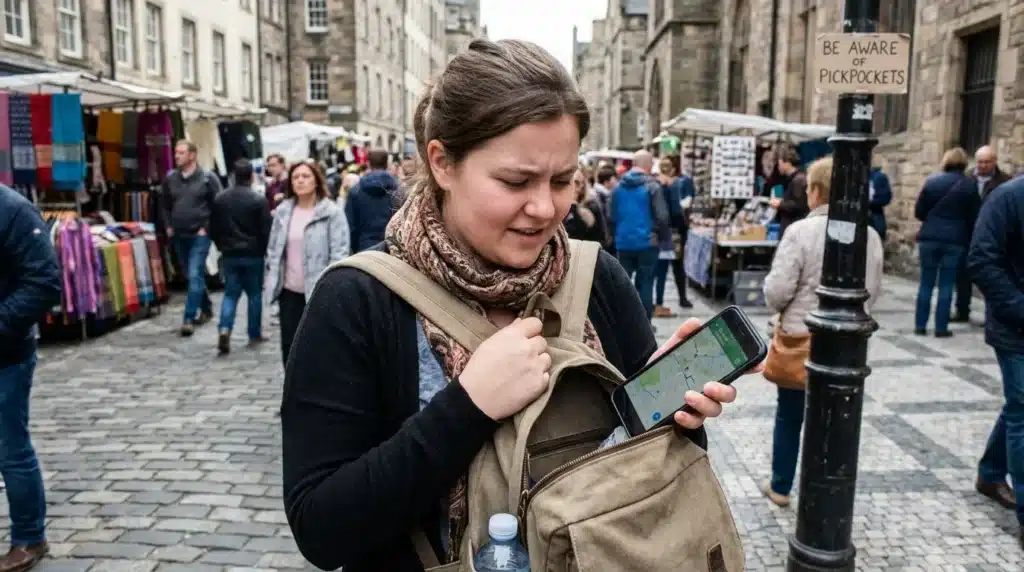
- The Danger of Digital Overload: We spend so much time looking down at Google Maps that we completely forget to watch our physical surroundings.
How Scams Damage Your Peace of Mind
The painful impact of a street scam goes much deeper than your bank account balance. It directly hits your personal confidence and your mental health during the entire trip.
- Complete Loss of Trust: You stop interacting with genuine locals because you falsely think everyone wants to steal from you.
- Constant Travel Anxiety: Every time a stranger approaches you, your heart rate goes up and you feel deeply stressed.
- The Psychological “Victim” Feeling: You feel incredibly foolish and angry at yourself for letting a simple trick happen.
- Immediate Canceled Plans: Losing your official passport or primary credit cards can end your international trip immediately.
The Harsh Reality of the Modern Scammer
Scammers are no longer just suspicious people hiding in dark, empty alleys. They are often incredibly well-dressed, speak multiple languages fluently, and look highly professional.
Some might even look like innocent students or elderly people who look like they desperately need your help. They use advanced psychology to make you feel like you owe them something.
In many major tourist hotspots, these street scams are organized exactly like a corporate business. There are lookouts, professional distractors, and the main thief who actually takes the cash. By the time you realize what just happened, they have all disappeared into the crowded market.
Important Security Note: Understanding this reality is the first major step toward protecting yourself. You are not just avoiding a single bad person; you are avoiding an organized system designed to take your money. If you go prepared, you can reclaim your trip and enjoy it without constant worry.
How to Outsmart Scammers Before They Strike
Staying completely safe does not mean you have to be paranoid during your vacation. It simply means being fully prepared and knowing exactly what to look for. Here is a step-by-step guide to help you move through any global city with absolute confidence.
Step 1: Research Specific Scams for Your Destination
Every international city has its own “famous” street setups. What happens to a tourist in Paris is very different from what happens in Bangkok, Bali, or Rome.
Before you leave your house, spend thirty minutes looking up recent travel safety forums. Search for recent tourist incidents and read what actually happened to people in the last few months.
Always talk directly to your hotel front desk staff when you arrive. Ask the local receptionist which specific neighborhoods to avoid at night. They live there and see these things every day, so their insider advice is pure gold.
Step 2: Learn the Power of a Firm “No”
Professional street scammers always rely on you being too “nice” or polite to walk away. They might start a random conversation that feels completely harmless, but it always has a hidden financial goal.
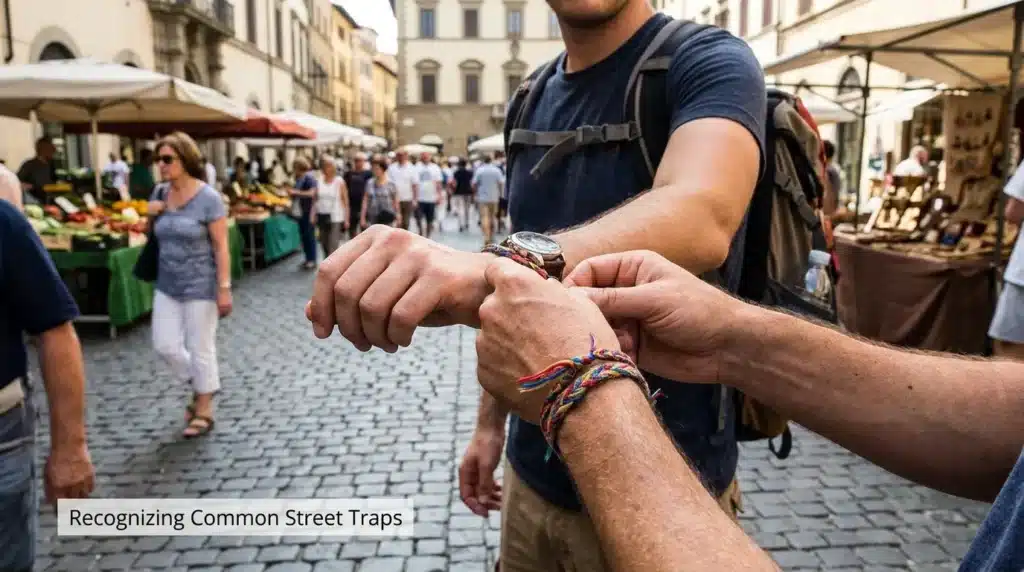
If a stranger approaches you with a free gift or a flower, do not touch it under any circumstance. Once you touch it, they will aggressively act like you have officially bought it.
Keep walking at a steady pace. You don’t have to be rude, but you must look completely firm. A simple, loud “No, thank you” while moving away is highly effective.
Step 3: Secure Your Physical Belongings
Pickpockets and thieves always look for “low-hanging fruit” or easy targets. Your travel gear plays a massive role in how much of a target you look like to observers.
Investing in the right gear is your first line of defense. Use a hidden money belt or an internal pocket to keep your main cash and passport secure. For quick transactions, always learn how to safely hide cash and passports while traveling instead of exposing your main wallet.
Be extremely careful with your smartphone. Never walk around crowded streets with your phone loosely in your hand while looking at a map. This is the easiest way for someone on a passing bike to grab it and ride away instantly.
Step 4: Identify the “Helpful Stranger” Tactic
One of the most common ways international travelers get robbed on the street is through a fake “accident” or distraction tactic.
- The Spill Scam: Someone might accidentally spill ketchup, coffee, or even bird poop on your shoulder. While they “helpfully” wipe it off, their hidden partner is actively reaching into your pockets.
- The Broken Camera Trick: A stranger asks you to take a quick photo of them. When you hand the camera back, they purposefully drop it, blame you loudly, and demand cash for the “broken” device.
- The Map Helper: If you look visibly lost, someone might offer to show you the way on a large paper map. They use the massive map to physically block your view of your own bag while they rob you underneath it.
Step 5: Master Safe Transportation
Taxis, local trains, and public transport hubs are major worldwide centers for tourist fraud.
Always use official, designated airport taxi stands. Never get into a random vehicle with someone who approaches you inside the arrival terminal. These are almost always unlicensed, illegal drivers who will overcharge you by hundreds of dollars.
Insist that the driver turns on the official taxi meter. If the driver claims the meter is “broken,” politely get out of the car immediately. A broken meter is a guaranteed sign that they want to charge you an illegal price.
Whenever possible, rely on official ride-sharing apps like Uber or Grab. These digital platforms lock in the price beforehand and provide a tracking route. This aligns with modern 5 essential tips for a securely life that every global commuter should follow.
Step 6: Watch Out for “Closed” Attractions
This is a classic, highly effective scam frequently run in many Asian and European historic cities.
A friendly local tuk-tuk or taxi driver might tell you that the famous museum or temple you want to visit is “closed for a local holiday.” They will then kindly offer to take you to a “much better” secret palace that is only open today.
This is always a complete lie. They are actually driving you to a high-pressure jewelry or souvenir shop where they receive a massive cash commission for anything you buy.
Always check the main entrance gate yourself. Never blindly trust a random stranger who tells you a major national attraction is closed. Most historic sites don’t close without official notices on their website.
Step 7: Protect Your Digital Data
Modern scams are no longer just physical; your digital identity and personal banking data are just as valuable as your paper cash.
Avoid using free public Wi-Fi networks for personal banking. Never log into your financial accounts or type in sensitive passwords while connected to free airport, hotel, or cafe Wi-Fi. Cybercriminals can “sniff” and intercept this unencrypted data easily.
Always use a reliable Virtual Private Network (VPN) on your phone and laptop. Furthermore, be incredibly wary of “Free USB Charging Stations” in public places. Some public ports are modified to secretly steal data from your phone, so always use your own wall plug instead.
Step 8: The Fake Police Scam
This is one of the scariest setups because it involves immediate psychological pressure and perceived official authority.
Someone wearing a realistic uniform might stop you on the street and ask to check your wallet for “counterfeit bills” or verify your visa status.
Real international police officers will rarely handle your physical cash on the street. If this happens, stay completely calm and firmly ask to see their official police identification card.
Politely suggest walking together to the nearest official police station to resolve the matter. A fake officer will almost always make an immediate excuse and walk away because they don’t want to go near a real precinct.
Step 9: Trust Your Intuition and Gut Feeling
Your internal “gut feeling” is a powerful survival tool. If a deal, a tour, or an interaction feels a bit too good to be true, it almost certainly is.
If a luxury item or experience is priced incredibly cheap, there is always a massive catch. No one is going to sell you a real gold ring or a designer leather bag for ten dollars on a street corner.
Never be afraid to leave an uncomfortable situation. You do not owe a stranger an explanation for walking away when your safety is on the line. Also, stay fully sober in unfamiliar nightlife districts, as scammers actively target intoxicated tourists.
Step 10: Always Have a Secure Backup Plan
Even with perfect preparation, unexpected things can still go wrong. Having a reliable backup system makes a massive difference in an emergency.
Keep a secure digital copy of your passport, visa, and travel insurance in a secure cloud folder like Google Drive or Dropbox. If your physical documents are stolen, having these copies makes getting an emergency replacement much faster.
Never keep all your cash and cards in one single place. Keep one backup credit card locked inside your hotel room safe. If you need help choosing accommodation with proper security features, check out this comprehensive hotel room security locking guide to protect your room.
Master-Level Tricks to Stay One Step Ahead of Street Thieves
Getting to know the basic tricks is a good start. But if you want to travel like a true seasoned professional, you need to learn to think exactly like an experienced scammer.
The Art of the Dummy Wallet
One of the smartest safety habits you can adopt is carrying a “dummy wallet”. This is simply an old, cheap wallet filled with a few expired gift cards and a tiny amount of local cash.
If you ever find yourself in a rare, high-pressure situation where someone demands your money, you can calmly hand over the dummy wallet.
This brilliant trick works perfectly because it satisfies the criminal immediately. They get what they want and run away, while your real cash, primary credit cards, and official ID remain safely hidden in your secret body belt.
Securing Your Digital Footprint on the Move
Thieves don’t just want your physical paper cash anymore; they want your digital banking access codes and personal data.
When you are unlocking your phone in a busy public square, never leave your screen visible to onlookers. “Shoulder surfers” often watch tourists type their passcodes before physically snatching the phone from their hands.
If they manage to grab your unlocked phone along with your numerical passcode, they can drain your mobile banking accounts in minutes. Always rely on biometric locks like your fingerprint or Face ID when you are out exploring.
ATM Safety Beyond the Basics
Most travelers already know to look for hidden pinhole cameras at a street ATM. However, professional financial scammers now use advanced “skimmers” that are completely invisible to the untrained eye.
Before you insert your debit card, give the plastic card reader slot a very firm physical tug. Real bank ATM parts are solid and won’t move at all. If the plastic casing feels loose, shaky, or wobbly, walk away immediately.
Before you put your card in, make sure you choose your location wisely:
- Safe ATM Choice: Located inside a bright, staffed bank building during business hours.
- Risky ATM Choice: Located on a dark, isolated street corner at night.
If a machine suddenly “eats” your card, do not walk away to find help. Often, a thief has placed a physical trap inside the slot and is waiting nearby for you to leave so they can pull your card out safely.
Huge Mistakes That Make You an Instant Target for Scammers
Many international tourists make the exact same critical errors over and over again. These bad habits act like a giant “rob me” sign for professional street thieves.
Thinking You Are “Too Smart” to Be Tricked
This is easily the most common mistake made by modern travelers. People falsely assume that because they have a high-paying job or a college degree, they cannot be fooled by a street hustler.
Professional scammers do not care about your academic IQ. They play purely on human emotions, empathy, and cultural confusion. They spend twelve hours a day, 365 days a year, perfecting these psychological traps.
The Societal Fear of Being Rude
We are naturally taught to be polite to everyone we meet. When visiting a gorgeous new country, tourists desperately want to avoid looking like an “angry, arrogant tourist.”
Scammers actively use this social pressure directly against you. They will keep talking, walking alongside you, and asking questions, knowing that you feel too awkward or embarrassed to simply walk away.
You must realize that a stranger who completely refuses to leave you alone is the one being incredibly rude, not you. You have every right to end the conversation instantly.
Carrying All Your Financial Assets in One Place
Imagine if your primary daypack gets stolen and it contains your passport, all your cash, and both of your active credit cards. Your dream vacation is over in a single second.
Never keep all your financial eggs in one single basket. Always use the reliable split-cash method to ensure that a single incident does not leave you completely stranded abroad.
Common Questions About Staying Safe Abroad
What should I do if I realize I am being actively scammed right now?
The absolute best thing to do is disengage and walk away immediately. Do not try to “win” a loud argument or get your money back if the situation feels physically unsafe. Find a crowded shop, a hotel lobby, or an official security guard as soon as possible.
Are local street markets always a hotspot for scams?
Not at all. The vast majority of global street vendors are honest, hard-working people trying to make a living for their families. The key is to negotiate and fully agree on the final price before you take or consume the item.
Is it safe to give cash directly to children on the street?
While it is emotionally heartbreaking, giving money to child beggars often keeps them trapped out of school. Organized crime groups frequently use children to collect cash for adult handlers. If you want to make an impact, donate to a registered local charity.
How can I tell if a local taxi is official or a scam?
Official taxis almost always feature a permanent, bolted sign on the roof, a visible meter, and an official driver ID badge displayed clearly inside the cabin. If the vehicle is a standard personal sedan with no markings, it is an unlicensed ride.
Is it better to use physical cash or credit cards to avoid theft?
Credit cards are generally much safer for international travel because they offer robust fraud protection. If someone steals your cash, it is gone forever. If they steal your credit card data, you can instantly freeze the card via a mobile app and get your money protected by your bank.
Travel with Absolute Confidence and Joy
Exploring our beautiful world is one of the most enriching things you can ever do in your life. Never let the fear of street scams stop you from seeing amazing historic places and meeting wonderful cultures.
By following these simple, expert-approved safety steps, you are already significantly safer than 90% of other tourists on the plane. You now possess the mental tools to spot an organized trap before it even unfolds.
The world is full of incredibly kind, welcoming, and wonderful people who genuinely want to share their rich culture with you. Now that you know how to easily avoid the few bad actors, you can focus entirely on making beautiful friends and lifelong memories.
Go out there and explore our planet with your eyes wide open and your heart ready for a grand adventure. Have an absolutely amazing, safe trip!
Disclaimer: The information in this blog post is for educational purposes only. While we aim to provide accurate and helpful advice, travel situations can change quickly. We are not responsible for any loss, theft, or injury that may occur during your travels. Always check local laws and official government travel advisories for your specific destination before you go.