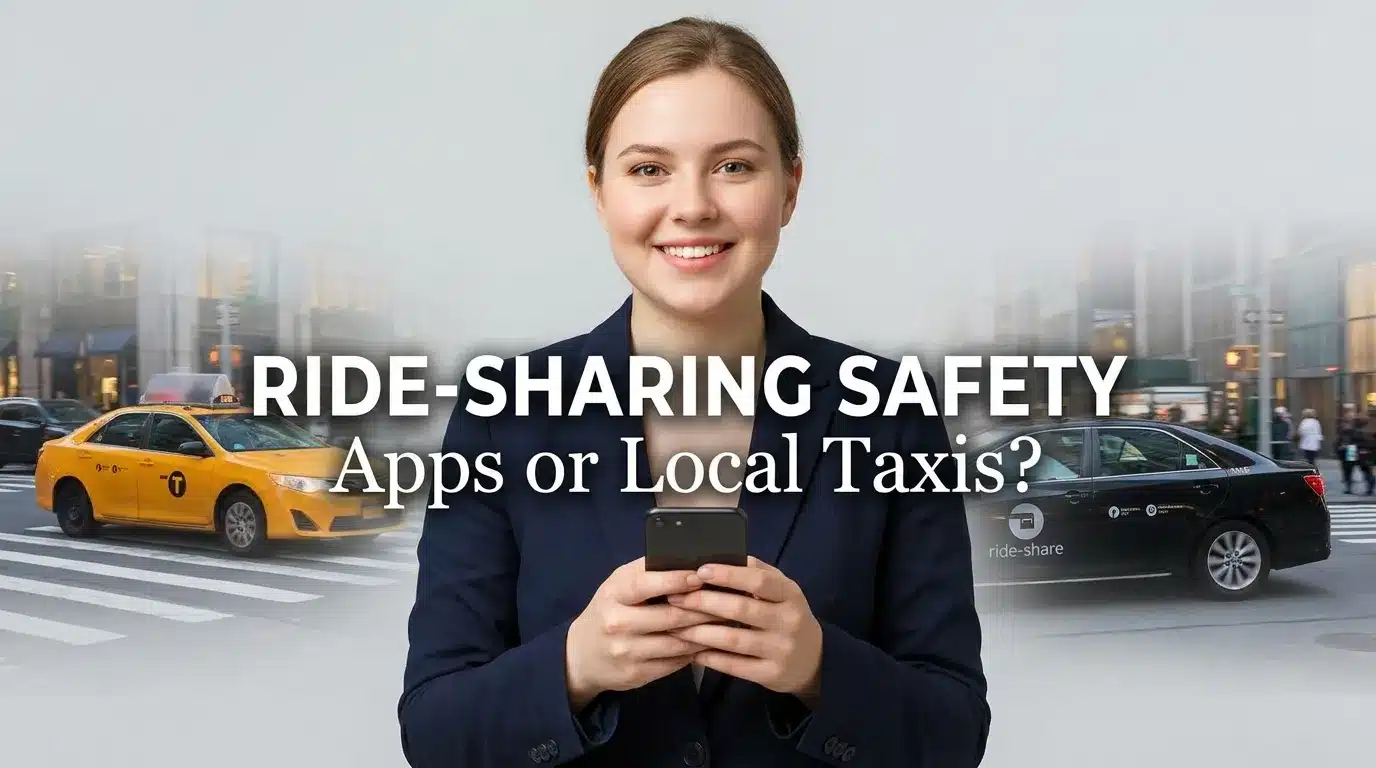
Have you ever stood on a busy street corner, watching cars pass by, and felt a tiny pinch of fear?
You need to get home or reach a hotel in a new city. You open a ride-sharing app, but then you see a bright yellow local taxi parked right there.
Your mind starts racing with questions. Is this driver licensed? Will they take a longer route to charge me more? What if I get into the wrong car?
According to transport safety studies published by Forbes, millions of travelers face this dilemma daily. We live in a time where we trust strangers with our lives just to get from point A to point B.
This constant worry isn’t just in your head; it is a real response to the risks of modern travel. Implementing practical ride-sharing safety tips can significantly eliminate these vulnerabilities.
Many people feel trapped between the convenience of an app and the traditional feel of a local cab. This confusion often leads to poor choices that put your personal safety at risk. As detailed in the global overview of ridesharing services on Wikipedia, passenger security remains a top priority worldwide.
Why Finding the Right Safety Information Feels Impossible
- Conflicting Reviews: You see one person praising an app while another shares a horror story about the same service.
- Lack of Local Knowledge: When you are in a new city, you don’t know the reputation of local taxi companies, making it easy to fall victim to common travel traps. To prevent this, you should learn how to avoid common tourist scams abroad before your trip.
- Overwhelming Tech Features: Apps have so many buttons and “safety tools” that it is hard to know which ones actually work.
- Hidden Scams: Both apps and taxis have unique ways of tricking passengers, and the rules change depending on where you are.
- The “It Won’t Happen to Me” Mindset: Many people ignore safety rules because they have never had a bad experience before.
How Transport Stress Ruins Your Peace of Mind
- Low Confidence: You feel vulnerable and small when you don’t know if your driver is following the right path.
- Mental Exhaustion: Constantly checking your GPS and looking over your shoulder makes travel feel like a chore rather than a joy. Developing a strong sense of situational awareness can help you stay calm and alert.
- Fear of Being Lost: The thought of being dropped off in a dark, unknown area can cause a genuine panic attack.
- Loss of Control: You are sitting in the back seat, and someone else is in charge of your physical safety, which is a scary thought.
- Social Pressure: Sometimes we ignore our gut feelings because we don’t want to seem “rude” to a driver or a friend.
When you can’t trust the car you are in, the whole trip becomes a nightmare. You stop looking at the beautiful city outside and start staring at the driver’s ID or the car door lock.
“Safety is something you have to create for yourself by using the right tools and knowledge. Most people think they are safe just because they booked through an app, but that is a dangerous mistake.”
Apps can have glitches, and taxi meters can be tampered with. If you don’t have a solid plan, you are basically leaving your safety to luck. We are here to change that and give you the power back.
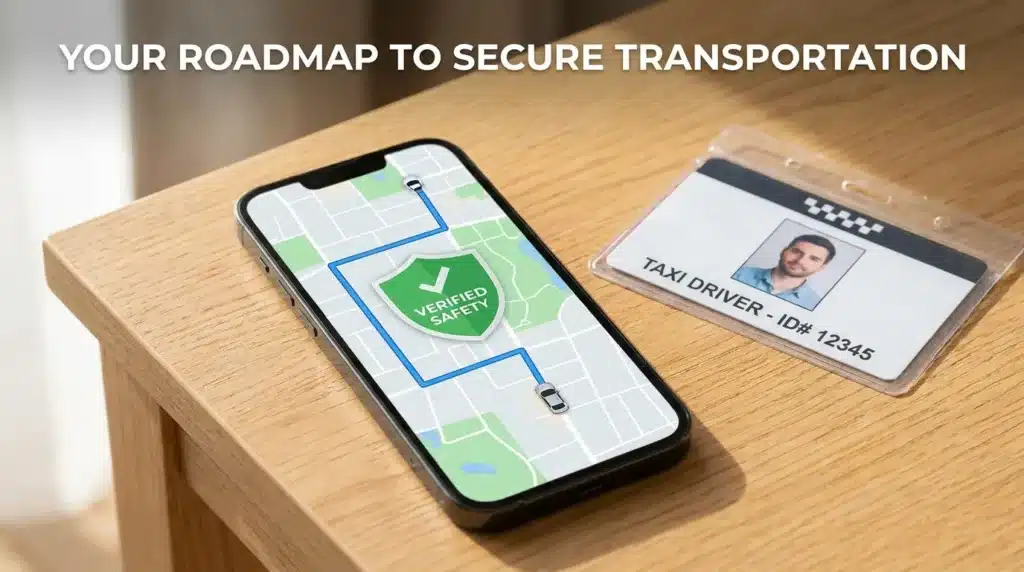
Your Roadmap to Secure Transportation: Practical Steps
To stay safe, you need a system that works every single time. It doesn’t matter if you are using a high-tech app or a classic taxi. You need to follow these steps to make sure you arrive at your destination without any trouble.
Step 1: Master the Art of Digital and Physical Verification
Before you even touch the door handle, you must verify who is behind the wheel. For ride-sharing apps, this is usually easier, but people often get lazy.
Never ask the driver “Are you [Name]?” instead, ask them “Who are you here to pick up?” This simple flip of words forces the driver to prove they have your data on their screen.
If you are using a local taxi, look for the official ID displayed on the dashboard. In most cities, this is a legal requirement.
If the photo on the ID doesn’t match the face of the driver, do not get in. It might feel awkward to walk away, but your safety is worth more than a moment of social discomfort.
Check the license plate of the car. In an app, this is shown clearly. For a local taxi, make sure the plate matches the number painted on the side of the car or the roof light.
Look for official markings. Real taxis usually have a radio, a visible meter, and official city seals. If a “taxi” looks like a regular private car with a loose plastic sign on top, it might be an unlicensed “gypsy cab.” These are much riskier because they have no official oversight.
Step 2: Use Technology as Your Personal Bodyguard
Your smartphone is your best friend when it comes to travel safety. For ride-sharing apps, always use the “Share Trip Status” feature. Send your live location to a friend or family member.
Tell the driver you are doing this. You can say something simple like, “I’m just sending my arrival time to my brother.” This sends a clear message to the driver that someone else knows exactly where you are and who you are with.
If you are in a local taxi that doesn’t have an app, use Google Maps. Type in your destination and follow the blue dot. If the driver starts moving away from the suggested path, ask them why.
Sometimes there is traffic, and they are taking a shortcut. But by asking, you show them that you are paying attention. A driver who knows they are being watched is much less likely to try anything suspicious.
Always keep your phone charged. If your battery is low, carry a small power bank. A dead phone makes you much more vulnerable because you lose your GPS and your ability to call for help. Using public networks at transit hubs also poses risks, so make sure to protect your data and prevent identity theft on public Wi-Fi.
Step 3: Choose Your Seat and Exit Strategy Wisely
Where you sit in the car matters more than you think. Always sit in the back seat, preferably on the side opposite the driver. This gives you a clear view of both the driver and the road.
Sitting in the back provides you with more personal space. It also makes it harder for the driver to reach you physically. If you sit directly behind the driver, they can’t see you easily in the mirror, which adds another layer of privacy.
Before the car starts moving, check the door handles. Some cars have child locks engaged. While this is meant for kids, it can be used to trap a passenger.
Make sure you can open the door from the inside. If you feel uncomfortable, you can pretend you didn’t close the door properly and test the handle.
Also, keep your belongings right next to you. Do not put your bag in the trunk if you can avoid it. If you need to exit the car quickly in an emergency, you don’t want your laptop or passport locked in the back of the car. This is just as critical as checking your hotel room security locking guide when arriving at your destination.
Step 4: Trust Your Gut and Set Boundaries
We often ignore our “inner voice” because we want to be polite. If a driver asks too many personal questions, you don’t have to answer. You don’t have to tell them if you live alone or if you are visiting the city for the first time.
It is okay to be a “boring” passenger. You can pretend to be on a call or put in headphones (even if no music is playing). This creates a barrier between you and the driver.
If the car smells like alcohol, or if the driver seems sleepy, trust your instincts and cancel the ride. It is better to pay a small cancellation fee than to risk a car accident.
If you face any uncomfortable situations or inappropriate comments, knowing how to safely handle street harassment can empower you to set firm boundaries immediately.
If you are in a local taxi and the driver refuses to turn on the meter, ask them to stop the car immediately. Negotiating a price at the end of the trip is a common way for people to get scammed.
Understanding the EEAT of Transport
When we talk about safety, we have to look at the Experience, Expertise, Authoritativeness, and Trustworthiness of the service. Apps like Uber or Lyft have huge systems to track drivers. This gives them a lot of “Tech Authority.”
However, local taxi drivers often have years of experience driving in the same streets. They know the shortcuts and the “bad” neighborhoods better than an algorithm does.
The trust comes from how the company handles problems. Does the app have a 24/7 help line? Does the local taxi company have a physical office you can visit?
When you choose a ride, you are choosing which type of authority you trust more. Neither is perfect, but being aware of how they work makes you a smarter traveler.
In many countries, local taxis are heavily regulated by the police. This means the drivers have gone through background checks that are sometimes even stricter than those for app-based drivers.
On the other hand, apps provide a digital trail. If something goes wrong, there is a record of the license plate, the GPS path, and the driver’s name on a central server. This digital footprint is a powerful tool for safety.
Comparing the “Hidden” Risks
Let’s look at some scenarios. Imagine you are at an airport late at night. You see a long line of official taxis. These are usually safe because the airport monitors them.
But then you see that a ride-sharing app is $20 cheaper. Is the saving worth the risk? If the app driver has a 4.9-star rating and thousands of rides, the risk is very low.
But if the driver is new and has only 2 rides, you might want to stick with the official taxi line. Ratings and history are your best shield.
In a local taxi, the risk is often “overcharging.” In a ride-share app, the risk is often “technical errors” or drivers using someone else’s account. Knowing these specific risks helps you stay one step ahead.
Always look at the car’s condition. A well-maintained car usually means the driver is a professional who takes their job seriously. A car that is dirty or damaged might be a sign that the driver doesn’t follow standard safety rules.
Making a Safe Exit
When you reach your destination, don’t just jump out. Look around first. Make sure the driver has pulled over in a well-lit area.
If you are going home, don’t let the driver drop you off exactly at your front door if you feel uneasy. You can ask them to drop you at the corner of the street.
Wait for the car to drive away before you enter your house. This prevents the driver from knowing exactly which house is yours. It is a small step, but it adds a lot of security.
If you had a bad experience, report it immediately. Whether it is an app or a taxi company, your feedback helps protect the next person. Reporting isn’t being “mean”; it is a community service.
By following these practical steps, you turn a stressful event into a controlled one. You are no longer just a passenger; you are a safety-conscious traveler who knows how to handle the road.
Taking Control: High-Level Strategies for Every Trip
Now that you know the basics of identifying your car and driver, let’s look at more advanced ways to stay protected. These are the secrets that frequent travelers use to stay one step ahead of potential trouble.
The Power of the Safety PIN Verification
Many ride-sharing apps now offer a feature where you must give a four-digit code to the driver. The driver cannot start the ride on their screen until they enter this code.
This is a game-changer for your security. It acts as a digital handshake that confirms you are in the right car and the driver is the right person.
If your app offers this, turn it on in the settings and keep it on forever. It adds about five seconds to your start time, but it removes the risk of “accidental” wrong car entries.
The “Ghost Call” Technique for Solo Riders
If you ever feel a strange vibe from a driver, you don’t have to wait for something to go wrong. You can use the “Ghost Call” method to show you are being tracked.
Pick up your phone and pretend to have a live conversation with a friend. Say something like, “Hey, I’m in the car now, I’ll be there in ten minutes. I’ve already shared my live location with you.”
Even if no one is on the other end, the driver now knows that a third party is waiting for you. This tiny bit of psychological pressure can stop a bad actor from even thinking about changing the route.
Using Built-In Emergency Buttons Correctly
Most people see the “Shield” icon or the “SOS” button on their apps but never click it. Take a moment to look at what happens when you press it before you actually need it.
In many regions, pressing this button doesn’t just alert the app company. It can also silently record audio or alert local police with your exact GPS coordinates.
Knowing how to trigger this quickly—sometimes just by tapping your phone power button five times—can save your life. It is not just a fancy icon; it is a direct line to help that bypasses the need to talk out loud.
Checking the Car’s Physical Safety Features
Safety isn’t just about the driver; it’s also about the vehicle itself. When the car pulls up, look at the tires and the windows.
If the tires look completely bald or the windshield has giant cracks, the driver is likely skipping maintenance. A driver who ignores car maintenance often ignores safety rules on the road too.
Also, look for the “Child Lock” status on the door. You can usually see a small switch on the side of the door frame. While you can’t always check this from the outside, you can feel the door handle from the inside to make sure it works as soon as you sit down.
Building a Long-Term Safety Habit
Staying safe shouldn’t be something you only do when you are scared. It should be a standard routine that you follow every single time you travel.
Create Your Own “Pre-Flight” Checklist
Think like a pilot. Before they take off, they check everything, even if they have flown a thousand times. You should do the same for every car trip.
- Match the plate.
- Ask for the passenger name.
- Check the back-seat door handles.
- Share your trip status.
If you do this every time, it becomes a habit that takes no mental effort. Consistent execution is the greatest enemy of scammers and criminals. They look for people who are distracted, tired, or not paying attention.
The Value of Using “Preferred” or “Top-Rated” Options
If you have the budget, always choose the higher-tier ride options. These often come with drivers who have more experience and cars that are inspected more frequently.
In many cities, “Premium” or “Black” car drivers are full-time professionals, not just people doing this as a side job. Their livelihood depends on their perfect safety record.
While a local taxi or a basic ride-share is fine for most trips, if you are traveling late at night or in a dangerous area, paying a little extra is like buying insurance for your peace of mind.
Keeping Your Digital Footprint Clean
Be careful about what you leave behind in the car. Check the seat for your phone, wallet, or keys before you close the door.
But also, be careful about what you “give” the driver. Never let a driver see your home security code if you are being dropped off at your gate.
If you use a local taxi and pay with a credit card, make sure they don’t take the card out of your sight. Skimming devices can be hidden in small handheld readers. Whenever possible, use “Tap to Pay” or pay through the app to keep your financial data safe.
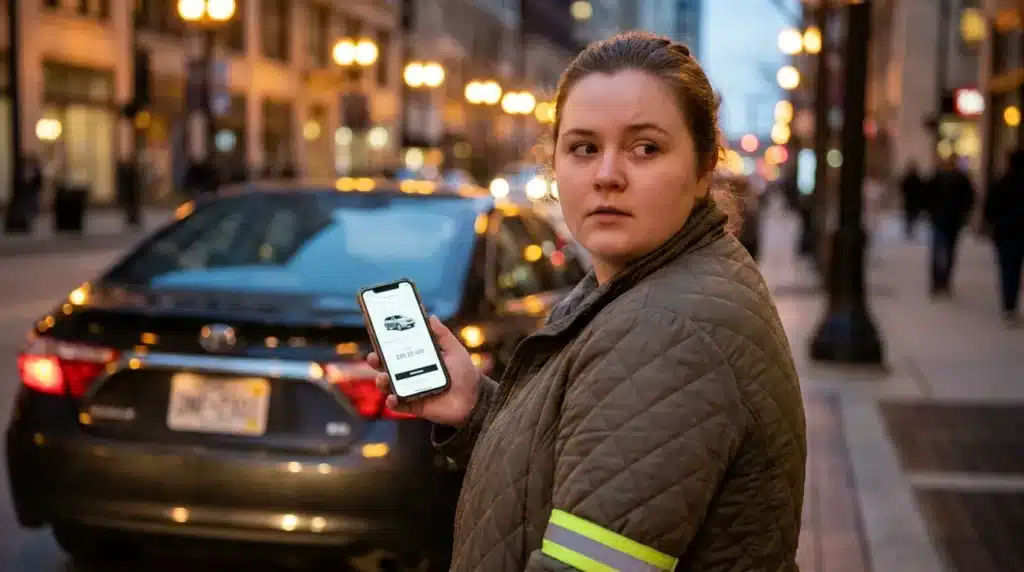
Fatal Errors: Mistakes That Put Your Safety at Risk
Even the smartest travelers can make mistakes when they are in a rush. Avoiding these common pitfalls is just as important as knowing the safety tips.
1. Getting Into an Unmarked or “Private” Taxi
This is perhaps the most dangerous mistake anyone can make. At airports or train stations, people might approach you and whisper, “Taxi? Cheap ride?”
Never, under any circumstances, get into a car that you didn’t book through an official app or a licensed taxi stand. These drivers are not tracked, they have no insurance for passengers, and no one knows who they are.
If something goes wrong in an unlicensed car, you have zero legal protection. It is a total gamble with your life just to save a few dollars.
2. Agreeing to “Go Off the App” for a Discount
Sometimes a driver will ask you to cancel the ride on the app and pay them in cash for a lower price. They say this helps them avoid the company’s high fees.
While it sounds like a win-win, you lose all safety features the moment you hit cancel. The GPS tracking stops, the insurance coverage vanishes, and the company no longer has a record of your trip.
If the driver takes a wrong turn or acts aggressively, you can’t use the emergency button. It is a trap that leaves you completely isolated and vulnerable.
3. Sharing Too Much Personal Information
It is natural to want to be friendly and chat with your driver. However, there is a limit to what you should share.
Don’t tell the driver if you are staying alone at an Airbnb. Don’t tell them exactly how long you will be in town or what expensive items you have in your bag.
Keep the conversation professional and light. If they start asking personal questions about your family or your job, it is okay to give vague answers or just go back to looking at your phone.
4. Falling Asleep During the Ride
We get it—you’re tired after a long flight or a night out. But sleeping in a stranger’s car is a massive safety risk.
When you are asleep, you have no idea where the car is going. You are also physically vulnerable and can’t react if there is a sudden stop or an accident.
If you feel like you can’t stay awake, call someone and talk to them. The sound of your own voice will help you stay alert until you reach your destination.
5. Not Checking the Surroundings Before Exiting
The danger doesn’t end when the car stops. Many people hop out of the car without looking at the street.
You could step right into the path of a cyclist or another car. Or, the driver might have stopped in a dark spot where someone is waiting to grab your bag.
Always look out the window before you open the door. If the area looks unsafe, ask the driver to pull up to a more lit area or closer to a security guard.
Common Questions About Safe Travels
Is a local taxi safer than an Uber or Lyft?
There is no simple answer as it depends on the city. In places with strict taxi laws, local cabs are very safe because drivers are vetted by the police. However, ride-sharing apps provide a digital trail and GPS tracking that traditional taxis often lack.
What should I do if the driver goes the wrong way?
First, stay calm and ask, “I noticed we are off the route, is there a reason?” If they don’t give a good answer or act suspicious, use the “Share Trip” feature immediately. If you feel truly unsafe, ask them to stop at a public place like a gas station and get out.
Should I sit in the front or back seat?
Always sit in the back seat. It provides a physical barrier between you and the driver and gives you access to two exit doors. It also keeps your personal space private, which is better for both you and the driver.
Can I trust the driver’s rating?
A high rating is a good sign, but it isn’t a 100% guarantee. Always look at the number of trips the driver has completed. A 5-star rating with only 2 trips is less reliable than a 4.8-star rating with 5,000 trips.
Is it safe to use ride-sharing apps at night?
Yes, but you must be extra careful. Always wait for your ride inside a building rather than on the street. Make sure you share your live location with a friend and keep your phone in your hand at all times.
Your Journey to Worry-Free Travel Starts Now
Traveling should be about the excitement of the destination, not the fear of the journey. By following these steps, you are taking your personal security into your own hands.
You now have the tools to verify your ride, use technology to your advantage, and avoid the traps that catch most people off guard. Safety is a choice you make every time you open a car door.
Don’t let the fear of “what if” stop you from exploring the world. Instead, use that energy to stay alert and prepared. You deserve to feel safe every time you travel, whether you are going across town or across the globe.
Start practicing these habits today. The next time you call a ride, go through your checklist. You will find that the more you do it, the more confident you feel. Safe travels are not just about luck; they are about being smart.
Disclaimer: The information provided in this article is for educational purposes only. While we strive to provide the most accurate safety tips, transport conditions and laws vary by location. Always follow the advice of local authorities and use your best judgment. The author and website are not responsible for any incidents that may occur during your travels.