Imagine waking up in a beautiful beach town, ready to start your workday. You reach under your bed or look toward the locker, but your bag is gone. Your $2,000 laptop, your camera, and your external hard drives have vanished.
- For a digital nomad, this is not just a lost item; it is a lost livelihood. The fear of theft is the biggest shadow hanging over the budget travel lifestyle. Most nomads want the social vibe of a hostel but carry a fortune in their backpacks.
- This constant worry can ruin your travel experience. You find yourself unable to enjoy the sunset because you are wondering if your locker is truly secure. It is a stressful way to live and work while exploring the world.
According to remote work metrics published by Forbes, maintaining hardware safety is essential for asset protection.
Why Most Advice About Hostel Safety Fails You
Many travelers follow outdated tips that simply do not work for modern remote workers. Here is why people continue to lose their expensive gear despite trying to be careful:
- Relying on “Vibes” Alone: Many nomads think that because the people in their dorm seem “cool,” they won’t steal. Trusting strangers with your primary income source is a recipe for disaster.
- Using Cheap Padlocks: Most people buy the smallest, cheapest lock they can find at the airport. These are incredibly easy to snap or pick with basic tools.
- Hiding Gear in Plain Sight: Some travelers think hiding a laptop under a pillow or deep in a messy bag is enough. Professional thieves know exactly where to look first.
- Ignoring Locker Quality: People often assume every hostel locker is the same. In reality, some lockers have hinges that can be unscrewed or gaps big enough to slide a tablet through.
- Following “Old School” Packing Tips: Traditional backpackers don’t carry much value. Digital nomads have specific needs that standard travel blogs often ignore.
The Mental Toll of Constant Tech Anxiety
Living with the fear of theft does more than just threaten your wallet. It changes how you interact with the world and your work.
- Loss of Focus: When you are constantly checking your bag, you cannot focus on your clients or your creative projects.
- Social Withdrawal: You might stop hanging out in common areas because you don’t want to leave your gear unattended for even five minutes.
- Sleep Deprivation: It is hard to get a good night’s rest when every sound in the dorm makes you jump. You wonder if someone is messing with your locker.
- Lack of Confidence: A single theft can make you want to quit the nomad life and go back home. It shatters your sense of safety and adventure.
- Financial Stress: Most nomads do not have thousands of dollars sitting around to replace a MacBook Pro and a Sony camera in the middle of a trip.
The Reality of Hostel Security in the Modern Age
Hostels have changed over the years, but so have the risks. You are sharing space with people from all walks of life. While 99% of travelers are honest, it only takes one person to ruin your career.
“Thieves in hostels are often ‘crimes of opportunity’ specialists. They look for the easiest target—the bag left on the bed or the locker left slightly open. They want to get in and out without making noise or causing a scene.”
As a digital nomad, you are a high-value target whether you like it or not. Your backpack likely contains more value than the combined luggage of everyone else in the room.
This means you need a professional security strategy that goes beyond “being careful.” You need to think like a security expert.
You must create layers of protection that make stealing your gear more trouble than it is worth. If a thief sees that your gear is well-secured, they will almost always move on to an easier target.
Choosing the Right Base: Researching Hostel Security
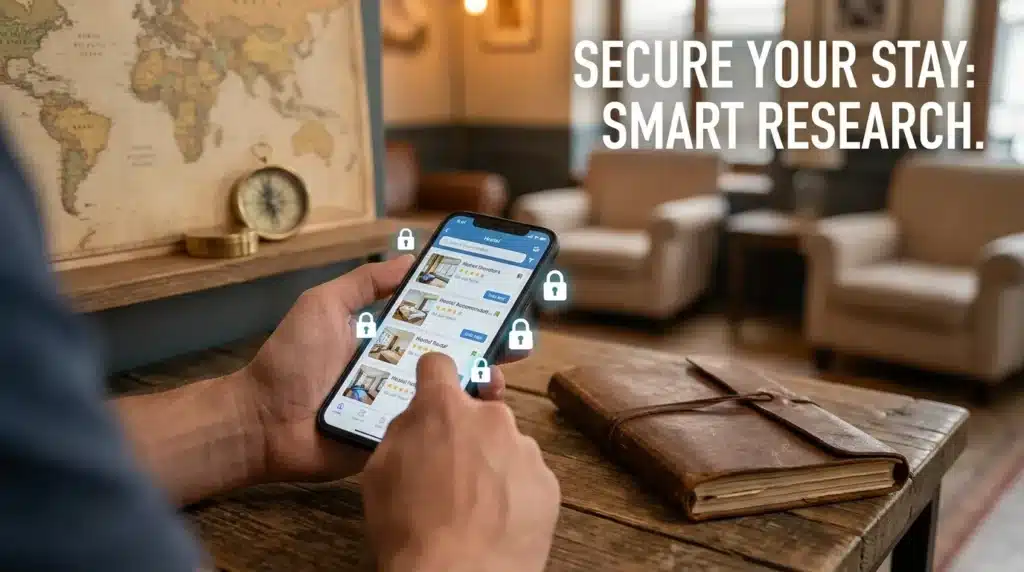
The first step in protecting your gear happens before you even book your bed. Not all hostels are created equal when it comes to safety. You need to look past the pretty photos of the rooftop bar and check the security features.
Start by reading recent reviews on sites like Hostelworld or Booking. Search specifically for words like “locker,” “theft,” “secure,” or “safe.” If multiple people mention that the lockers are too small for a laptop, move on to the next option.
Check the locker dimensions whenever possible. A “small locker” might only fit a passport and a wallet. As a nomad, you need a locker that can comfortably fit your entire “tech bag” or your whole backpack.
Look for hostels that offer keycard access to the dorm rooms. This limits the number of people who can enter your sleeping area. Avoid hostels where the front door is always open and there is no staff at the desk during the night.
Before heading out, checking a comprehensive solo travel safety guide can give you the foundational knowledge needed to evaluate accommodation safety accurately.
The Layered Security Strategy: Physical Barriers
Once you have chosen a secure hostel, you need to implement physical barriers. Think of your security as a series of circles. The outer circle is the room, the middle circle is the locker, and the inner circle is your bag.
Step 1: Use a High-Quality Padlock
Stop using those tiny luggage locks that come with a 3-digit code. They are far too easy to bypass. Instead, invest in a heavy-duty padlock with a thick shackle.
A combination lock is usually better than a key lock. If you lose your key in the ocean while swimming, you are locked out of your own laptop. A 4-digit combination is much harder to crack than a 3-digit one.
Make sure the lock is hardened steel. This prevents someone from using simple wire cutters to snip it off. A beefy lock is a visual deterrent that tells thieves you take security seriously.
Step 2: The Steel Cable Lock Method
Sometimes, hostels do not have lockers, or the lockers are full. This is a nightmare scenario for a digital nomad. This is where a steel cable lock becomes your best friend.
You can loop a plastic-coated steel cable through the frame of your backpack and around a heavy, fixed object. A bed frame is usually the best choice. While someone could still cut through your bag, they cannot simply walk away with the whole thing.
This method is also great for working in common areas. If you need to go to the bathroom or grab a coffee, you can loop the cable around the table leg. It provides a few minutes of safety while you are away from your seat.
If you are exploring alternative accommodations, understanding a detailed hotel room security system can help you apply similar physical barrier principles outside of hostels.
Step 3: Use AirTags or GPS Trackers
In the modern world, physical locks are not enough. You need a way to track your gear if the worst happens. Hiding an Apple AirTag or a Tile tracker inside your laptop sleeve is a smart move.
Hide the tracker in a place that is not obvious. Don’t just throw it in the front pocket. Sew it into the lining or hide it inside a mouse case.
If your bag is moved while you are sleeping, your phone can alert you. If it is stolen, you have a chance to show the police exactly where your gear is located. This added layer of tech gives you immense peace of mind.
Organizing Your Gear for Quick Storage
Efficiency is a form of security. If it takes you twenty minutes to pack your gear into a locker, you will eventually get lazy and skip it. You need a system that allows you to secure your tech in seconds.
I recommend using a dedicated tech pouch or a small “inner bag.” This bag should hold your laptop, chargers, hard drives, and mouse. When you are done working, you simply zip one bag and put it in the locker.
This prevents you from leaving small, expensive items scattered around your bed. It also makes it easier to take your essentials with you if you decide to go work at a cafe. You just grab the “tech bag” and go.
Always keep your locker organized. A messy locker makes it easy to miss if a small item like an SSD or a pair of expensive earbuds goes missing. Everything should have a specific home within your bag.
Social Engineering and the “Low Profile” Approach
Security is not just about hardware; it is about how you carry yourself. If you sit in the hostel lobby bragging about your $3,000 setup, people will notice. The best way to stay safe is to be unobtrusive.
Try not to flash your most expensive gear in crowded common areas if you don’t have to. If you are using a high-end MacBook, consider using a plain, non-branded laptop sleeve. Cover any glowing logos with stickers to make the device look older or less valuable.
When you are putting your gear into your locker, do it discreetly. Don’t let the whole room see exactly what you are locking away. Turn your back to the room or wait until the area is less crowded.
Building a good relationship with the hostel staff is also a great security move. If the staff know you and like you, they are more likely to keep an extra eye on your things. They might even offer to keep your gear behind the front desk if you are going on a multi-day trip.
Digital Protection: The Last Line of Defense
If a thief successfully takes your hardware, you must ensure they cannot take your data. Your business information, client details, and personal photos are often more valuable than the laptop itself.
Enable Full Disk Encryption on your laptop immediately. On a Mac, this is FileVault; on Windows, it is BitLocker. This ensures that even if someone has your laptop, they cannot access your files without your password.
Back up your data every single day. Use a cloud service like Google Drive, Dropbox, or Backblaze. This way, if your laptop disappears today, you can buy a new one tomorrow and be back to work within hours.
Never leave your passwords written down anywhere in your bag. Use a digital password manager like Bitwarden or 1Password. Use **Two-Factor Authentication (2FA)** for every important account. This ensures that even if a thief gets your laptop and finds your passwords, they still cannot get into your bank or email.
Working in Public: Common Area Safety
Hostel common areas are great for meeting people, but they are high-risk zones for gear. Never leave your laptop on a table to “save your spot” while you go to the kitchen or the bathroom.
If you are traveling alone, you don’t have a partner to watch your things. This is where the cable lock we mentioned earlier is essential. If you don’t have a cable lock, you must pack your laptop into your bag and take it with you—even for a two-minute bathroom break.
It might feel paranoid, but it only takes five seconds for someone to walk past and grab a laptop. Most hostel thefts are not planned; they are quick grabs by people who see an easy opportunity. Don’t provide the opportunity.
Be mindful of who is sitting behind you. “Shoulder surfing” is a real risk where someone watches you type in your passwords or bank PINs. Use a privacy screen filter if you often work in crowded hostel lobbies. These filters make the screen look black to anyone not sitting directly in front of it.
Knowing how to protect yourself on the move is vital; learning to avoid common tourist scams will help you maintain high situational awareness in these shared public zones.
Insurance: Your Financial Safety Net
No matter how many locks you use, there is always a small risk. This is why specialized nomad insurance is a non-negotiable expense. Standard travel insurance often has very low limits for electronics (usually $300-$500).
Your laptop alone likely exceeds that limit. You need a policy that specifically covers “high-value tech” and “theft from a locked locker.” Read the fine print carefully.
Most insurance companies require a police report to process a theft claim. If your gear is stolen, go to the local police station immediately. It is the only way to get your money back.
Keep digital copies of all your receipts and serial numbers. Take photos of your gear and your locks before you start your trip. Having this documentation ready will make the insurance claim process much smoother and faster.
Trust Your Gut: The Human Element
At the end of the day, your intuition is one of your best tools. If a hostel feels “sketchy” or the other guests make you feel uneasy, don’t stay there. It is better to lose the money for one night’s stay than to lose your entire gear setup.
If you see people hanging around the dorms who don’t seem to stay there, tell the staff. If the lockers look broken or easy to bypass, ask for a different room or a refund. Never compromise on your security just to save a few dollars.
Your gear is your ticket to freedom. It allows you to travel the world and earn a living at the same time. Treating it with the respect it deserves will ensure that your nomad journey is long, successful, and stress-free.
Stealth Strategies for High-Value Travel Gear
Securing your gear is not just about having the biggest lock. It is about being smarter than the person looking to take your things. If you want to travel long-term as a digital nomad, you need to master stealth security tactics.
One of my favorite advanced tips is the “Dirty Bag Strategy.” Thieves are naturally drawn to brand-new, expensive-looking backpacks from famous outdoor brands. These bags scream, “I have a lot of money and expensive tech inside.”
Instead of a shiny new bag, consider using a backpack that looks a bit worn out. You can even add some decorative duct tape or patches to make it look less valuable. If your bag looks like it belongs to a broke student rather than a rich professional, a thief is much less likely to target it.
Another secret is using a Pacsafe bag protector. This is a stainless steel wire mesh that wraps around your entire backpack. It acts like a cage for your bag. You can lock this cage to a permanent fixture in your room, like a metal bed frame.
Even if a thief has a knife, they cannot slash through the wire mesh to get to your laptop. It provides a massive visual warning that your gear is not an easy target. Most people will see that mesh and not even bother trying to mess with it.
While protecting electronics is key, you must also know how to safely hide cash and passports to protect your absolute baseline survival tools while on the move.
Keeping Your Gear Safe While You Sleep
The most dangerous time for your gear in a hostel is often when you are asleep. Even if your things are in a locker, a determined thief might try to pick the lock while the room is dark.
This is why I recommend a motion-sensor alarm for your locker. These tiny devices are very cheap and easy to carry. You place the sensor inside your locker door or on your bag.
If the locker is opened or the bag is moved, a loud piercing alarm will sound. This alarm will wake you up and scare the thief away instantly. Thieves hate noise because it draws attention. Having a hidden alarm is like having a tiny security guard watching your bag while you dream.
Maintaining Your Security Habits for the Long Haul
It is easy to be careful during your first week of travel. The real challenge is staying alert after three months on the road. Many nomads get “travel fatigue” and start getting lazy with their security routines.
To avoid this, you must turn these safety steps into a fixed daily habit. You should never go to sleep without double-checking that your locker is clicked shut. You should never leave your laptop on a table to grab a quick glass of water.
Consistency is the only way to protect your business over time. Think of it like brushing your teeth. You don’t think about it; you just do it because it’s part of your day. Your security routine must be automatic.
If you feel yourself getting relaxed because you are in a “safe” country, remind yourself of the cost of replacement. Imagine the stress of losing your client’s data or your half-finished project. This mental check helps you stay focused on protection.
I also suggest doing a “gear audit” every Sunday. Check your locks for any signs of wear or tampering. Make sure your AirTag batteries are still strong. Check that your cloud backups are syncing correctly. This weekly check keeps your security system running smoothly.
To maintain a fully protected lifestyle, integrating these practices with general safety applications, like comparing ride sharing safety apps vs local taxis, ensures total safety across all travel environments.
Fatal Errors: Mistakes That Lead to Stolen Gear
Even the most careful nomads can fall into traps if they aren’t aware of common mistakes. Here are the biggest errors I see travelers make in hostels. Avoiding these could save your entire career.
- Mistake 1: The “New Friend” Trap — This is the most common way nomads lose their gear. You meet someone in the hostel, you share a few drinks, and you feel like you’ve known them for years. You think, “They seem nice, I can leave my laptop on the bed while I shower.” Never assume someone is trustworthy just because they are friendly. Always lock your gear up, no matter how much you like your roommates.
- Mistake 2: Leaving Gear Out While Charging — Hostels often have limited power outlets. You might see a free outlet across the room and plug your phone or power bank in. If you fall asleep or leave the room, that device is as good as gone. Always charge your devices inside your locker if it has a power outlet. If the room doesn’t have outlets in the lockers, use a high-capacity power bank. Charge the power bank during the day while you are sitting next to it, then use the power bank to charge your laptop inside your locked bag at night.
- Mistake 3: Buying the Wrong Size Padlock — I have seen many travelers buy a lock that is too thick for the hostel locker latch. When this happens, they often give up and don’t use a lock at all. Or they buy a lock with a very thin shackle that can be snapped with a pair of pliers. I recommend carrying two different sizes of locks. One should be a standard heavy-duty padlock, and the other should be a slightly smaller one with a flexible cable shackle. This ensures you can secure your gear no matter what kind of locker the hostel provides.
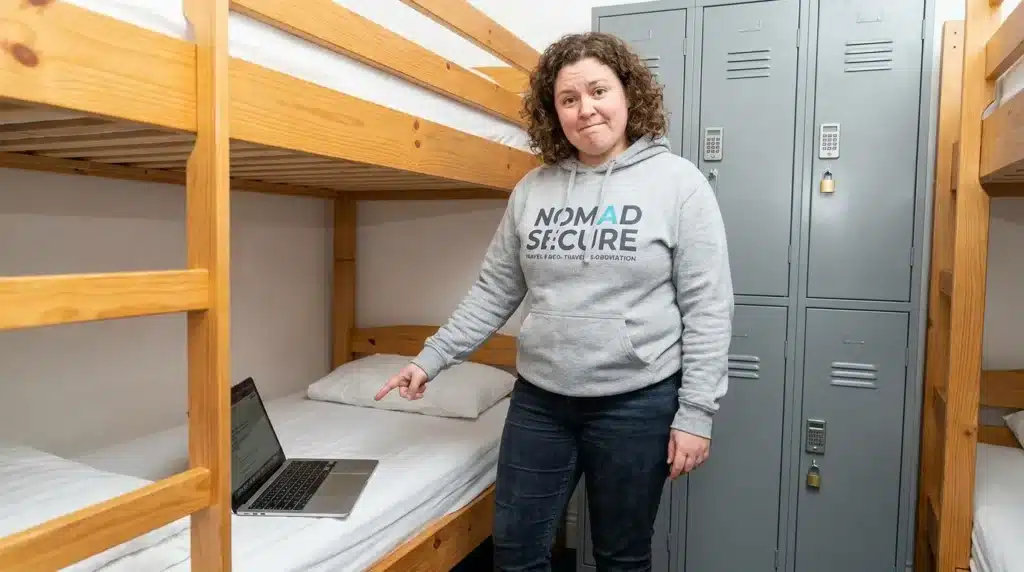
- Mistake 4: Not Checking the Locker’s Integrity — Some hostel lockers are actually broken. A thief might have bent the back of the locker or loosened the screws on the hinges. If you don’t check the physical condition of the locker, your lock won’t matter. Before you put your $2,000 laptop inside, give the locker a good shake. Look at the bottom and the back. If it looks flimsy or damaged, ask the staff for a different locker or use your own cable lock to secure your bag to the bed instead.
- Mistake 5: Posting Your Location in Real-Time — We all love sharing our travels on social media. However, posting a photo of your expensive setup and tagging the specific hostel while you are still there is a bad idea. You are essentially telling the internet exactly where to find your expensive gear. Wait until you leave a location before you post about it. Or at the very least, don’t mention the name of your hostel in public posts. You never know who might be watching your stories and looking for an easy score.
Frequently Asked Questions About Hostel Gear Safety
1. Is it better to stay in a private room or a dorm for safety?
While a private room feels safer, it can sometimes be less secure. In a dorm, there are people coming and going, which acts as a “natural surveillance.” In a private room, a thief only needs to get through one door and they have total privacy to break into your bags. Always use a locker regardless of the room type.
2. Should I carry my laptop with me everywhere I go?
Carrying your laptop all day increases the risk of street robbery or accidental damage. If the hostel has a very high-quality, bolted-down locker, it is often safer to leave it there. Only take it out when you have a specific plan to work.
3. What should I do if my locker key is a physical key?
Physical keys are risky because they are easy to lose. Use a wrist coil or a lanyard to keep the key attached to your body at all times—even in the shower. Never hide the key under your pillow or in your shoe while you sleep.
4. Can I trust the hostel’s “luggage storage” room?
Most luggage rooms are just unlocked closets. They are fine for dirty clothes, but never leave your tech in a general luggage room. If you must leave your gear after checkout, ask the staff if they have a safe behind the reception desk.
5. Are lockers with built-in electronic codes safe?
These are usually safe, but be careful. Some hostels have a “master code” that all staff members know. If you don’t trust the staff, it is better to use your own physical padlock on a locker that allows it.
Your Freedom Depends on Your Preparation
Living the digital nomad life is an incredible privilege. You get to see the world, meet amazing people, and work on your own terms. However, this freedom comes with the responsibility of protecting the tools that make it possible.
Don’t let the fear of theft stop you from traveling. Instead, let that fear drive you to be the most prepared person in the room. When you have a solid security system, you can relax and truly enjoy the beauty of your surroundings.
Security is not a one-time setup; it is a way of moving through the world. By following the steps in this guide, you are building a shield around your livelihood. You are ensuring that a single bad moment doesn’t end your journey.
Start today by auditing your gear. Get that high-quality lock, set up your cloud backups, and commit to your new safety habits. You have worked hard to build your remote career—now make sure you keep it safe while you explore this amazing planet.
Safe travels and happy working!
Disclaimer: The information provided in this article is for educational purposes only. While these tips significantly reduce the risk of theft, no security measure is 100% foolproof. We do not take responsibility for any loss or damage to your personal property while traveling. Always use your best judgment and ensure you have comprehensive insurance coverage for your electronic devices.