The dream of traveling the world alone is often met with a sudden wave of fear. You imagine yourself standing in a crowded train station in a foreign country, feeling like everyone is watching you.
The fear of the unknown can be paralyzing. You worry about getting lost, losing your passport, or being targeted by scammers.
This anxiety is real and it stops thousands of people from ever booking their first solo flight. The pain of feeling vulnerable in a place where you don’t speak the language is a heavy burden to carry.
Many people want to experience freedom but feel trapped by the “what ifs” that keep them awake at night. You want to see the world, but you also want to come home in one piece.
Why Most People Fail to Stay Safe on the Road
Finding good advice on solo travel safety is harder than it looks. Many travelers struggle because they rely on the wrong sources of information.
According to global tourism studies archived on Wikipedia, safety preparedness directly impacts a traveler’s vulnerability abroad.
- Social media influencers often show only the beautiful side of travel and ignore the risks.
- Travelers often believe that “it won’t happen to me” until they face a real emergency.
- Outdated blog posts might suggest safety tools that no longer work or are illegal in certain countries.
- Many people focus on big crimes but forget about the small, daily risks like digital theft.
- First-timers often pack too much gear but forget to pack a solid safety plan.
How Safety Concerns Impact Your Mental Peace
When you don’t feel secure, you cannot enjoy your trip. This lack of a safety net creates a cycle of stress that ruins the adventure.
“Constant anxiety transforms what should be a dream vacation into an exhausting survival challenge.”
- You might spend your whole day looking over your shoulder instead of looking at the sights.
- Constant worry about your hotel room security can lead to poor sleep and exhaustion.
- The fear of making a mistake makes you appear nervous, which can actually make you a target.
- A lack of confidence prevents you from meeting new people and having authentic experiences.
- You might end up staying in your room because the world outside feels too dangerous to handle alone.
The Reality of Solo Travel Risks Today
The world has changed, and so have the risks we face while traveling. It is no longer just about picking pockets or getting lost in a dark alley.
Modern safety includes your digital life, your physical health, and your home security.
When you leave your house, your Home Security becomes a travel issue. If you are worried about your front door back home, you won’t focus on the street in front of you.
Similarly, Digital Safety is now a huge part of travel. One hacked public Wi-Fi connection can ruin your entire bank account, as reported in cybersecurity trends by Forbes, before you even finish your coffee.
We often think of Family Safety as something we do at home. However, keeping your family updated on your location is a key part of staying safe abroad.
If you don’t have a system to check in, you are truly on your own if something goes wrong. This guide aims to bridge those gaps and give you a total security mindset.
Building Your Foundation for a Secure Journey
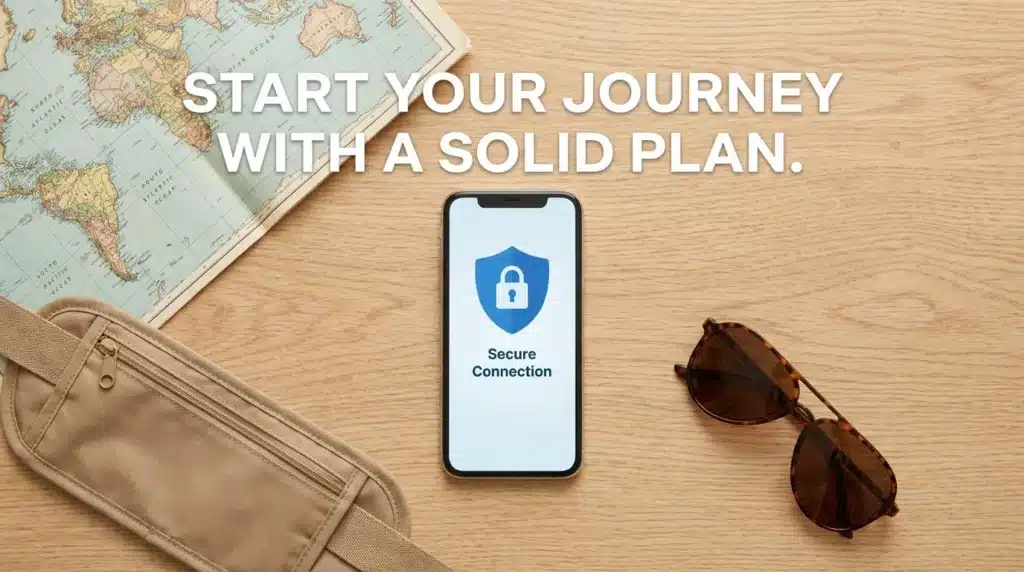
Safety does not happen by accident. It is the result of good habits and smart choices made long before you leave the house. Preparation is your best defense.
If you want to travel with confidence, you need to think like a security expert. At Securely Life, we believe that safety is a lifestyle. This applies to your home, your phone, and your backpack.
Let’s look at the first few steps you can take to ensure your solo trip is a success by practicing 5 essential tips for a securely life daily.
Step 1: Secure Your Digital Footprint Before You Board
Your phone is your most important travel tool, but it is also your biggest vulnerability. Digital Safety should be your top priority. Before you even pack your bags, you need to lock down your devices.
Start by updating all your software. Old apps have security holes that hackers love to use. Set up a strong VPN (Virtual Private Network) on your phone and laptop. This protects your data when you use “free” Wi-Fi at airports or cafes.
Back up your data to a secure cloud. If your phone gets stolen, you don’t want to lose your photos and contacts. Also, turn on “Find My Device” features. These simple steps take less than an hour but provide massive peace of mind.
Avoid posting your location in real-time on social media. It might be tempting to share that “live” sunset photo, but it tells the world exactly where you are and that you are alone. Wait until you leave a location before posting about it. This keeps your current whereabouts private.
Step 2: Create a Home Security Plan for Your Absence
You cannot be a confident traveler if you are constantly checking your home security cameras with a worried heart. Home Security is the first pillar of travel safety. If your home feels safe, your mind is free to explore.
Make your house look lived-in while you are away. Use smart light bulbs that turn on and off at different times. Ask a trusted neighbor to pick up your mail. A pile of packages on the porch is a giant sign that nobody is home.
Check all your locks and window sensors. If you have a security system, make sure the batteries are fresh. At Securely Life, we always suggest telling one local friend about your travel dates. They can keep an eye on the property while you are thousands of miles away.
Unplug non-essential electronics to prevent fire hazards. Ensure your smoke detectors are working. This might seem like a lot of work for a vacation, but true personal safety starts at home. Once your home is locked down, you can focus 100% on your adventure.
Step 3: Master the Art of “Personal Safety” Awareness
Once you land in a new city, your “Situational Awareness” becomes your best friend. This isn’t about being paranoid; it’s about being observant.
For a complete breakdown of this mindset, read our comprehensive situational awareness personal safety guide. Personal Safety is all about noticing things before they become problems.
When you walk out of your hotel, take a moment to look around. Notice who is standing near the entrance. Look for the exits in every building you enter. This habit should become second nature to you.
Try to blend in as much as possible. Avoid wearing flashy jewelry or clothes that scream “I am a tourist.” If you look like you know where you are going, people are less likely to bother you. Walk with a purpose, even if you are a little bit lost.
If you need to check your map, step into a shop or a cafe. Don’t stand in the middle of a busy sidewalk looking at your phone. This makes you unaware of your surroundings. Keep your back to a wall whenever possible when you are stopped in a public space.
Step 4: Establish a Family Safety Communication Loop
Being a solo traveler doesn’t mean you have to be isolated. Family Safety involves keeping your loved ones in the loop without being a burden. This creates a safety net that follows you across the globe.
Create a shared document with your family. Include your flight numbers, hotel addresses, and a rough itinerary. Do not leave them guessing where you are. If they don’t hear from you for 24 hours, they should know exactly who to call.
Use a “check-in” system. A simple text message every morning or evening is enough. It tells your family that you are safe and well. There are also apps that allow you to share your live location with a few chosen people.
If you are going to an area with poor cell service, let them know in advance. This prevents unnecessary panic. A worried family can lead to a stressed traveler. By keeping them informed, you protect their peace of mind and your own.
Step 5: Research Local Scams and Safe Zones
Every city has its own set of common tricks. Part of your Travel Safety research should be looking up “common scams in [City Name].” Knowledge is your shield against people who want to take advantage of you.
Learn which neighborhoods are safe to walk in at night and which ones to avoid. Talk to your hotel staff or hostel host. They usually have the best local knowledge. They can tell you which taxi apps are safe and which street food stalls are reliable.
Identify the location of the nearest hospital and your national embassy. Write these addresses down on a piece of paper. Do not rely only on your phone. If your battery dies, you still need to know where to go for help.
Understanding the local culture is also a safety feature. Some gestures that are friendly in your country might be offensive elsewhere. Respecting local norms helps you stay under the radar and avoid unwanted attention.
The Science of Intuition in Solo Travel
Science tells us that our “gut feeling” is actually our brain processing tiny details we haven’t consciously noticed. If a situation feels “off,” it probably is. Trusting your intuition is a vital skill for any solo traveler.
Your brain might pick up on a person’s strange body language or a shift in the atmosphere of a room. Never feel bad about leaving a place or canceling a plan because you feel uncomfortable. Your safety is more important than being polite.
If a stranger is asking too many personal questions, you don’t have to tell the truth. It is perfectly fine to say your “husband” or “friends” are meeting you in ten minutes. Creating a “fake” safety net in conversation can deter people with bad intentions.
Practicing this kind of mental readiness helps you stay calm during your trip. When you are calm, you make better decisions. A clear head is the most powerful tool in your security kit.
Practical Steps for Daily Security
When you are out exploring, keep your most important items on your person. Secure your valuables properly by learning how to safely hide cash and passports while traveling. Never keep all your money in one place.
If you carry a bag, wear it across your body. Keep the zipper facing towards you. In crowded areas, hold your bag in front of you. These small physical adjustments make it much harder for a pickpocket to succeed.
Keep a “decoy” wallet with a small amount of cash and some old, expired cards. If you are ever confronted, you can give them the decoy wallet and keep your real valuables safe. This is a classic travel safety hack that still works today.
Remember that Travel Safety is about layers. One single lock or one single habit might not stop a criminal, but five layers of safety will make them look for an easier target. By following these steps, you are making yourself a “hard target.”
Staying Healthy and Alert
Your physical health is a part of your safety. If you are sick or extremely tired, you cannot stay alert. Drink plenty of water and make sure you are eating well. Dehydration can lead to confusion and poor decision-making.
Be very careful with alcohol when traveling alone. It is fine to have a drink, but never lose control of your senses. Always watch your drink being made and never leave it unattended. This is a basic rule of Personal Safety that applies everywhere in the world.
Know your limits. If you are feeling exhausted, take a “rest day” in your hotel. It is better to miss one museum than to have an accident because you were too tired to pay attention. Self-care is a security strategy.
By focusing on these practical and logical steps, you are building a wall of protection around your trip. You are moving from a place of fear to a place of empowered action. This is the goal of every guide we produce at Securely Life.

Mastering the Art of Travel Resilience
Once you have the basics down, it is time to look at the advanced tactics that professional travelers use. These secrets help you stay safe even when things go wrong. Travel Safety is not just about avoiding trouble; it is about knowing how to get out of it.
Secure Your Finances with the “Two-Account” System
One of the biggest mistakes solo travelers make is carrying only one debit or credit card. If that card is stolen or blocked by your bank, you are in big trouble. We suggest a more advanced approach to managing your money.
Keep a primary bank account for your main savings and a secondary “spending” account. Every few days, transfer only enough money for your daily needs into the spending account. Link your spending card to your phone for touchless payments.
Keep your main savings card locked in the hotel safe. If you want to double-check the lock setup of your accommodation, review our expert hotel room security locking guide. If someone steals your wallet, your life savings remain protected.
Use Technology to Build a Virtual Safety Net
Digital tools are amazing if you use them correctly. You should set up Two-Factor Authentication (2FA) on every important app before you leave. This adds an extra layer of Digital Safety to your email and banking.
If someone steals your password, they still cannot get into your accounts without the code on your phone. You should also use an app that allows you to share your real-time location with your family. This fits perfectly into the Family Safety pillar we discussed earlier.
Pick one or two people you trust completely. Let them see where you are at all times. If you stop moving for a long time in an unusual place, they can check in on you. Technology acts as a silent bodyguard that follows you everywhere.
The Power of “Safe Havens” in an Emergency
Imagine you are walking in a new city and you feel like someone is following you. Don’t panic and don’t run into a dark alley. Instead, look for a “Safe Haven.”
A Safe Haven is a place like a high-end hotel, a bank, or a large chain restaurant. These places usually have security guards and cameras. Walk into a 5-star hotel as if you are a guest. Sit in the lobby and talk to the concierge.
“Using the existing security of big businesses is a smart way to boost your Personal Safety on the fly. Most luxury hotels will help you call a safe taxi even if you are not staying there—this is a pro-level secret that many beginners don’t know.”
Maintaining Your Safety Mindset for the Long Term
Staying safe is not a one-time task. It is a set of habits that you must keep alive throughout your entire journey. When you have been traveling for a few weeks, you might start to get lazy. Complacency is the enemy of safety.
Continue to check your Home Security app every few days to make sure everything is fine back at the house. Keep your devices updated for ongoing Digital Safety. Most importantly, never stop listening to your inner voice.
If you make these steps a part of your daily routine, they won’t feel like a chore. You will start to do them without even thinking. A safe traveler is a happy traveler. When you know you are protected, you can truly enjoy the beauty of the world.
Mistakes That Can Ruin Your Solo Adventure
Even with the best intentions, it is easy to fall into common traps. Many first-timers make simple errors that put them at risk. Recognizing these pitfalls is the first step to avoiding them.
- Over-Sharing Your Location on Social Media: Posting your exact location while you are still there is a huge risk. Wait until you have moved to a new city or returned to your hotel before posting.
- Ignoring Your Surroundings Because of Your Phone: Distracted travelers are easy targets. If you need to use your phone, stop and lean against a wall to protect your back and maintain your field of vision.
- Carrying All Your Cash and Documents Together: Split your money into three places (wallet, hidden pouch, and hotel safe). Never keep all your recovery financial tools in one single pocket.
- Trusting “Overly Friendly” Strangers Too Fast: Scammers often use forced friendship or high-pressure helpfulness to lower your guard. Keep your personal trip details strictly private.
- Neglecting Home Security Before the Trip: Forgetting to lock a window or leaving your lights off for weeks makes your home a prime target. Secure your primary property lines before you board.
Common Questions About Solo Travel Safety
Is it safe for a woman to travel alone for the first time?
Yes, solo female travel is very common and can be very safe. The key is to do your research, stick to well-traveled routes for your first trip, trust your intuition, and always have a reliable way to communicate with family.
What should I do if I lose my passport?
First, do not panic. Go to the nearest police station to report the loss and get a written report. Then, contact your national embassy or consulate immediately. Always keep a digital copy of your passport in your email for this reason.
How do I keep my money safe in a crowded area?
Use a cross-body bag with zippers that face your body. Never keep your phone or wallet in your back pocket. In very crowded places, hold your bag securely in front of your chest to keep it within your sight.
Should I tell my bank that I am traveling?
Yes, you should always inform your bank of your travel dates and locations. This prevents them from blocking your card when they see a foreign transaction and helps them monitor your account for any Digital Safety threats.
How do I find safe transportation at night?
Always use official taxi apps or ask your hotel to call a car for you. Never get into an unmarked car or a “taxi” that doesn’t have an official meter. If you feel unsafe, stay in a well-lit public area until your ride arrives.
Embracing Your Journey with Confidence
Solo travel is one of the most rewarding things you can do for yourself. It teaches you how to be independent and how to trust your own skills. By following this guide, you are not just staying safe; you are becoming a more capable person.
You now have the tools to handle Personal Safety, Digital Safety, and even Home Security like a pro. These skills will serve you well for the rest of your life. The world is waiting for you to explore it, and you are now ready to do it securely.
Take that first step today. Start by securing your digital accounts or checking your home locks. Small actions lead to big adventures. We believe in your ability to explore the world safely. Your first solo trip is just the beginning of a lifetime of secure and happy travels.
Disclaimer: This guide is for informational purposes only. While we strive to provide the most accurate safety advice, travel risks can change quickly. Always check official government travel advisories and use your best judgment. Securely Life is not responsible for any incidents that may occur while traveling. Stay alert and stay safe.