Have you ever checked into a beautiful hotel, laid down in bed, and then jumped at the slightest sound in the hallway? You are not alone. That cold feeling of vulnerability is something every traveler faces. You are in a new city, in a room where hundreds of strangers have stayed before you.
The door is the only thing between you and the outside world. Even in luxury resorts, the thought of someone walking in while you sleep can ruin your entire trip.
This anxiety isn’t just a bad mood; it is a natural psychological response to being away from your standard safe zone. According to global data on travel security, tracking environmental threats is a key part of personal well-being.
When you don’t feel safe, you don’t sleep well. When you don’t sleep well, your vacation or business trip becomes a nightmare of exhaustion and worry.
Why Standard Hotel Locks Often Fail to Protect You
Many travelers think that just clicking the door shut is enough. Sadly, they often find out the hard way that basic locks have major limits.
Here is why people struggle to find true protection on the road:
- The Master Key Problem: Hotel staff and even former employees often have electronic cards that can open any door in the building.
- Worn Out Hardware: Hotel doors see a lot of daily use. Latches can become loose or misaligned over time, making them easy to bypass.
- The “Gap” Danger: Many hotel doors have a large gap at the bottom or near the handle that intruders can exploit with simple tools.
- False Sense of Safety: People trust the “U-bolt” or the “swing chain,” but these are actually very weak and can be cut or pushed open easily.
- Bad Habits: We often forget to use the physical deadbolt because we are tired from a long flight, leaving ourselves open to sudden risks.
How Lack of Security Destroys Your Travel Experience
When you ignore Hotel Room Security, the price you pay is much higher than just a bad night’s sleep. It affects your mind and your body in ways you might not notice immediately.
Your brain stays in a state of high alert all night, meaning you never reach deep, restful sleep. Feeling unsafe in your room also makes you feel more nervous while exploring the city, shrinking your sense of adventure.
Worrying about your bags while you are out at dinner ruins your meal and your social time with friends or family. If a room is not secure, your passport, laptop, and cash are at risk, which can quickly lead to a massive travel disaster.
Creating real peace of mind means taking your safety into your own hands. You cannot rely only on the hotel management to protect you. They have hundreds of rooms to worry about, but you only have one.
By learning a few pro-level habits, you can turn any hotel room into a temporary fortress. It is about moving from a state of fear to absolute power.
When you know exactly how to check a lock and how to add extra layers of safety, you can finally relax. Imagine laying your head on the pillow and knowing for a fact that no one can get through that door.
Let’s look at the simple, effective steps you can take starting tonight.
Pro-Level Steps and Expert Strategies to Lock Down Your Hotel Room
You don’t need to be a security expert to achieve a safe life while traveling. You just need a practical, step-by-step action plan.
Here are the essential steps to mastering your room defense the moment you walk in with your suitcase.
Step 1: The Triple Check of Primary Locks
The first thing you must do when you enter your room is a physical check of the main door. Don’t just trust that it closed automatically behind you.
Pull the door toward you and push it away to make sure the latch is fully seated in the frame. Next, look closely at the deadbolt mechanism.
Turn the thumb-turn on the inside of the door. Does it move smoothly? If it feels stuck or doesn’t go all the way in, call the front desk and ask for a different room immediately.
Finally, test the secondary lock, like the swing latch or the chain. These are not meant to stop a strong physical push, but they act as an effective alert system.
If someone tries to open the door, these will stop it for a critical second and make a loud noise, giving you time to react. This setup is a core part of your daily protection routine.
Step 2: Blocking the Gap and Adding Extra Layers
Even with a functioning deadbolt, some people feel much safer with an extra layer of protection. This is where simple physical tools come in handy.
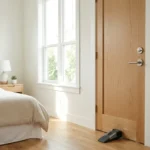
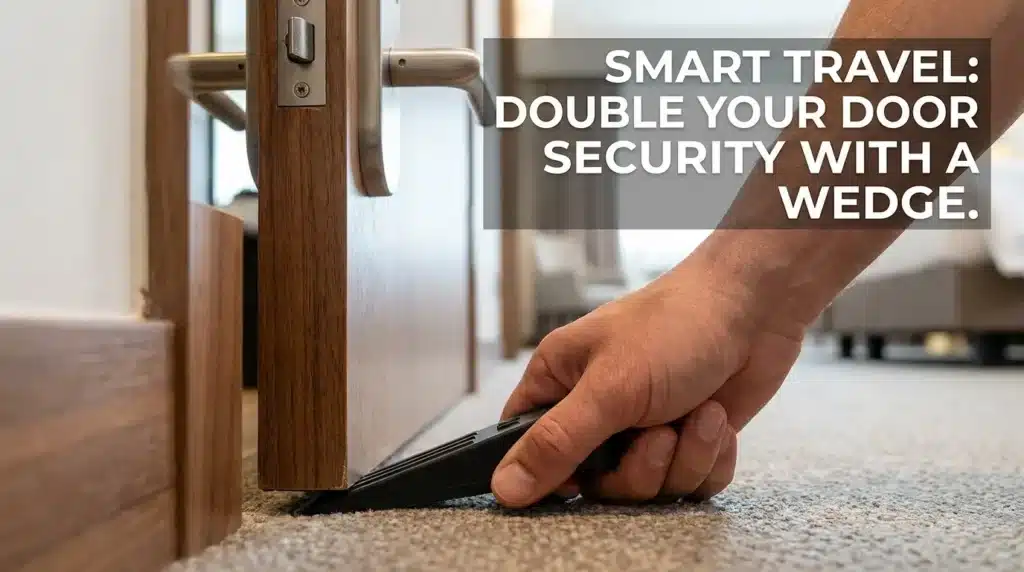
You can use a basic rubber door wedge. Shove the wedge firmly under the door from the inside while you are in the room.
If someone tries to use an unauthorized master key, the wedge will physically stop the door from swinging open. It is a cheap, light tool that fits in any bag.
Another pro tip is to use the “hanger trick” if you don’t have a wedge. Take two coat hangers from the closet. Hook one on the door handle and lock the other on the swing latch.
Physical barriers work because most hotel intruders look for quick and quiet entries. A door wedge makes an unauthorized entry loud, slow, and highly difficult.
This type of physical protection is very similar to how you should protect your property at home. If you want to see how these habits compare to residential defense, check out our 5 essential tips for a securely life.
Step 3: Managing Privacy and Information
Excellent room security isn’t just about the physical door; it is about what people think is happening inside the space. One of the best tools you have is the simple “Do Not Disturb” sign.
Keep this sign on your door handle at all times, even when you are out exploring. This tells anyone walking the halls that someone might be inside. If a thief thinks a room is occupied, they are much less likely to target it.
You should also keep the TV running on a low volume when you leave the room. The sound of voices or music coming from the inside suggests that the room is currently occupied.
Be careful about who hears your room number during check-in. If the clerk says your room number out loud in front of a crowd, politely ask them to assign you a different room and write the number down instead.
This idea connects back to your digital safety habits as well. Never post photos of your room key or your room number on social platforms while you are still staying there.
Expert Strategies to Level Up Your Travel Security:
Building a protected lifestyle on the road is about being smarter than the average traveler. To truly master Hotel Room Security, you must think like a professional who wants to protect their peace at all costs. Below are the remaining advanced steps to fully secure your space.
Step 4: The Secret to Handling Unexpected Visitors
One of the oldest tricks in the book is the “Maintenance Trap.” A stranger knocks on your door and says they are from housekeeping or maintenance.
They might claim there is a leak in the room below and they need to check your bathroom immediately. Never open the door for an unscheduled visitor, even if they look official.
Professional thieves often wear fake uniforms to get inside guest rooms. If someone knocks unexpectedly, keep the door locked and call the front desk to verify the employee’s identity.
This is an essential part of your personal safety that many people forget simply because they want to be polite. Your protection is more important than a stranger’s feelings.
While you are talking to the front desk, keep your hand on the deadbolt. If the hotel actually sent someone, keep the security swing latch engaged while you speak to them through the crack.
Never let a stranger fully enter your room while you are completely alone. This strict habit ensures that you are always in control of your physical space.
It prevents “distraction thefts” where one person talks to you while another slips inside behind your back. Developing this mindset is just as critical as learning active situational awareness.
Step 5: Using Portable Alarms for a High-Tech Shield
To take your travel safety to the absolute next level, consider buying a portable door alarm. These are small, battery-operated devices that you hang on the door handle or place on the floor.
If someone tries to turn the handle or open the door, the device lets out a very loud, high-pitched siren. The sudden sound is usually enough to scare away any intruder immediately.
Think of these devices as a smart sensor for your temporary home. If you enjoy using smart technology to stay safe, you should also look into our comprehensive guide on how to secure smart home devices for your permanent residence.
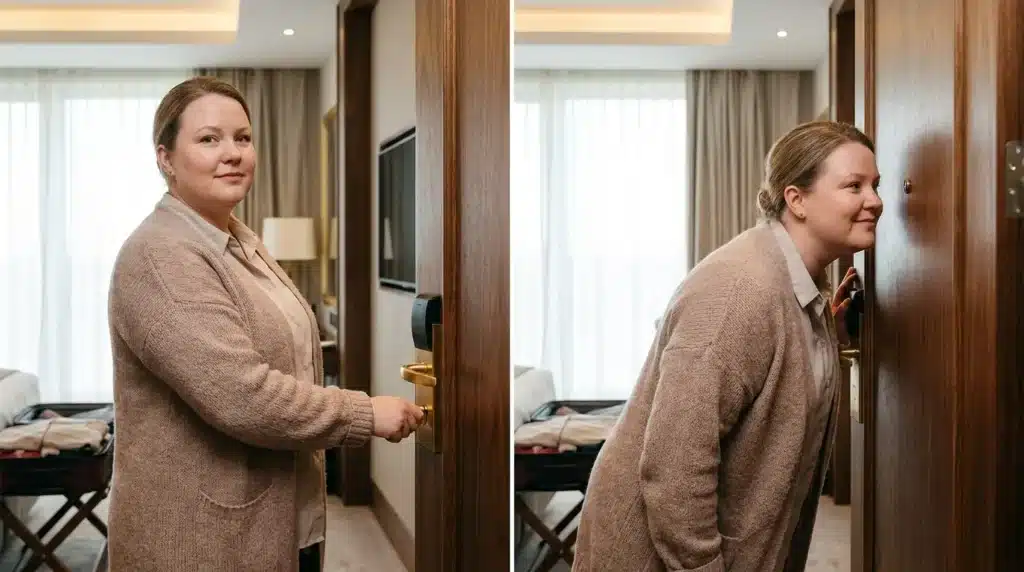
Before you open your door to leave, always look through the peephole to ensure the hallway is clear. When you return to your room, have your electronic key ready in your hand.
Major Pitfalls That Can Ruin Your Hotel Stay
Even experienced travelers make easy mistakes that put their life security at risk. These errors usually happen when we are tired, rushed, or feel too comfortable.
Avoiding these five big mistakes will help you stay completely safe:
- Leaving the Door Propped Open: Running to the ice machine and propping the door open with a suitcase is a massive mistake. It takes less than five seconds for someone to slip inside and hide in the closet.
- Putting Too Much Trust in the Swing Latch: The swing latch is one of the weakest parts of a hotel door. A simple piece of plastic or wire can bypass it from the outside in seconds. Always rely on the deadbolt.
- Announcing Private Details in Public: Never say your room number out loud in the hotel lobby, elevator, or restaurant. Keep your location private to avoid being tracked by solo traveler predators.
- Not Using the In-Room Safe Correctly: Put your passport, extra cash, and small electronics in the safe every time you leave. Avoid using highly obvious codes like “1234” or your birth year.
- Ignoring the View Through the Peephole: Some criminals use reverse peephole viewers to look inside your room. When you are not using the peephole, cover it up with a sticky note or the built-in plastic cover.
Common Questions About Staying Secure in Hotels (FAQs)
Is it safe to leave my laptop in the hotel room?
It is generally safe if you use the built-in room safe or a high-quality locking security cable. Never leave expensive gear sitting out openly on the bed or the desk when you are away from the room.
What is the most secure floor in a hotel?
Security experts often suggest staying between the 3rd and 6th floors. This is high enough to avoid easy street-level break-ins but low enough for standard fire truck ladders to reach your window in an emergency.
Can hotel staff enter my room even if I have the “Do Not Disturb” sign out?
Yes. Hotel management can legally enter for welfare checks or emergencies. However, for daily cleaning, they will respect the sign. Using a solid door wedge provides an extra physical layer if someone tries to enter while you sleep.
What should I do if I lose my hotel room key?
Go to the front desk immediately and ask them to completely deactivate the lost card code. They will issue you a new card with a brand-new electronic code so the old card will no longer open your door.
Should I use a VPN on the hotel Wi-Fi?
Yes, absolutely. Using a virtual private network is an essential habit. Hotel networks are open and unencrypted, making it incredibly easy for hackers to steal your data. To protect your financial accounts from these networks, read our guide on how to prevent identity theft on public Wi-Fi.
Your Path to a Worry-Free Travel Experience
Achieving a secure life while you travel is about being prepared and staying alert. You don’t have to be afraid of exploring new locations; you just have to be ready for them.
Take these protective habits with you on every upcoming journey, from big cities to quiet towns. Share these tips with your friends and family so they can stay safe on the road too.
Start your next adventure with total confidence. You have the tools, the knowledge, and the professional mindset to stay secure. Safe travels!
Disclaimer: The information provided on Securely Life (securelylife.com) is for educational and informational purposes only. While we strive to provide accurate and helpful advice on Hotel Room Security, Home Security, Digital Safety, Personal Safety, Travel Safety, and Family Safety, we are not professional legal or security consultants. Every situation is unique, and you should always use your best judgment or seek professional help when dealing with serious safety threats. Securely Life is not responsible for any actions taken based on the content of this article.