When I first brought my baby home from the hospital, I spent almost thirty minutes sweating in the driveway just trying to get the car seat to stop wobbling. I felt so bad realizing that even though I bought the most expensive model, I didn’t actually know if I was keeping my child safe. That stressful day made me see that being a good parent means moving past the manual and learning how these seats work in the real world.
Every time you hear the click of a car seat buckle, you are making one of the most significant safety decisions for your family. Many parents believe that simply owning an expensive car seat is enough to keep their children safe during a long drive.
However, current data from the National Highway Traffic Safety Administration (NHTSA) reveals a terrifying reality for many families. Nearly half of all car seats are installed incorrectly, leaving children vulnerable during a sudden stop or collision.
If you are a new parent, you might already be following a family safety blueprint to secure your household. Extending that mindset to your vehicle is the next necessary step in your journey as a dedicated protector.
When you implement 5 essential tips for a securely life, you move from a state of constant worry to a state of absolute preparedness. This roadmap will help you master the science of child vehicle restraints and eliminate the guesswork.
The Mental Burden of an Insecure Drive: Facing the Reality of Risks
The moment you pull out of your driveway, you enter an environment that you cannot fully control. This simple act often brings a silent layer of stress that many parents struggle to talk about openly with others.
You might find yourself constantly checking the rearview mirror to see if your toddler has escaped their straps. This emotional burden is real because the stakes are incredibly high every single time you enter traffic.
The Struggle with Conflicting Information
Most parents feel overwhelmed by the sheer volume of advice they receive from different sources. You hear different rules from friends, grandparents, and social media, leaving you unsure about the right way to protect your child.
This confusion often leads to the “good enough” trap where families assume the seat is fine because it feels solid. Unfortunately, ignoring the invisible risks of a loose harness can have devastating results during an accident.
The Heavy Weight of Post-Accident Regret
The heaviest emotional weight comes from knowing an injury could have been prevented with a simple five-minute check. Many search for a quick solution but end up feeling more lost in technical manuals that feel like they were written for engineers.
They might rely on a quick installation at a shop, not realizing that seats can shift or loosen over time. This problem steals your confidence and makes every road trip feel like a gamble.
Reclaiming Your Confidence as a Parent
You deserve to feel like your car is a safe sanctuary for your children. This is just as important as ensuring child pool safety prevent drowning during the busy summer months.
Learning essential car seat safety tips for parents is the only way to reclaim your peace of mind. It is about moving from guessing to knowing that your child is anchored by the best possible protection.
A proactive approach allows you to focus on the road instead of worrying about the back seat. This mental clarity is a key part of being a responsible and safe driver for your family.
The Vehicle Restraint Master Plan: Three Pillars of Child Protection
To build a truly secure environment, you must apply the same level of care to your vehicle as you do to your home. Just as you are meticulous about baby proofing electrical cords at home, you must be disciplined about child restraints.
You need to develop a habit of checking your equipment every single time you prepare for a drive. If something feels loose or looks wrong, it requires your immediate attention before you put the car in gear.
1. Selecting the Appropriate Shield Based on Physical Development
The first step in your safety roadmap is choosing a seat that matches your child’s actual height and weight. Many parents feel pressured to move their child to a “big kid” seat too early because it seems more convenient for daily use.
You must strictly follow the rear-facing car seat age requirements provided by experienced medical professionals. Experts at the Centers for Disease Control and Prevention (CDC) suggest keeping children rear-facing for as long as possible.
This position provides the best support for a child’s head, neck, and spine during a forceful impact. Moving to a forward-facing seat too early is one of the most common mistakes that can lead to severe injuries.
Think of this as a part of your overall child-proofing your home safety checklist where every detail matters. You are not just buying a product; you are choosing a survival tool that must fit perfectly to work correctly.
2. The High-Precision Installation Protocol
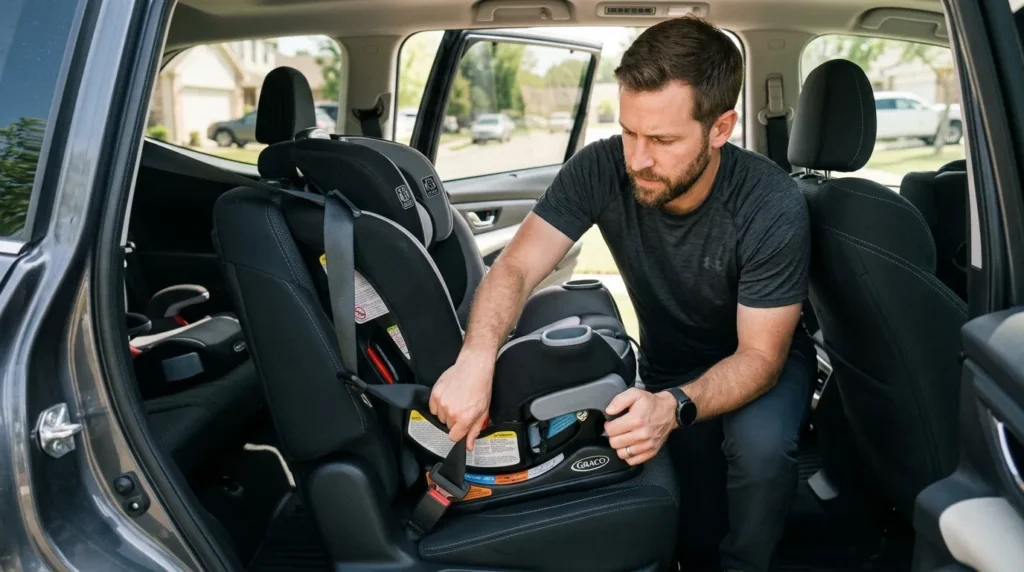
A car seat is only effective if it is anchored to the vehicle with zero room for movement. You should decide between using the LATCH system or the vehicle’s seat belt for the installation process.
However, you must never use both systems at once unless the manufacturer specifically says you can. The seat should not move more than one inch in any direction when you tug on it at the belt path.
This “inch test” is a professional standard that every parent should perform at least once a month. It ensures that the base remains secure even after several long trips or heavy use.
You can also find smart door lock benefits for busy parents that help you manage your home safety while you are busy with the car. These tools allow you to lock your front door from your phone so you can focus entirely on the vehicle.
While you are working on the car, a pet camera for nursery monitoring can help you keep an eye on your baby inside. This allows you to take your time and ensure the installation is perfect without feeling rushed.
3. Mastering the Harness Tension and Comfort Logic
Once the seat is solid, you must ensure the child is held securely within the protective shell. The harness straps should always be flat and never twisted against the child’s body.
Twists can reduce the strength of the webbing and cause injury during a sudden stop. You must perform the car seat harness tension test, which is often called the “pinch test” by safety experts.
If you can pinch any part of the strap between your fingers at the child’s shoulder, the harness is too loose. Tighten the straps until your fingers slide smoothly over the webbing without being able to grab any slack.
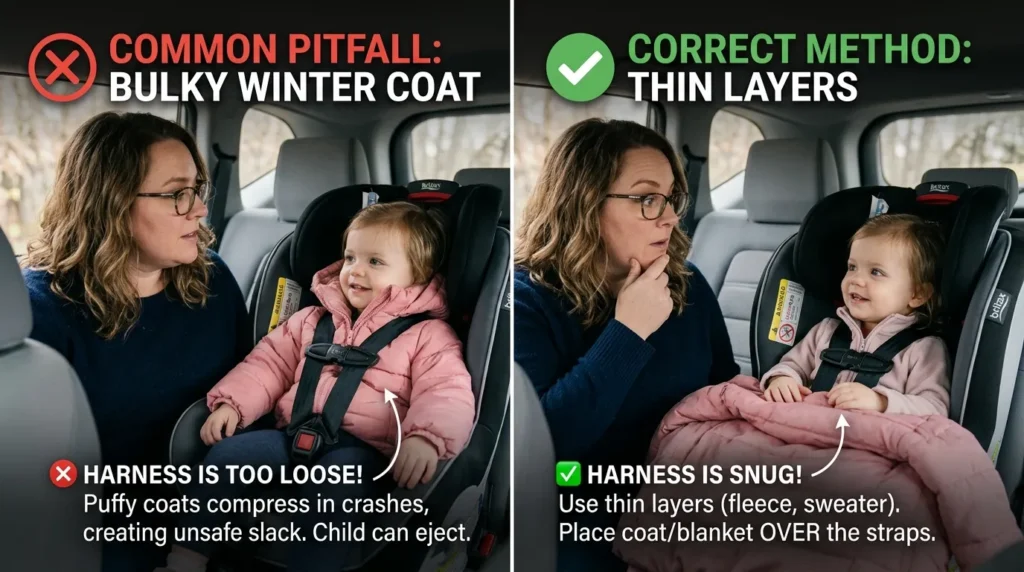
Be careful about what your child wears during the winter months when traveling. Bulky coats can compress during a crash, leaving the harness far too loose to hold the child in place.
One big mistake I made for a long time was letting my toddler wear his thick winter jacket under the straps because I was worried he would get cold. I was shocked to learn that in an accident, all that puffy fabric squeezes down and leaves the harness way too loose to hold him. Now, I always take the coat off first and tuck a warm blanket over the top of the harness once he is buckled in tight.
Check out this expert demonstration below to see exactly how to perform the “pinch test” correctly! Seeing the right way to check harness tension will give you the confidence to ensure your child is buckled in perfectly every single time.
4. Identifying Hidden Hazards Within the Vehicle
Your attention to detail should be as sharp as identifying toxic indoor plants for toddlers in your living room. You must look for hidden risks inside the car that might not be obvious at first glance.
Loose objects like heavy toys or water bottles can become dangerous projectiles during a crash. Secure all loose items in the trunk or a dedicated storage area to prevent them from hitting your passengers.
Check the angle of the car seat to ensure your baby’s head does not flop forward. Most seats have a built-in level indicator to help you find the safest angle for your child’s specific age.
This level of care creates a complete safety bubble for your child during every journey. It shows that you are a proactive parent who values safety over convenience every single time.
5. Transitioning with Scientific Accuracy
As your child grows, their needs will change, requiring you to update your restraint strategy. Do not rely on your child’s age alone to decide when to move to a booster seat.
Always look at the height and weight markers printed on the side of the seat. A child is only ready for a seat belt alone when they can sit with their back against the vehicle seat comfortably.
This disciplined approach ensures that your child is always protected by the most advanced technology available for their size. It is a long-term commitment that pays off every time you reach your destination.
Building these habits now protects your family’s future and gives you the confidence to explore the world. You deserve a life where you feel like a pro every time you buckle that belt.
Advanced Protection Protocols and Professional Secrets
Applying essential car seat safety tips for parents is the first step, but staying safe requires a deeper level of knowledge. Professional safety consultants often use specific protocols that many families never hear about in a basic store demo.
These secrets focus on the physics of a crash and the long-term maintenance of your gear. Mastering these details will ensure your child remains protected through every growth spurt and seasonal change.
The Mystery of the Top Tether for Forward-Facing Seats
Many parents move their child to a forward-facing seat and think the job is done once the lower anchors are clicked. However, there is a hidden strap at the top of the seat called the “Top Tether” that is often ignored.
This strap is a life-saver because it prevents the top of the car seat from tipping forward during a crash. Without it, a child’s head could hit the back of the front seat with extreme force, causing severe brain or neck injuries.
According to Safe Kids Worldwide, using the top tether reduces head movement by up to four inches during an impact. You should always locate the tether anchor point in your vehicle and ensure it is tightened until the strap is solid.
Managing In-Car Hazards During Long Trips
Safety in the car goes beyond just the seat; it includes everything else inside the vehicle cabin. You must be careful about carrying loose items that could become heavy projectiles if you have to slam on the brakes.
For instance, a heavy tablet or a hard toy can fly through the air and hit your child with the force of a brick. Use soft toys for road trips and secure all heavy luggage in the trunk or under the seats.
If you are traveling with medicine for your family, you should follow a medication safety home guide to keep these items secure. Store all drugs in a locked container inside your bag so they don’t spill or become a choking hazard for a curious toddler.
Vetting Others Who Drive Your Children
Your child’s safety protocol is only as strong as the person behind the wheel. If you use a nanny or a relative to transport your kids, you must ensure they know how to use your car seat correctly.
It is a good idea to learn how to vet a babysitter to ensure they have a clean driving record and understand safety rules. Ask them to demonstrate how they buckle the child in to verify they are doing the car seat harness tension test every time.
Do not assume that someone else knows the rules just because they have children of their own. Safety standards change over time, and a person who used car seats ten years ago might be using outdated methods today.
The Vehicle Fire and Emergency Exit Logic
In rare cases, a vehicle accident can lead to a fire or a situation where you need to exit the car quickly. You should teach your older children how to unbuckle themselves if you are unable to help them.
This type of readiness is similar to practicing fire escape drills for kids at home. Knowing where the emergency releases are can save precious seconds when the environment becomes dangerous.
You should keep a specialized seatbelt cutter and window breaker tool within reach of the driver’s seat. This ensures you can free your children from their restraints even if the buckles get jammed during a collision.
Sustaining Safety for the Long Haul
A professional safety plan is a marathon, not a sprint. You should perform a “Safety Audit” of your vehicle at the start of every month to check for wear and tear.
Look for fraying on the harness straps and check the plastic shell for any cracks or stress marks. If your car seat has been in a moderate to severe crash, it must be replaced immediately, even if it looks fine.
This level of preparedness is as important as a 9-step home alone safety readiness guide for older children. By making safety a consistent habit, you create a culture of protection that stays with your family forever.
Avoiding Dangerous Errors and Misconceptions
Even the most loving parents can fall into traps that compromise their child’s vehicle safety. Recognizing these common pitfalls is the only way to avoid them and stay truly secure on the road.
If you ignore these warnings, you are leaving your family’s well-being to chance. Every mistake you avoid is a step closer to a successful and safe journey for your little ones.
- Buying Second-Hand Seats with No History: You should never buy a used car seat from a stranger or a thrift store. You have no way of knowing if the seat was in a crash or if it has been recalled for a major safety flaw.
- The “Winter Coat” Harness Gap: Thick winter jackets create a layer of air between the child and the harness. During a crash, that air disappears, leaving the straps too loose to hold the child, so always place blankets over the harness instead.
- Wrong Harness Height for Rear-Facing: For rear-facing seats, the straps must be at or just below the child’s shoulders. If they are too high, the child could slide up and out of the seat during a frontal collision.
- Moving to a Booster Seat Prematurely: Parents often switch to boosters too soon because they want more space in the car. Keep your child in a 5-point harness until they reach the maximum weight allowed by the manufacturer to ensure total protection.
- Ignoring the Chest Clip Position: The chest clip belongs at the level of the armpits, not the belly. A low chest clip can cause serious internal organ damage or allow the child to fall out of the harness entirely.
Failing to correct these car seat installation common mistakes can lead to legal issues or deep emotional trauma after an accident. You should always refer to your vehicle’s owner’s manual and the car seat instructions to verify your setup.
The American Academy of Pediatrics (AAP) provides updated guidelines to help parents avoid these dangerous traps. Staying informed is your best defense against the hidden risks of daily travel.
Essential Questions About Child Vehicle Safety
What is the safest age for a child to switch to a forward-facing car seat?
The current expert advice is to keep your child in a rear-facing seat for as long as possible. Most modern seats allow children to remain rear-facing until they are at least four years old or reach specific weight limits.
How can I tell if my child’s car seat harness is tight enough?
You should use the “pinch test” at the child’s shoulders to check the tension. If you can pinch any slack in the webbing between your fingers, the harness is too loose and needs to be tightened immediately.
Is it safe for a baby to wear a winter coat in a car seat?
No, it is not safe because bulky coats prevent the harness from fitting snugly against the child’s body. You should dress your child in thin layers and put a blanket over them after they are buckled in securely.
How do I know if a car seat has expired or been recalled?
Every car seat has a sticker with a manufacturing date and an expiration date on the base. You can check for recalls by visiting the manufacturer’s website or signing up for alerts at the NHTSA website.
Can smart home security devices help keep my child safe while loading the car?
Yes, using smart door lock benefits for busy parents allows you to lock your house without taking your eyes off your child. A pet camera for nursery monitoring can also help you watch a sleeping sibling while you secure the car seat in the driveway.
Your Path Forward for a Safer Journey
Protecting your child on the road is a responsibility that requires constant attention and care. By following this protocol, you have taken the first step toward becoming a pro-level protector for your family.
You no longer have to feel overwhelmed by the complexity of car seat manuals and conflicting advice. You have the tools and the knowledge to make every trip a safe one for your little ones.
Start today by checking your harness tension and verifying the date on your car seat base. Share what you have learned with your friends and family so they can stay safe too.
The peace of mind you gain from being prepared is worth every minute of effort. You are now a key player in the safety of your home and your community on the road.
Stay alert, stay informed, and always trust your training. Your love and your knowledge are the ultimate tools for a long and healthy life for your children.
Taking these small steps gave me a huge sense of relief every time we hit the road for a family trip. You don’t have to be a tech expert to get this right; you just need to start with one simple check today to protect your little ones. Go ahead and test that strap tension right now—you will feel so much better knowing your child is truly anchored and safe!
Disclaimer: The information provided in this article is for educational and informational purposes only. Car seat laws and safety standards vary by region and change over time. Securely Life (securelylife.com) is not liable for any injuries, deaths, or legal consequences resulting from the application of these techniques. We strongly recommend visiting a certified Child Passenger Safety Technician (CPST) for a professional installation check. Always refer to your car seat manufacturer’s instructions and your vehicle’s owner’s manual for specific safety requirements.