Leaving your child at home with someone new is one of the hardest things you will ever do. You walk out the door, but your heart stays behind.
Your mind starts racing with “what if” scenarios that make it impossible to focus on your work or enjoy your evening. Modern research shared on Wikipedia shows that parental anxiety spikes dramatically during the first few instances of hiring external childcare providers.
This is not just about finding someone to watch TV with your kids. This is about Family Safety and the sanctity of your home.
You are handing over the keys to your house and the safety of your most precious people to a person you barely know.
The struggle is real because the stakes are incredibly high. According to insights on Forbes, a household staff transition requires strict risk management protocols to avoid structural vulnerabilities. One wrong choice can lead to more than just a messy kitchen—it can lead to a breach of Home Security or, worse, a threat to your child’s well-being. This fear is a heavy weight that every modern parent carries.
Why Finding a Trustworthy Sitter Feels Impossible
Many parents try to find help but end up feeling more stressed than before. Here is why the search often fails:
- You rely on neighborhood apps where anyone can create a fake profile with a nice photo.
- You see “glowing reviews” that might just be written by the sitter’s best friends or family members.
- You feel pressured to hire someone quickly because you have a work meeting or a family emergency.
- You don’t know which documents to ask for, so you just hope for the best and trust your gut.
- You skip the background check because the process via standard platforms listed on Investopedia seems too expensive or complicated to set up.
- You assume a “nice” person is always a “safe” person, which is a dangerous mistake.
How Uncertainty Destroys Your Peace of Mind
When you don’t have a solid vetting process, your mental health suffers in ways you might not notice:
- You spend your entire time away checking your Home Security cameras instead of being present.
- You feel a constant sense of guilt, wondering if you did enough to protect your kids.
- You lose confidence in your ability to manage your household and keep things under control.
- You start to pull back from social life or work opportunities because the stress of hiring a sitter is too much.
- You live in a state of hyper-vigilance, which leads to burnout and exhaustion for the whole family.
The Real Danger of Skipping the Vetting Process
At Securely Life, we believe that Personal Safety starts with the people you allow into your inner circle. Hiring a babysitter without a deep dive into their background is like leaving your front door wide open at night.
In the digital age, Digital Safety is also a major factor. Does this sitter know how to implement a child online safety guide when letting your kids browse the internet?
Do they understand how to keep your home Wi-Fi password private? These are modern risks that didn’t exist a decade ago.
When you ignore these security steps, you aren’t just taking a risk with your child. You are risking your data, your privacy, and your physical Home Security.
A babysitter sees where you keep your spare keys, where your jewelry is, and what your daily routine looks like. If that person is not properly vetted, that information could end up in the wrong hands.
This is why a simple interview is never enough. You need a system that looks at the person from every angle. We want to help you build that system so you can leave your home with total confidence.
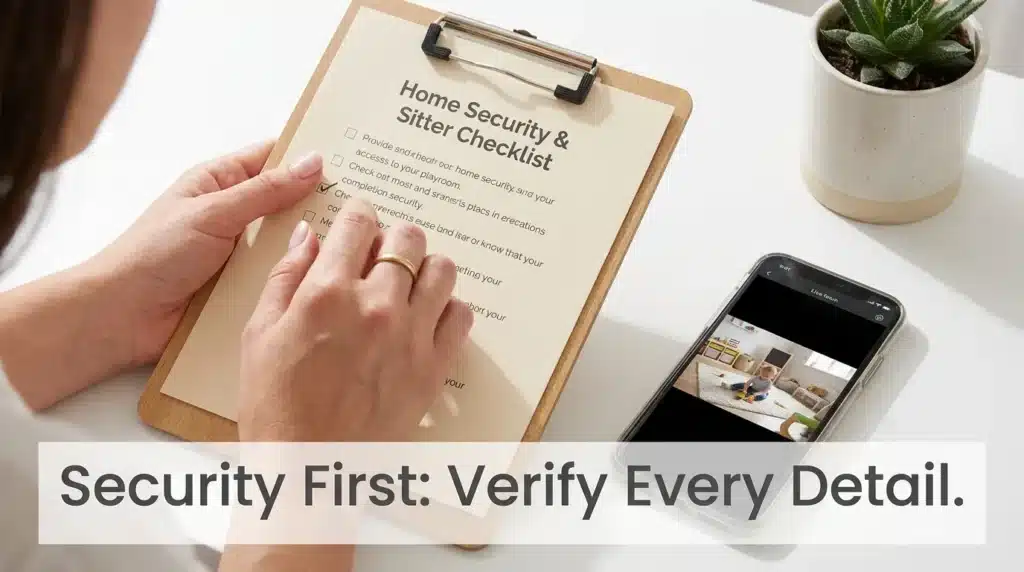
Your Step-by-Step Guide to Vetting a Babysitter Like a Pro
To keep your Family Safety at its highest level, you need a plan. Don’t just wing it. Follow these steps to ensure the person you hire is truly who they say they are.
Step 1: Conduct a Detailed Pre-Screening Search
Before you even invite someone to your home, you need to do your homework. This starts with Digital Safety and online research.
Start by searching their name on Google. Look beyond the first page. Check for any news articles or public records. You might be surprised at what a simple search can reveal.
Check their social media profiles. Are they posting content that makes you feel uneasy? Look for signs of illegal activity or a lifestyle that doesn’t align with your family values.
Check their LinkedIn profile to see if their work history matches the resume they gave you. If there are gaps in their history, make a note to ask about them later. This first step saves you time by filtering out candidates who are clearly not a fit.
Step 2: The Security-Focused Phone Interview
Once the candidate passes the online check, schedule a 15-minute phone call. This is your chance to hear their voice and check their professionalism.
Ask them about their experience with kids the same age as yours. If they seem annoyed by your questions, that is a red flag. You want someone who understands why you are being careful.
During this call, mention that you use Home Security cameras. Watch their reaction. A safe, professional sitter will not mind cameras in common areas.
If they seem defensive, they might not be the right person for a home that values a comprehensive situational awareness personal safety guide.
Confirm their availability and their comfort level with your house rules. Do they have reliable transportation? If they rely on rideshares, that might be a concern for Travel Safety if they ever need to take your kids somewhere in an emergency.
Step 3: Verifying Identity and References
Never take a resume at face value. Ask for a government-issued ID, like a driver’s license or passport. You need to know exactly who is in your home.
Ask for at least three professional references. These should be former employers, not friends or cousins. When you call these references, don’t just ask “were they good?”
Ask specific questions like:
- “How did they handle a situation where the child was upset?”
- “Were they always on time?”
- “Did they follow your rules regarding screen time and snacks?”
- “Would you hire them again to protect your own children?”
Listen to the tone of the person on the other end. If they hesitate, there might be a reason. Real references are usually happy to talk about a great sitter.
Step 4: The In-Person Security Interview
Now it is time to meet in person. This should happen when your kids are awake. Watch how the candidate interacts with your children. Do they get down on the floor to play, or do they stay on their phone?
This is where you ask the tough security questions. You need to see how they think under pressure. Their answers will tell you if they can handle a real emergency.
Ask these specific security questions:
- “What would you do if someone knocked on the door and said they were a delivery driver?”The right answer is that they should never open the door for a stranger. They should check the Home Security camera or look through the peephole and call you if they are unsure.
- “How do you handle emergency situations, like a fire or a power outage?”They should know how to find the exits and have a plan to get the kids out safely. You should also show them where your first-aid kit and fire extinguisher are located.
- “What is your policy on posting photos of my children on your social media?”In terms of Digital Safety, the only correct answer is “I will never post photos of your kids.” This protects your family’s privacy and keeps your children’s faces off the public web.
- “Do you know Infant and Child CPR and First Aid?”This is a non-negotiable for Family Safety. If they aren’t certified, you might want to pay for them to take a class before they start.
- “If my child gets a minor injury, like a scraped knee, how do you handle it?”This shows if they can stay calm and follow basic medical steps. It also shows if they know when to call you versus when to handle it themselves.
Step 5: Setting Clear Boundaries and Expectations
Safety is also about clarity. You must be very clear about what is allowed and what is not. Write down your “House Rules” and keep them in a visible spot.
This list should include rules about:
- Visitors: No guests are allowed in the house while they are working.
- Phone Use: Phones should only be used for emergencies or quick updates to you.
- Privacy: Which rooms are off-limits?
- Digital Safety: No sharing your home address or Wi-Fi password with anyone.
When you set these rules early, you build a professional relationship. A good sitter will appreciate the structure. It shows that you take Personal Safety seriously and that you expect them to do the same.
Step 6: The “Trial Run” Period
Don’t just leave them alone for 8 hours on the first day. Start with a trial run. Stay at home while they watch the kids for a few hours.
You can stay in another room and work. This lets you hear how they talk to your children. Do they stay patient? Do they follow the routine you set?
After the trial, ask your kids how they felt. Even young children can give you clues. If they seem happy and calm, it is a good sign. If they seem scared or unusually quiet, you need to investigate why.
Step 7: Ongoing Security Monitoring
Vetting doesn’t end after the hire. You should continue to monitor the situation. Use your Home Security system to check in occasionally.
Pay attention to any changes in your child’s behavior. Are they suddenly afraid of the sitter? Do they have unexplained marks or bruises?
Keep the lines of communication open. Ask the sitter for a daily report. What did they eat? When did they nap? What did they play? A sitter who provides details is usually a sitter who is doing their job well.
Why This Process Matters for Your Family
Taking these steps might feel like a lot of work. But when it comes to Family Safety, there are no shortcuts. You are building a layer of protection around your home.
By following this guide, you are doing more than just hiring a helper. You are ensuring that your home remains a safe haven. You are protecting your children from potential harm and giving yourself the gift of peace.
At Securely Life, we believe that being informed is your best defense. Whether it is Travel Safety while on vacation or Digital Safety at home, the more you know, the safer you are.
Hiring a babysitter is a big step. But with the right questions and a solid plan, you can find someone who will care for your kids as much as you do. Stay vigilant, stay informed, and always put safety first.
You have the power to make your home the safest place it can be. Start your vetting process today and breathe a sigh of relief knowing you have done your best for your family.
Moving Beyond the Basics of Childcare Security
You have already done the initial screening and the first interview. Now, it is time to look at the advanced layers of Family Safety.
Many parents stop after a quick chat and a reference call. But truly protecting your home and kids requires a deeper look into the person you are hiring.
Think of your home as a fortress. You wouldn’t let just anyone through the gates without a thorough inspection. These next steps will help you build a wall of security that keeps your family safe and sound.
Using Professional Screening for Ultimate Personal Safety
A simple search on the web is a good start, but it doesn’t show everything. Professional background checks are the gold standard for Personal Safety.
You should ask the candidate for permission to run a formal criminal background check. This process looks at court records across different states and counties.
It also checks the sex offender registry, which is a step you can never skip. Sometimes, people move to a new area to hide a troubled past. A professional check will find those hidden details.
If a candidate refuses to let you run a background check, take that as a major warning sign. Someone with nothing to hide will understand why you are taking this step.
Remember, this is not about being paranoid. It is about being a responsible parent. You are the last line of defense for your children.
Running Real-Life Emergency Scenario Drills
Testing a sitter’s knowledge is one thing, but seeing how they react is another. Before you leave them alone, run through a few “what if” scenarios.
Ask them, “If the fire alarm goes off right now, where is your first exit?” Watch how quickly they answer. You want someone who is alert and knows the layout of your home.
Talk about Travel Safety if they will be driving your kids. Ask them what they would do if they got into a minor car accident with the kids in the back seat.
Do they know where you keep the emergency contact list? Do they know how to operate your Home Security system if it starts beeping?
These drills help the sitter feel more prepared and give you peace of mind. It turns theoretical knowledge into practical skills that can save lives in a crisis.
Creating a Private Digital Safety Agreement
In our world today, Digital Safety is just as important as physical locks on your doors. Your babysitter will likely have a smartphone with them at all times. If you don’t set boundaries, they might accidentally leave your home data vulnerable, which is why it’s vital to learn how to prevent identity theft public wi fi rules on connected profiles.
You need to have a clear talk about what they can and cannot do online. Many sitters love to post “cute” photos of the kids they watch.
While it might seem harmless, this can reveal your home’s location to strangers. It can also show what the inside of your house looks like, which is a risk for Home Security.
Explain that you have a strict “No Social Media” policy regarding your children. They should understand your social media privacy settings guide expectations. They should not post photos, tag your location, or mention your family’s name online.
This protects your kids’ privacy and keeps your home address off the public web. You should also tell them not to share your Wi-Fi password with anyone else.
By setting these digital boundaries, you are closing a door that many parents accidentally leave wide open. It is a simple step that has a huge impact on your long-term security.
How to Maintain a High Standard of Safety Long-Term
Keeping your family safe is not a one-time task. It is a habit that you need to practice every single day.
Once you find a great sitter, don’t get too comfortable. Keep checking in and staying involved. Ask for regular updates and photos during the day.
Periodically review your Home Security camera footage. You don’t have to watch every second, but a quick check ensures that the rules are being followed.
If the sitter’s behavior changes, or if your child seems unhappy, don’t ignore your gut feeling. Trust is earned, but it must also be maintained.
Talk to other parents in your circle. Share what you have learned about vetting. When we all share our knowledge, our entire community becomes safer.
Huge Mistakes to Avoid When Hiring Help
Even the most careful parents can make mistakes. Knowing what these pitfalls are can help you avoid them before they cause trouble.
1. Hiring Based Only on “Good Vibes”
We all want to like the people we work with. However, a “nice” personality can sometimes hide a lack of professional skills.
Don’t let a friendly smile stop you from doing a background check. Some of the most dangerous people can be very charming.
Always back up your feelings with hard facts and verified records. Your child’s safety is too important to leave to a “feeling.”
2. Forgetting to Verify Every Single Reference
Sometimes, parents only call one reference because they are in a hurry. Or, they might just send a text instead of calling.
You need to hear the person’s voice on the other end. People are more likely to be honest over the phone than in a text message.
Ask the reference if there were ever any safety concerns. If they seem to be holding back, there is likely a reason for it.
3. Being Secretive About Your Security Cameras
Some parents feel guilty about having Home Security cameras. They might try to hide them or not mention them to the sitter.
This is a mistake. Being honest about cameras sets a tone of transparency. It also acts as a deterrent for bad behavior.
A professional sitter will have no problem with cameras in common areas like the living room or kitchen. If they are upset about it, they are likely not the right fit for you.
4. Not Having a Written Emergency Plan
Assuming the sitter knows what to do is dangerous. Every home is different and every family has different needs.
Without a written plan, the sitter might panic in a crisis. This can lead to delays in getting help or making a situation worse.
Make sure they have a physical list of numbers, including poison control and your neighbor’s contact info. Don’t just rely on them having it in their phone.
5. Ignoring Changes in Your Child’s Behavior
Your child is your best security sensor. If they suddenly don’t want to be with the sitter, pay attention.
Children might not have the words to tell you if something is wrong. They show it through their actions, their sleep patterns, or their mood.
Always take your child’s feelings seriously. It is better to be overly cautious than to ignore a potential problem.
Frequently Asked Questions About Sitter Security
How much should I pay for a professional background check?
Most reliable background checks cost between $30 and $50. This is a small price to pay for the safety of your family and the security of your home. Think of it as an investment in your peace of mind.
Is it legal to have security cameras in my home?
Yes, in most places it is perfectly legal to have cameras in common areas of your own home. However, you should never place cameras in private areas like bathrooms or the sitter’s bedroom if they are staying overnight. Always check your local laws to be sure.
What are the biggest red flags during an interview?
Red flags include being late to the interview, refusing a background check, and speaking poorly about past employers. Another big warning sign is if they seem more interested in your Wi-Fi password than in meeting your kids.
How many references should I actually call?
You should aim to speak with at least three professional references. If they can only provide one or two, ask why. Having multiple sources of information helps you see a pattern of behavior over time.
Should I ask for a copy of their driver’s license?
Yes, absolutely. You need to verify their identity and know exactly who is in your house. Take a photo of the license and keep it in a secure place. This is a standard part of any professional vetting process.
Taking Charge of Your Family’s Protection Today
Securing your home and protecting your children is a journey, not a destination. By taking the time to vet your babysitter properly, you are showing that your family is your top priority.
You now have the tools and the questions to find a sitter who is not only fun but also safe. This process gives you the confidence to walk out your front door without looking back.
Remember that Home Security and Personal Safety work together. When you have a trusted person in your house, your entire security system becomes stronger.
Don’t wait until you are in a rush to find a sitter. Start your search now, use these steps, and build a relationship based on trust and safety.
You deserve to have peace of mind. Your children deserve to be in a safe environment. Take these lessons and put them into action today.
At Securely Life, we are here to help you every step of the way. Stay safe, stay smart, and keep your family protected.
Disclaimer: The information provided on Securely Life is for educational and informational purposes only. While we strive to provide accurate advice on Family Safety and Home Security, we are not legal or professional security experts. Always conduct your own research and consult with local authorities or legal professionals regarding background checks and privacy laws in your area. Use of any tips or checklists provided is at your own risk.