I know the feeling of a hot summer afternoon. You hear the sound of kids splashing and the smell of sunscreen in the air.
Having a pool in your backyard is supposed to be about joy and making memories. However, creating a fun environment goes hand in hand with maintaining overall 5-essential tips for a securely life.
For many parents, that sparkling blue water also brings a sense of worry. You might feel a small knot in your stomach every time you can’t see your child for a second.
This fear is real because we know how fast things can change. According to global water safety standards documented on Wikipedia, submersion incidents happen much faster than most people anticipate.
We want our homes to be a place of total safety. But a swimming pool can turn from a fun zone into a danger zone in the blink of an eye.
Accidental drowning is a quiet threat that haunts many families. According to data from the Centers for Disease Control and Prevention (CDC), it remains a leading cause of accidental death for young children globally.
“It is not like what you see in the movies where people shout for help. Accidental drowning is almost always fast and completely silent.”
Why Finding the Right Safety Information Is Hard
Many parents try to do the right thing, but they often get lost in bad advice. Here is why many families struggle to find the right solutions:
- Reliance on Cheap Toys: People think “floaties” or water wings are safety devices. They are actually just toys and can slip off or deflate easily.
- The “It Won’t Happen to Me” Mindset: Most accidents happen when a parent is distracted for just a moment, thinking they are “right there.”
- Confusing Safety Gear: There are so many fences, alarms, and covers on the market. Parents often pick the cheapest one without checking certifications.
- Incomplete Knowledge: Some think swim lessons make a child “drown-proof.” No child is ever 100% safe in the water, no matter how well they swim.
How Water Anxiety Impacts Your Family Life
When you don’t have a solid safety plan, it affects your mental peace. You might find yourself constantly on edge during every backyard BBQ or family gathering.
This constant hyper-vigilance means you spend every second scanning the water instead of relaxing. This behavior rapidly leads to parental burnout and stress.
Furthermore, it causes a loss of confidence. You might stop inviting friends over or avoid using the pool entirely, taking away the fun of having it.
It also breeds a fear for older kids. Sometimes we worry so much about toddlers that we forget older kids can get into trouble too, creating a dangerous false sense of security.
Parents often end up second-guessing their barriers. Looking at your fence or door lock and wondering if it is truly strong enough can keep you up at night.
The Real Truth About Drowning Risks
We need to talk about the reality of water accidents. Drowning is the leading cause of accidental death for small children, a heartbreaking fact we must face to change.
Most of these accidents happen in residential pools. It usually occurs when a child was thought to be in the house or playing somewhere else.
Children find a way out and head straight for the water. Developing good habits here is just as vital as teaching your family about modern stranger danger tips.
Water is magnetic to children because it looks sparkly and fun. Since their heads are heavy and muscles are small, they can get into trouble in just a few inches of water.
The good news is that these accidents are almost always preventable. We don’t need to live in fear; we just need a multi-layered plan that works every single time.
By understanding the “Layers of Protection” concept, you can regain control. It starts with physical barriers and ends with constant eyes on the water.
Creating a Shield: The First Steps to Pool Safety
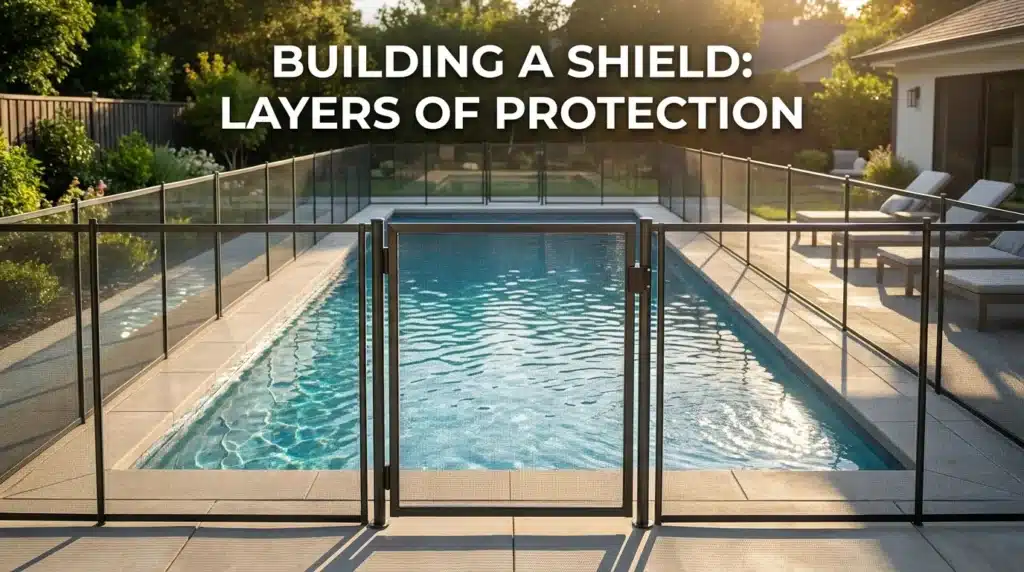
To keep your kids safe, you need more than just one lock or one rule. You need a system that acts as a comprehensive “Safety Shield.”
Step 1: Install a Four-Sided Isolation Fence
The most important physical barrier you can have is a fence. It must be a fence that completely separates the pool from the house.
Many people have a fence around their yard, but the back door leads directly to the pool. This is a big mistake as a child can walk out and fall into the water in seconds.
Your fence should be at least four feet high and difficult to climb. Look for certified fences that do not have handholds or footholds.
The gate is the most important part. It must be self-closing and self-latching, meaning it swings shut and locks on its own if someone forgets.
Keep the latch high enough so that a toddler cannot reach it. Check the fence regularly for any gaps or broken parts that could be an entry point.
Step 2: Use Technology with Smart Alarms
Technology can be your best friend when it comes to pool safety. Even the best parents can get distracted by a phone call or a doorbell.
Alarms act as your extra set of ears. First, use door alarms on every single entryway that leads directly to the pool area.
Second, you can use pool surface alarms that sit in the water. These detect waves and sound off if something heavy falls into the pool.
Third, consider wearable alarms for children. These small devices are worn on the wrist and sound an immediate alarm if they get wet.
Remember, tools are just backups and not a replacement for you. Always keep them maintained and check their batteries regularly.
Step 3: Designate a “Water Watcher”
Supervision is the most effective way to prevent accidents. However, “watching the kids” can be a vague term at busy gatherings.
This is why you should use the Water Watcher system. One adult is chosen to be the designated watcher for a specific timeframe, like 15 minutes.
That person wears a special lanyard or holds a specific card. Their only job is to look at the water without looking at their phone or talking to others.
When their time is up, they hand the card to the next adult. This ensures there is always a fresh pair of eyes and removes dangerous confusion.
If you are the watcher, stay within an arm’s reach of any toddlers. This touch supervision allows you to pull them up instantly if they slip.
Step 4: Teach Water Competence Early
Learning to swim is a life skill that every child needs. It is not just about doing strokes; it is about building true water competence.
This means teaching a child how to return to the surface if they fall in, how to float on their back to breathe, and how to move toward the edge.
You can start water orientation classes very early to reduce panic. Reducing panic is a big reason why accidents do not become fatal.
Even if your child is a great swimmer, they still need supervision. Cramps, exhaustion, or hitting their head can make anyone lose their ability to stay afloat.
Always remind your children that they are never allowed near the water without an adult. Make this a golden rule in your home.
Step 5: Keep the Pool Area Clear of Temptation
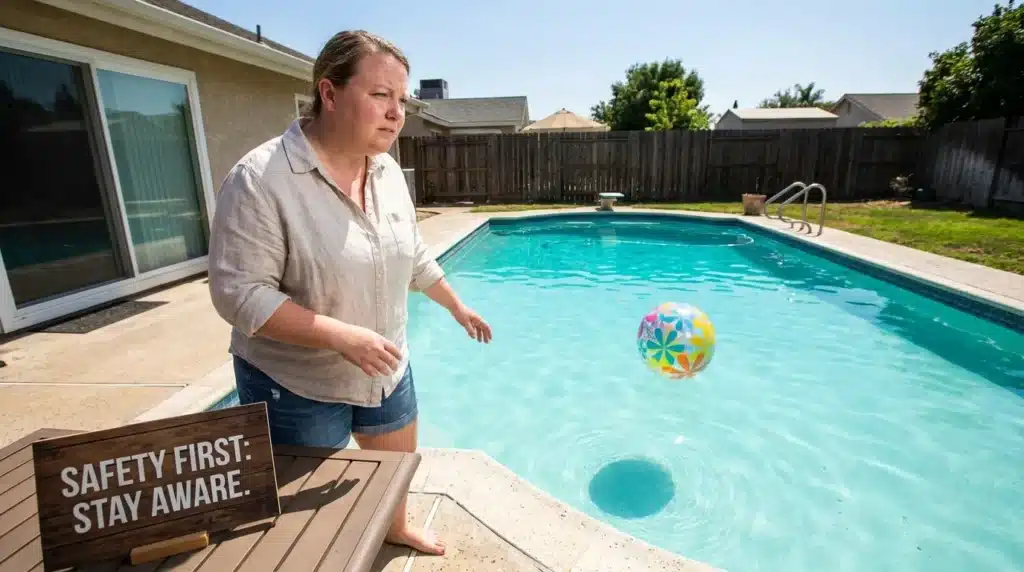
Sometimes children end up in the pool area because they are looking for a toy. If a ball is floating in the water, a child will try to reach for it.
They might lean over too far and lose their balance. To prevent this, always clear the pool and the deck of toys when you are done swimming.
Use a large bin or a storage box to hide the toys away. If the child can’t see the fun things, they are less likely to try to get into the pool area alone.
Also, keep furniture like chairs or tables away from the fence. A clever child can move a chair to the fence and use it as a ladder to climb over.
Step 6: Learn Basic Rescue Skills
Preparation is about what you do if something actually goes wrong. Every parent with a pool should know CPR (Cardiopulmonary Resuscitation).
Knowing how to perform CPR makes a massive difference while waiting for help. Keep a phone near the pool at all times strictly for emergency use.
You should also have professional rescue equipment near the pool. A life ring or a reaching pole can help you pull someone out safely.
Make sure these tools are easy to see and grab. Just like learning situational awareness personal safety guide tactics, being prepared saves lives.
Moving Beyond the Basics: Expert Ways to Secure Your Pool
Building a safe environment for your children is a journey that goes beyond just setting up a fence. We must eliminate the hidden dangers most people overlook.
One of the biggest hidden risks in any swimming pool is the drainage system. The suction from an unmaintained pool drain can be incredibly strong.
This suction can trap a child’s hair, limbs, or swimsuit. To prevent this hazard, you must install anti-entrapment drain covers immediately.
You should also look into a Safety Vacuum Release System (SVRS). This smart device senses when a drain is blocked and shuts off the pump in a split second.
Think of the SVRS as a kill switch for your pool’s suction. Check your pool drains every single week to ensure no covers are loose, cracked, or missing.
Understanding the Trap of Soft Pool Covers
Another major area where families make mistakes is with pool covers. There is a massive difference between a solar cover and a certified safety cover.
A solar cover is a thin, blue sheet of plastic designed to keep the water warm. However, it is actually a major drowning hazard.
If a child falls onto a solar cover, the plastic can wrap around them like a cocoon, making it extremely difficult to swim or break free.
Instead, invest in a solid safety cover anchored into the deck with heavy-duty springs. A high-quality safety cover should hold the weight of an entire family.
When the pool is not in use, this cover must be fully closed and locked. Never leave a pool partially covered under any circumstances.
Staying Safe in the Neighborhood
Your safety plan should not stop at your own property line. While managing your household, you must also consider child online safety guide measures and local physical threats.
Kids love to explore. If your neighbor has a pool without a fence, your child could wander into their yard completely unnoticed.
Take the time to talk to your neighbors about water safety. Offer to help them check their gates or look for gaps in their hedges to protect all local kids.
Also, teach your children that they must never go into a neighbor’s yard without you. Make it clear that the rules of the water apply everywhere.
How to Maintain These Safety Standards Long-Term
Safety is not a set-it-and-forget-it task. To keep your family protected, you need a strict routine that you follow every single season.
Start by making a safety checklist that you review on the first day of every month. Check the tension on your pool cover and test the gate latches.
Sun and chemicals make plastic parts brittle over time. If you notice a latch getting sticky, fix it or replace it immediately without delay.
Run a safety drill with your family once a month. Ask your kids what they would do if they saw the pool gate open, and reward them for pointing out risks.
By making safety an active part of your life, it becomes a habit. For more tips on tracking safety, you can download the best personal safety apps for loved ones to stay coordinated.
Fatal Errors: Mistakes That Put Your Family at Risk
Even with the best intentions, parents often fall into dangerous traps. Knowing these common mistakes is the only way to avoid them entirely:
- Relying on Floaties: These are toys, not life-saving devices. They can slip off easily or cause a false sense of security.
- Supervising While Distracted: Looking at a text message for just five seconds is long enough for a silent submersion to occur.
- Drinking Alcohol Near the Pool: Alcohol slows your reaction time and blurs judgment. Stay 100% sober when supervising children.
- Thinking Shallow Water is Safe: A small child can drown in as little as two inches of water, including baby pools and buckets.
- Leaving the Pool Area Messy: Toys left floating in the water act like magnets that draw curious toddlers into danger zones.
Common Questions About Child Water Safety
At what age should my child start swimming lessons?
Most experts suggest starting water orientation as early as six months old. However, formal swimming lessons usually start around age one to four.
Are pool alarms 100% reliable?
No electronic device is perfect. Alarms can fail if the batteries die. Think of an alarm as a backup system, not your primary way of watching the kids.
What is the very first thing I should do if a child is missing?
Check the pool first. Every second is vital in a water emergency. Look in the water before searching anywhere else in the house.
Do I need a fence if I have a pool cover?
Yes, you should have both. A fence is a permanent barrier that prevents access to the area, while a cover serves as an extra layer of defense.
Is it safe to use a pool at night?
Night swimming can be safe if you have excellent, professional lighting. However, if the lighting is poor, keep the pool area closed after sunset.
Your Path to a Worry-Free Summer
Protecting your children from drowning is one of the most important jobs you have as a parent. Start today by checking your back door locks and checking your fence.
No fence or alarm can replace your eyes and your care. But when you combine your attention with these physical barriers, you create a safe haven.
You deserve to enjoy your pool without the constant weight of fear. By following these steps, you are taking control and making your home a better place.
Disclaimer: The information provided in this article is for educational purposes only. While we strive to provide accurate safety tips, every pool environment is unique. Always consult with local safety experts and follow your local laws regarding pool fencing and maintenance. Swimming pool safety requires constant adult supervision, and no physical barrier can replace the watchful eye of a parent or guardian. We are not liable for any accidents or injuries that may occur.