I still remember the night I walked home from my friend’s apartment and heard footsteps behind me for three whole blocks. My heart was pounding so hard I could feel it in my throat. I gripped my keys between my fingers like they were a weapon, even though I had no idea if that would actually help me.
I didn’t tell anyone how scared I was that night. I just laughed it off the next morning and said, “Oh, it was probably nothing.”
But it wasn’t nothing to me. It changed how I walked for months.
I started avoiding certain streets. I started making up excuses to leave places before it got dark. My world got smaller, and I didn’t even realize it was happening until a friend pointed out that I never walked anywhere alone anymore.
That fear is more common than people admit. If you’ve ever felt your pulse quicken while walking alone, you are not being dramatic. You are being human.
The Quiet Weight So Many People Carry
A lot of people walk around with a low hum of worry every single day. Maybe it’s the short walk from your car to your front door. Maybe it’s your morning jog before the sun comes up. Maybe it’s just a walk to the corner store for milk.
This constant low-level stress adds up. It can make you tense your shoulders without noticing. It can make you check over your shoulder so often that a simple walk feels like a chore instead of something relaxing.
Parents worry about their teenagers walking home from school. Adult children worry about their aging parents walking the dog at dusk. New residents in a city worry about routes they haven’t learned yet. Even people who feel confident during the day admit they feel different once the sun goes down.
None of this means the world is falling apart. It means your brain is doing its job — trying to keep you safe. The problem is that fear without a plan just creates anxiety. Fear with a plan creates confidence.
That’s exactly what this guide is for. Not to scare you further, but to hand you real tools you can use starting today, whether you’re heading out for a jog, walking to work, or taking the dog around the block one more time before bed.
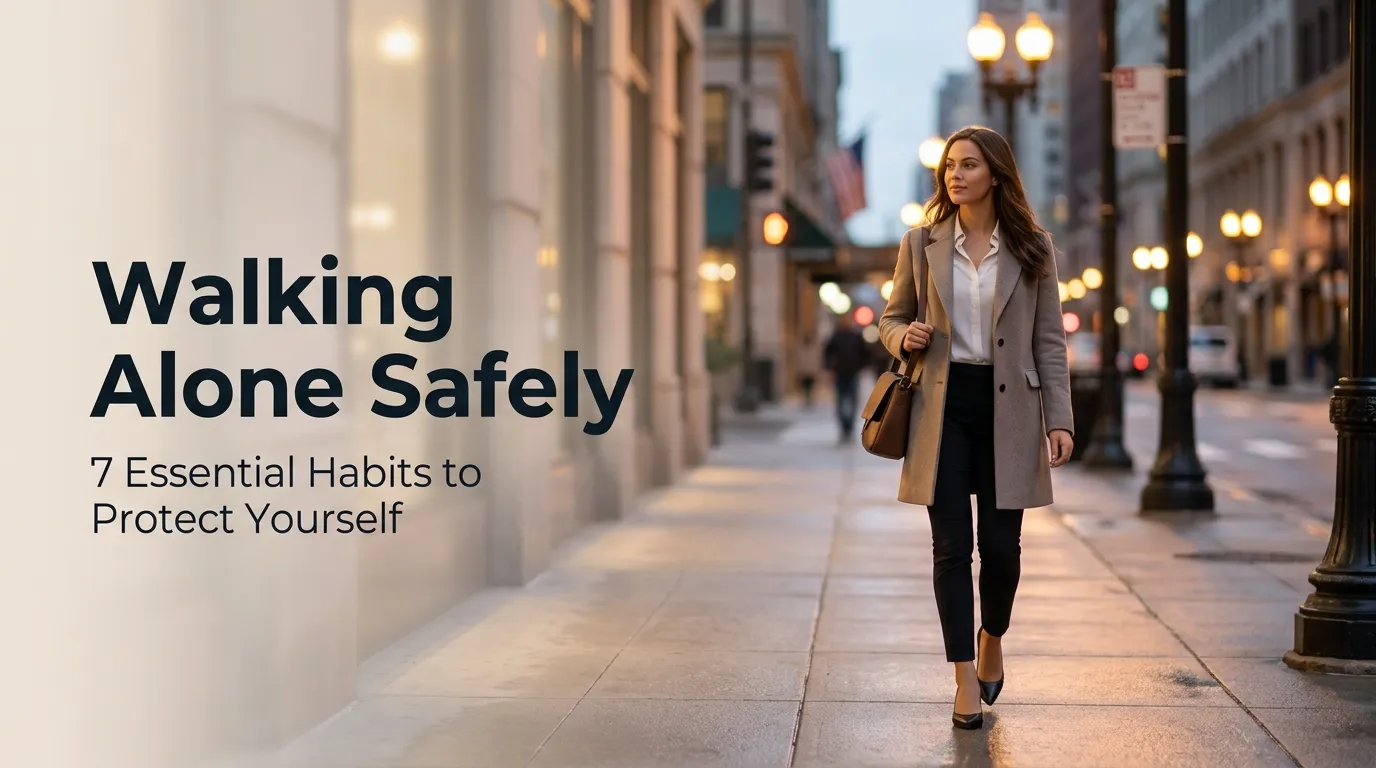
7 Essential Habits to Stay Safe While Walking Alone
Safety while walking alone isn’t about one single trick. It’s about stacking small habits that work together. Think of it like layers. One layer alone might not stop every problem, but several layers working together make you a much harder target.
Let’s break this down into pieces you can actually use.
1. Know Your Route Before You Ever Take a Step
Before you leave the house, take thirty seconds to think through your path. Are you walking through well-lit areas? Are there people around, or will you be completely alone for long stretches?
If you’re new to an area, it helps to review your walk on a map first. This simple habit is covered in more depth in this personal safety guide, which walks through how to build safer daily routines from the ground up.
Pro Tip: I used to just wing it and pick whatever street looked “close enough.” One night I ended up on a completely unlit road with no sidewalk, and I felt so exposed. Now I check my route on a map app first, every single time, even for walks I’ve done a hundred times before. It takes ten seconds and it’s saved me from a few sketchy detours.
2. Tell Someone Where You’re Going
This sounds simple, but so many people skip it. Send a quick text to a friend or family member with your route and when you expect to arrive.
According to the National Safety Council, sharing your location and expected arrival time with someone you trust is one of the most effective low-cost ways to reduce personal risk when traveling alone on foot.
If you’re a student or a younger person walking alone often, this habit matters even more. There’s a full breakdown of age-specific advice in this guide on personal safety tips for teenagers.
3. Trust That Uneasy Feeling in Your Gut
Your intuition is smarter than you think. If a street feels wrong, or a person makes you uncomfortable, that feeling is your brain picking up on tiny details you haven’t consciously noticed yet.
Don’t talk yourself out of it. Cross the street. Turn around. Walk into a nearby store. You don’t owe anyone politeness at the cost of your safety.
We go much deeper into this idea in our guide on how to trust your intuition for personal safety, including real examples of what that inner alarm usually sounds like.
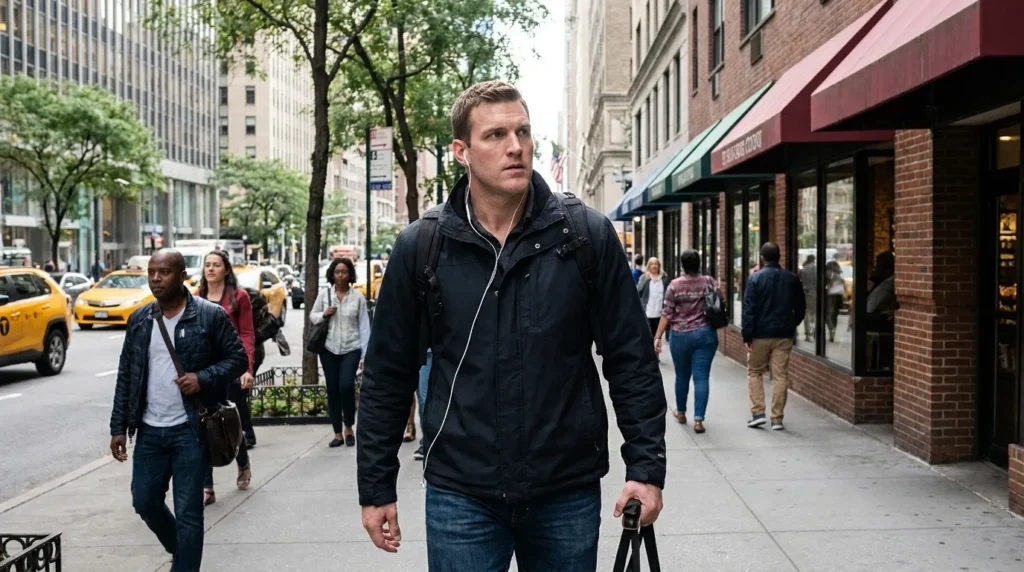
4. Watch Your Surroundings, Not Your Screen
I know, I know. Scrolling while you walk feels normal now. But it’s one of the easiest ways to miss warning signs.
Try keeping one earbud out instead of two. This lets you stay connected to music or a podcast while still hearing footsteps, traffic, or someone calling out to you.
This single habit is often called situational awareness, and it’s one of the strongest tools you have. Our full situational awareness guide breaks down how to build this skill without feeling paranoid every time you leave the house.
Here’s a quick visual breakdown that shows exactly how to scan your surroundings while walking, without looking anxious or overly alert.
What happens when you walk alone at night for 30 days straight? This eye-opening video explores the real-world lessons of situational awareness and shares a simple 3-step method to help you stay alert and confident on any street, without ever feeling on edge.
5. Walk Like You Know Exactly Where You’re Going
Body language speaks louder than most people realize. Standing tall, walking with a steady pace, and keeping your head up sends a clear signal that you are alert and not an easy target.
Research on victim selection, including work referenced by the Bureau of Justice Statistics, has repeatedly shown that people who appear distracted, hesitant, or unaware of their surroundings are more likely to be approached than those who look confident and alert.
You don’t need to feel confident to walk confident. Sometimes faking it really does help train your brain to feel it too.
6. Carry a Safety Tool You Actually Know How to Use
A personal safety alarm, a whistle, or pepper spray can help, but only if you know how to use it under pressure. Practice pulling it out and using it a few times at home so it becomes muscle memory.
For a full comparison of legal, effective options, take a look at our guide on legal self-defense tools for personal safety. It covers what’s legal where you live and how each tool actually works in a real moment of stress.
7. Adjust Your Habits After Dark
Walking at night calls for a few extra layers of caution. Stick to streets with streetlights. Avoid shortcuts through parks, alleys, or unlit lots, even if they save you five minutes.
The Centers for Disease Control and Prevention notes that visibility plays a major role in pedestrian safety, and wearing reflective or light-colored clothing at night can make a real difference in how easily others can see you, whether that’s a driver or a passerby who might help if something goes wrong.
If jogging or cycling alone at night is part of your routine, our guide on staying safe running or cycling at night goes even deeper into gear, timing, and route choices built specifically for nighttime movement.
Bonus: Using Technology as Your Safety Net
Safety apps have come a long way. Many now let you share your live location with chosen contacts, set a timer that alerts someone if you don’t check in, or send an emergency alert with one tap.
These apps work best as a backup layer, not your only plan. For a full list of trusted options, check out our roundup of the best personal safety apps for loved ones.
A Quick Look: Daytime vs. Nighttime Habits
| Habit | Daytime Walk | Nighttime Walk |
|---|---|---|
| Route choice | Any populated street | Well-lit, familiar streets only |
| Visibility | Optional | Reflective or light clothing |
| Check-in | Nice to have | Strongly recommended |
| Earbuds | One or none | None, or one at low volume |
| Safety tool | Optional | Keep it easily accessible |
Myth vs. Reality
Myth: “If I’m careful enough, nothing bad will ever happen.” Reality: No single habit guarantees anything. Layering several small habits together simply lowers your risk and gives you more options if something does happen.
Myth: “Walking with headphones in both ears is fine as long as the volume is low.” Reality: Even at low volume, both ears blocked reduces your ability to hear footsteps or traffic behind you.
Every one of these habits is small on its own. But together, they build a version of your daily walk that feels less like a risk and more like something you’re fully in control of. That shift, from feeling unsafe to feeling prepared, is really the whole point.]
The Habits That Keep You Safe for the Long Run
Getting through one careful walk is easy. Keeping these habits alive six months from now is the real challenge.
Most people start strong. They check their route, they text a friend, they stay alert for a week or two. Then life gets busy, and the old habits creep back in.
Here’s the truth: safety habits only work if they become automatic. You don’t want to think hard about them every single time. You want them to feel as normal as buckling your seatbelt.
Turn Your Safety Steps Into a Pre-Walk Ritual
Pick two or three of the habits from earlier and turn them into a quick routine you do every time, without exception. Maybe it’s always sending a text, always checking the map, and always grabbing your safety alarm off the hook by the door.
When something becomes a ritual, your brain stops treating it as extra work. It just becomes part of leaving the house, the same way you grab your keys or lock the door behind you.
Pro Tip: I keep my safety alarm clipped to the same spot on my bag every single day. If it’s not there, I notice right away because the habit is so automatic now. That one small trick saved me from ever forgetting it.
Practice Your Response Before You Need It
Most people never think about what they’d actually do if someone approached them. They just hope it never happens.
Take five minutes this week to picture a few scenarios. What would you do if a stranger started walking too close? What would you do if a car slowed down next to you? Where’s the nearest open business you could walk into?
This isn’t about living in fear. It’s about training your brain the same way you’d train for anything else, so your body knows what to do without freezing up.
Rotate Your Routine Every Now and Then
Walking the exact same path at the exact same time every single day can make you predictable. Predictability isn’t dangerous by itself, but it does remove one layer of protection.
Try switching up your route or your timing every so often, especially if you’re walking somewhere alone on a regular basis, like a daily commute or evening jog.
Check In With Yourself, Not Just Your Phone
Apps and alarms are great, but your own awareness is still your strongest tool. Every few minutes during a walk, take a mental snapshot. Who’s around you? How do you feel? Does anything feel off?
This kind of quick self-check takes seconds, and it keeps you present instead of walking on autopilot.
Where Even Careful People Slip Up
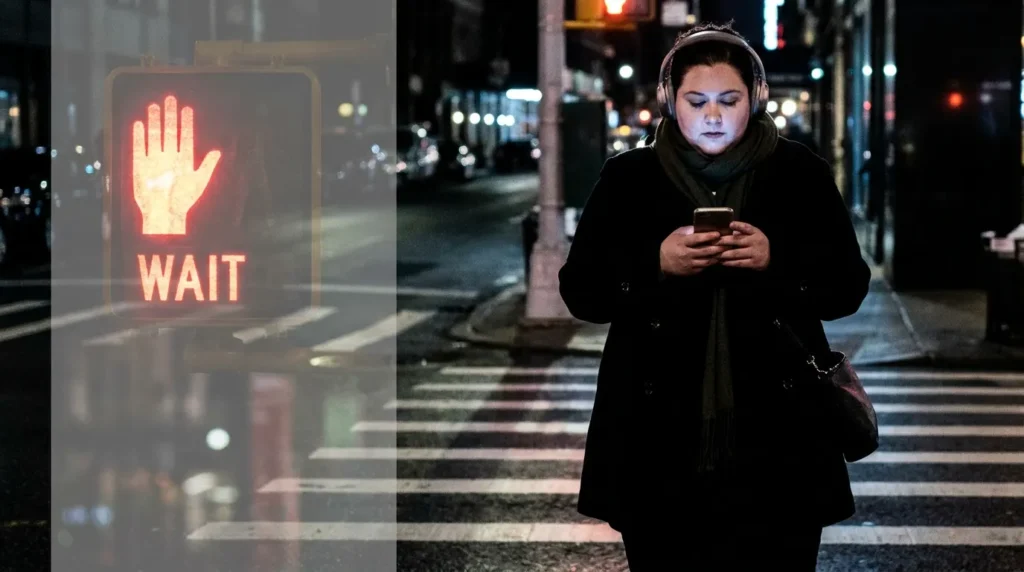
Even people who genuinely care about their safety make mistakes. It’s not because they’re careless. It’s usually because these mistakes feel small in the moment.
One of the biggest slip-ups is skipping the plan “just this once.” You’re in a rush, you’re tired, or you’re only walking a short distance, so you decide the usual precautions don’t apply. That one skipped step is often the exact moment things go wrong.
Another common mistake is relying on a single safety layer instead of several. Maybe you always carry pepper spray, but you never actually tell anyone your route. Or you always share your location, but you walk with both earbuds in at full volume. One strong habit can’t cover for a missing one.
People also tend to freeze instead of act. When something feels wrong, the instinct to stay polite or avoid seeming rude can override the instinct to protect yourself. You don’t have to explain yourself to anyone. Walking away, crossing the street, or stepping into a nearby store is always allowed.
There’s also the mistake of assuming familiar places are automatically safe. Your own neighborhood, a route you’ve walked a hundred times, or a well-known park can still have an off night. Comfort with a place shouldn’t replace awareness of it.
Ignoring your gut feeling is another quiet but serious mistake. So many people later admit they noticed something was wrong but talked themselves out of reacting because they didn’t want to seem paranoid. That hesitation costs precious seconds.
Not knowing how to use your safety tools is just as risky as not carrying them at all. A pepper spray canister sitting at the bottom of your bag, buried under books and receipts, isn’t going to help you in a real moment of stress.
These mistakes aren’t about blame. They happen to careful, smart people all the time. The goal isn’t to feel guilty about past slip-ups. It’s simply to notice them now, so you can close those small gaps going forward.
Common Questions About Walking Alone Safely
What are the 3 A’s of personal safety?
The 3 A’s usually stand for Awareness, Assessment, and Action. In simple terms, that means noticing your surroundings, quickly judging whether something feels off, and then actually doing something about it, like changing direction or seeking help.
What are 10 personal safety rules?
There isn’t one official universal list, but most safety experts agree on a similar core group: plan your route, tell someone your plans, stay alert, trust your gut, avoid distractions, walk with confidence, stick to well-lit areas, carry a safety tool, know nearby safe spots, and avoid sharing your location publicly in real time.
What is the best personal safety device?
There’s no single “best” option because it depends on your comfort level and local laws. A personal safety alarm is a solid starting point for most people since it’s simple to use, legal almost everywhere, and doesn’t require close contact with anyone.
Why is it not safe to walk alone at night?
Reduced visibility, fewer people around, and lower chances of a bystander noticing trouble all combine to raise risk after dark. It doesn’t mean nighttime walks are impossible, just that they call for extra precautions like better lighting and sharing your location.
What can I use to protect myself when walking?
Beyond physical tools like a personal alarm or pepper spray, your biggest protection is awareness, a clear plan, and confidence in your own instincts. Tools help, but your attention to your surroundings usually matters even more.
How can I stay safe walking alone without feeling constantly anxious?
Build a small, repeatable routine instead of overthinking every single walk. Once habits like checking your route or texting a friend become automatic, they stop feeling stressful and start feeling like second nature.]
Your Next Walk Can Feel Completely Different
You don’t need to overhaul your whole life to feel safer walking alone. You just need a few solid habits, repeated consistently, until they become second nature.
Start with just one change on your very next walk. Maybe it’s texting someone your route. Maybe it’s leaving one earbud out. Small, consistent changes build real confidence over time.
I still think about that night I heard footsteps behind me. But these days, my walks feel completely different. I plan ahead, I trust my gut, and I walk with a kind of steady confidence I didn’t have before.
My hope is that you take even one tip from this guide and use it on your very next walk, because that one small step is really where everything starts to change.
Disclaimer: This article is intended for general informational and educational purposes only and does not constitute professional security, legal, or safety advice. Personal safety needs vary based on individual circumstances, location, and local laws, so please consult local law enforcement, a certified self-defense instructor, or a legal professional for guidance specific to your situation. Securely Life is not liable for any actions taken based on the information provided in this post.