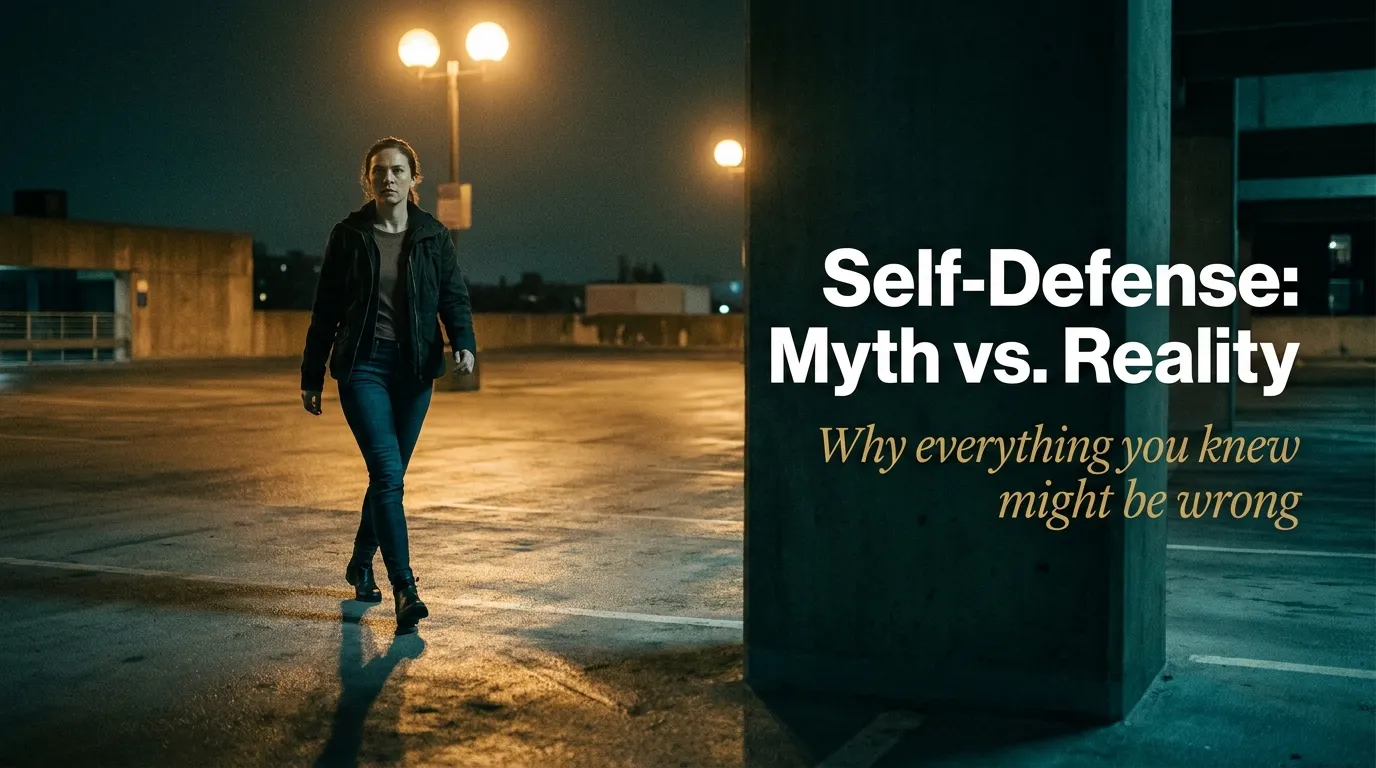
The Night I Found Out Everything I “Knew” About Self-Defense Was Wrong
I used to think I was prepared. I had pepper spray in my bag, a rape whistle on my keychain, and a vague idea that I could “just scream and run” if something ever happened. Then one night, walking from my car to my front door, a man stepped out from between two parked cars and grabbed my arm. My mind went blank. My hands shook so badly I couldn’t even get the pepper spray out of my pocket. I froze for what felt like a full minute, even though it was probably only a few seconds. That night taught me something no self-defense video ever had: most of what I believed about protecting myself was just plain wrong.
That kind of moment sticks with you. It changes how you walk to your car at night. It changes how you sleep. And honestly, it’s a lonely feeling, because most people around you have no idea how much energy you spend just trying to feel safe.
Here’s what a lot of people go through every single day:
- Constantly scanning parking lots, hallways, and sidewalks, even when nothing is wrong
- Feeling foolish for being scared, because “nothing has happened yet”
- Carrying a self-defense tool but not actually knowing how to use it under pressure
- Being told to “just fight back” without anyone explaining what that actually means
- Losing sleep over what-if scenarios that never seem to go away
That constant low-level worry is exhausting. It chips away at your peace of mind bit by bit, and most people never talk about it because they don’t want to sound paranoid. But it’s real, and it’s common. If any of this sounds familiar, you’re not being dramatic. You’re reacting to a world that doesn’t always feel predictable, and your body is trying to protect you the only way it knows how.
The good news is this: once you understand what actually works in an emergency, that background noise of fear gets a lot quieter. You stop guessing. You stop relying on movies and internet rumors. You start trusting a plan that’s based on how the body and brain really respond to danger, not on Hollywood choreography.
Myth vs. Reality: What Self-Defense Experts Actually Want You to Know
Most self-defense advice floating around online is either outdated, exaggerated, or just plain made up. Let’s go through the biggest myths one at a time, and I’ll walk you through what actually holds up when things get scary.
Myth #1: “I’ll Just Fight Back With Everything I’ve Got”
This sounds tough, but it’s not realistic advice. Fighting an attacker is not like a movie fight scene.
Most confrontations are messy, fast, and confusing. Your body floods with adrenaline, and fine motor skills (like aiming a punch precisely) get much harder to control.
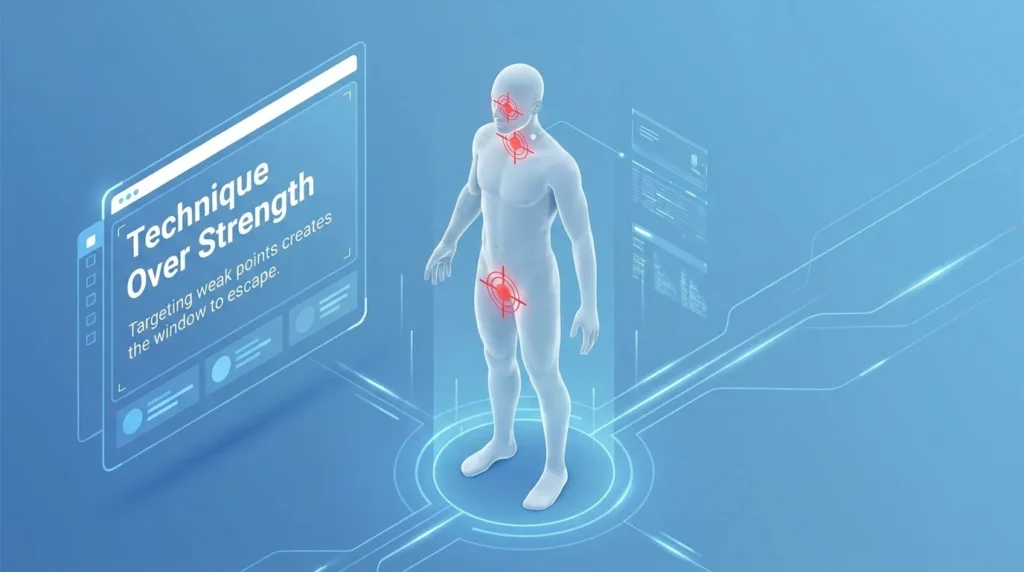
What actually works instead: Target the body’s built-in weak points. A strike to the eyes, throat, or groin doesn’t require strength, just accuracy and commitment. According to research published by the National Institute of Justice, resistance strategies that target an attacker’s vulnerable areas are associated with better outcomes for the person being attacked, especially when combined with immediate escape.
I’ll admit something here. For years I thought “fighting back” meant throwing punches like a boxer. It wasn’t until I took a real self-defense class that I learned a simple palm strike to the nose does more damage, with less effort, than any punch I could throw. That one lesson changed how I think about every unsafe situation I’ve been in since.
Watch this short breakdown of body-based defense tactics that don’t rely on strength:
Myth #2: “Pepper Spray Always Works”
Pepper spray can genuinely help, but it’s not magic. Wind direction, distance, and how fast you can access it all affect whether it actually stops someone.
A lot of people carry pepper spray buried at the bottom of a bag, which means it’s basically useless in an actual emergency. If you can’t reach it in two seconds, it’s not doing its job.
What actually works: Keep it clipped somewhere you can grab without looking, like a belt loop, keychain, or jacket pocket. Practice pulling it out, again and again, until it’s automatic. You can read more in our legal self-defense tools guide for options that are both effective and legal in most states.
Myth #3: “Size and Strength Decide Who Wins”
This myth keeps a lot of smaller people from even trying to learn self-defense, which is honestly the opposite of what should happen.
Size matters less than most people assume. Leverage, angles, and targeting vulnerable areas can offset a size difference in a real confrontation.
This is also why programs built specifically for women walking alone focus on technique and awareness rather than raw strength.
Myth #4: “Running Away Always Works”
Running is often a great option, but “always” is doing a lot of heavy lifting in that sentence.
If someone is already holding onto you, running isn’t possible until you create distance first. That’s where a quick strike or an escape technique comes in, not as the whole plan, but as the step that makes running possible.
Simple rule to remember: create space, then create distance. In that order.
Myth #5: “The 5 A’s of Self-Defense Are Complicated”
People often ask about the “5 A’s” of self-defense, expecting some complex system. It’s actually pretty simple once you break it down.
- Avoid – Stay aware of your surroundings so you can sidestep trouble before it starts.
- Assess – Quickly judge the threat level and your options.
- Alert – Yell, use a whistle, or call attention to the situation loudly.
- Act – Use a strike, tool, or escape move to create an opening.
- Alarm/Attempt escape – Get away and get to safety as fast as possible.
Trusting your gut is a huge part of step one. If you want to build that instinct further, our guide on how to trust your intuition for personal safety is a good next read.
Myth #6: “You Have to Own a Weapon to Protect Yourself”
This one keeps a lot of people from feeling prepared, because not everyone wants to carry a weapon, and in some places, certain tools aren’t even legal to carry.
Everyday items can double as self-defense tools:
- A set of keys, gripped between the fingers, adds force to a strike
- A sturdy pen can be used defensively in close range
- A small flashlight can disorient an attacker and double as a striking tool
- A rolled-up magazine or bag can be used to block or push someone away
None of these require a permit, and all of them are things you probably already carry.
A quick note on the law: Self-defense laws vary a lot by state, and understanding what counts as “reasonable force” matters just as much as knowing how to defend yourself physically. The American Bar Association publishes state-by-state overviews of self-defense and “stand your ground” laws that are worth a quick read before you assume you know your rights.
Why Your Brain Freezes (And How to Train Past It)
Remember that frozen moment I mentioned earlier? That wasn’t weakness. It’s biology.
When you’re startled, your body triggers a stress response that can cause freezing, not just fight or flight. According to Harvard Health Publishing, this stress response evolved to help humans react to danger, but it can also short-circuit clear thinking in the first few seconds of a threat.
Here’s the part that actually helped me: freezing gets shorter with practice. The first time you rehearse a scenario, even just in your head, your brain builds a faster pathway to react next time.
Simple Ways to Train Your Response
- Visualize scenarios – Picture yourself reacting calmly to a scary situation. This sounds small, but it genuinely rewires your response time.
- Practice grabbing your phone or alarm without looking – Muscle memory beats panic every time.
- Take one real class – Even a single beginner self-defense workshop builds more confidence than a dozen YouTube videos.
- Build situational awareness into your routine – Our full situational awareness guide breaks this down step by step.
I started doing the visualization exercise on my daily walk to my car. It felt silly at first, honestly. But a few months later, when someone approached me too fast in a parking garage, I didn’t freeze. I moved. That’s the whole point.
What This Looks Like in Real Life
Knowing the myths is one thing. Applying it is another.
If you’re walking through a crowded event, awareness matters as much as any physical skill. Our guide on staying safe in large crowds and public events covers how to spot exits and read a crowd before trouble starts.
If the danger comes from someone you know, like unwanted attention on the street, the response looks a little different. Our guide to handling street harassment walks through de-escalation and when to act more firmly.
Every situation is different, but the foundation stays the same: stay aware, trust your gut, create distance, and know your options before you ever need them.
For a broader starting point, our full personal safety guide ties all of these pieces together in one place.
Building Habits That Actually Stick, Not Just One-Time Fixes
Learning a few moves is a good start. But the people who stay safest over the long run are the ones who turn safety into a habit, not a one-time lesson they forget about a month later.
Think of it like brushing your teeth. You don’t do it once and expect clean teeth forever. Self-defense works the same way. It needs small, repeated practice to actually stay sharp.
Here’s how you can build that habit without turning your life into a full-time training camp.
Practice in Tiny, Realistic Bursts
You don’t need an hour-long session every day. Even five minutes counts.
Try this: while you’re waiting for coffee to brew, practice pulling your keys out fast and gripping them for a strike. While you’re locking your car, glance around and name three things you notice. These tiny reps add up fast.
A personal note: I keep a small reminder on my phone that pops up twice a week. It just says “practice your grip release.” That’s it. Two minutes, and it’s kept the skill fresh for months.
Loop in the People Around You
Safety habits are stronger when they’re shared. If you live with family, a partner, or roommates, agree on a simple check-in system, like a text the moment you get home safe.
This matters even more for teens heading out on their own for the first time. Our guide on personal safety tips for teenagers breaks down age-appropriate habits that build real confidence without creating constant fear.
Use Technology as a Backup, Not a Crutch
A safety app is a great extra layer, but it should never replace awareness or physical skill. Think of it as your backup plan, not your only plan.
Set up your phone’s emergency features now, while you’re calm, not later when you’re panicking. Our guide to personal safety apps walks through some solid, easy-to-set-up options.
Adjust for Where You Actually Spend Time
Generic advice only goes so far. Someone who commutes late at night needs a slightly different plan than someone who mostly drives during the day.
If you work irregular hours, our guide for night shift workers and commuting safety covers specific routines for low-light situations. If you rely on buses or trains, the public transport safety guide is worth bookmarking too.
None of this needs to feel heavy or scary. Once these small habits are in place, they run quietly in the background, the same way locking your front door does. You just do it, without thinking twice.
A Quick Do’s and Don’ts You Can Save
Sometimes a short list sticks better than a long explanation. Save this one on your phone.
Do:
- Practice your go-to move once a week, even for two minutes
- Keep your phone charged and your safety app tested
- Trust your gut the moment something feels off
- Tell someone your plans when you’re heading somewhere unfamiliar
Don’t:
- Bury your safety tools where you can’t reach them fast
- Assume one class from years ago is still “enough”
- Stay quiet out of politeness when your instincts say otherwise
- Wait for proof before you act on a bad feeling
Here’s a small scenario to picture. Say you’re walking back to your car after a late shift, and you notice someone lingering by the exit who wasn’t there a few minutes ago. You don’t have to know for sure that something is wrong. You just move toward the well-lit main entrance, keys already in hand, phone already unlocked. That’s the whole habit in action, no drama required.

Where Good Intentions Quietly Fall Apart
Even people who genuinely care about staying safe make mistakes that undo all their good effort. These slip-ups aren’t dumb. They’re just human, and they’re worth talking about honestly.
One of the biggest ones: learning a skill once and never practicing again. A class you took a while back doesn’t stay fresh in your muscles or your mind forever. Without repetition, that knowledge fades a lot faster than people expect, and in a real emergency, hesitation costs you time you don’t have.
Another common one is carrying a self-defense tool the wrong way. A pocketknife buried in a purse, a pepper spray canister with the safety cap still stuck, an alarm app you’ve never actually tested. These give a false sense of security. In the moment, a tool you can’t access fast is basically the same as not having one at all.
People also tend to underestimate verbal boundaries. A firm, loud “back off” or “stop, I don’t know you” does more than most people realize. It draws attention, it interrupts an attacker’s plan, and it forces them to make a choice in front of witnesses. Staying quiet out of politeness, especially with strangers, can actually work against you.
There’s also a subtle mistake that’s easy to miss: ignoring your own gut feeling because you don’t want to seem rude or paranoid. If a hallway feels wrong, if someone’s questions feel off, if your stomach tightens for no clear reason, that reaction is data. Overriding it to avoid awkwardness has cost people real time in real emergencies.
And finally, one that surprises people the most: relying only on physical strength or size as your safety plan. Confidence matters, but overconfidence without any actual training or awareness habits can lead to freezing at the exact moment quick thinking matters most.
The fix for all of this isn’t complicated. It’s just consistency. Refresh your training every so often. Test your tools. Speak up when something feels wrong. Trust your gut, even when it’s inconvenient.
If unwanted attention shows up at work instead of on the street, the same principles apply. Our guide on handling workplace harassment covers how to set boundaries in a professional setting without putting your job at risk.
Quick Answers to What People Actually Ask
Can I legally hit someone if they hit me first?
In most states, yes, as long as your response is reasonable and matches the level of the threat. Using far more force than necessary can turn a self-defense case into a legal problem for you, so it’s worth knowing your local laws ahead of time.
What’s the golden rule of self-defense?
Avoid the situation if you can, and if you can’t, get away as fast as possible once you’ve created an opening. Fighting is the last resort, not the first move.
What’s the best self-defense approach for a total beginner?
Start with awareness and a single simple technique, like a palm strike or an escape from a wrist grab. Mastering one move well beats knowing five moves poorly.
What should I do the moment I feel unsafe?
Trust that feeling immediately and move toward people, light, or an open business. You don’t need proof something is wrong before you’re allowed to act on it.
Is training really worth it if nothing bad has ever happened to me?
Yes, and honestly, that’s exactly why it’s worth it. Training before you need it means your body already knows what to do, instead of trying to figure it out for the first time in a moment of panic.
Carrying This Forward, One Small Step at a Time
Here’s the truth I wish someone had told me before that night in the parking lot: feeling prepared isn’t about becoming fearless. It’s about knowing you have real tools, real habits, and a real plan, so fear doesn’t get to run the show anymore.
You don’t have to master everything in this guide today. Pick one habit. Practice your keychain grip this week. Set up one safety app feature tonight. Trust your gut the next time something feels off, even just a little.
I still get nervous walking to my car sometimes, and that’s okay. The difference now is that nervousness doesn’t freeze me anymore. It just makes me pay attention, and that’s really all any of us need it to do.
My honest advice, from someone who’s been there: start small, stay consistent, and give yourself credit for showing up for your own safety. That alone puts you ahead of where most people ever get.
You’re not being paranoid by planning ahead. You’re being smart, and that’s a habit worth being proud of.
Disclaimer: This article is for general educational and informational purposes only and does not constitute legal, medical, or professional safety advice. Self-defense laws vary significantly by state and country, and the use of force, including so-called “reasonable force,” depends on the specific facts of each situation. Always consult a licensed attorney regarding self-defense laws in your area, and consider certified, in-person self-defense training before relying on any technique described here. Securely Life is not responsible for outcomes resulting from the use or misuse of the information in this post.