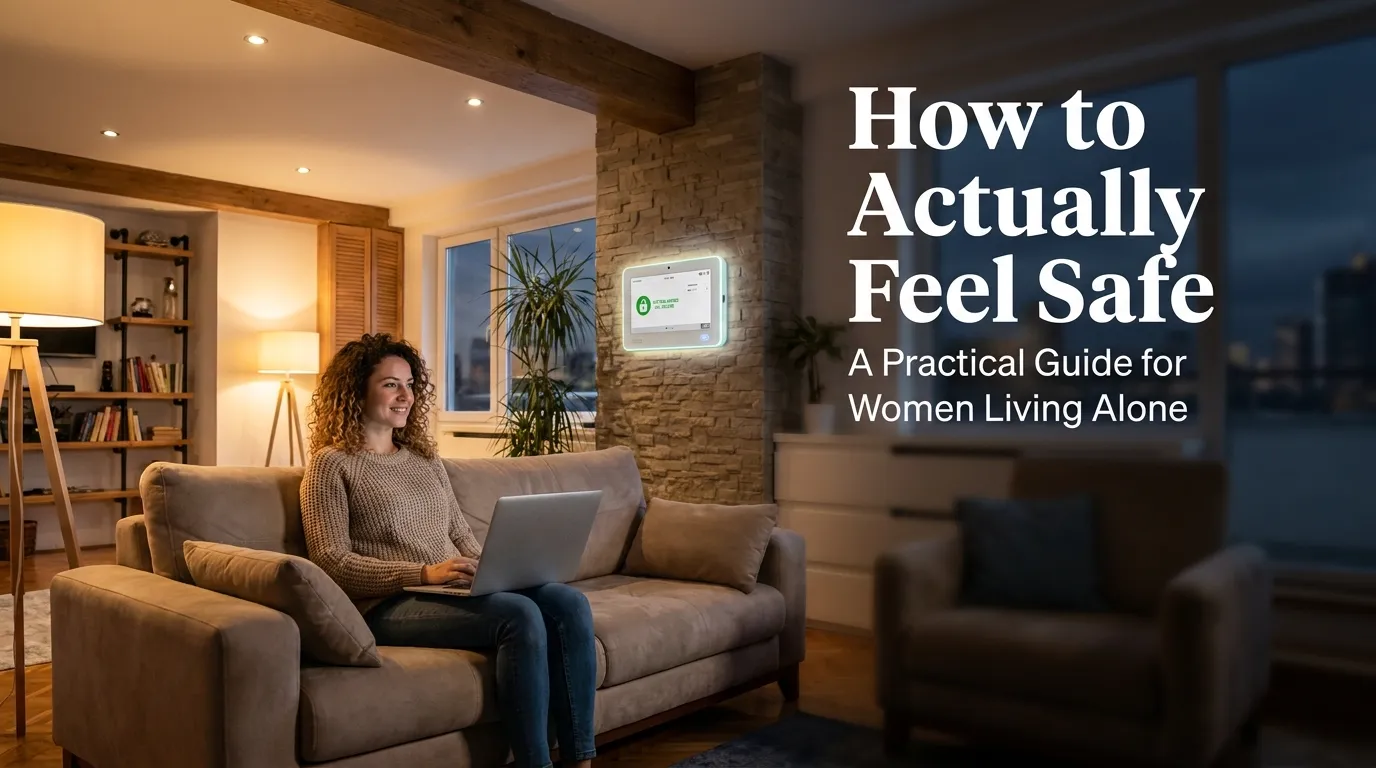
The First Night I Locked My Own Front Door — Alone
I still remember the first night I locked my own front door and realized nobody else was coming home. My cat wasn’t even born yet. I stood in my kitchen listening to every creak in the house, and my mind ran through a dozen “what if” scenarios in about ten seconds. I checked the lock twice. Then I checked it a third time. My hands were actually shaking a little, and I felt silly about that, but it was real. That night taught me something I now tell every woman who asks me about living alone: the fear is normal, but staying stuck in it is optional.
Buying a home by yourself is supposed to feel like a win. And it is. But nobody really prepares you for the quiet moments after the movers leave. You’re proud of your new place, and at the same time, your brain keeps asking, “What if something happens and I’m the only one here?”
That question follows a lot of us home. Maybe you’ve caught yourself checking the same lock more than once. Maybe you’ve laid awake because of a sound that was probably just the house settling. Maybe you’ve felt a small wave of panic walking from your car to your front door in the dark.
- You start Googling “best home security system” at 1 a.m.
- You feel guilty for feeling scared in your own home
- You wonder if you’re overreacting, even though your gut says otherwise
- You avoid telling friends how uneasy you actually feel, because you don’t want to sound dramatic
None of that means you’re weak or paranoid. It means you’re paying attention. Your body is doing exactly what it’s supposed to do when you take on full responsibility for your own safety, with nobody else to split the mental load with. The good news is that this feeling gets smaller once you build real systems around your home and your habits — not fear-based systems, but calm, practical ones you barely have to think about after a while.
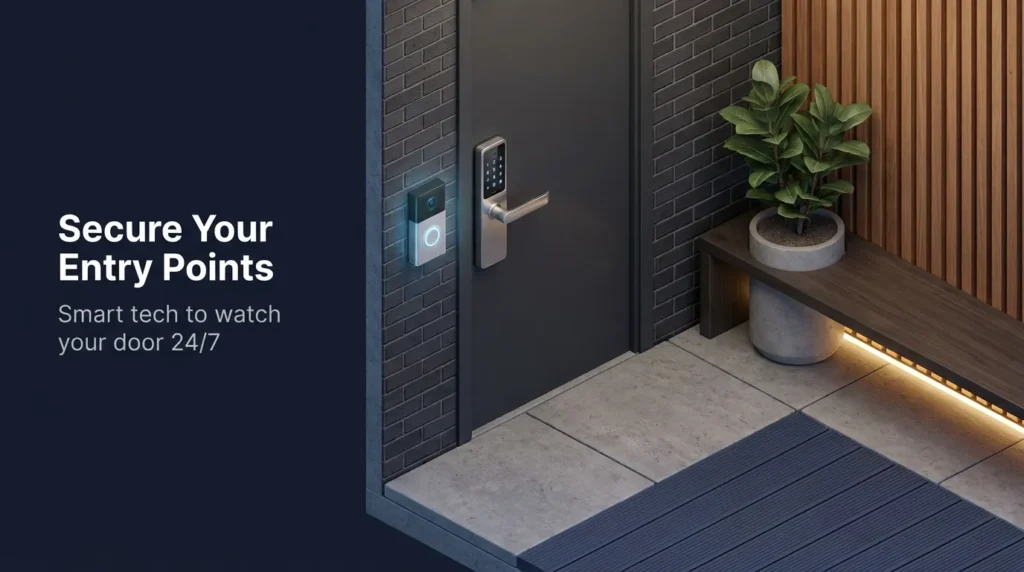
Turning Your House Into a Home That Works For You
Feeling safe isn’t about one big purchase or one dramatic change. It’s built from small, boring, repeatable habits stacked on top of each other. Let’s go through this piece by piece, the same way I built it in my own home.
Start With the Door You Use the Most
Your front door gets the most attention in most home safety guides, and for good reason — it’s the main entry point criminals look at first. A basic pin-tumbler lock can be picked in seconds by someone who knows what they’re doing.
Upgrading to a Grade 1 deadbolt is one of the cheapest, highest-impact changes you can make. According to the National Crime Prevention Council, simple physical barriers like solid deadbolts and reinforced strike plates remove a huge share of opportunistic break-in attempts before they even start.
If you want to go a step further, a smart lock with a keypad or app control means you’re never fumbling for keys in the dark, and you can lock your door remotely if you ever forget. This pairs well with the habits covered in my personal safety guide, which walks through everyday routines that lower your overall risk.
My pro tip here: I used to leave a spare key under a fake rock by my porch, because I thought it was clever. It’s not. Burglars check those spots first, and mine was found within a year by someone who was clearly not a friend of mine. I switched to a small lockbox with a rotating code instead, and I sleep better knowing that habit is gone for good.
Let Technology Watch the Door When You Can’t
A video doorbell is one of the most useful, low-effort upgrades for anyone living alone. You get to see who’s outside before you ever open the door, and most models send an alert straight to your phone the moment someone steps onto your porch.
Here’s a short video that walks through exactly how to pick and set one up:
Watch this before you buy your first video doorbell — it can save you from wasting money on the wrong model.
Pair your doorbell with motion-sensor lighting around every entry point. Darkness is one of the biggest allies a would-be intruder has, and a bright, motion-triggered light removes that advantage instantly. Research from the Illuminating Engineering Society has consistently shown that well-lit entry points reduce opportunistic crime around residential properties.
Build Your Emergency Response Before You Ever Need It
Most people only think about emergency contacts after something has already gone wrong. Flip that around. Take fifteen minutes this week to set up a proper emergency contact list on your phone, including a neighbor, a family member, and a close friend who can respond quickly.
Add a personal safety app that lets someone track your location during a walk, a late drive home, or a solo hike. I’ve written a full breakdown of the best personal safety apps for staying connected with loved ones if you want a place to start.
It also helps to know your local non-emergency police line, not just 911. Many departments encourage residents to call this number to report a suspicious car or a person lingering nearby, and officers would rather check something small than respond after it becomes something big.
Trust the Feeling Before You Explain It
Here’s something that took me years to actually believe: your gut reaction is data, not drama. If a delivery person lingers too long, if a car circles your block twice, if something about a knock at the door feels off — you’re allowed to act on that before you have a full explanation for why.
I go much deeper into this in my guide on learning to trust your intuition for personal safety, because this single skill has stopped more bad situations for me than any lock or camera ever has.
Know a Few Physical Basics, Just In Case
You don’t need to become a martial artist to feel more capable in your own home. Knowing two or three simple self-defense moves — a palm strike, an elbow strike, a way to break a wrist grab — builds real confidence, and confidence itself changes how you’re perceived by anyone with bad intentions.
A lot of common self-defense advice floating around online is outdated or flat-out wrong. My article on self-defense myths and what actually works breaks down which techniques hold up and which ones are just Hollywood.
If you’d rather rely on a legal tool as backup, look into state laws around personal safety devices before buying anything. My guide on legal self-defense tools for personal protection covers what’s actually allowed where you live, since rules vary a lot by state.
Practice Reading a Room Before You’re In One
Situational awareness sounds like a big phrase for something pretty simple: noticing your surroundings before your surroundings notice you. Walk your own street once and pay attention like a stranger would — where are the blind spots, where’s the nearest neighbor, where would you go if you needed help fast.
I break this exact exercise down step by step in my situational awareness guide, and it takes about ten minutes to do properly the first time.
According to home insurance data compiled by the Insurance Information Institute, homes with visible security measures — cameras, yard signs, lighting — are targeted noticeably less often than homes without any visible deterrent at all. Sometimes safety is less about stopping an event and more about making your home look like the harder option.
Keep the System Simple Enough That You’ll Actually Use It
The biggest mistake people make with home safety is building a system so complicated they stop using half of it within a month. Pick three habits from everything above — maybe the deadbolt, the video doorbell, and the emergency contact list — and get those fully working before adding anything else.
Once those three feel automatic, add the next layer. Safety isn’t a single event you complete once. It’s a habit you keep light enough to actually keep.
Give Yourself Permission to Feel Settled
I want to be honest about something. Even after I added every lock, every light, and every app, I still had a few nervous nights. That’s normal, and it doesn’t mean any of it failed.
What changed wasn’t the fear disappearing overnight. It was the fact that every time something felt off, I already had a plan. My doorbell was recording. My contact list was ready. My locks were solid. That small stack of preparation did more for my peace of mind than any single “fix” ever could.
Living alone isn’t a risk you have to manage forever with white-knuckle vigilance. It’s a skill you build, one small habit at a time, until your home starts to feel like exactly what it should be — yours, and safe.
Small Upgrades That Keep Paying Off Long After You Make Them
Getting your locks, lights, and apps set up is a great start. Keeping that setup working for you, month after month, is a different skill.
Treat your home like a system that needs small check-ins, not a project you finish once. Once a season, walk around your house and test every lock, every light, and every camera angle. Batteries die. Sensors shift. Doors settle and stop closing all the way. A five-minute check-in catches these problems before they turn into real gaps.
Get to know two or three neighbors by name. This sounds small, but it changes everything. A neighbor who recognizes your car, your schedule, and your usual comings and goings will notice something off far faster than any camera app buried in your phone. Groups connected through the National Neighborhood Watch program have reported that simple, informal neighbor connections often catch problems long before any alarm does.
Document what you own. Take a slow video walk through every room, open every closet, and say out loud what’s in front of the camera. Store that video somewhere off your phone, like a cloud drive. If you ever need to file an insurance claim, this single habit saves you weeks of stress and guesswork later.
Rotate your routine every so often. If you leave for work at the same time, park in the same spot, and walk the same path every single day, you become predictable. Predictable isn’t dangerous by itself, but it does make you an easier target to plan around. Mixing up small details — a different grocery day, a different route home — costs you nothing and removes that pattern.
Keep a small “go bag” near your door. A flashlight, a phone charger, copies of your important documents, and a little cash. You’ll likely never need it for anything dramatic. But during a storm, a power outage, or an unexpected night away from home, you’ll be glad it’s already packed instead of scrambled together at midnight.
My own version of this habit started after a bad storm knocked out power for two days. I didn’t have a flashlight that worked, my phone died by the second night, and I genuinely couldn’t find my backup ID when I needed it for something unrelated. That week taught me that “advanced” safety isn’t about fancy gear. It’s about being the kind of person who already thought about the boring stuff before it mattered.
Think about your home the way a coach thinks about a game plan. A coach doesn’t just show up once and hope the team remembers everything from practice. They review the plan, adjust for new information, and check in constantly. Your home safety setup deserves that same ongoing attention, not a one-time setup you forget about.
A short story that stuck with me: a friend of mine installed a great alarm system right after moving in, felt proud of it for a solid month, and then quietly stopped arming it because typing the code every night felt like a hassle. Nothing bad happened for a long stretch, so the habit just faded. It wasn’t until a random late-night noise scared her that she realized the system had been sitting there, unused, the entire time. She reset the habit that same week, and now she treats arming it like brushing her teeth — something she barely thinks about because it’s just part of the routine.
Consider building a simple safety “buddy system” with one trusted person. This could be a sibling, a close friend, or even a coworker who lives nearby. Agree on a quick check-in text at a set time, especially on nights you’re coming home later than usual. It costs nothing, takes ten seconds, and gives someone outside your house a reason to notice if something feels off.
Where Good Intentions Quietly Fall Apart
Most people don’t get hurt because they never tried to be safe. They get hurt because a good habit slowly faded out, and nobody noticed until it was too late.
Here’s a scenario worth sitting with. Someone buys a great lock, sets it up perfectly, and feels proud of that decision for months. Then one hot week, they start propping the door open “just for a minute” to bring in groceries or let in some air. That minute becomes a habit. A habit becomes a blind spot. The lock was never the problem. The slow fade was.
Posting your location in real time is another quiet trap. A check-in at your gym, a tagged photo outside your own front door, a story showing your street in the background — none of it feels risky in the moment. Stacked together over months, it builds a surprisingly clear map of your daily patterns for anyone paying attention.
Ignoring a gut feeling because you don’t want to seem rude is a mistake that shows up again and again. Letting someone into a building because they “look official,” staying on a call with a stranger longer than feels right, opening the door because knocking again would be “annoying” — these choices come from politeness, not weakness, but they still carry real risk.
Treating home security as a one-time purchase instead of an ongoing habit causes real damage over time. A camera with a dead battery is just decoration. A lock nobody ever re-keyed after a break-up or a lost key is a door that isn’t really locked at all. A safety app installed once and never opened again isn’t protecting anyone.
Skipping the boring paperwork side of safety hurts people more than they expect. An outdated home insurance policy, an emergency contact list nobody has updated in years, a lack of any written plan for “what happens if” — these gaps don’t show up until the exact moment you need them the most, and that’s the worst possible time to discover a gap.
None of these mistakes make someone careless. They’re just what happens when good habits quietly slip while life gets busy. Catching them early is the whole goal.
A simple do’s and don’ts list makes this easier to remember on a busy week:
- Do re-key your locks after any move-in, breakup, or lost key. Don’t assume an old key situation “probably doesn’t matter anymore.”
- Do test your doorbell and outdoor lights once a month. Don’t wait for a dead battery to remind you during an actual emergency.
- Do trust a strange feeling about a person or situation. Don’t talk yourself out of it just to avoid seeming rude.
Quick Answers Before You Go
How can a single woman stay safe living alone?
Focus on layers, not one big fix. A solid lock, decent lighting, a doorbell camera, and a habit of trusting your gut cover most of what actually matters day to day.
What are the best home security devices for women living alone?
A video doorbell, motion-sensor outdoor lighting, and a smart lock with app control tend to give the most protection for the least effort. You don’t need a full alarm system to feel a real difference.
What are the 5 basic safety rules at home?
Lock every entry point, keep your porch and walkway well lit, know your neighbors, keep an emergency contact list current, and trust your gut before you explain it. Simple, repeatable, and enough to cover most everyday risk.
How do you keep yourself safe when you’re home alone?
Stick to a few habits you’ll actually keep up: check your locks at night, don’t announce being home alone on social media, and keep a charged phone within reach. Small consistency beats a complicated system you abandon after a week.
What should you avoid doing when living alone at home?
Avoid posting your real-time location, propping doors open “just for a minute,” and ignoring small maintenance issues like a sticky lock or a dead doorbell battery. These small slips are exactly where most real problems start.
Your Next 24 Hours
You don’t need to fix everything today. Pick one thing from this guide and do it before you go to bed tonight — check a lock, charge a doorbell battery, or text a neighbor your number.
Real safety isn’t built from panic. It’s built from a handful of small, boring habits that you keep up long after the initial excitement wears off.
I’ve lived through the nervous first nights, the “am I overreacting” spirals, and the slow process of actually feeling settled in my own home. My honest advice: start small, stay consistent, and trust yourself along the way. You already have more control over this than that first scary night ever let you believe.
Disclaimer: This article is for general informational purposes only and does not replace advice from a licensed security professional, insurance provider, or local law enforcement agency. Home safety needs vary by location, building type, and personal circumstances, so please consult a qualified professional or your local authorities before making major security decisions for your home.