I still remember the sound of my own heart in my ears that morning. My son was six, and he was standing by my bed holding my old flashlight, asking why the drawer next to my bed had a “funny lock” on it. My gun was locked inside a small box, unloaded, just like I’d always told myself was “safe enough.” But in that second, watching him tug at the latch, safe enough didn’t feel safe at all.
I own a gun for one reason: to protect my family. That’s it. But standing in my bedroom that morning, I realized I had never actually asked myself a harder question. Was I protecting my family from the outside world, while quietly leaving a bigger risk sitting right there in my own room? I didn’t like the answer.
That morning changed how I think about gun ownership completely. It’s not about giving up the gun. It’s about respecting what it really is: a tool that needs to be handled with real thought, not just good intentions.
Why This Feels So Heavy for So Many Parents
If you own a firearm and you’re also raising kids, you already know this weight. It’s not something people talk about at dinner parties. It sits quietly in the back of your mind.
Here’s what that quiet stress usually looks like day to day:
- You second-guess where you stored it, even hours later.
- You worry about your kid’s friends coming over and finding it by accident.
- You feel guilty for owning something that could hurt the people you love most.
- You wonder if a “quick fix” storage habit is actually good enough.
- You avoid the topic with your kids because you don’t know how to bring it up without scaring them.
None of that makes you a bad gun owner. It actually means you’re paying attention. The real danger isn’t gun ownership itself — it’s treating storage as an afterthought. According to data shared by the Centers for Disease Control and Prevention, unintentional firearm injuries among children happen far more often in homes where guns are left loaded or unlocked. That single fact is the whole reason this guide exists.
Building a Storage System That Actually Holds Up
Talking generally about “locking up your gun” isn’t enough. You need a system, not just a habit you sometimes remember to follow. Let’s walk through what that system actually looks like.
1. Pick Storage That Matches How You Actually Live
Not every storage option fits every home. A single dad with a toddler has different needs than a retired couple with teenage grandkids visiting on weekends.
Here’s a simple breakdown to help you compare your options:
| Storage Option | Best For | Access Speed | Child-Proof Level |
|---|---|---|---|
| Gun safe (biometric or keypad) | Families with young kids | Fast (2-3 seconds) | Very high |
| Lock box (cable-style) | Travel or temporary storage | Moderate | High |
| Trigger lock only | Backup layer, not standalone | Slow | Moderate |
| Standard gun cabinet | Multiple firearm owners | Slow | Low if unlocked often |
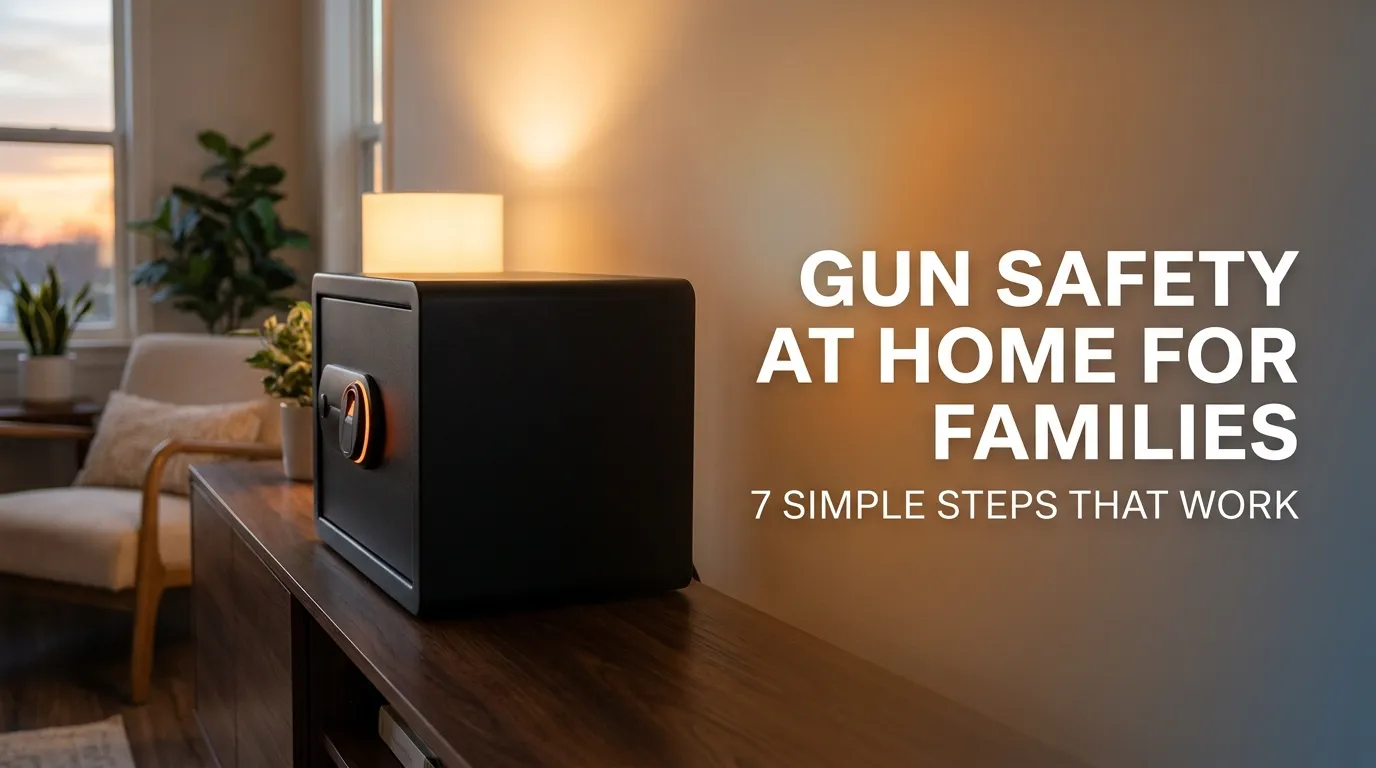
A biometric safe tends to work best for parents because it’s fast enough for a real emergency but still completely out of a child’s control. The Project ChildSafe program actually distributes free cable locks to gun owners across the US, which is a solid starting point if you’re not ready to invest in a full safe yet.
Pro tip from personal experience: I used to think a simple trigger lock was “good enough” because it made the gun harder to fire. What I didn’t think through was that my son could still physically hold it, point it, and pull the trigger — the lock just stopped it from firing. That gap in my thinking is exactly why I upgraded to a biometric safe within a month of that scary morning.
2. Store Ammunition Somewhere Completely Separate
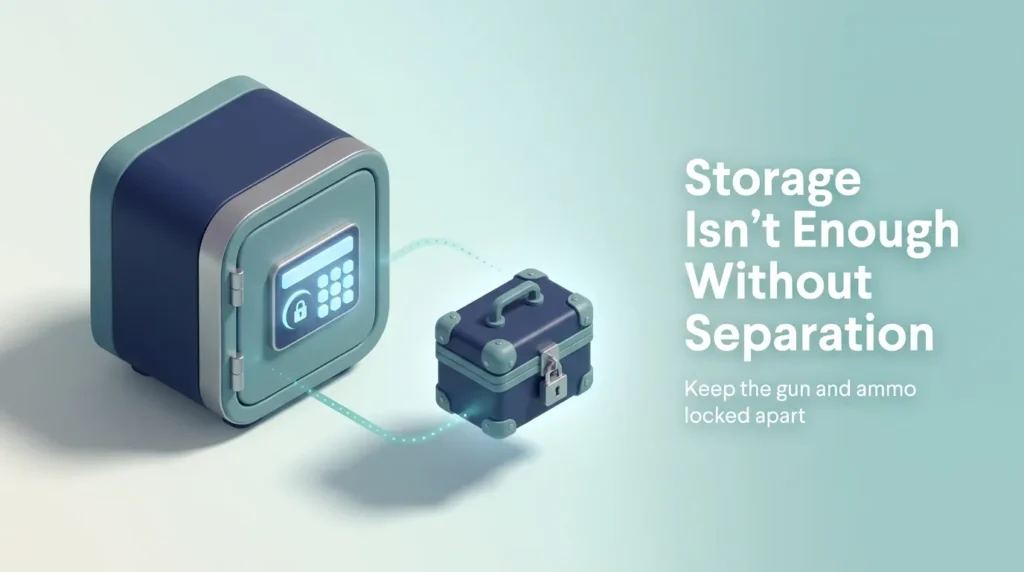
This step gets skipped more than any other, mostly because it feels inconvenient. But separating your ammunition from the firearm is one of the biggest safety upgrades you can make, and it costs almost nothing.
Keep ammunition in a different locked container, ideally in a different room entirely. This single habit turns a scary “what if” scenario into something far less likely to ever happen.
Watch this quick walkthrough on setting up a two-layer storage system at home:
3. Control Who Actually Knows the Code
A locked safe only works if the code or key stays private. This sounds obvious, but plenty of parents write the code down somewhere “safe,” like a sticky note in a drawer or a note saved in their phone labeled “safe code.”
Kids are more observant than most of us give them credit for. If you type a code in front of them regularly, they may memorize it faster than you’d expect.
A few small habits that help:
- Change your code every few months.
- Never say the code out loud around kids.
- Avoid using birthdays or house numbers as your combination.
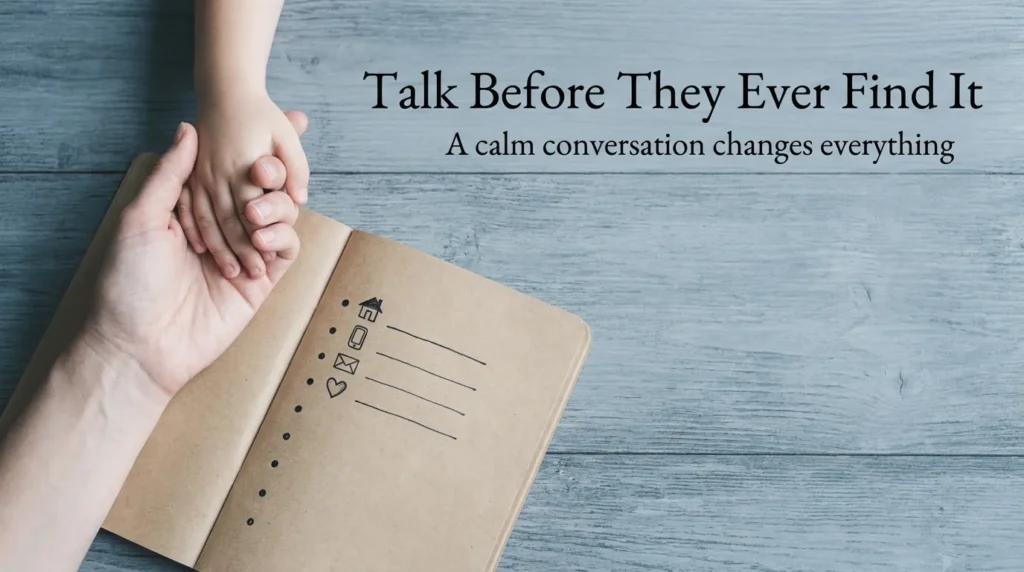
4. Talk to Your Kids Before They Ever Find the Gun
This part matters just as much as the physical storage. Kids who understand why a gun is dangerous, without being frightened by the conversation, are far less curious about finding one on their own.
You don’t need a long lecture. A short, calm conversation works better than most parents expect. If you’re not sure how to start that kind of talk without scaring your child, our guide on how to talk to kids about emergencies without fear walks through age-appropriate language you can use for almost any serious safety topic, not just firearms.
5. Ask the Question Before Playdates Happen
Here’s something a lot of parents never think to ask: does the house your child is visiting store guns safely? Research from the Johns Hopkins Bloomberg School of Public Health has found that a large share of unintentional shootings involving kids happen at a friend’s or relative’s house, not their own home.
Asking “do you store any firearms in the home, and are they locked up?” before a playdate isn’t rude. It’s the same instinct that makes you ask about pool safety or allergies. If you’re setting rules for visitors and outside caregivers in general, our managing visitors and home alone safety guide covers more ground on this exact kind of conversation.
Myth vs Reality: What Most Parents Get Wrong
Myth: “My kid knows not to touch it, so we’re fine.” Reality: Studies consistently show that even kids who are told not to touch a gun will often pick it up out of curiosity when they find one unsupervised. Telling a child “don’t touch it” is not the same as making it physically inaccessible.
Myth: “Storing it unloaded means it’s automatically safe.” Reality: An unloaded gun stored next to ammunition in the same drawer isn’t much safer in practice. A curious child can load it in seconds if both pieces are within reach.
6. Know Your State’s Storage Laws
Storage rules aren’t the same everywhere, and knowing your state’s requirements protects you legally as much as it protects your family. Several states now have Child Access Prevention laws that hold gun owners responsible if a child accesses an unsecured firearm.
You can check your specific state’s requirements through resources like Everytown Research’s state storage law tracker, which stays updated as new laws pass.
7. Make It Part of a Bigger Family Safety Habit
Gun storage works best when it’s not treated as a one-time task you check off and forget. It fits naturally alongside other home safety habits, like securing household chemicals, medications, and other hazards that curious kids can get into.
If you haven’t already built out a full safety routine for your home, our family safety blueprint is a good next step, and it pairs well with our child-proofing checklist and our guide on medication safety at home, since all three problems share the same root cause: things stored within a child’s reach.
For older kids who spend time home without supervision, it’s also worth reviewing our 9-step home alone safety readiness guide, which covers what to do if they ever come across something they shouldn’t in the house, including our notes on household poison hazards.
Where This Leaves You
None of this has to feel overwhelming. Start with one change this week. Move your ammunition to a separate locked spot, or finally set up that biometric lock you’ve been putting off.
Owning a gun and raising safe, confident kids aren’t opposite goals. They just both need the same thing from you: a system you actually follow, not just a good intention you meant to get around to.
Habits That Separate Careless Owners From Careful Ones
Once you’ve got the basics locked down, there’s a next level most parents never get to. It’s not about buying more gear. It’s about building small habits that hold up even on your busiest, most distracted days.
Think about it like brushing your teeth. You don’t do it once and call it done forever. You repeat it, almost without thinking, because the habit is baked in. Gun storage needs that same kind of muscle memory.
Do a “Reset Check” Every Sunday
Pick one day a week to physically check your storage setup. Open the safe, confirm the ammo is still separated, and make sure nothing got left out after cleaning or maintenance.
This takes less than two minutes. A weekly reset check catches the small slip-ups before they turn into a real problem, like a gun left on a closet shelf after cleaning night.
Rotate Access, Not Just Codes
If more than one adult in the house has access to the safe, don’t assume everyone follows the same habits you do. My wife and I actually sat down and agreed on the exact same rules together, because half-following a safety plan is almost the same as not having one.
Talk it through with every adult who has access. Get everyone on the same page about when the safe gets opened and when it stays closed.
Treat Storage Like an Evolving System, Not a Fixed Setup
Your kids change fast. What worked when your daughter was four won’t necessarily work when she’s eleven and can pick a simple lock out of curiosity or watch a tutorial online.
Revisit your storage plan every year, especially around birthdays. Ask yourself honestly: could my child, at their current age and height, get around this setup if they really tried?
Build a Habit Around Guest Safety Too
If relatives or friends visit with their own firearms, the same rules should apply to them inside your home. It’s an awkward conversation, but a short one.
Something as simple as, “Hey, if you’re carrying, would you mind locking it in our safe while you’re here?” keeps things consistent without making anyone feel accused of anything.
The Costly Slip-Ups I See Parents Make Again and Again
Some mistakes with gun storage aren’t dramatic. They’re small, quiet habits that feel harmless until the one day they aren’t.
One of the biggest ones is what I’d call “temporary storage creep.” You unlock the safe for cleaning, get interrupted by a phone call, and the gun sits on the dresser for twenty minutes. Twenty minutes is exactly how long it takes for a curious kid to wander in.
Another common one is assuming older kids don’t need the same precautions as younger ones. Teenagers going through a hard time emotionally are actually one of the highest-risk groups when a firearm is accessible at home. The American Academy of Pediatrics has pointed to safe storage as one of the most effective ways families can lower that risk, alongside open conversations about mental health.
Parents also tend to underestimate how observant kids are. A child watching you enter a keypad code three or four times will often remember the pattern, even if they can’t explain why they remember it.
There’s also a quieter mistake: silence. Never talking about the gun at all, hoping curiosity just never comes up. Kids are naturally curious about things that feel off-limits or hidden, and silence tends to make that curiosity grow rather than shrink.
Do’s and Don’ts Quick Reference:
- Do store the gun unloaded and locked, with ammo separate.
- Don’t leave it “just for a minute” during cleaning or maintenance.
- Do change your access code regularly.
- Don’t say the code out loud where kids can hear it.
- Do talk to your kids calmly about what to do if they ever find a gun anywhere, not just at home.
- Don’t assume older kids or teens need less supervision around firearms than younger kids do.
Fixing these habits doesn’t take money. It just takes a little more attention than most of us naturally give it on a regular day.
Quick Answers Parents Keep Searching For
What is the safest way to store a gun at home with kids?
The safest setup is a locked safe or lock box, with the gun unloaded and the ammunition stored somewhere completely separate. A biometric or keypad safe adds an extra layer since it can’t be opened with a stolen or copied key.
Should ammunition be stored separately from the gun?
Yes, and this is one of the easiest upgrades you can make. Keeping ammo in a different locked location, ideally a different room, makes it far harder for a child to ever load a firearm on their own.
What are the gun storage laws in my state?
Storage laws vary a lot from state to state, and some states hold you legally responsible if a child accesses an unsecured gun in your home. It’s worth a quick search for “child access prevention law” plus your state name to see exactly what applies to you.
How do you talk to kids about gun safety without scaring them?
Keep it short, calm, and matter-of-fact, similar to how you’d talk about crossing the street safely. Tell them that if they ever see a gun, anywhere, they should stop, not touch it, and go tell an adult right away.
What’s the best gun safe or lock box for a family home?
A quick-access biometric safe usually works best for families, since it opens fast enough for an emergency but stays completely out of a child’s control. Cable-style lock boxes are a solid, lower-cost backup if you’re not ready for a full safe yet.
Do trigger locks work as well as a safe?
Trigger locks are better than nothing, but they’re not a full replacement for a locked safe. A child can still hold and point a gun with a trigger lock on, even if they can’t pull the trigger.
Your Next Step Starts Today, Not Someday
I used to think safety was something I’d “get around to” eventually, like organizing the garage. That morning with my son taught me safety doesn’t wait for a convenient time.
You don’t need to fix everything today. Pick one thing from this guide, whether that’s separating your ammo or finally setting up that code, and do it this week.
My honest advice, as someone who’s been through that scary moment: don’t wait for a close call of your own before you take this seriously. Start with one small change tonight, and let the rest follow naturally.
Disclaimer: This article is for general educational and informational purposes only and does not constitute legal, medical, or professional safety advice. Gun storage laws vary by state and change over time, so always check your local regulations and consult a licensed professional or your local law enforcement agency for guidance specific to your situation.