The Day My Doorbell Rang and My Stomach Dropped
I still remember the exact sound of my doorbell that afternoon. I was at work, fifteen minutes away, and my phone buzzed with a text from my ten-year-old: “Mom, someone’s at the door and I don’t know if I should open it.”
My hands went cold. I hadn’t left her a clear answer for that exact moment. We had talked about fires. We had talked about the stove. We had never talked about a stranger standing on our porch while she was home by herself.
I called her right away and talked her through it, and it turned out to be a delivery driver. Nothing happened. But my heart was pounding the whole drive home, and I kept thinking about how close I came to leaving that gap open.
That gap is what this guide is about. Not fires, not stoves, but the moment someone knocks and your child has to decide what to do next.
If you have ever felt that same jolt of worry, you are not alone. So many parents focus on locking the doors and hiding the medicine cabinet, then completely forget to plan for the person standing on the other side of the door.
Here is the honest truth about why this part of home-alone planning gets skipped so often, and why it matters so much:
- You assume your child already knows the answer. Most kids have never actually been told, in plain words, what to do when the doorbell rings.
- Visitors feel less scary than “real” dangers. A knock at the door doesn’t feel as urgent as a kitchen fire, so it slides down the priority list.
- Kids want to be helpful. Many children open the door simply because they don’t want to seem rude, not because they think it’s safe.
- Salespeople and delivery workers look “normal.” Kids are taught to fear scary strangers, not friendly ones in uniforms holding clipboards or packages.
- Nobody practices it. You can tell a child a rule once, but under real pressure, a rule they’ve never rehearsed tends to disappear.
None of this makes you a careless parent. It just means visitor safety is one of those pieces that’s easy to miss until the doorbell actually rings. Getting this right is part of a much bigger picture too, and if you haven’t mapped out the rest of your plan yet, our 9-step home alone readiness guide is a good next stop after this one.
Building A Visitor Plan Your Kids Will Actually Remember
You don’t need a security background to get this right. You need a short, clear plan, a few practice runs, and maybe one or two tools that do some of the work for you.
Start With The “Who’s Allowed” Conversation
Before anything else, sit down with your child and make a short, specific list. Who is allowed inside the house when you’re not home? Grandma, yes. The neighbor they’ve never met, no.
Keep this list small on purpose. A short list is easier for a child to remember under pressure than a long one. Write it down and stick it somewhere your child can glance at, like the inside of a kitchen cabinet.
Talk about delivery drivers and repair workers too, since they show up unannounced more than almost anyone else. According to the American Academy of Pediatrics, most children aren’t ready for unsupervised time until around age 10 or 11, and part of that readiness is knowing exactly how to handle situations like an unexpected knock.
Give Them The Exact Words To Use
Kids freeze up when they don’t know what to say. Give them a script instead of a vague rule.
Something like: “Mom or dad can’t come to the door right now.” That’s it. Short, true, and it doesn’t reveal that they’re home alone.
Practice this out loud a few times, the same way you’d practice a fire drill. Say the line together, and even role-play a knock at the door so it feels familiar instead of scary.
Teaching kids how to talk to strangers safely goes beyond the front door too. If your child uses a phone, tablet, or plays online, our modern stranger danger tips walk through how these same “don’t reveal too much” habits apply online as well.
[Pro Tip] I made the mistake early on of just telling my daughter “don’t open the door to strangers,” and I assumed that covered it. It didn’t. She still opened it for a man collecting donations because he “seemed nice.” I learned that kids need a rule that applies to everyone who isn’t on the approved list, not just people who look scary, because real danger rarely looks the way we picture it.
Let Technology Take Some Of The Pressure Off
This is where a video doorbell or a smart lock genuinely earns its place in a family’s home. Your child never has to open the door at all. They can see who’s there from a tablet or your shared phone, and in many cases, you can talk to the visitor remotely from wherever you are.
Watch a real setup walkthrough here so you can see exactly how this looks in practice:
A smart lock adds another layer, letting you check remotely whether the door is locked and lock it yourself if it isn’t. Just be thoughtful about the device you choose, since not every smart camera protects your family’s privacy the way it should. The FTC’s guidance on securing home security cameras is worth a quick read before you buy, since some budget cameras have weak encryption that can expose your home footage to strangers online, which is the opposite of what you’re trying to prevent.
Cover The Front Entryway Itself, Not Just The Door
A visitor plan isn’t only about who comes in. It’s also about what they’d see and reach if your child does open the door, even briefly, for someone approved like a grandparent or a babysitter.
Take a walk through your entryway and ask yourself a few quick questions:
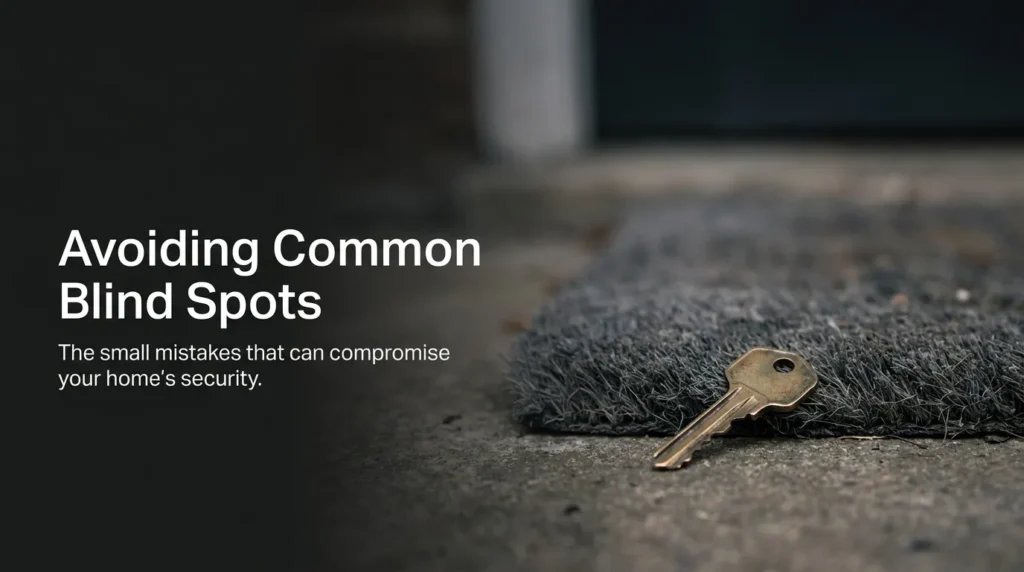
- Is there a spare key sitting in an obvious spot?
- Are house alarm codes written down somewhere visible?
- Could a visitor easily see into the house and notice a child is alone?
Closing curtains near the entry, moving spare keys out of sight, and keeping the alarm panel out of view from the doorway are small changes that add up. For a full room-by-room pass, our childproofing checklist covers entryways along with every other space in the house.
Vet Every “Approved” Adult The Same Way You’d Vet A Babysitter
Just because someone is on your approved visitor list doesn’t mean the conversation stops there. Family friends, neighbors, and even distant relatives should be people you genuinely trust with your child’s safety, not just people who happen to live close by.
Use the same kind of thinking you’d use for hiring outside help. Our guide on how to vet a babysitter has a background-check approach that works just as well for deciding who belongs on your visitor list in the first place.
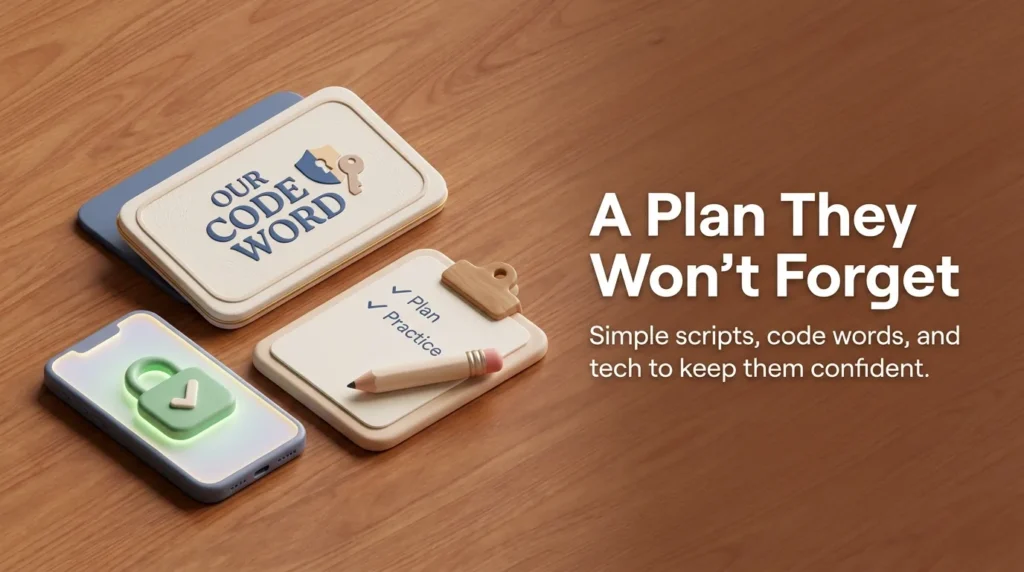
Build A Code Word Into The Plan
A family code word solves a specific problem: what happens if someone shows up claiming you sent them, like a neighbor saying “your mom asked me to check on you”?
Pick a simple, easy-to-remember word with your child. If someone uses that scenario, your child asks for the code word first. No code word, no entry, no exceptions, no matter how convincing the story sounds.
This same instinct, staying calm and following a rehearsed plan instead of panicking, matters in other emergencies too. It’s the same skill kids use during a fire escape drill, so if your family hasn’t practiced one recently, it’s worth pairing that drill with your visitor conversation in the same week.
Know That The Rules Around This Vary By State
One more thing worth knowing: there’s no single national law that says exactly when a child is old enough to be home alone or to handle a visitor by themselves. According to the Child Welfare Information Gateway, a federal resource, only a small number of states set a specific minimum age, and most leave the decision to a family’s judgment based on maturity and circumstances.
That means you’re the best judge of when your child is ready for this responsibility, and it’s worth checking your own state’s guidance before you finalize your plan. This visitor plan works best as one piece of a bigger picture, so if you want to see how it fits alongside fire safety, poison prevention, and emergency contacts, our family safety blueprint ties all of it together in one place.
Run A Practice Round Before The Real Thing
The last step is the one most families skip: actually practicing. Knock on your own door and have your child respond the way you rehearsed. Text them a “someone’s at the door” message and see how they react.
Do this two or three times over a couple of weeks, not just once. Repetition is what turns a rule into a habit, and habits are what hold up when you’re not there to remind them.
Small home hazards near the entryway matter here too, especially if a younger sibling is around while an older child answers a message from you. Loose cords, unlocked cabinets, and things like the household items covered in our poison hazards guide are worth a quick check as part of the same walkthrough.
By the time you’ve had the conversation, given your child the words to use, maybe added a video doorbell, and practiced it a few times, that doorbell won’t feel like a threat anymore. It’ll just be another normal part of the day, one your child knows exactly how to handle.
Turning One Good Day Into A Habit That Lasts
Getting through one clean, calm visitor situation feels great. The real goal is making sure it stays that way six months from now, not just this week.
Refresh the conversation every season, not just once. Kids grow, friend groups change, and a rule that made sense in spring might need a second look by fall when the babysitter changes or a new neighbor moves in.
Holidays are a good example of a time this quietly falls apart. Packages show up more often, relatives drop by without calling first, and your child’s normal routine gets thrown off. Walk through your visitor plan again right before any busy season, the same way you’d check smoke detector batteries.
I started doing a quick five-minute “door check-in” with my daughter every couple of months. I ask her what she’d do if three different people showed up: a delivery driver, a stranger asking to use the phone, and grandma arriving early. It takes almost no time, and it keeps the plan fresh in her head instead of something she heard once and forgot.
Keep your approved visitor list a living document. Cross people off if a relationship changes, and add new trusted adults as your circle grows. A stale list is almost as risky as no list at all, because your child might still think someone old is “approved” when they aren’t anymore.
Teach your child to trust that uneasy feeling in their stomach, even about someone on the approved list. If a normally-fine neighbor is acting strange, or asking to come in when that’s never happened before, your child should know it’s always okay to say no and call you first. No adult, approved or not, should ever make a child feel bad for checking with a parent.
If your family uses a smart lock or doorbell, don’t let the device become a replacement for judgment. Wifi goes down. Batteries die. Apps glitch at the worst possible moment. Your child’s own habits and script are the real safety net, and the tech is just a helpful backup layer on top of that.
One more small thing that pays off over time: praise your child when they handle a visitor situation well, even a small one. A ten-second “hey, you handled that exactly right” does more for long-term habits than any lecture ever will. Kids repeat behavior that gets noticed, and safety habits are no different.
Where Even Careful Parents Slip Up
I want to be honest about the mistakes I’ve seen, including a couple of my own, because they’re easy to fall into without realizing it.
The first one is treating this as a “one and done” talk. A parent explains the rule once, feels good about it, and never brings it up again. Months later, the details are fuzzy, and fuzzy details are exactly what fall apart under real pressure.
Another one is giving mixed signals without meaning to. If you tell your child never to open the door, but you’re also expecting a big package that day, your child can feel torn between two instructions. That confusion is where kids make split-second choices that don’t match what you actually wanted.
Parents with more than one child at home often forget to plan for disagreement between siblings. An older child might know the rule cold, while a younger one panics and runs to open the door anyway. Every child in the house needs the same script, not just the oldest one.
Some families lean too hard on a single tool, like assuming a video doorbell alone solves the whole problem. A camera can show you who’s there, but it can’t make the decision for your child, and it definitely can’t help if the power or wifi happens to be down that day.
There’s also a quieter mistake: never actually asking your child how they feel about this responsibility. A child who is anxious about being left alone with visitor decisions but never says so might mask that fear instead of asking for help in the moment. Checking in honestly, “does this feel okay to you, or does it worry you,” opens the door for your child to be truthful instead of pretending they’re fine.
Skipping practice runs is probably the most common slip of all. A rule you’ve only said out loud, but never rehearsed, tends to disappear exactly when you need it most. Kids remember what they’ve done, far more than what they’ve simply been told.
The cost of these mistakes isn’t always dramatic. Sometimes it’s a child who feels a rush of panic they didn’t need to feel. Other times it’s a child who opens the door for the wrong person because nobody ever practiced what “the wrong person” actually looks like in real life. Either way, a few extra minutes of preparation is a small price for that peace of mind.
There’s one more slip that catches a lot of families off guard: forgetting to update the plan as your child gets older. The rules that worked for an eight-year-old don’t always fit a thirteen-year-old who now wants more independence and might feel embarrassed following a “baby” script.
Instead of dropping the plan altogether as your child grows, let them help rewrite it. A teenager who helped design their own visitor rules is far more likely to actually follow them than one who’s still using a script you handed them years earlier.
I’ve also noticed parents sometimes assume older siblings will automatically protect younger ones during a visitor situation. That’s a lot of pressure to place on a kid, and it isn’t a fair substitute for every child knowing the plan on their own. Even a responsible twelve-year-old shouldn’t be the only line of defense for a younger sibling.
None of this means you need to aim for perfect. It just means treating this plan as something that grows with your child, the same way you’d update a car seat or a curfew as they get bigger. A plan that bends a little as your family changes will hold up far better than one that stays frozen in time.
Common Questions About Handling Visitors When Kids Are Home Alone
At what age can I start leaving my child in charge of answering the door?
There’s no single magic number, since it really depends on your child’s maturity and how well they handle pressure. Most families start introducing this responsibility somewhere between ages nine and twelve, alongside other home-alone skills.
Should my child ever open the door for a delivery driver?
Generally, no, not unless it’s a delivery you’re expecting and your child has been specifically told about it ahead of time. It’s simpler and safer to have your child say the visitor can leave the package and go, without opening the door at all.
What if someone at the door says a parent sent them to pick up my child?
This is exactly what a family code word is for. If the visitor can’t give the correct word, your child should not go with them or let them in, no matter how believable the story sounds.
Is a video doorbell alone enough to keep my child safe from visitors?
A doorbell camera is a great extra layer, but it’s not a full plan by itself. Your child still needs the words, the practice, and the confidence to make the right call if the device isn’t working for any reason.
How do I know if my child is genuinely ready for this, not just old enough?
Watch how they handle smaller pressures already, like remembering a chore or following through on a promise without reminders. If they can hold a rule steady under mild pressure at home, they’re usually ready to hold it steady with a visitor too.
What’s the single most important habit to build first?
Teaching your child the exact words to say through a closed door, without opening it, before you worry about anything else. That one habit alone prevents most of the risky situations this whole guide is trying to avoid.
Your Action Plan for Tomorrow
You don’t need to fix everything tonight. Pick one piece from this guide and start there.
Here’s a short list to work through over the next week:
- Sit down and make your short “who’s allowed in” list together
- Practice the closed-door script out loud at least twice
- Walk your entryway and tuck away anything a visitor shouldn’t see
- Pick a family code word everyone can actually remember
- Schedule a real practice knock sometime this week, not just a conversation
I still think about that afternoon my daughter texted me about the person at the door. It scared me at the time, but it also pushed me to actually sit down and build a real plan instead of hoping things would just work out.
My honest advice is to start with one small step today, even if it’s just the code word conversation over dinner tonight. You’ll feel the difference the next time that doorbell rings, and so will your child.
Disclaimer: This article is for general educational and informational purposes only and is not a substitute for professional childcare, legal, or law enforcement advice. Home-alone readiness laws and guidelines vary by state and country, so please check your local regulations and use your own judgment about what’s right for your child and family.