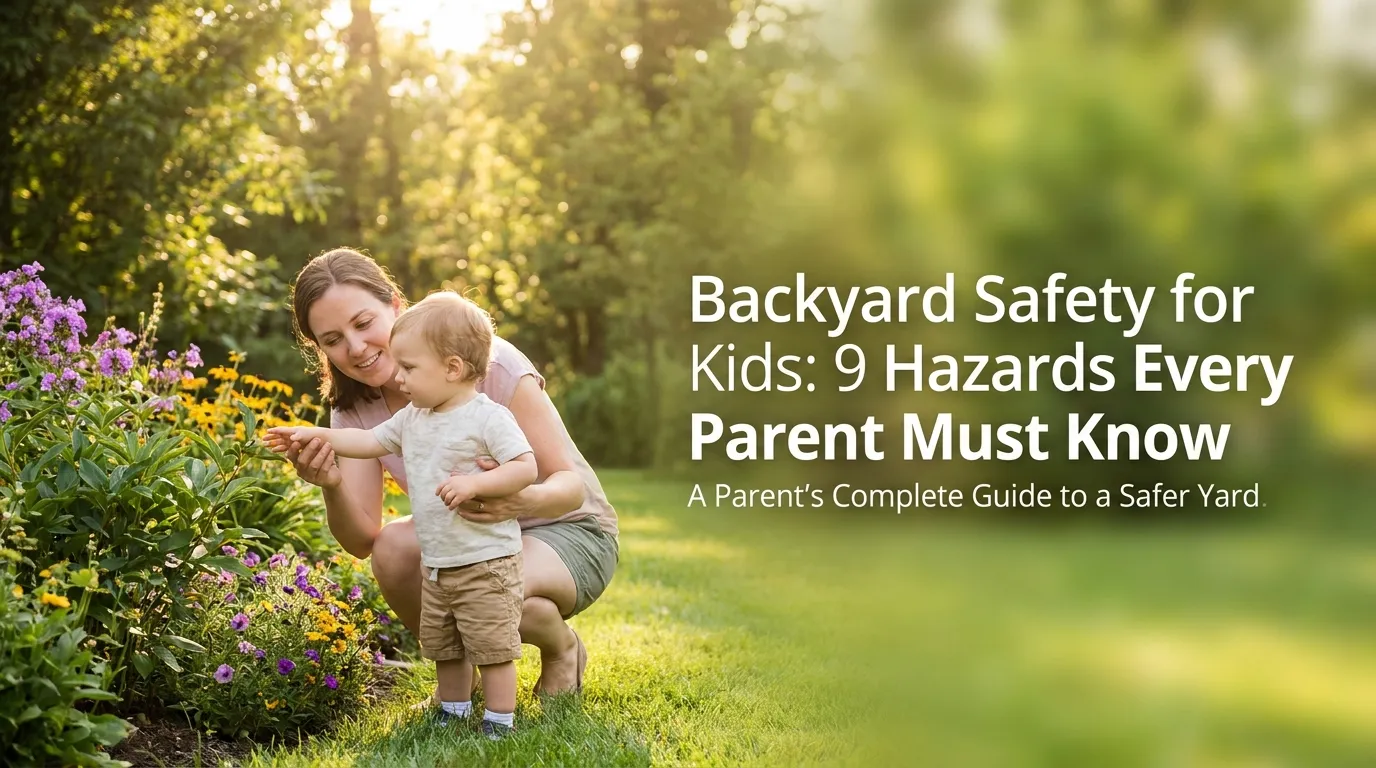
The Afternoon I Almost Lost Sight of My Daughter in Our Own Backyard
I still remember that Saturday afternoon like it happened yesterday. I was refilling the bird feeder, my back turned for maybe thirty seconds. When I turned around, my three-year-old daughter had wandered over to the flower bed and was holding a bright red berry right up to her mouth. My heart dropped into my stomach. I dropped the feeder, ran across the yard, and pulled her hand away just in time. That single moment changed how I look at my own backyard forever.
Before that day, I honestly thought of our yard as the “safe zone.” The house had childproof locks, outlet covers, and cabinet latches. But outside? I never once thought about it the same way. That mistake taught me something I want every parent reading this to know right now.
Your backyard can look completely harmless and still be full of quiet dangers.
Here’s what most parents don’t realize until it’s almost too late:
- Certain common garden plants are actually poisonous if a child chews on the leaves or berries
- Lawn tools and mowers cause thousands of child injuries every single year
- Standing water in buckets, ponds, or kiddie pools can be dangerous in seconds
- Loose fence gates let toddlers wander toward streets or pools unsupervised
- Garden chemicals sitting in an unlocked shed are easy for curious little hands to reach
The scary part isn’t that these hazards exist. The scary part is how ordinary they look. A pretty flower. A shiny tool. A puddle after rain. None of it looks dangerous until you know what to look for.
I felt a wave of guilt after that day with the berries. I kept asking myself how I missed something so obvious. But here’s what I learned after talking to pediatric safety experts and doing my own research: most parents miss the same things I did, because backyard hazards are rarely taught the way indoor ones are.
If you’ve ever felt that same gut-punch of fear watching your child play outside, you are not alone. And the good news is, almost every one of these risks can be fixed with a few small changes.
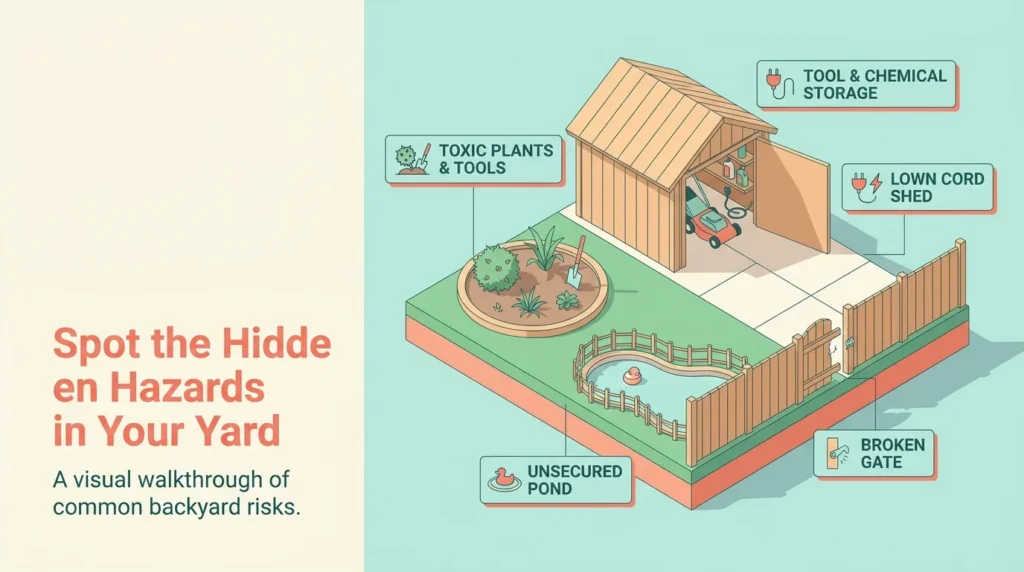
9 Backyard Hazards Hiding in Plain Sight (And How to Fix Each One)
You don’t need to turn your yard into a padded room. You just need to know where the real risks hide, and how to remove them one by one. Let’s walk through this together, step by step.
1. Start With a “Kid’s Eye View” Walkthrough
Get down on your knees. Literally.
Toddlers see the world from a completely different height than we do. What looks harmless from your eye level might be right at their reach when you crouch down.
Walk your entire yard slowly. Check for loose boards, exposed nails, sharp tool edges, and low-hanging branches. I do this every spring now, and I always find something I missed the year before.
Pro Tip: The first time I did this walkthrough, I found a rusty nail sticking out of our old fence post that I had walked past a hundred times without noticing. My son had already gotten close enough to touch it once. That’s when I realized this isn’t a one-time job. It’s a habit you build into your season, not a checklist you finish and forget.
2. Learn Which Plants in Your Yard Are Actually Dangerous
This is the one most parents skip, and it’s exactly what happened to me.
Common plants like foxglove, oleander, and certain lily varieties are toxic if ingested. Even some popular landscaping shrubs carry berries that look tempting to a curious toddler but can cause serious stomach illness.
You don’t need to rip out your entire garden. You just need to know what’s growing there.
According to the American Association of Poison Control Centers, plant exposure is one of the most common reasons parents call poison control hotlines for young children, which shows just how frequently this happens in ordinary backyards.
If you’re unsure about a plant, take a photo and search it, or ask your local nursery. It takes five minutes and could prevent a trip to the emergency room.
This connects directly to something we cover in our guide on common household poison hazards and how to prevent them, since outdoor and indoor poisoning risks often overlap more than people expect.
3. Lock Up Tools, Chemicals, and Anything With a Motor
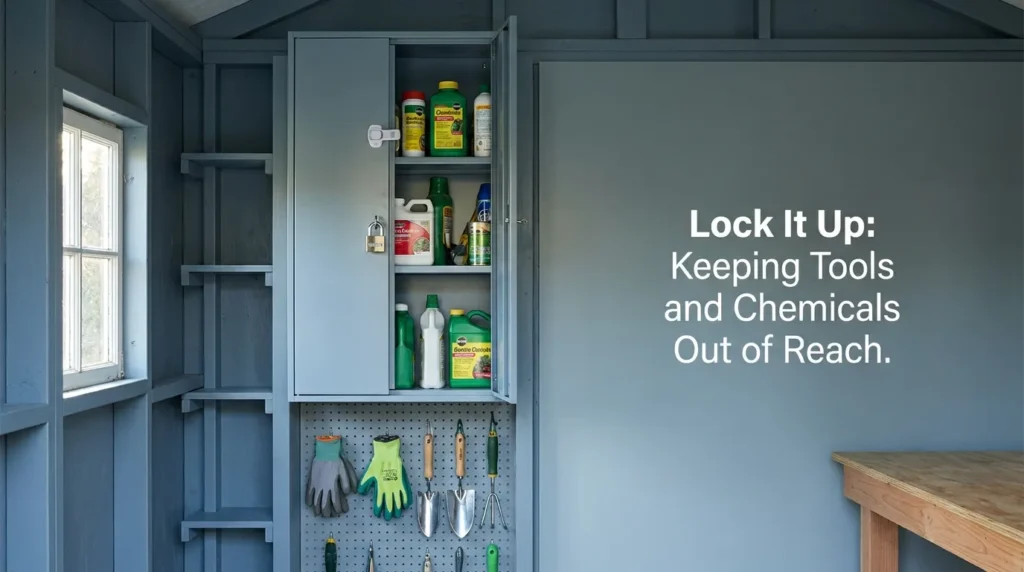
Lawn mowers, hedge trimmers, fertilizers, and pesticides should never sit out in the open.
The U.S. Consumer Product Safety Commission has reported that lawn and garden equipment sends tens of thousands of children to the emergency room every year, mostly from mower-related injuries. Store these items in a locked shed or garage, not just “put away” in a corner.
I’ll be honest, for years I kept our weed killer on a shelf that was technically “high up” but not actually locked. My daughter is a climber. That shelf was not as safe as I thought.
If you’re already thinking about upgrading your home’s overall security setup, our guide on essential tips for a securely life is a good next step after you finish childproofing the yard itself.
4. Watch Standing Water Like It’s a Full-Sized Pool
A child can drown in as little as two inches of water, and it can happen in under a minute without a sound.
Kiddie pools, buckets, birdbaths, and even puddles after a storm all count. Always empty standing water immediately after use, and never leave a young child unsupervised near any water source, no matter how shallow it looks.
If your yard has an actual pool or pond, this becomes even more urgent. We go much deeper into this exact risk in our guide on preventing child drowning around pools, which pairs perfectly with everything we’re covering here.
Here’s a quick way to see this visually.
Watch this short video for a real demonstration of how fast backyard water hazards can turn dangerous, and what to do about it:
5. Secure Your Fence Line and Gates
A fence only works if it actually closes.
Check every gate for a self-latching mechanism that a small child can’t reach or figure out. Loose fence posts, gaps large enough for a toddler to squeeze through, and gates that don’t fully close are some of the most overlooked risks in a backyard.
This is also where a bit of smart technology helps. A simple gate sensor or a pet camera aimed at your play area can alert you the moment a door or gate opens, giving you extra peace of mind when you step inside for even a minute.
If you’re building out your family’s full safety setup, our child-proofing home safety checklist is a great companion resource, since a lot of the same logic applies both indoors and out.
6. Set Age-Appropriate Rules for Yard Work and Equipment
Not every child is ready for every task, and that’s okay.
Groups like the National Children’s Center for Rural and Agricultural Health and Safety recommend that children under 12 should not operate push mowers, and no child under 16 should ride a riding mower, even as a passenger.
I know it feels harsh to say no when your kid wants to “help” with yard work. But this is one of those rules that exists because real injuries happen when it’s ignored.
Instead, give younger kids jobs that keep them at a safe distance, like watering plants with a small can or collecting sticks before you mow.
7. Keep Grills and Fire Pits Completely Off-Limits to Little Hands
Backyard cookouts are fun until a curious toddler wanders too close to a hot grill.
Grill surfaces stay dangerously hot long after you turn off the flame, sometimes for over an hour. Kids don’t understand that, and their skin burns faster than ours does.
Set a clear boundary, like a small fence or a rule that kids stay three feet back, and stick to it every single time you cook outside.
I learned this one from a scare, not a headline. My nephew reached toward our fire pit grate the moment I turned to grab tongs. It wasn’t even lit anymore, but the metal was still hot enough to hurt him. Now we use a portable outdoor fence around ours whenever kids are near, and I never leave a lit grill unattended, even for thirty seconds.
If you’re already thinking through supervision routines for gatherings at home, our guide on vetting visitors and keeping kids safe during home events pairs well with this, since cookouts often mean more people and more distractions at once.
8. Create a Designated Safe Play Zone
One of the simplest fixes I made was setting up one specific area just for play.
Keep it within clear sightline from your kitchen window or patio. Fill it with soft ground cover like mulch or rubber matting under swings and slides, since falls are one of the most common playground injuries at home.
This also makes supervision so much easier. Instead of scanning the whole yard, you’re watching one clear space.
If you’re also managing supervision during playdates or when other kids visit, our guide on managing visitors and kids’ home alone safety has some useful overlap with backyard supervision habits.
9. Don’t Forget About Insects, Wildlife, and Hidden Holes
Bee stings, tick bites, and hidden holes from digging animals are easy to overlook until someone gets hurt.
Check playsets and tree areas for nests before the summer season starts. Walk the yard for animal holes that could twist a small ankle during a game of tag.
A quick Michigan State University Extension guide on outdoor safety for children notes that checking your yard before each play session, especially after storms, catches most of these hazards before they become a problem.
This kind of routine check takes less time than you’d think, and it becomes second nature after a few weeks.
Small Habits That Keep Your Yard Safe All Season Long
Fixing hazards once is a good start. Keeping your yard safe all year is a different job entirely.
I learned this the hard way after my first “safety sweep.” I felt so proud of myself for locking the shed and checking the fence. Then three weeks later, a storm knocked over a branch that cracked our swing set frame, and I hadn’t checked it since.
Safety isn’t a one-time project. It’s a rhythm you build into your week.
Build a Weekly Two-Minute Check Into Your Routine
You don’t need a full inspection every single day. You just need two minutes, once a week, to walk the perimeter of your yard.
Look at gates, check the ground for holes, glance at your play equipment for loose bolts. Tie this habit to something you already do, like taking out the trash or watering plants on Sundays.
I keep a small note on my phone with five quick checkpoints: gate latch, mower storage, standing water, plant beds, and play equipment. It takes less time than making coffee.
Rotate Your Plant Watch With the Seasons
Here’s something most guides don’t tell you. The plants that are dangerous in spring aren’t always the same ones that matter in fall.
Berries ripen at different times. Mushrooms pop up after rain in ways you can’t predict. Fallen leaves from certain trees, like black walnut, can be harmful to pets and curious toddlers who put things in their mouths.
A simple seasonal habit: every time the season changes, walk your yard again with fresh eyes. Ask yourself what’s new since last time.
Use Technology as a Second Set of Eyes, Not a Replacement
I want to be honest about something. No camera, sensor, or gadget replaces actual supervision.
But technology can absolutely help fill the gaps. A motion-activated camera aimed at your play area, a smart gate sensor, or even a baby monitor with outdoor range can alert you the second something changes, like a gate opening or a child wandering toward the driveway.
Think of it like a smoke detector. It doesn’t stop a fire. It just gives you the warning fast enough to act.
If you already use similar tools indoors, this same mindset applies well beyond the yard. Our guide on modern approaches to stranger danger touches on this same idea of combining awareness with smart tools rather than relying on either one alone.
Talk to Your Kids About the Yard the Same Way You Talk About the Street
Most of us drill “look both ways” into our kids from a very young age. We rarely give the same attention to backyard rules.
Try simple, age-appropriate phrases like “ask before you touch a plant” or “tools are for grown-ups only.” Repeat them often, not just once.
Pro Tip: I made a small “yard rules” poster with my daughter using stick figures and simple words. She helped color it. Kids remember things better when they’re part of making them.
Involve Older Kids in Safety Checks Themselves
If you have older children, turn the walkthrough into a shared job instead of a solo chore.
Ask them to help spot problems, like a loose board or an open gate. This builds the habit early, and it teaches them to notice hazards on their own, which matters even more once they’re playing without you watching every second.
This approach connects well with the supervision skills we cover in our guide on readiness steps for kids being home alone safely, since noticing hazards is a skill that carries over from the yard into the whole house.
Where Good Intentions Quietly Go Wrong
I’ve made almost every mistake on this list myself, so I say this with zero judgment.
The biggest one is assuming safety is a “set it and forget it” task. You childproof once, feel relief, and stop paying attention. Hazards don’t stay still, though. Plants grow. Fences loosen. Kids get taller and reach higher.
Another mistake I see constantly is trusting a fence without testing it. A fence that looks solid from a distance can have a gap at the bottom just wide enough for a toddler to squeeze through. If you haven’t physically tested every gate latch with your own hands, you don’t actually know it works.
People also underestimate short absences. “I’ll just be gone a second” is how most backyard accidents happen. Drowning, poisoning, and falls all tend to happen in windows of time that feel too short to matter. They aren’t.
There’s also a quieter mistake that doesn’t get talked about enough: not talking to your kids about the “why” behind the rules. Telling a child “don’t touch that plant” without explaining that it can make them sick often leads to curiosity winning once you’re not looking. Kids respect rules more when they understand the reason behind them.
Skipping seasonal re-checks is another common trap. Many parents do one thorough safety pass in spring and never look again until the next year. New hazards show up constantly, especially after storms, heavy rain, or a growth spurt in your garden.
And finally, one mistake that quietly puts a lot of families at risk: assuming visitors and other parents follow the same safety habits you do. When friends or family bring their kids over, gates get left open, tools get left out, and supervision gets split between too many adults talking instead of watching. It’s worth a quick reminder before playdates, not because you don’t trust anyone, but because everyone’s “normal” looks a little different.
None of these mistakes make you a bad parent. They make you human. The goal isn’t perfection. It’s staying aware enough to catch the small stuff before it becomes something bigger.
Common Questions About Backyard and Garden Safety for Kids
What is the fastest way to check if my yard is safe for a toddler?
Get down to your child’s eye level and walk the whole yard slowly. Look for anything within arm’s reach that could be swallowed, touched, or climbed, and you’ll usually spot the biggest risks within a few minutes.
Are all garden plants dangerous for kids?
No, most plants are completely harmless, but a handful of common ones like foxglove, oleander, and certain berries can cause real problems if eaten. It’s worth spending ten minutes identifying what’s actually growing in your yard so you know exactly what to watch.
How often should I inspect play equipment for safety?
A quick check every couple of weeks is a good habit, plus an extra look after any storm or heavy wind. Loose bolts, cracked plastic, and worn ropes tend to show up gradually, so regular checks catch problems early.
Is a backyard camera actually necessary for child safety?
It’s not required, but it can genuinely help, especially for larger yards or blind spots you can’t see from the kitchen window. Just remember it’s meant to support your supervision, not replace it.
What age can kids safely help with yard work?
It depends on the task more than the exact age, but most experts agree children under 12 shouldn’t operate mowers, and simple jobs like watering plants or picking up sticks are safe much earlier. Always match the task to your child’s size, coordination, and ability to follow instructions.
Should I remove all poisonous plants from my yard completely?
Not necessarily. Many families simply fence off or relocate risky plants instead of removing everything, especially if the plants are mature or expensive to replace. The key is making sure young kids can’t reach them without supervision.
Your Backyard Can Be Both Fun and Safe, Starting Today
Looking back at that afternoon with my daughter and the berries, I don’t feel scared anymore. I feel prepared.
That’s really the whole point of everything we’ve covered here. You don’t need to be perfect. You just need to know where to look and build a few small habits that stick.
Your action plan for this week is simple:
- Walk your yard once at your child’s eye level
- Check every gate latch with your own hands
- Identify at least three plants growing in your yard
- Lock away anything with a motor, blade, or chemical label
Start with just one of these today. The rest will follow naturally once you build the habit.
My daughter still plays in that same backyard every single day now, and honestly, it’s become one of her favorite places in the world. A safe yard doesn’t mean a boring one. It just means the fun happens without the fear.
You’ve got this, and your kids are lucky to have a parent who cares enough to read all the way to the end of a guide like this.
Disclaimer: This article is intended for general informational and educational purposes only and should not be considered professional medical, legal, or safety consulting advice. Every home, yard, and child’s needs are different, so please consult a qualified pediatrician, landscaping professional, or child safety expert for guidance specific to your situation. SecurelyLife is not liable for any injury, loss, or damage resulting from the use of information provided in this post.