I remember lying in bed and jumping at every tiny noise coming from my yard. I had expensive cameras, but I didn’t actually know if they were watching the right spots or if I was just wasting my money on high-tech toys. That feeling of being blind in my own home is exactly why I decided to stop guessing and build this master plan for my family.
Many homeowners believe that simply buying an expensive camera system is enough to keep their family safe. They spend hundreds of dollars on high-tech gear but fail to realize that a camera in the wrong spot is just an expensive wall decoration.
If you want to achieve real peace of mind, you must understand certain foundational home safety protocols before you even think about drilling holes in your siding. Security experts at the FBI often point out that most residential burglaries happen because of visible vulnerabilities that homeowners overlook.
Safety isn’t just about recording what happens after a crime occurs. It is about deterring threats before they reach your front porch or your children’s windows.
When you start practicing core habits for a protected lifestyle, you begin to see your property through the eyes of an intruder. This perspective shift is the first step in creating a truly impenetrable home environment for your loved ones.
The Mental Burden of Hidden Vulnerabilities: The Silent Stress of Insecure Living
The feeling of being watched is uncomfortable, but the feeling of not being able to watch your own property is terrifying. Many families live in a state of constant low-level anxiety that they cannot quite shake off.
They jump at every small noise outside during the night. They worry about their expensive packages whenever they are away from home for just a few hours.
This emotional burden stems from a total lack of control over their physical environment. People often try to solve this by haphazardly mounting cameras wherever it seems easiest to reach a power outlet.
This “easy-way-out” approach leads to several frustrating outcomes that leave your home at serious risk:
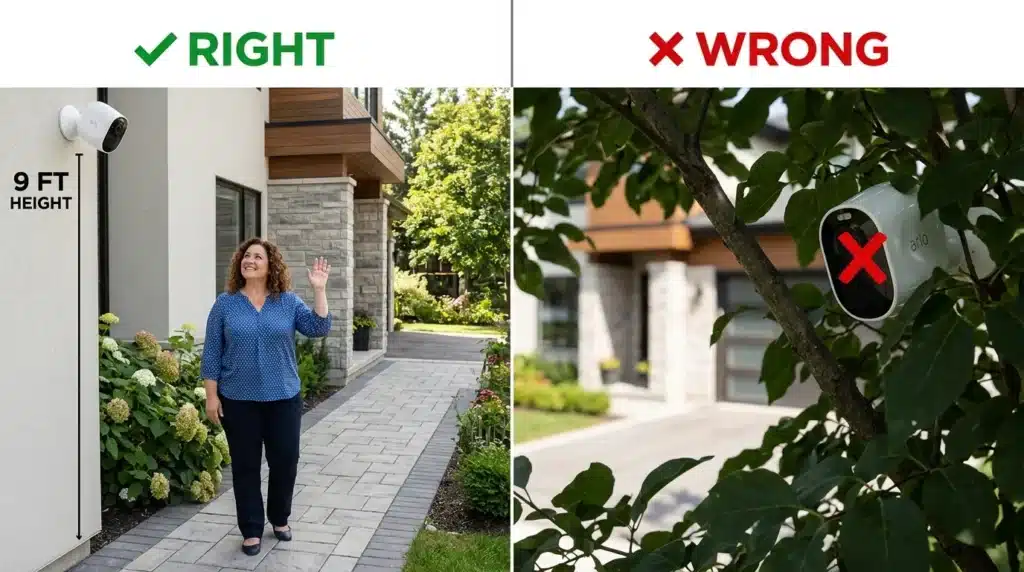
- A False Sense of Security: You think you are protected, but your cameras are actually pointed at the ground or blocked by growing tree branches.
- The Blind Spot Trap: Intruders often scout homes for days to find areas where the lenses cannot see them, turning your investment into a useless tool.
- Constant False Alarms: Poorly placed cameras might trigger every time a car drives by on the street, leading you to ignore notifications when a real threat actually arrives.
- Poor Image Quality: Placing a camera too high or against a bright light source makes it impossible to identify faces or license plates when the police need them.
When your security setup fails, it does more than just let you down during a break-in attempt. It erodes your confidence in your own home as a safe space.
You stop trusting your gear and start feeling like a target in your own neighborhood. You spend your nights checking the door locks ten times because you know deep down your cameras aren’t covering the side yard properly.
This mental fatigue can affect your performance at work and your quality time with your children. You deserve to feel like your home is a sanctuary, not a place of worry.
Understanding the best places to put security cameras outside your home is the only way to reclaim that lost sense of tranquility. It is time to stop guessing and start implementing a professional-grade surveillance strategy.
The Professional Strategic Placement Protocol: 7 Areas You Must Cover
To build a high-level surveillance web, you need to think about layers of protection rather than just a single camera. You aren’t just looking for one “best” spot to hang a lens.
Instead, you are looking for a combination of locations that work together to leave no room for intruders to hide or crawl. Each camera should overlap with another to create a seamless wall of digital eyes.
1. The Front Door Primary Command Post
The front door is the most common entry point for burglars and package thieves alike. Data from the National Safety Council suggests that most home accidents and intrusions start at the main entrance.
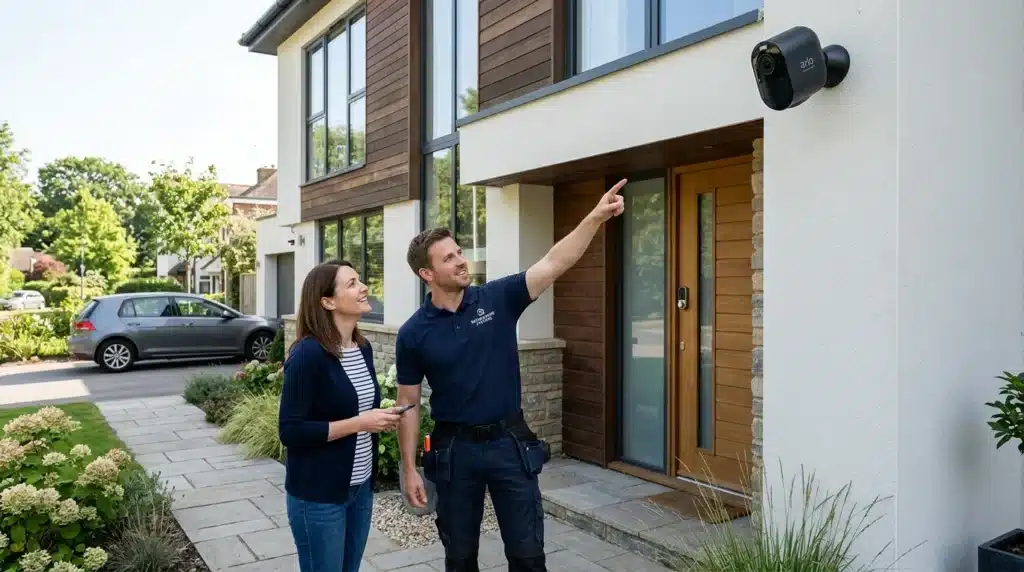
You need a camera here that captures clear facial features of anyone approaching your doorstep. A smart doorbell is a great start, but a secondary camera mounted at the optimal outdoor camera mounting height of 9 feet provides a much wider view.
By strengthening your primary entrance, you make this entry point nearly impossible to breach without detection. You want a clear line of sight that covers the entire porch and the walkway leading up to it.
If you have a porch light, ensure the camera is positioned to avoid direct glare. Glare can “blind” the sensor at night, leaving you with a white, blurry image instead of a clear face.
“A front door without a camera is an open invitation. In modern home safety, your front door is your primary data collection point for everyone who enters your private life.”
Check out this expert guide below to see the most common camera installation fails and how to avoid them! Watching this will help you get your setup right from the start and ensure your surveillance master plan actually keeps you safe.
2. The Back and Side Entrance Monitoring
Burglars love the back door because it usually offers more privacy from neighbors and the street. If your back door is hidden by a tall fence or thick bushes, it is a high-risk area that needs constant monitoring.
You must place a camera here to monitor all sliding doors or secondary entry points. These cameras should be weather-resistant and have strong infrared night vision for the dark hours.
Since these areas are often dark, a camera with a built-in motion light can act as a powerful deterrent. It scares away intruders before they even touch the handle of your door.
This ensures that even if someone attempts a break-in, they won’t stay long once the bright light or noise begins. Think of your back door as the secret entrance that needs the most attention.
3. The Garage and Driveway Vulnerability Zone
The garage is often the weakest link in home security for many households. It contains expensive tools, bicycles, and cars, and it often leads directly into the main living area.
A camera here should cover the entire driveway and the garage door itself. If you have a detached garage, you need a dedicated unit to monitor that specific structure.
Successfully locking down your garage area is much easier when you can check your live feed directly from your phone in bed. Make sure the camera is angled to catch license plates as vehicles enter your driveway.
This information is key for law enforcement if an incident occurs nearby. Experts often emphasize driveway safety as a top priority for families with young children who might be playing outside near parked cars.
4. Ground-Level Windows and Low-Entry Points
Windows are fragile and often left unlocked during the warmer months of the year. Any window that is not visible from the street should have camera coverage.
This includes windows behind tall hedges or those located at the side of the house where neighbors can’t see. You don’t necessarily need a camera for every single window in your house.
Instead, position your cameras at the corners of the building. This allows one camera to monitor two sides of the house at once, effectively covering multiple windows with a single lens.
If you are worried about someone breaking a window to get inside, you should look into internal security methods. Having a camera recording the attempt is good, but having a strong physical barrier is even better.
5. The Backyard and Patio Perimeter
Your backyard is your private oasis, but it can also be a staging ground for intruders to hide while they plan their move. If you have expensive patio furniture, a high-end grill, or a tool shed, you need eyes on this area at all times.
A backyard security camera placement strategy should focus on the perimeter fence. If you can catch someone climbing over your fence, you have much more time to react than if you only see them once they reach your back door.
This area is also important for monitoring your pets. While you might use a pet camera for indoor safety monitoring, an outdoor view ensures they haven’t found a way to dig under the fence.
It also helps you keep an eye on any wild animals that might wander into your yard at night. You can see if a stray animal is causing trouble before you let your dog out for their nightly walk.
6. Off-Street Windows (The Hidden Danger Areas)
Windows that face away from the street or the neighbors’ view are the most attractive to criminals. These are often located in the “blind spots” of your home’s architecture, such as behind a chimney or near a basement entrance.
When you are preventing security camera blind spots, pay special attention to these tucked-away corners. Use wide-angle lenses here to maximize what you can see of the area.
Even a small, discrete camera can provide enough evidence to stop a crime before it escalates into something much worse. Consider how these areas look during different times of the day.
A spot that is bright in the morning might be pitch black by 6 PM. Always test your cameras in low-light conditions to ensure they still provide a clear picture of these hidden danger zones.
7. Main Property Gates and Driveway Entrances
If your property is gated, the gate is your first line of defense against unwanted visitors. A camera here allows you to see who is requesting entry before they even get near your home or your front door.
This is especially helpful for rural properties or large suburban lots where the house is set back from the road. Capturing a clear image of a vehicle at the gate is often the best way to identify “casing” behavior.
Thieves often visit a home multiple times in different vehicles before they decide to strike. Seeing them at the gate early can help you alert the authorities before any damage is done.
Use a camera with a long-range Wi-Fi antenna or a wired connection to ensure the signal doesn’t drop when you need it most. You want to see the face of the driver clearly before you press the button to open the gate.
Expanding Your View: How Angles Change Everything
When you mount your cameras, you must think about the “field of view” and the angle of the lens. A camera pointed too low only sees feet.
A camera pointed too high only sees the tops of heads. The goal is to find a balance where you can see the person’s face and their hands at the same time.
One big mistake I made early on was putting my camera way too high because I was scared someone might reach up and grab it. I ended up with great videos of the top of a delivery man’s hat, but I couldn’t see his face at all! Now I always stick to the 9-foot rule so I can actually see who is standing on my porch.
Knowing what a person is carrying is just as important as knowing who they are. Are they carrying a harmless package? Or are they carrying a heavy tool meant for breaking into your home?
These small details change how you and the police will respond to the situation. Always check your camera’s mobile app while you are standing on the ladder.
Have a family member walk around the yard to see if there are any spots where they “disappear” from the screen. If they can hide, a burglar can hide too.
Environmental Factors That Ruin Your Footage
Rain, snow, and even spider webs can ruin your surveillance plan if you are not careful. Spiders are attracted to the infrared light on cameras, and they love to build webs right across the lens.
This can trigger motion alerts all night long and blur the image. Make it a habit to clean your lenses once a month with a soft, clean cloth.
Trimming your bushes is also a part of this process. A branch blowing in the wind can cause hundreds of false notifications, leading you to turn off your alerts entirely.
By covering these seven spots with care, you create a complete shell of protection around your home. You are no longer guessing or hoping for the best. You are using a professional-grade protocol to ensure your family stays safe.
Enhancing Your Watch: Advanced Protocols for Long-Term Surveillance Success
Installing your cameras in the right spots is a great first step. However, keeping those cameras effective over many years requires a more advanced approach.
Professional security consultants often use a concept called “Active Deterrence.” This means your cameras should do more than just record a crime while it happens.
They should make the intruder feel like they have already been caught. You can achieve this by pairing your cameras with smart lighting and audible alerts.
Maximizing the Impact of Your Smart Entry System
One of the most effective ways to boost your outdoor security is through front door smart lock integration. When your camera sees someone approaching, it can signal your smart lock to double-check its status.
This creates a digital handshake between your devices. If you are still deciding between smart locks vs deadbolts, remember that connectivity is the biggest advantage of modern tech.
A smart lock can log exactly when a door was accessed. Your camera provides the video evidence of who was standing there at that exact second.
This combination is much more powerful than any single device. It allows you to build a timeline of events that is impossible for a thief to dispute.
Defending Against Digital and Physical Tampering
Your physical security is only as good as your digital walls. If you do not learn how to secure home wi-fi smart cameras, a tech-savvy thief could disable your system from the sidewalk.
Always use a dedicated, encrypted network for your security devices. This prevents your cameras from slowing down your Netflix stream and keeps hackers out of your private feeds.
Physical tampering is another major risk to consider for long-term safety. Intruders may try to use long sticks or even stones to knock your cameras out of alignment.
Check your mounting brackets every few months to ensure they are still tight. A camera that has shifted even a few inches can create massive blind spots in your coverage.
Seasonal Maintenance and Environmental Protection
Nature is the biggest enemy of clear surveillance footage. Spiders love the warmth of camera sensors and often build webs directly over the lens.
This creates a blurry image and triggers constant false motion alerts on your phone. Make it a habit to wipe your lenses with a microfiber cloth at least once a month.
Heavy rain and snow can also cause water spots that ruin your night vision. Consider adding a small “shroud” or weather shield over cameras that are not under an eave.
According to home safety data from Forbes, poorly maintained systems are the leading cause of missed evidence during police investigations. Don’t let a simple spider web stand between you and your safety.
Mastering the Science of Camera Angles
Most people point their cameras directly at the ground. This is a mistake because you only end up seeing the top of a person’s head or their hat.
To get the best results, aim for a 15-degree downward angle. This helps in preventing security camera blind spots while still capturing clear facial features.
Think of your camera as a person standing on a ladder. If they can’t see the intruder’s face and hands, the camera isn’t doing its job properly.
Check your mobile app during different times of the day. The sun moves, and a spot that looks great at noon might be completely washed out by glare at 4 PM.
“A security system is a living thing. It needs regular attention and small adjustments to stay effective against changing threats.”
Building a Perimeter of Confidence
Your backyard is often the most neglected part of a security plan. However, learning how to secure sliding glass doors is much easier when you have a camera watching the patio.
A backyard security camera placement strategy should include a view of the fence line. You want to see the intruder the moment they step onto your grass, not when they are already at your window.
This early warning gives you time to call for help or move your family to a safe room. It also helps you monitor your pets to ensure they aren’t getting into trouble with local wildlife.
Organizations like SafeKids emphasize that a monitored yard is a safer place for children to play. You can stay in the kitchen while keeping an eye on the kids through your tablet or phone.
Avoiding the Traps: Common Surveillance Mistakes That Invite Danger
Even with the best intentions, homeowners often make small errors that compromise their entire safety network. Avoiding these pitfalls is key to maintaining a high-level security posture.
- Installing Cameras Too High: While you want to prevent tampering, putting a camera 15 feet up means you only see the tops of heads. Stick to the 9-foot rule for the best balance.
- Ignoring the Wi-Fi Strength: A camera with a weak signal will drop frames or fail to record during a critical moment. Always test your signal strength before drilling holes.
- Pointing Cameras at Reflective Surfaces: Windows and pools reflect infrared light at night. This causes a “white-out” effect that makes your footage completely useless.
- Forgetting About Privacy Laws: In many areas, it is illegal to record your neighbor’s backyard or windows. Always angle your cameras to focus strictly on your own property.
- Neglecting the Interior Connection: Outdoor cameras should be your first line of defense, but they work best when you have an indoor plan. This includes knowing where your toxic indoor plants are or following an electrical cord safety tips for home guide to prevent fires.
If you fail to address these mistakes, you aren’t just wasting money. You are giving yourself a false sense of security that could lead to disaster during a real emergency.
The goal is to eliminate every possible excuse an intruder might have to target your home. A well-maintained and correctly positioned camera system makes your house the least attractive target on the block.
Frequently Asked Questions About Home Surveillance
Where is the most important place to put a security camera?
The front door is the most vital spot for any home. Statistics show that 34% of burglars try the front door first, and it is also where package theft occurs most often.
How high should outdoor security cameras be mounted to prevent tampering?
You should aim for approximately 9 feet (about 2.7 meters). This height keeps the camera out of reach for most people while still allowing the lens to capture clear facial details.
Can outdoor security cameras see at night clearly?
Most modern cameras use infrared (IR) technology to see in total darkness. For the best results, use cameras with “Full-Color Night Vision” which uses small spotlights to show colors even at midnight.
Do security cameras at the front door reduce the risk of package theft?
Yes, visible cameras are a massive deterrent for “porch pirates.” Thieves are much less likely to steal a box if they see a camera lens pointed directly at them.
How many outdoor cameras do I need for full home coverage?
A standard rectangular home usually needs four cameras. One for the front door, one for the back entrance, and two placed on opposite corners to cover the side yards and windows.
The Path Forward for Your Secure Life
Securing your home is not a one-time event; it is a lifestyle choice. By taking the time to plan your camera placement, you are making a long-term investment in your family’s peace of mind.
You no longer have to wonder about that strange noise in the middle of the night. With a quick glance at your phone, you can see every corner of your property with total clarity.
Start by following a nighttime home security checklist to identify your darkest and most vulnerable spots. Then, use the strategic spots we discussed to fill those gaps one by one.
You have the tools and the knowledge to protect what matters most. Don’t wait for a “close call” to take action. Begin your security upgrade today and enjoy the comfort of a truly protected home.
Your journey toward a safer environment is something we are proud to support. Every camera you mount and every lock you reinforce brings you one step closer to total tranquility.
Getting my camera placement right was the best thing I ever did for my family’s peace of mind. You don’t have to be a tech expert to stay safe; you just need to start with one camera in the right spot today. Go ahead and take that first step toward a safer home—you will sleep so much better tonight!
Safety & Legal Disclaimer: The information provided in this article is for educational and informational purposes only. While we strive for accuracy, home security needs vary based on location, local laws, and property types. Securely Life is not responsible for any security breaches, legal issues regarding privacy, or hardware failures. Always consult with a local professional security installer and review your state or country’s laws regarding video surveillance and privacy before installing any recording equipment. Proper maintenance and regular system checks are the responsibility of the homeowner.