Imagine a quiet afternoon in your living room. Your toddler is playing happily on the rug while you check an email. Suddenly, the house goes silent.
As every parent knows, silence is the loudest warning sign. You walk into the kitchen and see your child holding a bright orange bottle of floor cleaner.
The cap is loose. Your heart stops. This is the exact moment every mother and father fears most.
Common household poison hazards to hide from kids are not always where you think they are. While following a complete child-proofing your home safety checklist, we often focus on the big dangers but completely forget the small, everyday items that look like delicious treats to a child.
According to safety experts at the National Safety Council, accidental poisonings remain a leading cause of preventable injury at home, taking a massive toll on a parent’s peace of mind.
Why Finding the Right Safety Information Feels So Hard
Many parents struggle to keep their homes truly safe. This is not because they do not care, but due to several major roadblocks:
- Misleading Packaging: Many toxic household cleaners are sold in bright colors that look exactly like fruit juice or sports drinks.
- False Sense of Security: We think putting a bottle “up high” is enough, but toddlers are world-class climbers.
- Information Overload: The internet is full of conflicting advice, making it hard to know which childproofing steps actually work.
- Hidden Toxins: Some highly dangerous items do not even carry a “poison” label, leading parents to overlook them entirely.
How Household Dangers Erode Your Peace of Mind
Living with these daily risks creates a heavy emotional burden for parents. You might find yourself jumping at every small sound, leading to:
- Constant Anxiety: You never feel fully relaxed, even when you are resting at home.
- Loss of Confidence: Seeing a child reach for something dangerous makes you doubt your ability to protect them.
- Fear of Judgment: There is intense social pressure to have a “perfectly safe” home, adding unnecessary stress to your daily life.
“I have spent years helping families secure their homes. Based on official CDC poisoning prevention guidelines, you just need clear, simple, and actionable steps to make your house a safe zone.”
A Comprehensive Guide to Identifying and Hiding Home Hazards
To solve this problem, we need to look at our homes through the eyes of a child. Everything is new, and everything is a potential toy or a tasty snack.
According to verified Poison Control Center statistics, thousands of accidental exposures occur at home annually. Below is our comprehensive list to start your household poisoning prevention journey.
10 Common Household Poison Hazards to Hide From Kids
These are the ten most critical and hazardous items that must be secured using a “double-lock” system—meaning the toxic item is inside a secure container, and that container is inside a locked cabinet.
1. Bright and Colorful Kitchen Cleaners
Most dish soaps, drain cleaners, and degreasers are toxic household products parents often overlook. These liquids are frequently neon green, bright blue, or orange.
To a two-year-old child, that bottle of blue window cleaner looks exactly like blueberry juice. They do not understand the hazardous “poison” symbol; they are only attracted to the bright, neon color.
How to secure them: Move all heavy-duty chemicals to a high shelf in a garage or locked closet. If kept in the kitchen, always use magnetic cabinet locks that require a special key to open.
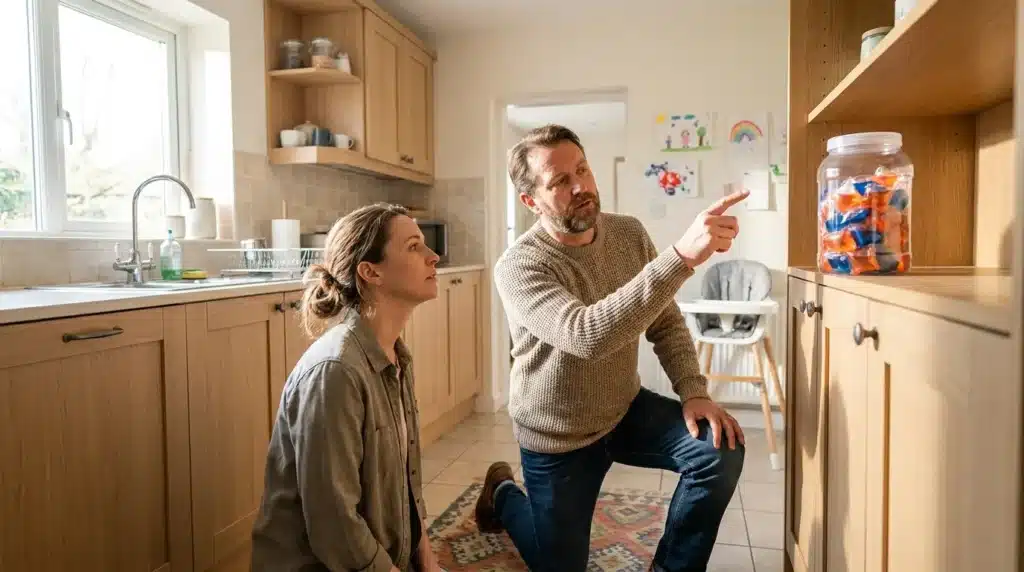
2. Candy-Like Laundry Detergent Pods
Laundry rooms are a major site for accidental poisonings, and the biggest culprit is the highly concentrated laundry detergent pod.
These pods are soft, squishy, and colorful. They look remarkably like gummy candies or fun toys to a toddler.
When a child bites into a pod, the highly concentrated liquid bursts instantly into their throat. This can cause immediate, life-threatening chemical burns or severe respiratory distress.
How to secure them: Always keep detergent pods in their original, opaque packaging. Store them on a shelf that is at least five feet off the ground and keep your utility room locked at all times to implement proper essential tips for a securely life.
3. Prescription and Over-the-Counter Medications
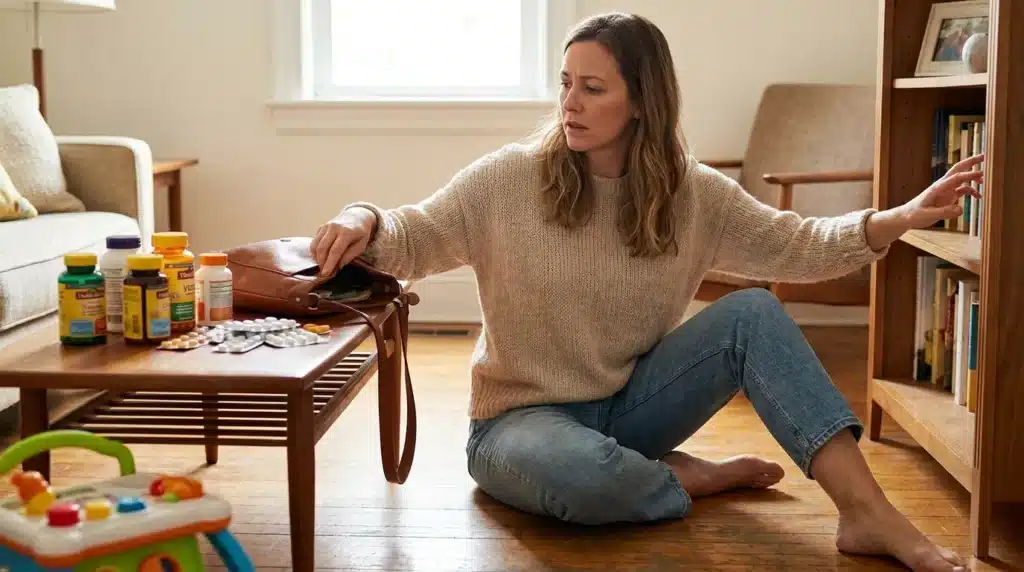
Medication is a top cause of pediatric poisoning. We often remember to lock the medicine cabinet but forget about the pills left in our purses, backpacks, or on the nightstand.
A single pill meant for an adult can be fatal for a small child. Heart medications and adult painkillers pose massive risks.
How to secure them: Check your floors daily for dropped pills. Keep all purses and diaper bags hung up on high hooks. When you vet a babysitter, ensure their bags are stored securely away from kids.
4. Colorful Vitamins and Iron Supplements
Many parents do not realize that gummy vitamins and iron supplements look and taste exactly like candy to a young child.
Children love to mimic adults. If they see you taking a vitamin, they will want to play house and swallow a handful of them too, which can lead to severe iron toxicity.
How to secure them: Never call vitamins “candy” to get a child to take them. Treat them with the same level of security as prescription drugs and lock them away in a medication safety home guide approved locker.
5. Alcohol-Based Mouthwash on Bathroom Counters
Many daily hygiene products are actually toxic household products parents often overlook. We frequently leave mouthwash sitting right on the vanity counter.
To a curious toddler, a bottle of bright red mouthwash looks like a delicious fruit drink. Mouthwash often contains high levels of alcohol, which can cause severe illness in a child’s small system.
How to secure them: Move all hygiene products, including mouthwash and perfumes, into a locked cabinet. Never assume that a child-resistant cap is 100% safe, as kids are incredibly patient when trying to open them.
6. Rubbing Alcohol and Hydrogen Peroxide
These common first-aid items are highly toxic if swallowed. Even a small amount of rubbing alcohol can lead to severe alcohol poisoning, blindness, or critical metabolic issues in toddlers.
Because they are often stored under bathroom sinks or on open shelves, they are incredibly easy for crawling babies to reach.
How to secure them: Keep these items locked up high. If you must store first aid supplies within reach, ensure they are inside a container with a heavy-duty latch that toddlers cannot easily bypass.
7. Small Lithium Button Batteries
Another major hazard that stays hidden in our living rooms is the button battery. These are the small, silver, coin-shaped batteries found in remote controls, toys, and car keys.
According to the U.S. Consumer Product Safety Commission guidelines, these small cells are among the most dangerous items to keep out of reach of toddlers.
If a child swallows a shiny button battery, it can get stuck in their esophagus and trigger an alkaline chemical reaction. This reaction can burn a fatal hole in the esophagus in as little as two hours.
How to secure them: Check every device in your home. If the battery compartment does not have a screw to keep it shut, tape it down securely or move the device to a high shelf.
8. Beautiful but Poisonous Indoor Plants
Many of us love keeping indoor plants to make our homes feel fresh. However, some very common plants are actually poisonous to humans and pets.
Plants like Lilies, Philodendrons, and Pothos are beautiful but can cause swelling of the throat and mouth if a child chews on a leaf.
How to secure them: Keep these plants on high plant stands or hanging baskets. Better yet, swap them for non-toxic versions like Spider Plants or Boston Ferns, and always keep a list of your plants handy in case of emergencies.
9. High-Alcohol Hand Sanitizers
Hand sanitizer contains a very high amount of alcohol (often up to 70%). If a child swallows even a small travel-sized bottle, it can lead to dangerous alcohol poisoning.
We often leave these sanitizers in purses, on dining tables, or attached to strollers, making them highly accessible to toddlers.
How to secure them: Always keep travel-sized sanitizers high up and supervised. Teach older children that these are for hands only, not for playing or tasting.
10. Concentrated Essential Oils
Many essential oils like tea tree oil, wintergreen, and eucalyptus are highly toxic if swallowed by a child. They can cause rapid-onset seizures, chemical pneumonia, or severe breathing problems.
Because they are natural, parents often make the mistake of leaving them on nightstands or diffusers within easy reach.
How to secure them: Treat your essential oils exactly like prescription medicines. Store them in a locked box or cabinet, out of sight and out of reach of your little ones.
Understanding the Psychology of a Toddler
To truly master poison prevention, we have to understand why kids do what they do. They are natural-born scientists.
They use their mouths to learn about the world. Texture, taste, and temperature are all critical data points for them.
They do not have a sense of fear yet. Their curiosity is much stronger than their instinct for personal safety.
This is why complete safe storage of cleaning supplies and chemicals is vital. If they can see a bright bottle, they will spend all day trying to reach it.
Out of sight truly means out of mind for a young child. If you remove the visual trigger, you remove the desire to explore that specific hazard.
Why Your Current Childproofing Might Fail
Many families buy a box of plastic outlet covers and cabinet latches and think they are done. This is a common, risky mistake.
Standard plastic latches can wear out over time. They can also break if a strong child pulls on the cabinet door hard enough.
Also, we often forget about the “hidden” items, such as the spare batteries or the hand sanitizers rolling around at the bottom of our bags.
Even natural cleaners can be harmful if swallowed. As safety experts point out, natural does not always mean edible.
Creating a Safety Routine That Works
Safety is not a one-time event; it is a consistent daily habit. You need a system that fits into your busy life without feeling like a chore.
Start by doing a “floor-level walk.” Get down on your hands and knees and crawl through your home.
Look at what is visible from that height. You will be surprised at how many hazardous things look interesting from two feet off the ground.
Check the corners of your bathroom and under the beds. This simple act can help you find small hazards before your child does.
This long-term habit is just as important as practicing modern stranger danger tips or reviewing a home alone safety readiness guide with older siblings.
Having a clear plan drastically reduces panic. When you know exactly where the dangerous items are and that they are locked away, your anxiety starts to fade.
You can finally sit on your couch and watch your child play, knowing you have built a true safe haven for your family.
Mistakes That Can Put Your Toddler at High Risk
Even the most careful parents can make simple mistakes that lead to an emergency. Understanding these pitfalls is the best way to avoid them.
The biggest mistake is relying too much on child-resistant packaging. These caps are designed by manufacturers to be “resistant,” not “proof.”
According to the American Academy of Pediatrics safety standards, toddlers can open these bottles in less than a minute using their teeth or pure strength.
Another common error is transferring chemicals into different containers. Never put bleach or garden chemicals into an old soda bottle or a water bottle.
Even if you label it, a young child cannot read that label. They only see a bottle they recognize as a drink and might swallow it before you can stop them.
The Danger of “Just for a Second” Thinking
We often leave a bottle of cleaner on the table because the phone rings. We think, “I’ll just be gone for a second.”
That second is all it takes for an accident to happen. Most poisonings occur when the product is actually in use, not when it is stored away.
Always take the bottle with you if you have to leave the room. If you are multitasking, ensure you are practicing child pool safety to prevent drowning and other outdoor hazards simultaneously.
Another mistake is forgetting about guest bags. When grandparents or friends visit, they might have medication in their purses or pockets.
They might not be used to having a toddler around. Always give your guests a safe, high place to hang their bags as soon as they walk in the door.
Lastly, many people forget to keep the Poison Control number visible. In a moment of panic, your brain might freeze, and you might struggle to find the number online.
Have the number saved in your phone and posted on your fridge. Just as you keep a preventing senior falls at home safety guide handy, this saves precious minutes in an emergency.
Answers to Common Family Safety Questions
Is it safe to use hand sanitizer around small children?
Hand sanitizer contains a very high amount of alcohol. If a child swallows a small bottle, it can lead to alcohol poisoning. Always keep travel-sized sanitizers high up and supervised.
Are laundry pods really more dangerous than liquid soap?
Yes, laundry pods are much more dangerous because they are highly concentrated and under pressure. They can spray into a child’s eyes or throat if bitten. Always keep them locked away.
Can essential oils be poisonous if swallowed?
Many essential oils like tea tree oil, wintergreen, and eucalyptus are very toxic if swallowed by a child. They can cause seizures. Treat your oils just like you treat prescription medicines.
Should I keep cleaners on top of the refrigerator?
While it is high up, the top of a fridge is often easy to see and can attract a child’s attention. If they learn to climb, they might reach it. It is always better to keep them inside a locked cabinet.
What should I do if my child swallows something toxic?
Do not try to make them vomit unless a doctor tells you to. Immediately call your local Poison Control center. Have the product container with you so you can read the exact ingredients to the medical experts.
Your Journey to a Truly Safe Home Starts Today
You have taken a big step by learning about these hidden risks. Protecting your family from common household poison hazards to hide from kids is about being proactive.
A safe home gives you the freedom to enjoy your time with your children without constant fear. It allows your kids to explore and play in an environment built for their protection.
I want you to take fifteen minutes today to check just one room. Maybe it is the bathroom or the area under your kitchen sink.
Move one dangerous item higher or add one lock to a cabinet. These small actions add up to a massive shield of safety for your loved ones.
You are a great parent for caring this much about your family’s safety. Keep up the good work, stay alert, and continue making your home a place where your children can grow up happy and secure.
Disclaimer: This article is for informational purposes only and does not replace professional medical advice. Always contact your local Poison Control center or emergency services immediately if you suspect a poisoning. The author and website are not responsible for any actions taken based on this content. Follow all manufacturer safety labels on household products.