Why I Almost Learned About Travel Insurance the Hard Way
I still remember standing in a hospital hallway in Lisbon with my phone at two percent battery, trying to explain to a nurse that I had no idea what my insurance actually covered. My husband had slipped on wet cobblestones near Alfama, and his ankle looked wrong.
I had bought a cheap travel insurance plan three days before our flight, and I never once read the fine print. In that hallway, my hands were shaking as I opened the policy PDF on my phone for the very first time.
We found out later that our plan covered the ER visit but not the ambulance ride that got him there. That single gap cost us almost four hundred dollars we never budgeted for. It taught me something simple but important: buying travel insurance and understanding travel insurance are two completely different things.
The Quiet Stress Nobody Talks About
If you have ever booked a trip and just clicked “yes” on the insurance add-on without reading it, you are not alone. Most people do this. But that small shortcut can turn into a very expensive, very scary surprise the moment something actually goes wrong.
Here is what this usually looks like in real life:
- You get sick abroad and find out your “medical coverage” has a low daily cap that barely covers one night in a hospital.
- Your flight gets canceled for a reason your policy quietly excludes, and you are told the loss is “not covered.”
- Your bag gets stolen, and you learn your policy only reimburses items after a lengthy claims process with receipts you never kept.
- You need an emergency evacuation, and you discover this was an optional add-on you skipped to save fifteen dollars.
None of this is your fault. Insurance language is written by lawyers, not by tired travelers trying to book a trip at midnight. But that confusion has a real cost, both financially and emotionally. Feeling safe on a trip is not just about what is in your suitcase. It is about knowing that if something goes wrong, you have a real safety net and not just a piece of paper that looks like one.
That is exactly what we are going to fix in this guide.

What Travel Insurance Actually Covers (And Where the Gaps Hide)
Travel insurance is not one single product. It is a bundle of smaller protections stacked together, and each one has its own rules. Once you understand these pieces separately, the whole thing stops feeling confusing.
Emergency Medical Coverage: The Part Most People Get Wrong
This is usually the biggest reason people buy travel insurance in the first place, especially for international trips. Emergency medical coverage is meant to pay for treatment if you get sick or hurt while traveling.
Here is the part that surprises people: your US health insurance almost never works overseas. Medicare, in particular, generally does not cover care outside the United States. This is why the Centers for Disease Control and Prevention recommends buying dedicated travel health insurance before any international trip, especially if you have any existing health condition.
Pay close attention to your plan’s medical maximum, because many budget plans cap out around $50,000, which sounds like a lot until you learn that a single night in a foreign ICU can cost more than that. Also check whether pre-existing conditions are excluded, because most standard plans will not cover flare-ups of a condition you already had before booking your trip.
If you want a full walkthrough of what to actually do the moment a health emergency happens abroad, our guide on handling a medical emergency abroad breaks it down step by step.
Pro Tip: I used to think “medical coverage” and “emergency evacuation coverage” were the same thing. They are not. My mistake almost cost us thousands when a friend needed a medical flight home from a rural area with no advanced hospital nearby. Now I always check both lines separately before I buy any plan.
Emergency Evacuation: The Coverage Nobody Thinks About Until They Need It
Emergency evacuation coverage pays to transport you to the nearest adequate hospital, or sometimes all the way home, if local medical care cannot treat your condition. This is not the same as a regular ambulance ride down the street.
This type of coverage matters most when you are traveling somewhere remote, like hiking trails, small islands, or countries with limited hospital infrastructure. The US State Department’s travel guidance specifically warns travelers to check evacuation coverage before heading to regions with limited medical facilities, since a single medical evacuation flight can cost well over $100,000 without insurance.
If your travel plans include hiking, remote regions, or physically demanding activities, it is worth reading our hiking safety guide for beginners alongside your policy, since both are really about the same goal: reducing your risk before something happens, not just reacting after. Watching how a real evacuation claim plays out step by step makes this coverage click in a way that reading policy text never does.
Trip Cancellation and Interruption: What Actually Counts as “Covered”
This is the coverage that reimburses your prepaid, non-refundable costs, like flights, hotels, and tours, if your trip gets canceled or cut short. According to data from the US Travel Insurance Association, trip cancellation and interruption protection makes up the vast majority of all travel insurance policies purchased, because it is the one most people actually end up using.
The catch is the phrase “covered reason.” Getting a bad case of nerves is not a covered reason. Neither is simply changing your mind. Covered reasons are usually specific: a documented illness, a death in the family, a natural disaster, or your airline canceling the route entirely.
Read your policy’s list of covered reasons before you book anything, not after. It takes five minutes and can save you hundreds of dollars.
Lost, Stolen, or Delayed Luggage: Why This Coverage Has Limits
Baggage protection sounds simple, but it usually comes with per-item cash limits. Your $1,200 camera might only be reimbursed up to $250 unless you specifically listed it as a high-value item when you bought the policy.
This is also where keeping your important documents separate and secure really matters, both for your safety and for your claim. Our guide on safely storing your cash and passport while traveling covers simple habits that make a lost bag a lot less painful, and also make it much easier to file a claim with proof of what you actually packed.
Quick reality check: most policies require you to report theft to local police within 24 hours and get a written report. No report usually means no payout, no matter how honest your claim is.
Rental Car and Personal Liability Protection
If your trip includes a rental car, do not assume your travel insurance automatically covers it. Many plans treat rental car damage as a separate add-on, and skipping it can leave you responsible for the full repair cost after an accident.
Before you pick up your keys anywhere, our car rental safety checklist is worth five minutes of your time, since it walks through exactly what to photograph and check before you ever leave the rental lot.
The Coverage Gaps That Catch Even Careful Travelers
A few gaps show up again and again in real claims data. According to the National Association of Insurance Commissioners, the most common source of denied claims is travelers assuming something is covered when their specific policy excludes it, especially around pre-existing conditions, extreme sports, and travel to regions under a government advisory.
Common mistakes worth avoiding:
- Buying insurance the same day you leave, which can void coverage for anything already in motion, like a brewing storm.
- Skipping the “cancel for any reason” upgrade, then wishing you had it when plans fall apart for a reason your basic plan does not cover.
- Not saving digital copies of your policy, so you cannot even find your coverage details when you actually need them.
Your safety on a trip is not only about insurance paperwork, though. It also comes down to daily habits, like locking your hotel room properly with our hotel room security guide, staying alert to your surroundings using our international travel security protocol, and protecting your health with simple steps from our guide on avoiding food poisoning while traveling. Insurance is your financial safety net. These daily habits are what keep you from needing that net in the first place.
Understanding your policy before you fly is not about expecting the worst. It is about traveling with a clear head, because you already know exactly what happens if something goes wrong.
Smart Habits That Keep Your Coverage Working For You
Buying the right plan is only half the job. The other half is knowing how to use it so it actually pays out when you need it.
Read the Declarations Page Like a Detective
Most policies come with a short summary page called the declarations page. This one page tells you your actual dollar limits, not the marketing language on the sales website.
Take five minutes and highlight three numbers: your medical maximum, your evacuation maximum, and your cancellation maximum. These three numbers matter more than anything else in the whole document.
Screenshot Everything Before You Need It
I now take a screenshot of my policy number, the 24-hour emergency hotline, and my coverage limits before every trip. I keep it in an offline notes app, not just my email, because email does not always load without signal.
This one small habit has saved me twice, once when my phone was almost dead in a foreign hospital and once when a claims agent asked for my policy number over a shaky phone line.
Time Your Purchase Right
Buying insurance the same day you leave usually means any storm, strike, or event already brewing in the news will not be covered. Most “cancel for any reason” upgrades also require you to buy the policy within a short window after your first trip payment, often 14 to 21 days.
If you already paid a deposit on a flight or hotel, that clock is already running. Set a reminder the same day you book anything.
The Annual Multi-Trip Option Frequent Travelers Swear By
If you travel more than two or three times a year, a single-trip plan for every trip can actually cost you more than one annual plan. Annual multi-trip plans usually cover unlimited trips under a set length, often 30 to 45 days each.
This is a smart move if you are a digital nomad or someone who travels for work often. Our guide on protecting your gear and staying safe in hostels pairs well with this kind of coverage, since frequent travel usually means more moving parts to protect.
Match Your Coverage to Your Actual Trip
A weekend trip to a nearby city does not need the same coverage as a three-week trip through a region with limited hospitals. Adjust your medical and evacuation limits based on where you are actually going, not a generic default number the website suggests.
Call Before You Assume
Many travelers never call their insurer’s assistance line until an emergency is already happening. That is the worst time to learn how the process actually works.
A short call before your trip, just to confirm your policy number and ask one or two questions, can clear up confusion fast. Most agents are used to these calls and would rather answer a simple question now than handle a stressful claim later.
Keep a Small Paper Trail Habit
I got into the habit of taking a quick photo of every receipt the moment I get it, hotel folios, pharmacy receipts, even a taxi slip if something feels off. It takes ten seconds and lives in one folder on my phone.
This single habit turned what used to feel like a scavenger hunt at claim time into something I can finish in twenty minutes. A little organization while you are calm saves a lot of stress while you are stressed.
The Mistakes That Turn a Small Problem Into a Financial Disaster
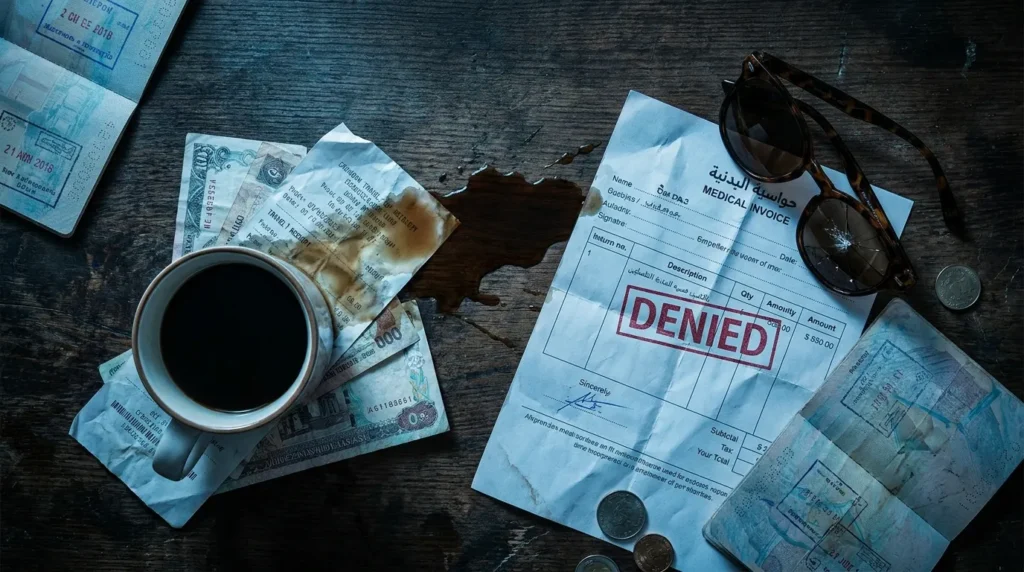
Here is a scenario I hear about constantly. Someone buys a plan, their bag gets stolen at a train station, and they file a claim expecting a smooth payout. Then they get a denial letter, because they never filed a police report within the required window.
This is not rare. It is one of the most common reasons claims get denied, and it has nothing to do with whether the theft actually happened.
The Document Mistake
People assume a claim just needs their word. In reality, most insurers want receipts, photos, or a police report. If you do not keep any proof of what you packed or paid for, your claim can get reduced or denied even when your story is completely true.
The Assumption Mistake
A huge number of travelers assume “travel insurance” is one universal product that covers everything equally. It is not. Skipping the fine print because you are excited to book a trip is understandable, but it is also how people end up paying out of pocket for something they thought was already covered.
The Timing Mistake
Waiting until the week before departure to buy insurance can shrink or completely remove your “cancel for any reason” option, and it can also mean any already-forming weather event or political situation gets excluded as a “known event.”
The Silence Mistake
Some travelers get hurt or sick and try to just push through it, worried that filing a claim will be a hassle or get rejected. This usually makes things worse. Most policies have a 24-hour assistance line for a reason, and calling early often makes the entire claims process smoother later.
There is also a quieter risk that has nothing to do with paperwork. Distracted, stressed travelers dealing with an insurance headache are often easier targets for common scams. Staying alert matters just as much as staying insured, and our guide on avoiding common tourist scams abroad is worth a read before your next trip, especially if you are visiting a busy city for the first time.
The Rental Car Mistake
I have a friend who assumed her credit card’s travel perks automatically covered her rental car overseas. It turned out that specific perk only applied to domestic rentals, and she ended up paying a repair bill out of pocket after a minor parking lot scrape. Always confirm which country your card benefits actually apply to, not just assume they follow you everywhere.
None of these mistakes make someone careless. They just show how confusing this whole system can be when nobody explains it in plain language.
Quick Answers Before You Book Your Next Trip
What does travel insurance not protect against?
Most standard plans will not cover a simple change of mind, undisclosed pre-existing conditions, or losses tied to reckless behavior like extreme sports you did not add coverage for. Always check the excluded reasons list, since it is usually short but very specific.
What items should always be in your travel insurance policy?
At a minimum, look for emergency medical coverage, emergency evacuation, and trip cancellation or interruption protection. If you are heading somewhere remote or doing anything physically demanding, evacuation coverage becomes even more important.
Is travel insurance necessary for international travel?
For international trips, yes, especially since most US health plans and Medicare do not cover care overseas. Even a basic medical-only plan can prevent a five figure bill from a single hospital stay.
What are the most common mistakes when buying travel insurance?
The biggest ones are buying at the last minute, skipping the fine print, and not saving proof of purchases or valuables. All three are easy to fix once you know they matter.
How can I keep my home safe while I’m traveling?
Simple steps like using timed lights, asking a neighbor to collect mail, and securing entry points before you leave can lower your risk significantly. If home security is a bigger concern for you, our international travel security protocol covers pre-trip prep that applies to both your home and your destination.
You Don’t Need to Be an Insurance Expert, Just a Prepared One
Travel insurance was never meant to be confusing on purpose. It just was not written with a tired traveler in mind, and that is where most of the stress comes from.
Once you know what to actually check, the whole thing takes less time than picking a hotel. A few minutes with your declarations page can save you thousands of dollars and a lot of panic later.
I think back to that hospital hallway in Lisbon often. My biggest regret was not the ambulance bill, it was how unprepared I felt in that moment. That feeling is the one thing I want you to avoid.
Read your policy once, screenshot the important numbers, and book your next trip knowing you actually understand what is protecting you. That small habit is worth more than any upgrade you could buy.
Disclaimer: This article is for general informational purposes only and does not constitute financial, medical, or legal advice. Travel insurance policies vary widely by provider, destination, and individual circumstances, so always review your specific policy documents and consult a licensed insurance professional before making coverage decisions. Securely Life is not affiliated with any insurance provider mentioned or referenced in this article.