My Sleepless Night in a 'Perfect' Vacation Rental
I will never forget the feeling of walking into a highly-rated private vacation rental late at night. The photos online looked absolutely beautiful, showing a bright, cozy space that felt just like home. But the reality I faced upon opening the front door was entirely different.
The front door lock was a cheap, flimsy keypad, and the host gave me a highly predictable four-digit code. As I walked into the bedroom, I immediately noticed some exposed electrical cords casually tucked behind the nightstand. Then, I saw a strange, blinking blue light on an alarm clock facing the bed.
My heart started racing instantly. I spent the entire night wide awake, staring at the ceiling, wondering who else had the code to that door. I questioned if that little blue light was actually a hidden camera recording my every move.
That single night completely ruined the start of my vacation. It made me realize that finding a safe place to sleep is about so much more than just reading positive reviews online. We often trade our personal security for the aesthetic appeal of a private home.
The Hidden Anxiety of Booking Accommodations
You work incredibly hard all year to save up for a peaceful getaway. You deserve to relax, unwind, and leave your daily stress behind. But for many of us, the booking process itself triggers a massive wave of anxiety.
We constantly second-guess our choices because the risks are practically invisible until you arrive. You might find yourself asking these exact questions:
- Who slept in this bed right before me, and did the host actually change the sheets?
- How many random strangers still have the active PIN code to this front door?
- Is this neighborhood actually safe to walk around in after the sun goes down?
- What happens if there is a massive fire in the middle of the night?
These fears absolutely destroy your peace of mind. Instead of enjoying a local dinner, you find yourself rushing back to your room just to make sure your belongings are still there. This constant state of worry drains your energy and makes traveling feel like a heavy chore rather than an escape.
This is exactly why you need a reliable solo travel safety guide for beginners before you even start packing your bags. Knowing the actual facts gives you the confidence to enjoy your trip.
Decoding the Security Gap: Commercial Standards vs. Private Homes
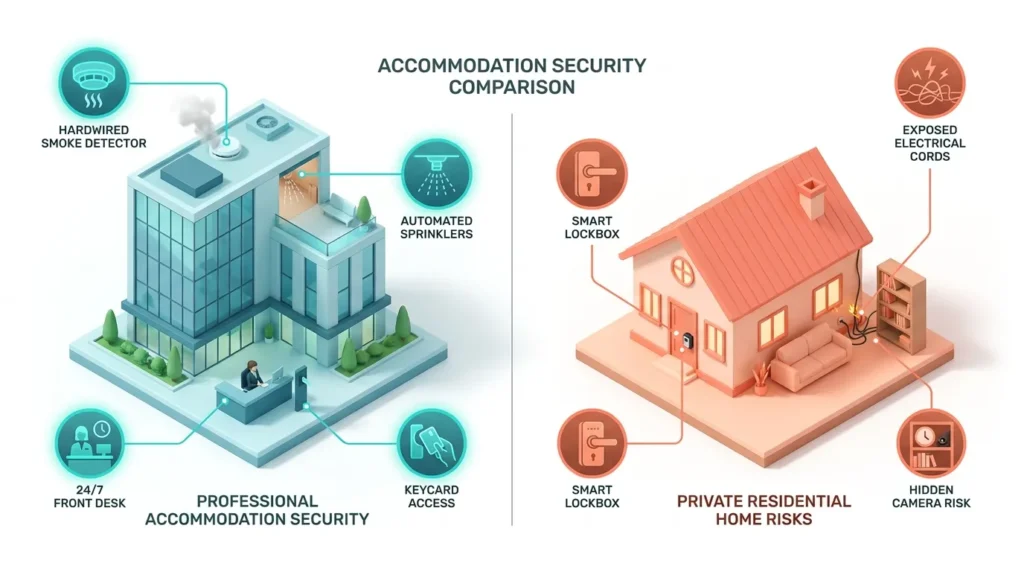
To truly understand the difference between these two options, we have to look at how they are built and managed. A commercial lodging facility is designed from the ground up to protect hundreds of strangers at the same time. A private rental is simply someone’s personal house or apartment.
This fundamental difference changes everything about how you are protected. In a commercial building, security is highly regulated by strict local laws. In a private home, your safety heavily relies on the personal choices of a random property owner.
When you book a private home, you are essentially trusting a stranger’s judgment on what is safe. Sometimes, that judgment is excellent. Other times, it falls dangerously short of basic expectations.
The Reality of Access Control and Door Locks
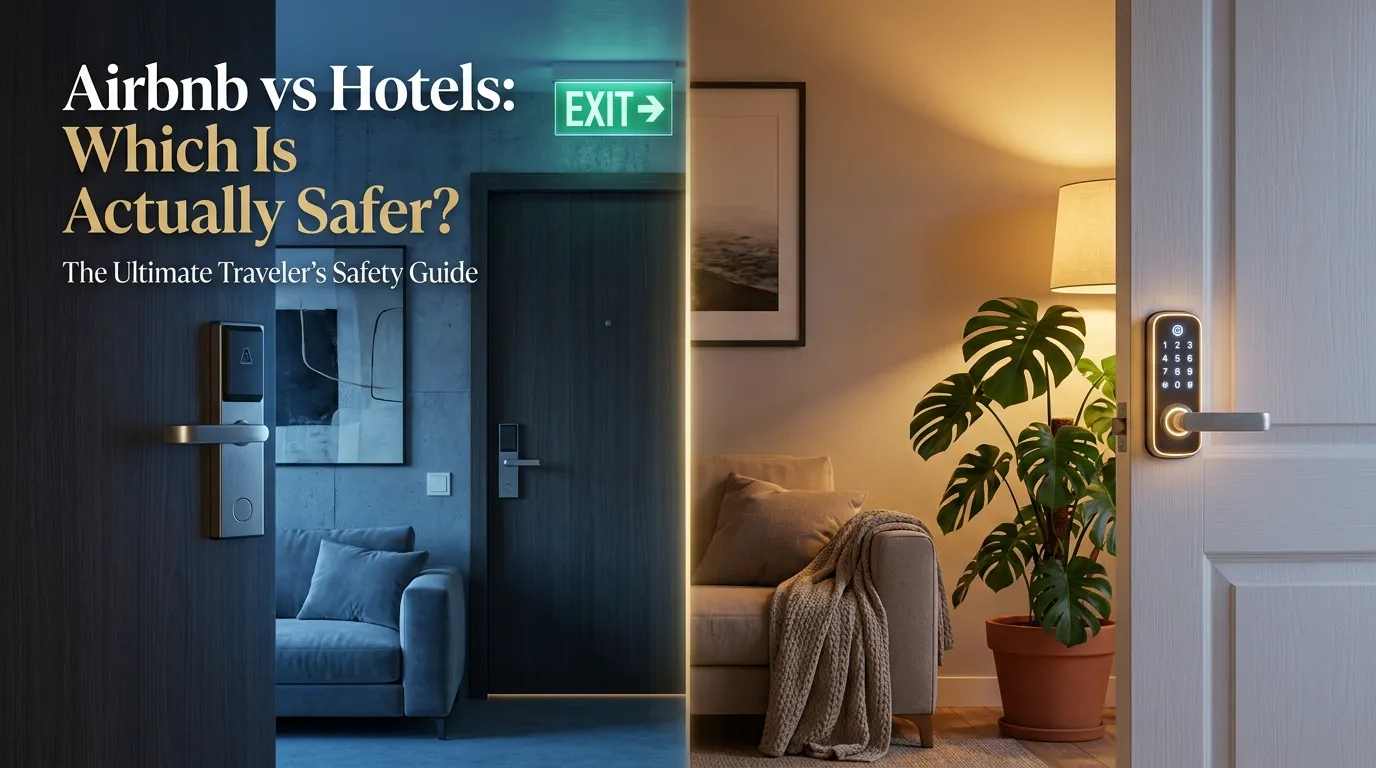
Let us talk about the very first line of defense: the front door. Commercial properties use highly sophisticated electronic locking systems. These systems generate a completely unique, temporary digital key for your specific stay.
Once you check out, that digital key instantly becomes useless. No previous guest can ever use their old card to access your room. Furthermore, if you lose your card, the front desk can deactivate it in a matter of seconds.
Private rentals heavily rely on vacation rental smart door locks or physical lockboxes. While smart locks are convenient, many hosts are quite lazy about changing the master code between guests. This means the family who stayed there last month might still know exactly how to open your door.
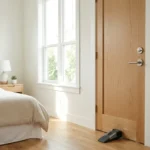
If you are a woman traveling on your own, this single detail can be terrifying. This is why prioritizing solo female traveler safety in an Airbnb requires you to bring your own portable travel security devices. A simple door wedge or a portable travel lock can physically stop someone from entering, even if they have the right code.
Pro Tip: I once assumed a rental’s smart lock was secure, only to realize the host used the property’s street address as the passcode. Ever since that terrifying realization, I never travel anywhere without a heavy-duty portable door lock in my suitcase. Taking five extra seconds to secure the door from the inside gives me the best sleep of my life.
Fire Safety and Structural Hazards
Fire safety is arguably the most ignored aspect of travel security. Commercial lodging buildings are legally required to meet extremely strict regulations. They feature hardwired smoke detectors, heavy fire-retardant doors, and automated sprinkler systems in every single room.
According to guidelines set by the National Fire Protection Association (NFPA), commercial properties must undergo rigorous, unannounced safety inspections regularly. If they fail, they are shut down immediately.
Private rentals operate in a massive gray area. A host might buy a cheap smoke detector, install it improperly, and completely forget to check the batteries for months. There are rarely any sprinkler systems, and the fire escape routes might be blocked by heavy furniture or decorative items.
If a fire breaks out in a commercial building at 2 AM, loud alarms will wake you up, and staff members will guide you out. If a fire starts in a private home, you are entirely on your own. You have to figure out the escape route in the dark while navigating an unfamiliar floor plan.
“Check out this shocking reality about accommodation security before your next trip!”
Invisible Indoor Hazards You Probably Ignore
When we think about safety, we usually think about burglars or criminals. But the most common dangers are often sitting quietly inside the room with you. Commercial properties have highly standardized cleaning and maintenance protocols.
They use standard, fire-resistant furniture and keep pathways clear to comply with disability access laws. Private homes, however, are filled with personal items and quirky decorations that can actually be quite dangerous.
For example, many hosts decorate their living rooms with toxic indoor plants in rentals, like Philodendrons or Pothos. If you are traveling with a curious toddler or a pet, these plants can cause severe allergic reactions or poisoning.
Another massive issue is exposed electrical cords safety. Hosts often run extension cords under rugs or behind cheap furniture to power their aesthetic lamps. The Consumer Product Safety Commission (CPSC) warns that damaged or improperly routed extension cords are a leading cause of residential electrical fires.
Then there is the issue of the kitchen. Shared kitchens in private rentals can be a breeding ground for bacteria if the previous guests were messy. You have to be extremely careful and follow strict food safety protocols in shared kitchens to avoid ruining your trip with a terrible stomach bug.
The Fear of Hidden Surveillance
This is the exact topic that keeps most modern travelers awake at night. The idea of hidden cameras in Airbnb bedrooms or bathrooms is a very real fear. While recording guests in private spaces is strictly against platform policies, it still happens far too often.
Hosts sometimes hide tiny lenses inside smoke detectors, alarm clocks, or even USB wall chargers. Because a private home has so many personal trinkets and decorations, hiding a camera is incredibly easy.
In a commercial setting, the rooms are intentionally minimalist. The walls are mostly bare, the alarm clocks are standard, and there are very few places to hide a recording device without it being obvious. Plus, commercial management companies have zero incentive to spy on you; the legal risk is simply too massive for their corporate structure.
If you choose a private rental, you must take the time to scan the room. Turn off all the lights and use your smartphone flashlight to look for small reflections inside vents and electronics. Knowing how to keep your valuables completely secure also means keeping your privacy secure from prying eyes.
Myth vs. Reality: Breaking Down Accommodation Beliefs
Let us clear up some of the most common misunderstandings travelers have about booking their stays. People often make assumptions based on clever marketing rather than actual facts.
| Common Traveler Belief | The Harsh Reality |
| “A private host cares more about my safety than a large corporation.” | Corporate properties have dedicated risk management budgets and 24/7 security staff. Hosts are often just regular people with regular jobs. |
| “Private neighborhoods are much safer than busy commercial districts.” | Busy areas usually have highly visible police patrols and bright street lighting. Quiet residential streets can be extremely isolated at night. |
| “Smart locks make private homes impenetrable.” | Smart locks can be easily hacked, or the master PIN codes are simply never updated by the lazy property owner. |
| “If I get hurt, the platform will completely take care of me.” | Third-party booking platforms are just middlemen. You often have to fight difficult legal battles to get any real help. |
This table clearly shows why relying on assumptions is a terrible idea. You always need to look at the physical facts of the building you are staying in.
The Human Element: Emergency Support When Things Go Wrong
Security is not just about strong locks and smoke detectors. It is also about what happens the moment things go completely wrong. Medical emergencies, severe weather, or aggressive local criminals can strike at any time.
If you fall violently ill in a commercial lodging facility, you simply pick up the room phone and call the front desk. They have staff on duty 24/7 who know exactly how to contact local emergency services. They can guide paramedics directly to your room number without any delay.
This immediate human support is incredibly reassuring, especially when you are in a foreign country. You do not have to worry about speaking the local language or knowing the exact street address.
In a private rental, you are highly isolated. If you face a severe emergency at 3 AM, your host is probably asleep with their phone on silent. You have to figure out how to call local authorities yourself.
This makes handling sudden medical emergencies abroad significantly more difficult. You must know the exact property address, the local emergency numbers, and how to clearly explain your location to a dispatcher. A university study on hospitality risk management highlights that the presence of on-site staff drastically reduces emergency response times for travelers.
Evaluating the Neighborhood Surroundings
The safety of your room also heavily depends on what is outside your window. Commercial properties are usually strategically located in well-lit, high-traffic areas. They have large, brightly lit parking lots covered by highly visible security cameras.
Criminals naturally avoid these areas because there are simply too many witnesses and too many cameras. You can comfortably walk from your rental car to the main lobby without constantly looking over your shoulder.
Private rentals are often located deep inside residential neighborhoods. While this sounds charming, it can also mean poorly lit streets and zero active security patrols. If you arrive late at night, you might have to walk through a dark alley or a dimly lit garden just to find the hidden lockbox.
If you are renting a vehicle during your trip, this becomes a major concern. Parking your car on a dark, unfamiliar residential street makes it a prime target for break-ins. It is highly recommended to follow a strict car rental safety checklist to make sure your vehicle and your luggage remain untouched overnight.
Ultimately, both options require you to stay highly alert and proactive. You cannot blindly trust a corporate logo, and you certainly cannot blindly trust a friendly online host. True safety comes from your own preparation, your awareness of your surroundings, and the physical tools you bring along for the journey.
Pro-Level Security Hacks for the Anxious Traveler
Once you understand the fundamental differences between a commercial room and a private house, you have to take control of your own protection. You cannot just rely on luck or a friendly host’s smile to keep you out of danger. True peace of mind comes from taking active, physical steps the moment you drop your luggage on the floor.
The very first thing I do in any new room is an immediate physical sweep. I completely ignore the pretty view or the nice furniture until I know the environment is secure. This habit might sound a little intense, but it completely removes that nagging anxiety that ruins vacations.
For example, when staying in a private rental, you must locate the primary fire extinguisher and the main emergency exit path immediately. If the power suddenly goes out in the middle of the night, you will not have time to fumble around in the dark. I always keep a high-powered tactical flashlight right on my nightstand, rather than relying on my quickly draining phone battery.
The Master Key Problem and Portable Barriers
If you choose a private rental, you have to assume that someone else out there has the access code or a spare key. Previous guests, cleaning staff, maintenance workers, or even the host’s friends might know the PIN. This is where you must bring your own physical barrier to secure the front door from the inside.
A high-quality portable travel security device, like a heavy-duty door wedge or an add-on locking mechanism, is non-negotiable. These small tools cost barely twenty dollars, but they physically prevent a door from opening even if someone uses the master key. This simple physical block provides an immense psychological relief when you are trying to sleep in an unfamiliar city.
In a commercial setting, you already have the benefit of heavy, auto-locking doors and a deadbolt. However, you should still use the manual flip latch at the top of the door frame. Do not rely solely on the electronic lock, because staff master keys can sometimes override the deadbolt in an emergency.
Sweeping for Unwanted Eyes
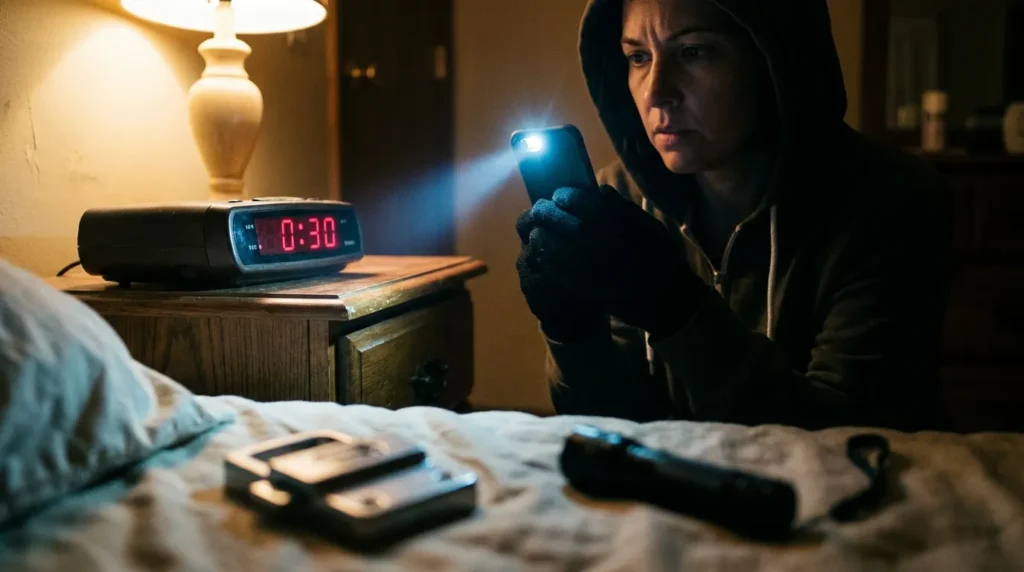
The fear of being watched is completely valid in today’s world of microscopic technology. Finding hidden cameras in Airbnb rooms requires a systematic approach, not just a casual glance. You need to turn off every single light in the room and close all the blinds until it is pitch black.
Turn on your smartphone’s flashlight and slowly scan the room, looking specifically for small, purple-ish or white reflections. Pay extremely close attention to the bathroom, the bedroom alarm clocks, smoke detectors, and any wall chargers facing the bed. The Cybersecurity and Infrastructure Security Agency (CISA) actually advises travelers to unplug any unnecessary electronics in their room just to be safe.
If I see a digital alarm clock that looks suspiciously bulky or is angled strangely toward the shower, I simply toss a towel over it. You do not need to dismantle the device; just physically block its view. This is a massively important part of an international travel security protocol, especially if you are traveling to countries with lax privacy laws.
Managing the Information You Share
Another massive security flaw is how much information you accidentally give away during your trip. Never announce your exact room number loudly in a busy lobby, and never tell a private host your exact daily itinerary. There is absolutely no reason a stranger needs to know that your room will be completely empty from noon to six.
If you are a woman traveling on your own, I highly suggest leaving the TV on at a low volume when you leave the room. You can also leave the “Do Not Disturb” sign on the door handle permanently. These tiny psychological tricks create the illusion that someone is always inside the room, making it a highly unappealing target for thieves.
Before you even book, try to heavily research the local neighborhood using satellite map views. If you want to know how to look less like an obvious tourist, start by choosing accommodations in areas where locals actually live and work. Blending into a well-lit, busy neighborhood is far safer than renting a massive, isolated villa in the middle of nowhere.
The Dangerous Traps Most Travelers Fall Into
Many people completely ignore basic security rules because they are too caught up in the excitement of a new destination. This false sense of security leads to some incredibly dangerous decisions that can ruin a trip in seconds. The biggest trap is trusting the aesthetic of a property over its actual physical safety features.
We see a beautifully decorated living room on social media and automatically assume the property is safe and well-managed. We completely ignore the fact that the front door looks flimsy or that the neighborhood appears highly deserted at night.
Leaving Valuables in Plain Sight
A shocking number of travelers simply toss their passports, cash, and expensive laptops onto the bed before heading out to dinner. In a commercial room, housekeeping staff usually have daily access to your space. In a private rental, a host might enter to “fix a leak” or drop off extra towels while you are gone.
Never assume your belongings are safe just because the main door is locked. Always use the provided room safe, but even then, hide your most valuable items deep inside dirty laundry or hidden compartments in your luggage. Most casual thieves want to grab things quickly; they will not spend ten minutes digging through your worn socks.
Ignoring Intuition and Red Flags
This is a massive mistake that often leads to terrible situations. If you walk into a private rental and the lock looks tampered with, or the host acts strangely aggressive, you must listen to your gut. Many travelers stay in terrible situations simply because they do not want to be “rude” or deal with the hassle of finding a new room.
Your personal safety is completely non-negotiable. If a situation feels wrong, grab your bags and walk straight back out the door. Taking a financial hit on a canceled booking is far better than spending a night terrified for your life.
Skipping Emergency Pre-Planning
Most people never bother to locate the nearest medical clinic or police station until they are actually bleeding or robbed. By that time, panic sets in, the local internet connection might drop, and you have no idea who to call.
Before you even step on the airplane, you should have offline maps downloaded and key emergency addresses saved in your phone. If you want to avoid common tourist scams abroad, you need to know exactly where to run if someone starts acting aggressively toward you on the street. Having a plan drastically reduces the panic when a real crisis happens.
Honest Answers to Your Biggest Booking Concerns
Is it actually safer to stay in an Airbnb or a hotel?
Generally speaking, a commercial lodging facility is physically safer because it must strictly follow local building codes, fire safety laws, and have 24/7 on-site staff. Private rentals are essentially strangers’ homes, meaning the safety standards vary wildly and are rarely inspected by authorities.
Can Airbnb hosts spy on guests using hidden cameras?
Yes, it is physically possible, and unfortunately, it happens more often than people realize despite platform rules. Because private homes are filled with personal decorations, it is incredibly easy to hide tiny lenses inside smoke detectors, plants, or electronics. Always sweep your room with a flashlight and unplug any suspicious devices.
What is the most common thing stolen from Airbnbs and hotels?
Cash, small electronics like tablets, and prescription medications are the most frequently stolen items because they are incredibly easy to hide in a pocket. Casual thieves rarely steal large suitcases; they look for high-value items carelessly left on tables or nightstands.
Are Airbnbs safe for solo female travelers?
They can be, but they require much more proactive caution than a standard commercial room. Solo female travelers should avoid isolated private rentals, always bring a heavy-duty portable door lock, and never share their specific travel itinerary with their host.
Do hotels have better fire safety standards than Airbnbs?
Absolutely. Commercial properties are legally required to have hardwired smoke detectors, heavy fire doors, and active sprinkler systems. Private rentals rarely have active sprinklers, and you are entirely trusting the host to replace the batteries in their cheap smoke alarms.
Taking Back Control of Your Travel Experience
At the end of the day, your safety does not belong to a corporate brand or a friendly online host. It completely belongs to you. Booking a beautiful room is wonderful, but making sure you can sleep soundly in that room is the ultimate goal.
Stop relying on aesthetic photos and start looking for physical safety features. Pack your portable door locks, learn how to check for hidden surveillance, and always trust your gut feeling if a place seems wrong. When you take control of your environment, you completely eliminate the anxiety that holds you back.
I used to spend my first night in a new city completely terrified of every weird noise in the hallway. Now, I spend five minutes securing my door, hiding my passport, and sweeping the room, and I sleep like a baby. Take these practical steps on your very next trip, and you will finally experience the total relaxation you actually paid for.
Disclaimer: The information provided in this article is for educational and informational purposes only. It does not constitute legal, medical, or professional security advice. Travel risks vary greatly depending on location, local laws, and individual circumstances. Always conduct your own research, consult local authorities, and exercise personal judgment when making travel and accommodation decisions. Securely Life is not responsible for any incidents, losses, or damages that may occur during your travels.