A few years ago, I woke up with a pounding headache and felt incredibly dizzy. I almost ignored it, thinking I just had a bad flu or didn’t sleep well. It wasn’t until a technician found a small leak in my old furnace that I realized how close my family came to a real disaster. That scary morning changed the way I look at home safety forever, and it’s why I’m sharing this guide with you.
You lock the doors. You check the windows. You feel safe.
But locks and cameras can’t stop what you can’t see. Gas leak and carbon monoxide safety is a different kind of challenge, because both threats can build up in your home without a single obvious sign.
This is the part that scares people most. A break-in gives you a sound to react to. A fire gives you smoke to smell. Carbon monoxide and a hidden gas leak often give you nothing — until your body starts shutting down or a spark finds the leak. That’s why building a solid personal safety guide for your home has to include threats you can’t see, not just the ones you can.
According to the CDC’s carbon monoxide safety data, this gas kills hundreds of Americans every single year and sends thousands more to emergency rooms. Most of these cases happen in ordinary homes, not industrial sites.
Why So Many People Miss the Warning Signs
The early symptoms of carbon monoxide exposure feel like the flu. That’s the trap.
People often blame:
- A headache on stress or dehydration
- Nausea on last night’s dinner
- Dizziness on being tired
Because the symptoms match a hundred harmless explanations, most people don’t connect the dots until the exposure gets severe. By then, confusion and loss of coordination can make it hard to even reach the door.
This is also true for natural gas leaks. Many people assume they’ll always smell the “rotten egg” odor added to gas lines. But wind direction, a stuffy room, or a weak sense of smell (common with colds or allergies) can hide that warning completely.
A gas leak or CO leak doesn’t announce itself loudly. It waits for you to notice too late.
The Emotional Weight of an Invisible Threat
There’s a specific kind of anxiety that comes from not being able to trust your own senses.
You start second-guessing every headache. You wonder if that “off” smell in the kitchen is nothing, or something. Parents especially carry this weight, checking on sleeping kids at 2 a.m. just to make sure breathing sounds normal.
This constant low-level worry chips away at your peace of mind. Real safety isn’t just about surviving a dangerous event — it’s about feeling confident enough in your home that you can actually relax. Practicing situational awareness as part of your daily safety routine helps close that gap between fear and control. Once you understand exactly what to watch for, the anxiety turns into readiness instead of dread.
The good news is that this danger, unlike many others, is highly preventable. You don’t need special training or expensive equipment. You need a clear plan, a few pieces of low-cost technology, and the discipline to act the moment something feels wrong.
Your 6-Point Gas Leak and CO Safety Protocol
Gas leak and carbon monoxide safety comes down to a handful of core habits you can build into your normal routine. None of them are complicated. All of them work.
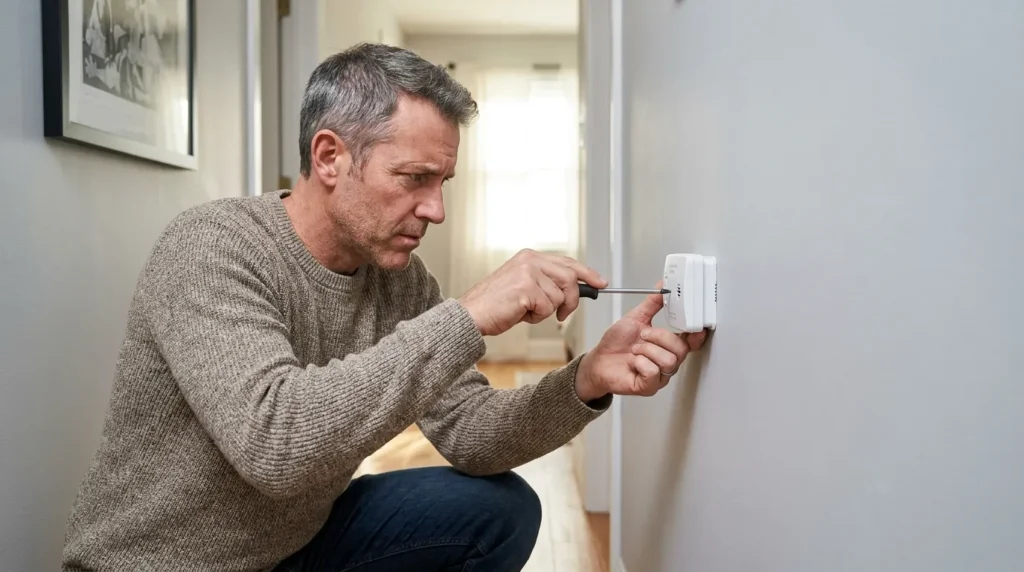
Step 1: Install and Position Your Detectors Correctly
I used to make the mistake of putting my CO detector right next to a window because I thought it needed “fresh air.” A professional told me that was actually a bad move because the outside air can thin out the gas and stop the alarm from going off. Now, I keep mine near the bedroom door at head height, where it can actually do its job and wake me up if something is wrong.
A carbon monoxide detector is your first and most important line of defense. Without one, you are relying entirely on your body to notice symptoms — and as we covered above, that’s not reliable.
Look for a detector certified by UL (Underwriters Laboratories). Install one on every level of your home, and always place one near sleeping areas since CO exposure during sleep is the most dangerous scenario.
Test your detectors monthly. Replace the batteries twice a year, and replace the entire unit every five to seven years, since the sensors degrade over time.
This single habit fits naturally into a broader safety mindset. Many of the five essential habits for a safer daily life revolve around this same idea: small, consistent actions prevent large, irreversible problems.
Step 2: Learn the Physical and Sensory Warning Signs
Your senses can still help you, even without smelling carbon monoxide directly. Train yourself to notice these physical clues around the house:
- Soot or dark staining near appliances, vents, or fireplaces
- A pilot light that frequently blows out or burns yellow instead of blue
- Condensation appearing suddenly on windows near gas appliances
- A hissing sound near gas lines or connections
Clinical research on carbon monoxide exposure, published through the National Institutes of Health, notes that headache is reported in the vast majority of poisoning cases, making it one of the earliest and most reliable red flags. If more than one person in the house develops similar symptoms at the same time, especially ones that improve after leaving the building, treat that as a serious warning sign, not a coincidence.
Never run a car, generator, or grill inside a garage, even with the door open. This is one of the most common causes of accidental poisoning, and it happens far more often than people expect.
Step 3: Build an Emergency Response Habit Before You Need One
Knowing what to do matters just as much as knowing the warning signs. When your detector alarms, or you suspect a leak:
- Get everyone outside into fresh air immediately.
- Call emergency services from outside the home, never from inside.
- Do not go back in until professionals confirm it’s safe.
Practicing this plan with your family, the same way you’d practice a fire drill, removes hesitation in the moment. Pairing this habit with personal safety apps that can alert your loved ones instantly adds another layer of protection, especially for people who live alone or have family members who react slowly to emergencies.
I found that watching a quick walkthrough of an emergency plan helps these steps stick in your brain much better. Take a minute to watch this short video so you know exactly how to lead your family out safely if your alarm ever sounds.
Step 4: Schedule a Professional Inspection Every Year
DIY checks matter, but they can’t replace a trained eye. A licensed technician can spot early wear, corrosion, or venting problems long before they turn into a leak.
Have a professional inspect:
- Furnaces and boilers
- Water heaters and gas stoves
- Chimneys and flue systems
- Fireplace connections
Think of this the same way you’d think of a car inspection. Everything can look fine on the surface while a critical part quietly fails underneath. One yearly visit, usually before winter, closes that blind spot completely.
Step 5: Fix Your Ventilation and Appliance Habits
Even a perfect detector can’t help if your daily habits create risk. Small routine mistakes are behind a large share of accidental CO exposure cases.
Avoid these common mistakes:
- Using a gas oven or stove to heat a room
- Running a generator in a garage, basement, or near an open window
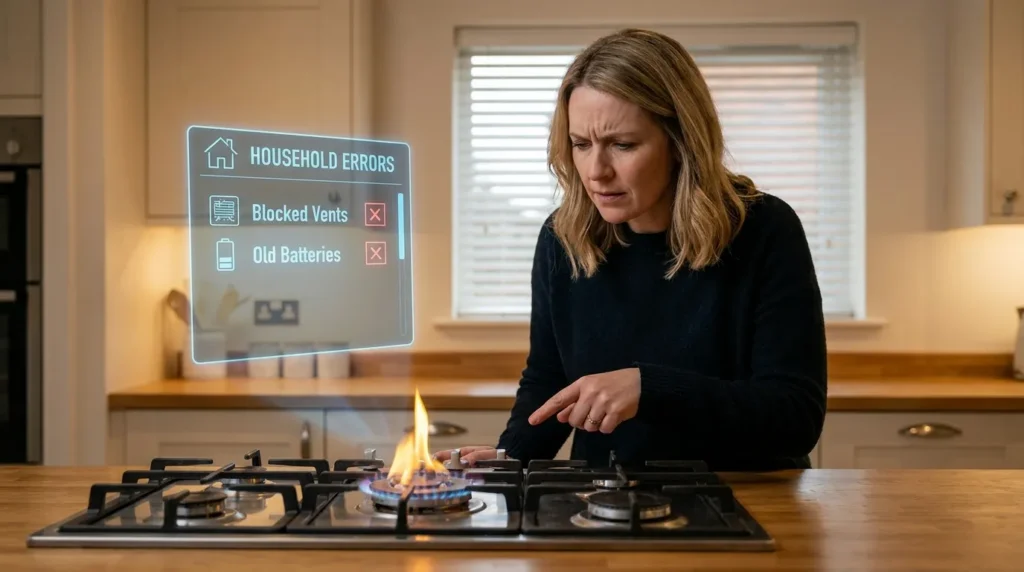
- Blocking vents, chimneys, or flue pipes with furniture or storage boxes
- Warming up a car inside an attached garage, even briefly
None of these habits feel dangerous in the moment. That’s exactly the problem. Carbon monoxide builds up quietly, and by the time you notice something’s wrong, the air around you may already be unsafe.
Step 6: Know Your Gas Shutoff Valve Before You Need It
Most people never think about their gas shutoff valve until an emergency forces the question. Every home with a gas line has one, usually near the meter outside.
Find it today, not during a crisis. Take a photo of it on your phone and make sure every adult in the house knows how to turn it off.
Here’s something most people don’t know: a leak underground doesn’t always produce a strong smell. Soil can absorb the odorant, so the “rotten egg” smell you’re trained to expect may be faint or missing entirely, even during a real leak. The PHMSA pipeline leak recognition guidelines recommend watching for other signs too, like dead patches of grass, bubbling water, or a hissing sound near the ground.
If you ever suspect a leak, don’t flip light switches, use your phone inside, or start your car. Even a small spark can ignite gas in the air. Walk outside first, then call for help once you’re safely away from the house.
Safety isn’t about living in fear of an invisible gas. It’s about removing the guesswork so you can act fast and calm when it matters. With the right detectors in place, a yearly inspection habit, and a clear emergency plan your whole household understands, this “silent killer” stops being something you worry about and becomes something you’re simply prepared for.
Pro-Level Moves That Take Your Protection Further
Once your detectors are up and your habits are solid, you can go a step further. These are the details that separate an average safety setup from a genuinely strong one.
Map Your Home’s “Danger Zones” Room by Room
Not every room carries the same risk. Bedrooms, basements, and attached garages deserve extra attention because they sit closest to fuel-burning appliances or vehicle exhaust.
Walk through your home once and note where every gas appliance, chimney, and vent actually sits. This takes fifteen minutes and gives you a mental map you can rely on during an emergency, when clear thinking gets harder.
Trusting that internal alarm bell also matters here. If a room feels stuffy, smells faintly odd, or just seems “off,” don’t talk yourself out of it. Learning how to trust your intuition for personal safety applies just as much to gas safety as it does to walking alone at night. Your gut often notices small changes before your conscious mind catches up.
Talk to Every Person in the House, Not Just the Adults
A safety plan only works if everyone in the home understands it, including kids and teenagers.
Explain, in simple terms, what the detector sound means and what to do when they hear it. Practice it once like a fire drill. Kids who know the plan react faster and with less panic than kids who are hearing the alarm for the first time during a real emergency.
This same principle shows up across other safety topics too. The same logic behind teaching personal safety tips for teenagers — clear rules, practiced in advance — works perfectly here. A calm, rehearsed response beats a panicked one every time.
Watch Out for Scam “Inspectors” and Fake Safety Products
Here’s something people rarely think about: home safety fears can attract scammers. After news stories about CO poisoning, some door-to-door “inspectors” show up offering rushed, overpriced services or fake detector installs.
Always verify a technician’s license before letting them into your home. Ask for ID, check reviews, and never feel pressured to decide on the spot.
This overlaps with a skill you probably already use elsewhere. The same instincts covered in avoiding social engineering scams — slowing down, verifying identity, resisting urgency — protect you here too. A legitimate professional will never rush you into a decision.
Keep the Habit Alive Long-Term
The biggest risk after the first month isn’t ignorance. It’s forgetting.
Set a recurring reminder tied to something you already do twice a year, like changing your clocks. Test alarms, check batteries, and glance over your appliance vents at the same time. Consistency, not intensity, is what actually keeps a household safe over the years.
If you’re someone who works odd hours or commutes at night, this consistency matters even more, since your sleep and home-check schedule may differ from a typical household. The same discipline behind night shift worker safety and commuting tips — building safety into your routine instead of relying on memory — applies directly to home gas safety too.
Mistakes That Quietly Undo All Your Preparation
Even careful people fall into these traps. Here are the mistakes we see most often, and why each one matters more than it looks.
- Placing detectors near windows or doors. Fresh air can dilute the gas right at the sensor, delaying the alarm when you need it fastest.
- Ignoring “low battery” chirps for weeks. A detector with a dying battery is barely better than no detector at all.
- Assuming you’ll always smell a gas leak. Odor fade, underground leaks, or a weak sense of smell can all hide the warning completely.
- Using light switches, phones, or doorbells during a suspected leak. A single spark near leaking gas can be enough to ignite it.
- Not knowing where your gas shutoff valve is. In an emergency, searching for it costs you time you don’t have.
- Assuming a smoke detector also catches CO. These are different sensors built for different gases. One does not replace the other.
- Skipping the yearly inspection because “nothing feels wrong.” Corrosion, venting problems, and worn gas lines develop slowly and silently, exactly the way both these hazards do.
Each of these mistakes feels small in the moment. But good gas leak and carbon monoxide safety habits exist precisely because small oversights add up fast, often without a single obvious warning before it’s too late.
Teaching this to your whole family matters too. Reviewing basic family natural gas safety guidelines from the American Gas Association together, even once, makes the plan stick for everyone, not just the person who read this article.
The families most at risk aren’t the ones who never bought a detector. They’re the ones who bought one and stopped paying attention to it.
Your Top Questions, Answered
Why is carbon monoxide called the “silent killer”?
It has no color, smell, or taste, so your body can’t warn you the way it does with smoke or a gas odor. Symptoms often mimic the flu, which delays recognition even further.
At what percentage does carbon monoxide become immediately deadly?
Very high concentrations can cause loss of consciousness and death within minutes, which is why even a working detector should never be ignored once it sounds. Lower, prolonged exposure is dangerous too, just slower.
What’s the difference between a carbon monoxide leak and a natural gas leak?
Carbon monoxide has no smell at all, while natural gas is intentionally scented to smell like rotten eggs. They also require different detectors, since one sensor doesn’t reliably catch both gases.
How can I tell if there’s a gas leak in my house?
Watch for a sulfur-like smell, a hissing sound near gas lines, dead houseplants near an appliance, or unexplained headaches that ease once you leave the house. Any of these deserves immediate attention.
Where is the best place to install a carbon monoxide detector at home?
Place one on every level of your home and close to sleeping areas, since nighttime exposure is the most dangerous scenario. Avoid corners, windows, and direct airflow from vents.
Is it safe to use my phone if I smell gas in my house?
No. Turn off your phone or leave it behind, and avoid light switches, doorbells, and anything electrical. Walk outside first, then call for help once you’re a safe distance away.
Small Habits, Real Protection Starting Today
You don’t need to be an engineer or a safety expert to protect your home from this. You just need the right tools, a short weekly glance, and a plan your whole household understands.
Every step in this guide takes minutes, not hours. Testing a detector, walking through your home’s danger zones, or talking to your kids about the alarm sound, none of it demands special skill.
What it does demand is consistency. Pick one action from this guide and do it today, whether that’s testing your detector or booking that yearly inspection you’ve been putting off.
Your home should be the one place where you don’t have to think twice about breathing easy. Strong gas leak and carbon monoxide safety habits don’t require perfection, just consistency, and that’s something anyone can build starting today.
Taking these small steps finally ended that “what if” feeling that used to keep me up at night. Don’t wait until tomorrow to check your alarms or find that gas valve—do it now while it’s on your mind. Once you have this plan in place, you can finally relax and know your family is truly protected.
Safety Disclaimer: This article is for general informational and educational purposes only and does not replace professional inspection, medical advice, or emergency services. If you suspect a gas leak or carbon monoxide exposure, evacuate immediately and contact your local emergency services or a licensed professional. Securely Life is not liable for actions taken based on this content.