I remember walking home after a late work shift and feeling a cold shiver when I realized someone was following me too closely. My heart was pounding, and I felt completely lost because I didn’t have a real safety plan. That scary night changed my life, and it’s the reason I am so passionate about helping other women feel strong and ready when they are out on the street.
Walking through a crowded city or a quiet street as a woman often feels like a high-stakes balancing act. You want to enjoy your independence and get to your job, but a small voice in your head keeps telling you to watch your back.
Every shadow can feel like a threat when you are by yourself after dark. This constant state of alert is the daily reality for millions of solo female commuters navigating big cities today.
The physical stress of clutching your keys between your fingers or looking over your shoulder is deeply draining. It ruins your focus and makes your daily trip to work feel like a battle for survival instead of a simple routine.
According to global safety statistics found on Wikipedia, personal security is a top concern for urban residents. You deserve to move through your world without feeling like a target or living in constant fear.
Learning public transport safety tips for commuters is the first step in taking back your power. It helps you feel more in control of your daily life and your surroundings.
Why Most Safety Advice Simply Fails Women
When you search for help, you often find a sea of bad information that makes you feel even more worried. This misinformation can put you in more danger because it lacks practical depth and real-world testing.
- Useless Advice: Generic guides often tell you to “just stay home,” which is impossible for a professional woman with a career and goals.
- Scare Tactics: Media outlets use fear-based reporting that increases your anxiety without giving you any real tools or steps to follow.
- Complex Tools: Many experts suggest expensive gear that is hard to carry or too complex to use during a high-stress emergency.
- Outdated Methods: Old rules ignore the power of modern technology and how smartphones have changed the way we stay safe.
- Victim Blaming: Standard tips often focus on what you wear rather than how to spot and avoid a predator’s tactics.
How Constant Vigilance Erodes Your Mental Peace
Living in a state of high alert does more than just keep you safe from physical harm. It slowly eats away at your mental health and your ability to enjoy your life in the city.
- Loss of Freedom: You might stop going to social events or taking jobs that require you to travel after the sun goes down.
- Mental Exhaustion: Constantly scanning for threats leads to “decision fatigue” and lowers your overall productivity at work.
- Social Isolation: The fear of the “outside world” can make you stay indoors, affecting your connections with friends and family.
- Reduced Self-Esteem: Feeling vulnerable makes you feel less powerful in other areas of your life, like your career or your personal relationships.
The National Safety Council suggests that being prepared is the best way to lower your risks. You need a strategy that is grounded in logic and daily practice.
By mastering a situational awareness personal safety guide, you can start to walk with a new sense of authority and strength.
Mastering the Blueprint for Personal Security in the City
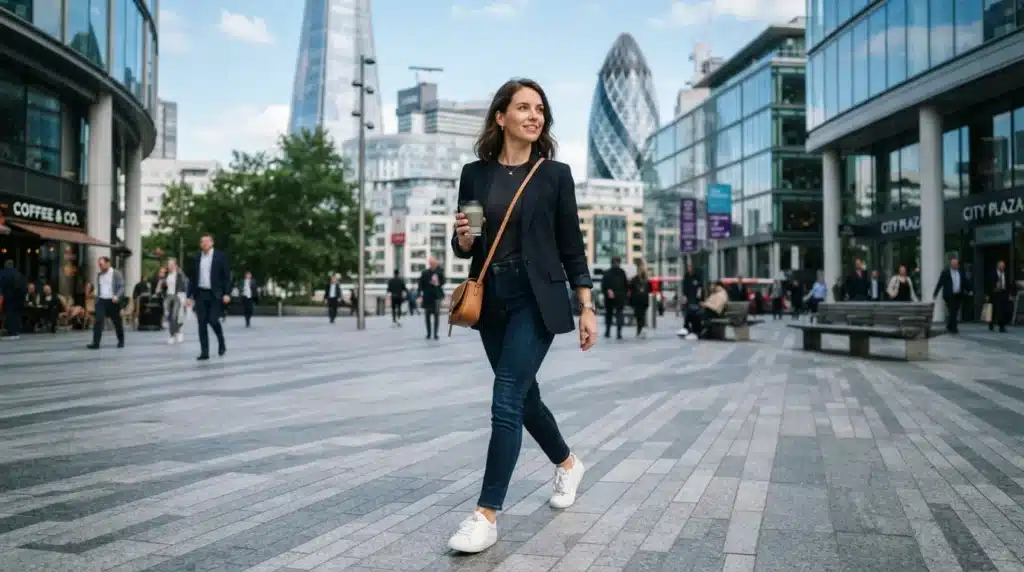
Staying safe is not about being lucky; it is about having a system that reduces your risk. Most predators look for easy targets who are not paying attention to the world around them.
If you change how you move and plan, you can effectively remove yourself from a predator’s list. Here is your step-by-step guide to building an urban safety shield that works.
Step 1: Strategic Route Planning and Navigation
Safety starts long before you step out of your door or your office building. A well-planned route is your first line of defense against unexpected trouble on the street.
Use your phone to map out your journey and look for “safe havens” along the way. These are places like 24-hour shops, hotel lobbies, or brightly lit cafes where you can go if you feel uneasy.
Avoid taking shortcuts through dark alleys or empty parks just to save a few minutes. Visibility is your best friend when you are walking alone, so stick to main roads with active businesses.
Tell a trusted friend or family member about your route and your expected arrival time. This simple “safety check” ensures that someone is watching over you from a distance while you travel.
This method is based on the “OODA Loop” (Observe, Orient, Decide, Act). By planning ahead, you have already finished the “Decide” phase before any stress happens.
Step 2: Turning Your Smartphone into a Digital Bodyguard
Your smartphone is the most powerful safety tool you own if you use it correctly. You need to move beyond just using it for maps and turn it into a personal security device.
Download and set up at least two personal safety apps for women that can track your location in real-time. These apps can send an SOS signal to your emergency contacts if you need help.
I suggest exploring the best personal safety apps for loved ones to find a tool that fits your daily life. Many of these apps have a “timer” feature that triggers an alarm if you don’t check in.
Keep your phone in an easy-to-reach pocket, not buried at the bottom of a heavy bag. You should be able to grab it and trigger an emergency alert in less than two seconds without looking.
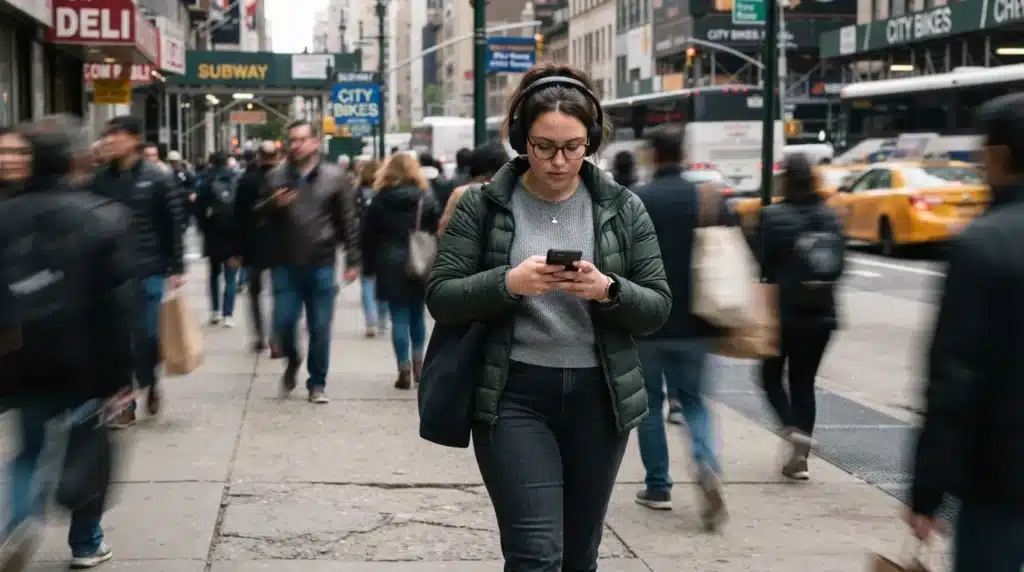
Be careful about how you look at your phone while walking on the street. Staring at a screen makes you look distracted and unaware. If you need to check a map, stop and put your back against a wall first.
A fully charged phone is a lifeline in a big city. Always carry a small power bank so you never have to deal with a dead battery during a night commute.
Step 3: Mastering Body Language and Non-Verbal Defense
I used to think wearing huge headphones would help me ignore strangers, but I realized I was just making myself an easy target by blocking out the sounds around me. Now, I always keep my ears open and walk with a fast, steady pace like I have somewhere very important to be. It is amazing how much more respect you get from people when you look like you are in total control of your path.
Predators often watch how a person moves before they decide to act. They look for signs of weakness or confusion to find what they call a “soft target.”
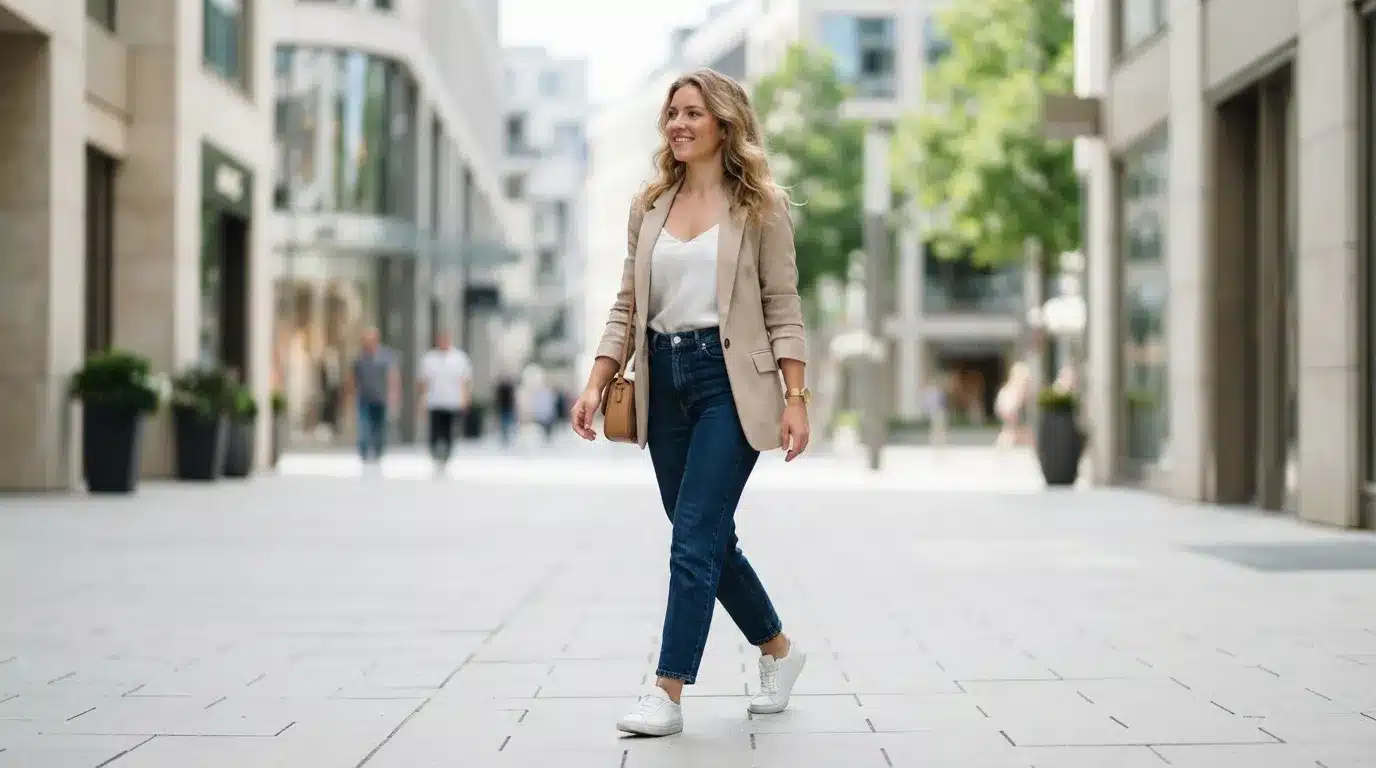
You can use science-backed body language to show that you are a “hard target.” Walk with a steady, purposeful pace and keep your shoulders back and your chin up.
This posture signals to the world that you are alert and capable of defending yourself. Avoid looking down at your feet or walking in a hunched position like you are trying to hide.
Make brief eye contact with people you pass on the sidewalk. A quick, one-second look tells a person, “I see you, and I can identify you if I need to.”
This small act takes away the element of surprise that most attackers rely on. When they know they have been noticed, they are much more likely to move on to someone else.
If someone approaches you and makes you feel scared, use your “command voice.” A loud, firm “STAY BACK” can stop a situation before it ever turns into a physical fight.
Walk with a steady, purposeful pace and keep your shoulders back and your chin up. This posture signals to the world that you are alert and capable of defending yourself. Making brief eye contact for just one second tells a person, ‘I see you, and I can identify you,’ taking away the element of surprise that most attackers rely on.
Want to see the “Strong vs. Weak” posture in action? Watch this short video to learn the exact body language secrets that make you look like a hard target and keep predators away!
Step 4: Staying Safe in Transit and Public Spaces
Public transit centers and bus stops are common areas for unwanted attention. You must maintain a high level of awareness even when you are tired after a long day of work.
Always stand near a wall or a pillar while waiting for your train or bus. This limits the directions you need to watch and prevents anyone from sneaking up behind you in the dark.
Once you are on the vehicle, choose a seat near the driver or the emergency intercom. If the car is empty, do not sit in the back where you can be easily trapped by a stranger.
Keep your bags close to your body at all times. If you have a backpack, wear it on your front in crowded areas to prevent anyone from grabbing your belongings.
If someone is staring at you or following you, do not be afraid to be “rude.” Stand up and move to another seat or another car at the next stop immediately.
According to safety guides from RAINN, your safety is more important than being polite. Trust your instincts every time you feel that something is wrong.
Step 5: Choosing Effective Personal Protection Tools
Many women want to carry something for physical protection, but they aren’t sure what is best. You need tools that are legal, easy to use, and effective in a split second.
A personal safety alarm is one of the best choices for any big city. These small devices make a deafening noise that draws immediate attention to your location from everyone nearby.
Bad people hate noise and light because it ruins their privacy. A very bright LED flashlight can also be used to temporarily blind someone so you can run away to safety.
Before you buy any spray or device, you must look at a legal self-defense tools personal protection guide. Laws change depending on your city, and you must stay within the law.
Practice using your tools at home until the movements are natural for you. You should be able to find your alarm or your light in your bag without looking down.
In a moment of high stress, your hands might shake. This is why muscle memory is so important for your personal security tools to actually work when you need them.
Step 6: Rideshare Safety Habits for Solo Women
Ridesharing apps have changed how we move around the city, but they require a specific set of safety rules. Always verify the car and the driver before you ever open the car door.
Check the license plate number and the make of the car against what the app shows. Look at the driver’s face to ensure it matches the profile picture on your smartphone screen.
Never get into a car and ask, “Are you here for [My Name]?” Instead, ask the driver, “Who are you here for?” This forces them to provide the correct name and details first.
Once you are inside, sit in the back seat on the passenger side. This gives you a clear view of the driver and puts more physical space between you and them.
Check the door locks and the windows to make sure you can get out if you need to. Use the “Share My Trip” feature so a friend can watch your progress in real-time until you arrive.
If the driver takes a strange turn or makes you feel unsafe, ask them to stop in a busy public place. Your personal safety is worth much more than the cost of a ride.
Step 7: Securing the Final Mile to Your Front Door
The walk from the station to your door is often called the “final mile.” This is the time when most people let their guard down because they are so close to their home.
Have your house keys ready in your hand before you reach your street. Fumbling with a heavy bag at your front door makes you vulnerable for several dangerous seconds in the dark.
Be careful of “tailgating” if you live in an apartment building. This is when a stranger follows you through the secure main door after you have unlocked it for yourself.
It is perfectly okay to close the door and let them buzz themselves in from the outside. You are not being mean; you are being secure and smart. A good neighbor will understand your caution.
Once you enter your home, lock the door and set the deadbolt immediately. Don’t wait until you have put your bags down or taken off your shoes to secure the entrance.
Step 8: Protecting Your Sanctuary: Interior Home Safety
Your home should be a safe place where you can finally relax and feel at peace. If you live alone, you should think about upgrading your locks to something more modern and smart.
Many people are now using smart door locks for apartment security to stay safe while living alone. These locks send an alert to your phone every time the door is opened or closed.
If you cannot change the locks because of a landlord, you can use a portable door jammer. These are cheap tools that stop a door from being pushed open from the outside.
Beyond the door, look at your windows. Even if you live on a high floor, an unlocked window is a major security gap that needs to be fixed immediately for your peace of mind.
Most break-ins happen through simple oversights like leaving a door unlocked for “just a minute.” Creating a “lock-up routine” every single night will help you sleep much better.
Your home security is the final link in your personal safety chain. When you know your house is secure, you can wake up feeling ready for your next urban adventure.
Advanced Urban Survival Strategies for Solo Women
Moving beyond the basics requires a deeper understanding of how cities and predators function. You need a set of skills that work even when you are exhausted or distracted after a long day.
Digital Safety Hygiene for the Modern Commuter
Your physical safety is now deeply connected to your digital life. Predators often use social media to track the habits and daily locations of their targets without you even knowing it.
You must manage your digital footprint by avoiding “live posting” of your current locations. Wait until you are safely home before posting about your day or your favorite coffee spot.
Check the privacy settings on your fitness and running apps as well. If you enjoy staying active after work, read our guide on how to stay safe running cycling night for more tech tips.
According to the FTC, keeping your digital life private is a major step in preventing real-world tracking. Never share your exact home or office address in public social media posts.
Social Engineering for Personal Protection
Attackers often use social tricks to get close to their victims on the street. They might ask for the time or directions to lower your natural defenses and get within reach of your bag.
You must learn to set firm boundaries immediately and without feeling guilty. It is okay to say, “I can’t help you,” and keep walking without stopping or looking back at the person.
If you deal with uncomfortable situations at your workplace, learning stop workplace harassment safety tips can protect your career and your mental peace. Knowing how to speak up is a key life skill.
Predators rely on your desire to be “polite” to put you in a dangerous spot. By breaking this social rule when you feel uneasy, you become a much harder target to control or manipulate.
Common Safety Mistakes You Must Avoid at All Costs
Even the most careful people can fall into bad habits that put them at risk. Recognizing these safety pitfalls early can prevent a dangerous situation from happening to you or your loved ones.
- Ignoring Your Inner Voice: Your gut feeling is your oldest survival tool; never ignore a bad feeling just because you don’t want to seem rude or “paranoid.”
- Predictable Routines: If you take the exact same train car and street every single day, you become easy to track. Change your route slightly to stay unpredictable.
- Too Much Trust in Gear: Carrying pepper spray doesn’t make you invincible. If you don’t practice with your tools, they can give you a false sense of security in a crisis.
- Distraction by Screens: Walking with noise-canceling headphones and your eyes on your phone is a huge mistake. This makes you blind and deaf to the world around you.
- Bad Home Security Prep: Forgetting to lock your door as soon as you enter or leaving home safety hazards to avoid in your path can lead to serious trouble.
If you find yourself in a difficult spot, knowing how to safely handle street harassment guide can save you. Avoiding these mistakes is just as important as knowing what to do right.
Frequently Asked Questions About Solo City Safety
Is it safe for a woman to walk alone in a big city at night?
Yes, it can be safe if you follow specific safety protocols. Stick to well-lit areas with foot traffic, keep your phone put away, and stay aware of who is moving around you at all times.
What are the best self defense tools for women commuters?
A personal safety alarm and a high-lumen LED flashlight are the best options for most women. They are legal in most places and focus on drawing attention rather than getting into a fight.
How can I make my apartment more secure if I live alone?
Start by installing smart door locks for apartment security. Also, ensure your windows are locked and your entrance has motion-sensor lighting to deter intruders before they get close.
What are common indoor safety hazards for solo dwellers?
Loose electrical cords, slippery rugs, and even certain toxic plants are often overlooked. As a solo dweller, a fall at home is a major risk, so keep your walking paths clear and safe.
Which personal safety app is most reliable for city commuters?
Apps like Noonlight or Life360 are very popular for urban city life. They allow you to share your live location with friends and feature a “panic button” for a quick emergency response.
Taking Charge of Your Urban Journey Today
You have the power to change your experience of the city from one of fear to one of confidence and control. Every safety tip you have learned today is a brick in your personal wall of protection.
Personal safety is about being smart, being prepared, and trusting yourself above all else. You don’t need to be an expert in martial arts to be a hard target on the city streets.
Start by making one small change today, like checking your phone privacy settings or buying a personal alarm. These small steps lead to a Securely Life that you can truly enjoy and feel proud of.
I believe in your ability to stay safe and strong. Start practicing your situational awareness tomorrow morning, and you will see how much more powerful you feel with every single step you take.
You have every right to enjoy your city and feel powerful while you do it. Start using these steps tomorrow, and you will feel that heavy weight of worry start to lift off your shoulders. You are stronger than you think, and being prepared is your best way to prove it every day!
Safety & Legal Disclaimer: The information provided on Securely Life is for educational and informational purposes only. Personal safety depends on various factors, including local laws, individual circumstances, and environmental conditions. We are not professional legal or law enforcement advisors. Always check your local regulations before carrying any self-defense tools. Use of the tips and tools mentioned in this article is at your own risk. Securely Life is not responsible for any accidents, injuries, or legal issues that may arise from following these suggestions. Always prioritize calling emergency services (such as 911) in immediate danger.