Have you ever walked down a street and suddenly felt a chill down your spine? You might have felt like someone was watching you.
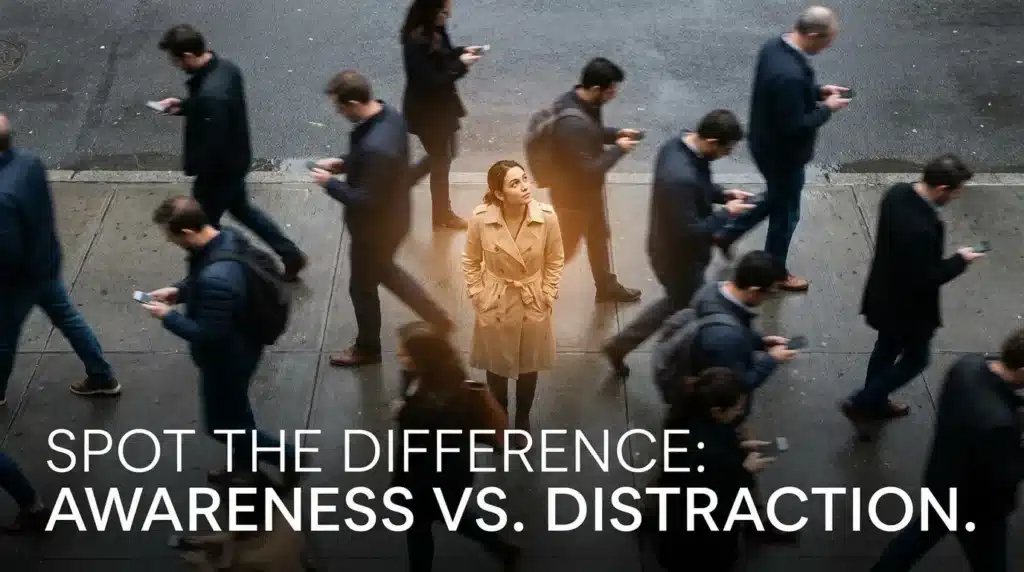
Many of us spend our days staring at phone screens while walking. We wear noise-canceling headphones in busy parks. We are physically present, but our minds are miles away.
This mental “fog” is exactly what makes us vulnerable. When we don’t pay attention to our surroundings, we miss the small warning signs that appear before a problem starts.
Most people think that staying safe means knowing how to fight. While self-defense is good, avoiding a fight is always better. The reality is that most accidents and crimes can be avoided if we see them coming.
However, we are never taught how to actually “see.” We go through life hoping nothing bad happens. But hope is not a plan. According to research on mental wellness published by Forbes, this lack of preparation creates a deep sense of subconscious worry and chronic anxiety that stays in the back of our minds.
Why Most People Fail to Stay Aware
Many people try to be safe, but they often focus on the wrong things. Here is why the average person struggles to spot threats:
- Information Overload: People read too many complex military manuals that are meant for soldiers, not for regular daily life.
- Phone Dependency: We rely on GPS and apps so much that we forget to look at the actual street signs or people around us.
- The “It Won’t Happen to Me” Bias: This is a mental trap where we assume bad things only happen to others or in movies.
- Fear of Being Rude: Many people see something suspicious but don’t act because they don’t want to seem “mean” or “judgmental.”
- Lack of Simple Systems: Without a clear way to process what we see, our brains just ignore potential red flags.
How a Lack of Awareness Hurts Your Mental Peace
Living without awareness doesn’t just make you physically unsafe; it drains your mental energy. Here is how it affects your daily life:
- Constant Anxiety: You might feel a general sense of fear when entering a new city or a crowded mall.
- Lower Self-Confidence: When you don’t trust your ability to spot danger, you feel small and helpless in public spaces.
- Hyper-Vigilance Fatigue: Some people try to be “too aware” and end up exhausted because they think everything is a threat.
- Parental Stress: If you have kids, the fear of not seeing a nearby danger can be overwhelming. To mitigate this, understanding a comprehensive child online safety guide alongside physical awareness is crucial for modern parents.
- Loss of Control: You feel like your safety depends on luck rather than on your own choices and actions.
The truth is, you don’t need to be a secret agent to be safe. You just need a better way to look at the world. Think of situational awareness as a mental muscle. If you don’t use it, it gets weak. But if you practice just a little bit every day, it becomes a natural part of who you are.
Being aware is not about being scared; it is about being prepared. When you know what to look for, you can move through the world with a sense of calm and power. You stop reacting to life and start navigating it.
Simple Steps to Build a Safety Mindset
To fix this, we need a clear plan. You don’t need fancy tools or expensive classes. You just need to change how you process information. Let’s look at the first few steps to building your situational awareness from scratch.
Step 1: Learn the Color Code of Awareness
One of the best ways to understand your mental state is by using a simple color system. This was originally created for pilots and police, but it works perfectly for everyone. It helps you label how much attention you are paying at any given time.
- Code White: This is when you are completely unaware. You are looking at your phone, daydreaming, or focused entirely on your internal thoughts. People in Code White are the easiest targets. You should only be in Code White when you are safe at home behind locked doors.
- Code Yellow: This is where you should spend most of your time. In Code Yellow, you are relaxed but alert. You are scanning the room, noticing who is around you, and looking for exits. You aren’t looking for a fight; you are just observing.
- Code Orange: This is when you notice something specific that doesn’t look right. Maybe a car has been following you for two turns, or a person is acting strangely in the subway. You are now focused on a potential threat and making an evaluation plan.
- Code Red: This is when the threat is real. You are now taking action. This could mean running away, calling for help, or defending yourself. Because you were in Code Yellow and Orange first, you aren’t shocked. You are ready.
Step 2: The Art of Environment Scanning
Scanning isn’t just looking around randomly. It is a specific skill. When you enter a new place, like a restaurant or a grocery store, do a quick “sweep.”
Start from the left and move your eyes to the right. Don’t just look at faces; look at hands and waistlines. Why? Because hands carry things that can hurt you. Hands also show intent. If someone is hiding their hands or acting nervous, take note.
Identify the Exits: Always know where the back door is. If a fire starts or someone becomes violent at the front entrance, you need a way out. Most people only remember the door they walked through. Be the person who knows the alternative routes.
Find the “Anomalies”: An anomaly is something that doesn’t fit the pattern of the environment. For example, someone wearing a heavy winter coat in the middle of summer is an anomaly. You don’t have to be afraid of them, but you should keep them in your Code Orange radar.
Step 3: Trust Your Gut Feelings
We have a built-in survival system that is millions of years old. Often, our subconscious picks up on tiny details that our conscious mind misses. You might feel “weird” about a person without knowing why.
Maybe their body language is slightly off, or their tone of voice doesn’t match their words. In the past, humans who ignored these feelings didn’t survive. Today, we often ignore them because we don’t want to be “judgmental” or “polite.”
Important Note: Stop apologizing for your instincts. If a situation feels wrong, leave. If an elevator feels off because of someone inside, wait for the next one. It is much better to feel a little bit silly for 5 minutes than to be in danger because you tried to be polite. Your brain is a supercomputer designed to keep you alive. Let it do its job.
Step 4: Manage Your Digital Distractions
Your smartphone is the biggest enemy of your safety. When you are in public, your phone should be in your pocket, not in your hand. If you must use it, stop in a safe spot, put your back against a wall, and then check it.
This way, no one can approach you from behind while you are distracted. The same goes for headphones. If you are walking alone, keep one earbud out or turn the volume down low. You need your ears to hear footsteps, car tires, or voices. Just like implementing a social media privacy settings guide protects your digital footprint, hiding your phone in public protects your physical space.
Think of it like this: Every second you spend looking at a screen in public is a second you are blind to your world. By staying off your phone for just ten minutes while walking, you increase your safety by a huge margin.
Step 5: Practice the “What If” Game
A great way to train your brain is to play a simple game while you wait for the bus or sit in a cafe. Ask yourself, “What would I do if…?”
- “What would I do if that person tried to grab my bag right now?”
- “Where would I run if a fire started in that kitchen?”
- “What is the closest heavy object I could use to protect myself?”
This isn’t about being paranoid. It is about pre-loading your brain with a plan. When a real emergency happens, most people freeze because their brain is trying to figure out what to do. If you have already played the game, your brain will recognize the situation and act much faster.
The Science of “Thin-Slicing”
Psychologists call this “thin-slicing.” It is the ability of our minds to find patterns in events based only on narrow windows of experience. This analytical approach mirrors how experts handle financial or physical risk assessments, a concept frequently detailed in behavioral studies on Investopedia.
When you practice situational awareness, you are teaching your brain to thin-slice better. You start to see the difference between a person who is just angry and a person who is about to become violent. This is a skill anyone can learn. It doesn’t require a high fitness level or special gear. It only requires your attention.
Master the Art of Reading Body Language and Group Dynamics
Building a strong safety mindset takes time. Once you know the basics, you can move on to more advanced skills. One of the most important secrets is learning to read body language. Most people think they need to look for a weapon. In reality, you should look for pre-attack indicators.
These are small movements people make before they act. For example, a person might look around to see if anyone is watching them. This is called “scanning for witnesses.” They might also “target glance,” which means looking at your bag or your pocket repeatedly.
Another advanced tip is to watch for grooming gestures. When someone is nervous, they might touch their face or adjust their clothes a lot. They might also pat their waistband to make sure a hidden item is still there. By noticing these small signs early, you gain several seconds to walk away safely.
To keep these skills sharp, you should turn them into a daily game. When you are sitting at a coffee shop, try to guess who is in a hurry and who is relaxed. You can also practice the ten-foot rule. When someone gets within ten feet of you, look them in the eyes and give a polite nod. This tells them that you are aware of them, making you a much harder target.
Finding Your Safe Zone in Any Crowd
In any public space, there are “hard” and “soft” spots. A hard spot is a place where you have a clear view and a way out. A soft spot is a place where you are trapped or hidden from view. To stay safe long-term, you must always look for the hard spots.
When you go to a movie theater or a restaurant, choose a seat that gives you a view of the main entrance. You don’t want your back to the door. If something happens, you will be the first one to know.
Also, pay attention to the “flow” of the crowd. If everyone is moving in one direction and one person is moving against it, that is a red flag. Expert safety professionals also use the three-second rule. Every few minutes, take three seconds to look around your entire environment. Check your 360-degree space.
Over time, your brain will start doing these checks automatically. Just as you protect your home environment by learning how to prevent identity theft public wi fi networks, mastering environmental flow keeps you secure on the move.
Big Mistakes That Can Put You in Danger
Even people who care about safety make mistakes. One of the most common errors is paranoia. There is a huge difference between being aware and being scared of everything. Paranoia makes you tired and clouds your judgment. Awareness makes you calm and clear-headed.
Another big mistake is the normalcy bias. This is when your brain refuses to believe something bad is happening. If you hear a loud pop, your brain might say, “Oh, that was just a firework.” Don’t try to find a normal excuse for a strange event. Treat it as a threat until you know it is safe.
Many people also fall into the “stereotype trap.” They only look for people who look like “bad guys” from TV. Real threats can come from anyone, regardless of how they are dressed. You should judge people based on their actions and behaviors, not their appearance.
A third mistake is relying too much on safety tools like pepper spray or a whistle. A tool is only useful if you have time to use it. If you are distracted by your phone, your tools are useless. Your mind is your primary weapon.
Lastly, many people stop being aware when they are close to home. This is when many accidents and crimes happen because we let our guard down. Stay alert until you are actually inside your locked home. Security requires continuity; just as you would protect home wifi network setups from external vulnerabilities, keep your physical guard up until you cross your threshold.

Frequently Asked Questions About Personal Safety
How can I be aware without looking like I’m nervous?
You don’t need to turn your head quickly or look panicked. Just use your peripheral vision and move your eyes, not your whole head. A relaxed, upright posture shows confidence and awareness without looking scared.
Is it possible to teach these skills to my children?
Yes, you can make it a game for them. Ask them to find the exit signs in a grocery store. This teaches them to look at their surroundings from a young age without making them feel afraid of the world.
How do I handle a situation if I think someone is following me?
First, change your pace or cross the street to see if they follow. If they do, go to a bright, crowded place like a store or a gas station. Never go home or into a dark alley where you might get trapped.
What is the best way to scan a large crowd?
Look for people who stand out from the baseline. If everyone is looking at a stage, but one person is looking at the crowd, that is an outlier you should keep an eye on.
Does situational awareness really work at night?
Yes, but you have to use your other senses more. Listen for footsteps or the sound of car doors. Stay in well-lit areas and avoid choke points like narrow walkways where you can’t see what is around the corner.
Taking Charge of Your Own Security
Safety is a journey, not a destination. It is a set of small choices you make every single day. When you start paying attention to the world around you, you gain a sense of freedom. You will find that you walk with more spirit and confidence.
This change in your body language alone can prevent many problems from even starting. Bad actors prefer targets who look weak and distracted. Start today by putting your phone away when you walk from your car to a store.
It only takes a little bit of practice to move from Code White to Code Yellow. Once you make that switch, you will see the world in a whole new way. Stay alert, stay calm, and stay safe. Your future self will thank you for the habits you build today.
Disclaimer: The information provided in this article is for educational purposes only. It does not substitute for professional security training or legal advice. Always prioritize your safety and contact local authorities in case of an emergency.