A cold chill hit the back of my neck the moment I stepped onto that empty subway platform late last year. Even though everything looked normal, my body was telling me to run back up the stairs immediately. I spent years doubting these feelings, but that specific night proved to me that my inner alarm is the most valuable tool I own for staying safe.
Have you ever walked into a room and felt like something was just wrong? Maybe your heart started racing for no clear reason. Or perhaps you felt a strange chill while talking to a stranger.
Most people brush these feelings aside. We tell ourselves we are being silly or overreacting. We try to be polite even when our brain is screaming at us to leave.
This is where the real danger begins. In our modern world, we are taught to rely on logic alone. We forget that our bodies have a built-in alarm system.
When you ignore that tiny voice, you leave yourself open to risks. This happens in parking lots, on night-shift commuting, on solo trips, and even inside your own house.
Why We Struggle to Listen to Your Inner Alarm
Many people find it hard to trust their gut because of how we are raised. Here are some reasons why we often fail to act on our instincts:
- The Politeness Trap: We are scared of looking rude or “crazy” to other people.
- Information Overload: We see so much news and data that we get confused about what is a real threat.
- Lack of Training: Most of us never learned about the psychology of gut feeling and danger.
- Second-Guessing: We wait for “proof” before we move, but by then, it might be too late.
- Mental Fatigue: Being tired makes it hard to separate real warnings from general stress.
How Ignoring Your Instincts Hurts Your Life
Living without trusting yourself creates a lot of hidden pain. It is not just about physical safety; it affects your whole mind. Here are the consequences:
- Constant Anxiety: When you don’t trust your gut, you feel uneasy all the time because you don’t feel in control.
- Loss of Confidence: Every time you ignore a warning and something goes wrong, you stop trusting your own judgment.
- Decision Paralysis: You become afraid to make simple choices about your home or travel plans.
- Vulnerability: Predators and scammers look for people who ignore their own personal boundaries and feelings.
The Biology of Your “Second Brain”
To understand how to trust your intuition for personal safety, you must know what is happening inside you. Your gut is often called your “second brain.”
“Your subconscious mind can process millions of bits of data every second, spotting patterns that your conscious mind misses.”
It is packed with millions of neurons. These neurons talk to your main brain through the vagus nerve.
Your subconscious mind can process millions of bits of data every second. Your conscious mind can only handle a few.
When you feel a “gut instinct,” your subconscious has spotted a pattern. It has noticed something that doesn’t fit the “safe” pattern.

Steps to Mastering Your Intuition
Step 1: Learn to Tell the Difference Between Fear and Intuition
One thing that helped me a lot was stopping the habit of arguing with my own gut. I realized that when I’m just anxious, my brain creates a long list of scary stories, but when my intuition talks, it is just one quiet, firm command to move. Now, I follow that quiet voice without asking questions, and it has made my daily life feel so much lighter and more secure.
One of the biggest hurdles is knowing if you are just scared or if your gut is talking. Signs of intuition vs fear can be subtle, but they are there.
Fear is often loud and messy. It usually focuses on the future or the past. Fear feels like a “what if” thought. It makes your mind spin in circles with worry.
Intuition is different. It is usually calm, cold, and very fast. It doesn’t argue with you. It simply says, “Don’t go in there” or “Move away now.”
To practice this, start small. Think about a time you felt uneasy but stayed. Contrast that with a time you felt a sudden “knowing.”
Intuition feels like a fact. Fear feels like a dark cloud. When you start noticing the “cold” feeling of intuition, you can act much faster.
Still not sure how to tell the difference? Watch this short animated summary of the world-famous book “The Gift of Fear” to see exactly how your intuition spots danger before you even know it!
Step 2: Build Strong Situational Awareness at Home
Situational awareness at home means being mindful of your environment. We often think our homes are 100% safe. This makes us lower our guard. However, many dangers are hidden right in front of us.
Take a walk through your house today. Look for common indoor trip hazards and electrical safety issues.
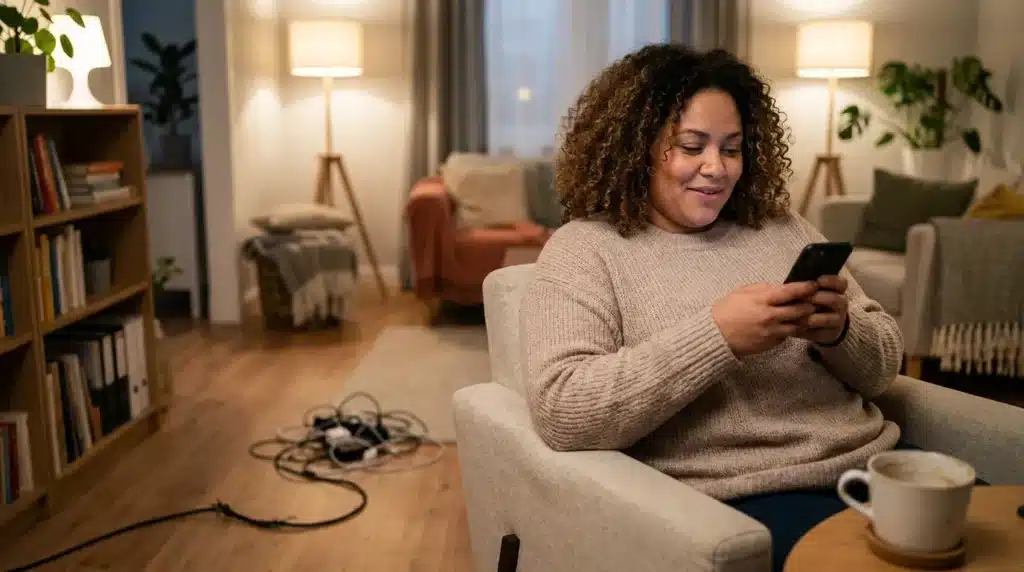
Are there loose rugs near the stairs? Are your power strips overloaded with too many plugs? These are “slow-motion” dangers that your gut might be trying to tell you about.
You might feel a slight sense of worry when you walk past a messy pile of wires. Don’t ignore that! That is your intuition telling you that a fire hazard exists.
Also, check your kitchen and living room for hidden household safety hazards. This includes things like toxic indoor plants (like lilies or oleander) if you have pets or kids.
It also includes checking for expired fire extinguishers or broken window locks. When your home is organized and safe, your “gut” has less noise to filter through.
Step 3: Use Technology to Support Your Natural Instincts
You don’t have to do everything alone. Modern tools can act as “extra eyes” for your intuition. This creates smart home security for peace of mind.
Sometimes, you might feel uneasy while you are away from home. Instead of worrying, you can check your phone.
Using a pet camera for home monitoring is a great way to stay connected. It’s not just for watching your dog.
It allows you to see the “vibe” of your home. If you feel a sudden urge to check on things, these devices give you instant answers.
Smart door locks and sensors also help. They remove the “did I lock the door?” stress. When you remove small worries, your intuition becomes much sharper for big dangers.
Technology should not replace your gut. It should verify it. If your gut says something is wrong, use your security app to check. If everything looks fine, you can relax.
Step 4: Recognize Environmental Red Flags
Your gut is very good at spotting things that are “out of place.” This is why how to trust your intuition for personal safety is so important during travel or using public transport.
Imagine walking down a street in a new city. You see a group of people, and you suddenly want to cross the road.
Do not stop to ask why. Just cross the road. Your brain might have spotted a predatory look or hidden weapon without you knowing it.
In your own neighborhood, pay attention to “environmental triggers.” This could be a car parked with the engine running for too long. It could be a door that is usually closed but is now slightly open.
These are not just random events. They are data points for your subconscious.
Step 5: Master the Art of Subconscious Pattern Recognition
To get better at this, you need to “feed” your brain good data. Read about safety, but don’t obsess over the news. Learn what real danger looks like. Study how people behave when they are trying to hide something.
When you learn the “patterns” of safety, your gut becomes more accurate. You begin to notice psychology of gut feeling and danger in real-time.
For example, if you are at a party and someone keeps moving into your personal space, your gut will react. This is a “boundary test.”
Aggressive people often test small boundaries before they try something bigger. If your gut says “get away,” listen to it immediately. You don’t need a “good” reason to leave.
Step 6: Practice “Safe” Testing of Your Instincts
You can grow your intuition like a muscle. Start by making small guesses in your daily life. Guess who is calling before you look at your phone. Try to feel which line at the grocery store will move the fastest.
If you feel like you should take a different route home, do it. As you see your small instincts come true, your trust in yourself will grow. For more, see our personal protection guide.
When it comes to personal safety, there is no such thing as being “too careful.” It is much better to be wrong and safe than to be “polite” and in danger.
Your gut feeling is the result of thousands of years of evolution. It is there to keep you alive. Respect it, listen to it, and let it guide you toward a more secure life.
By combining your natural instincts with tools like smart home security, you create a shield around yourself and your family.
Safety is not just a set of locks on a door. It is a state of mind. It is the harmony between your brain, your body, and your environment.
Strengthening Your Daily Awareness Skills
Building a strong sense of safety is like training a muscle. You have already learned the basics of how to trust your intuition for personal safety, but now we must go deeper.
The goal is to reach a level where your brain spots danger before you even realize it. This is often called “unconscious competence.”
Mastering the Power of Personal Boundaries
One of the best ways to sharpen your gut feeling is by setting clear social boundaries. Many people find this hard because they want to be helpful or kind.
However, predators often look for people who are “too nice” to say no. If a stranger asks you for a favor that makes you feel uneasy, your gut is sending a signal.
You do not need to give a long explanation. A simple “No, I cannot help you with that” is enough to protect your space.
By practicing this in small ways, you teach your brain that your comfort is more important than being polite. This makes your psychology of gut feeling and danger much more effective in real threats.
Creating a High-Awareness Environment at Home
Your home should be a place where your mind can rest. But it is also the place where we often overlook situational awareness at home.
To keep your instincts sharp, you must remove “visual noise” that causes stress. When your house is messy or has broken items, your brain gets tired of looking at them.
A tired brain is a slow brain. Start by fixing small things like common indoor trip hazards and workplace-related safety tips.
When you know your electrical cords are tucked away and your rugs are secure, your mind stops worrying about small accidents. This leaves more mental energy for your intuition to focus on larger security concerns.
You can also use smart home security for peace of mind to act as your digital guard dog. Devices like a pet camera for home monitoring allow you to verify your “bad feelings” instantly.
If you are in the kitchen and hear a strange noise in the garage, you don’t have to guess. Checking your camera feed gives you the data you need to act or relax.
Overcoming the Danger of “Normalcy Bias”
Normalcy bias is a mental trap where people think “nothing bad will happen because nothing bad has happened before.” This is the enemy of intuition.
To fight this, you should play “what-if” games with yourself. When you enter a new building, look for the exits.
When you park your car at night, look for the brightest lights. This is not about being paranoid; it is about being prepared. Check out our guide on handling harassment.
By doing this, you feed your subconscious mind the right information. If a real emergency happens, your gut will already know the best path to safety.
Maintaining Long-Term Security Habits
Staying safe is a marathon, not a sprint. You should not try to be on “high alert” 24 hours a day, as this leads to burnout.
Instead, create “check-in” moments throughout your day. Ask yourself, “How does this environment feel right now?”
This simple habit keeps your signs of intuition vs fear clear and reliable. Over time, you will find that you move through the world with more confidence and less worry.
Costly Errors That Weaken Your Safety Net
Even people who study safety can make mistakes. These errors can cloud your judgment and put you or your family at risk.
It is important to recognize these pitfalls before they lead to trouble. Here are the five most common mistakes people make when trying to stay safe:
- Ignoring Physical Signals for Social Comfort: This is the most dangerous mistake. People often feel a “pit in their stomach” but stay in a situation because they don’t want to look “weird” or “rude.”
- Confusing General Anxiety with True Intuition: If you are always worried about everything, your gut feelings become muffled. You must learn to separate the “loud” noise of stress from the “quiet” voice of a real warning.
- Neglecting Simple Indoor Hazards: Many people focus on outside threats but ignore hidden household safety hazards. A toxic indoor plant or a frayed cord can be just as dangerous as an unlocked door.
- Relying Only on Technology: Having a smart home security system is great, but it is not a shield. If you ignore a bad feeling because your app says everything is “OK,” you are making a mistake.
- Assuming Familiarity Means Safety: We often drop our guard in our own neighborhoods or with people we know. However, statistics show that many safety issues happen in familiar places.
The Consequences of These Safety Gaps
When you make these mistakes, you lose your most valuable tool: time. Security is often a game of seconds.
Ignoring a frayed electrical cord could lead to a house fire while you sleep. Ignoring a stranger’s odd behavior could lead to a physical confrontation.
By avoiding these traps, you keep your “safety radar” clean and functional. This allows you to live with more freedom because you know you can trust yourself.
Common Questions About Safety and Intuition
What is the difference between intuition and anxiety in safety?
Anxiety usually feels like a spinning cycle of “what if” thoughts and physical shaking. It is often about the future. Intuition is a sudden, calm “knowing” or a specific physical urge to move or stop. Intuition is usually focused on the present moment.
Why is it important to trust your gut feeling about personal safety?
Your subconscious mind notices patterns and threats much faster than your conscious mind. Trusting your gut gives you a head start in dangerous situations. It is your body’s oldest and most effective survival tool.
How can I improve my situational awareness to avoid common home hazards?
Start by doing a “safety walk” through your home every month. Look for common indoor trip hazards and electrical safety issues. Check for things like loose floorboards, overloaded outlets, or toxic plants that could harm children or pets.
Can smart home devices like indoor cameras enhance my sense of safety?
Yes, they provide “visual proof” that can either confirm your gut feeling or help you relax. Using best personal safety apps for home monitoring or smart locks helps reduce mental stress. This makes it easier for you to listen to your actual intuition when it matters.
What are the psychological red flags to watch out for in unfamiliar environments?
Watch for people who try to get too close too fast or who ignore your requests for space. Also, look for “forced teamwork,” where a stranger tries to make it seem like you have a shared problem. These are common tactics used by people with bad intentions.
Your Journey to a Safer Tomorrow
You now have the tools to change how you see the world. Safety is not a mystery or something that only happens to other people.
It is a skill that you can master starting today. By understanding the psychology of gut feeling and danger, you have already taken a huge step.
Remember that your body is on your side. It wants to keep you safe. All you have to do is listen to the quiet warnings it sends you.
Take some time today to look at your surroundings. Check your home for those hidden household safety hazards we talked about.
Set a new boundary with someone if you feel your space is being invaded. Each small action builds your confidence and makes your intuition stronger.
You deserve to feel secure in your home and as you travel the world. By combining your natural instincts with modern smart home security, you are creating a life of peace.
Trust yourself. You are your own best protector, and your inner voice is your most powerful guide. Start listening today, and watch how your world becomes a much safer place.
Trusting your instincts is like giving yourself a superpower that no one else can see. Take a deep breath today and promise yourself that you will start honoring your feelings instead of hiding them. You have everything you need to be your own best protector, so go forward with confidence!
Safety & Medical Disclaimer: The information provided on Securely Life is for educational and informational purposes only. We are not professional psychologists, medical doctors, or certified law enforcement officers. While we discuss topics like how to trust your intuition for personal safety and hidden household safety hazards, this content should not replace professional advice from security experts or medical providers. Always consult with a professional regarding specific security installations, fire safety codes, or health concerns related to toxic plants or substances. Securely Life is not responsible for any actions taken based on the contents of this article. Your safety is your personal responsibility.