Imagine landing in a beautiful, sun-drenched city you have dreamed of visiting for years.
You walk out of the airport, ready to explore, but there is a nagging feeling in the back of your mind.
According to international travel data on Wikipedia, crowded tourist spots are prime hubs for distraction theft. Every time someone brushes past you in a crowded market, your hand instinctively flies to your pocket.
This constant worry about losing your cash or your passport can turn a dream vacation into a stressful ordeal.
For many travelers, the fear of being stranded in a foreign country without money or identification is a daily reality.
A recent study by Forbes highlights that tourist safety directly impacts trip satisfaction.
This is not just about the money itself. It is about your Personal Safety and your ability to get back home safely.
According to safety warnings from the U.S. Department of State, passport security should be every international traveler’s highest priority.
When you feel vulnerable, you cannot truly enjoy the local culture or the sights.
You are too busy looking over your shoulder, wondering if that friendly stranger is actually a skilled pickpocket.
The struggle to find a balance between accessibility and security is something almost every traveler faces.
You need your money to buy dinner, but you don’t want to show the world exactly where you keep it.
This tension creates a deep sense of unease that follows you from the hotel lobby to the most remote hiking trails.
Practicing proper situational awareness can eliminate most of these hidden risks easily.
Why Most Travelers Fail to Protect Their Valuables
Most people use basic methods that professional thieves have known about for decades. Here is why the usual advice often fails to keep you safe:
- You rely on traditional money belts that create a visible bulge under your clothes, making you an obvious target.
- You keep all your cash, credit cards, and your passport in a single wallet, meaning one loss ruins your entire trip.
- You trust hotel safes without realizing that many can be opened with a simple master code or a physical override key.
- You follow outdated advice from old travel blogs that doesn’t account for modern theft techniques or Digital Safety risks.
- You assume that “safe” neighborhoods are free from crime, which leads to a dangerous lack of local awareness.
- You carry your original passport everywhere because you don’t have a secure way to store a copy or a digital backup.
How Insecurity Ruins Your Mental Peace and Confidence
When you don’t have a solid plan for your valuables, the psychological impact is much heavier than a light wallet:
- You lose the ability to relax, as your brain stays in a state of high alert for the entire duration of your trip.
- You start to view every local interaction with suspicion, which prevents you from making genuine connections.
- You feel a sense of powerlessness, knowing that a single mistake could leave you stuck at an embassy for days.
- You experience decision fatigue because you are constantly calculating the risk of every street you walk down.
- You lose confidence in your own judgment, which can lead to even more mistakes in your Travel Safety planning.
The Real Cost of Being Unprepared Abroad
At Securely Life, we know that Travel Safety is an extension of your overall Personal Safety.
If you were at home, you would have a comprehensive home security setup to protect your belongings. When you travel, you are your own primary defense system.
Losing a passport isn’t just an inconvenience; it is a major breach of your identity and your freedom of movement.
Thieves are looking for the “easy mark.” They want the person who looks confused, distracted, and has a wallet clearly visible in their back pocket.
If you haven’t prepared, you are essentially handing your hard-earned money to a criminal.
This can lead to a total loss of your travel budget, leaving you unable to pay for food, transport, or a place to sleep.
This is the real cost of being caught completely unprepared.
It is just as dangerous as failing to prevent identity theft on public Wi-Fi when accessing bank accounts during a trip.
The stress of dealing with a stolen passport in a country where you don’t speak the language is overwhelming.
You have to deal with police reports, embassy appointments, and the high cost of emergency documents.
This is why we focus so much on prevention. A little bit of planning can save you from a lifetime of bad memories.
We want to give you the secrets to staying invisible to thieves while keeping your essentials within reach.
A Pro Guide to Securing Your Cash and Documents
To stay safe, you need to think like a security expert. Personal Safety while traveling is all about layers.
You should never rely on just one hiding spot. If one layer is compromised, the others will still protect you.
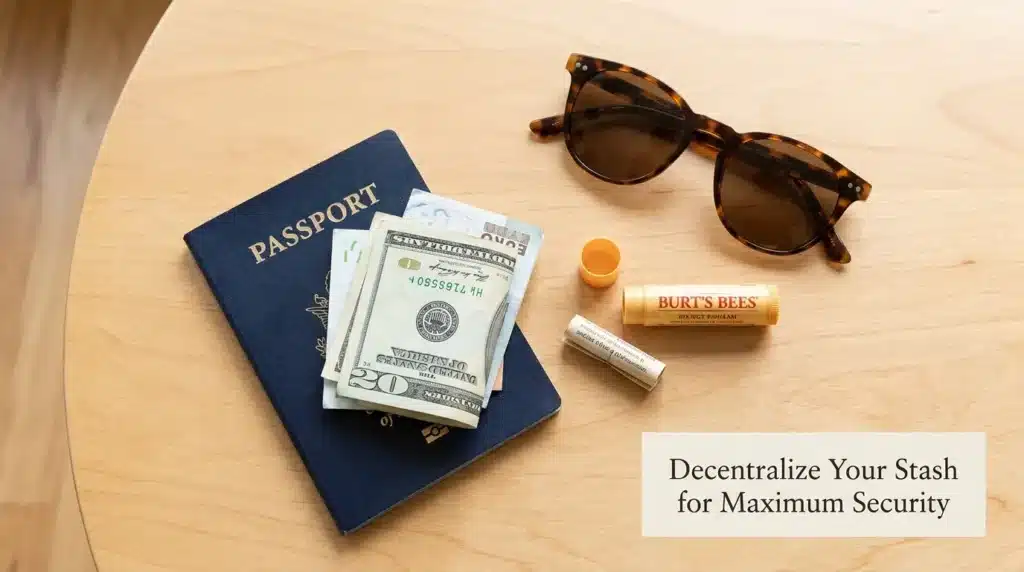
Step 1: Master the Art of Decentralization
The biggest mistake you can make is keeping everything in one place. We call this the “single point of failure.” If your one bag is stolen, everything is gone. To prevent this, you must split your assets.
Divide your cash into three or four different piles.
Keep a small amount of “spending money” in an easily accessible pocket for small daily purchases. This way, you never have to pull out a thick stack of bills in public.
Hide a larger “reserve” amount in a different bag or a hidden pocket in your clothes.
Keep another “emergency” stash in your hotel room, but not in an obvious place.
This strategy ensures that even if you are pickpocketed, you still have enough money to get back to your hotel and call for help.
Understanding these essential tips for a secure life will keep you one step ahead of scammers.
Think about Family Safety as well. If you are traveling with a partner or older children, have everyone carry a small portion of the group’s cash.
If one person loses their bag, the family can still function. This creates a safety net that protects everyone’s peace of mind.
Step 2: Utilize “Hidden in Plain Sight” Decoys
Professional thieves look for wallets, purses, and safes. They rarely look at items that seem like everyday trash or personal care products.
This is where you can get creative with your hiding spots.
You can use an empty, cleaned-out lip balm tube to hide a rolled-up high-value bill.
A small, empty mint tin can hold a backup credit card. Some travelers even use a hollowed-out hairbrush to store their emergency cash.
These decoy items are excellent because they don’t look valuable.
A thief who breaks into a room or grabs a bag will look for the obvious stuff first.
They won’t spend time opening a bottle of sunscreen or looking inside a pack of tissues.
An old, clean sock at the bottom of your laundry bag is a classic but effective spot. Thieves don’t want to dig through your dirty clothes. These small tricks make it much harder for a criminal to find your “pot of gold.”
Step 3: Secure Your Passport with Physical and Digital Backups
Your passport is your most important document, even more than your cash. Without it, you cannot leave or enter a country legally.
You must treat it with the highest level of care.
Never carry your original passport with you during daily sightseeing unless it is legally required by the local government.
Instead, keep the original locked in a secure spot in your room or hidden deep in your bag. Carry a high-quality color photocopy of the main page instead.
Before heading out, implementing a comprehensive hotel room security locking guide ensures your stationary valuables remain completely safe.
For Digital Safety, take a clear photo of your passport and your visa. Upload these images to a secure, encrypted cloud storage service.
You can also email them to yourself or a trusted family member back home. If your physical copies are lost, having a digital version makes the replacement process at the embassy much faster.
If you must carry your original passport, use an internal pocket that is close to your body. Avoid putting it in the outer pockets of a backpack.
Thieves are very fast at unzipping bags in crowded subways. Keeping it against your skin makes it almost impossible to steal without you noticing.
Step 4: Use Technology to Your Advantage
While physical hiding spots are great, modern technology can add another layer of protection.
Consider using RFID-blocking sleeves for your credit cards and passport. This protects you from electronic pickpocketing, where thieves use scanners to steal your card info through your bag.
Digital Safety is also about how you access your money. Use mobile payment apps like Apple Pay or Google Pay whenever possible.
These apps don’t share your actual card number with the merchant, which reduces the risk of card cloning.
Plus, if you lose your phone, you can remotely wipe the data. Your physical cards are still safe at your hotel.
Combining physical hiding spots with smart digital habits gives you a massive advantage over the average traveler. It shows that you are taking your Personal Safety seriously in the 21st century.
Step 5: Be Aware of Your Surroundings (The Human Factor)
No hiding spot is 100% safe if you are not paying attention. The best security tool you have is your own brain.
Pickpockets often work in teams. One person will distract you, perhaps by spilling something on you or asking for directions, while the other person steals your wallet.
Stay alert in high-risk areas like train stations, tourist landmarks, and crowded elevators.
If someone tries to create a scene or touch you, move away immediately and check your belongings.
Always look like you know where you are going, even if you are lost. Duck into a cafe or a shop to check your map or your phone.
This simple habit keeps you from looking like a vulnerable target. By staying aware, you protect your Personal Safety and keep your hidden cash exactly where it belongs—out of sight.
Professional Hacks for Keeping Your Valuables Invisible
You have already learned the basics of splitting your cash and using decoy items.
Now, let’s talk about the advanced strategies that professional travelers use to stay invisible to thieves.
Security is not just about where you put things. It is about how you move and how you manage your environment.
By adding these expert layers, you will turn your personal space into a secure zone. Whether you are in a crowded hostel or a luxury hotel, these tips keep your belongings safe.
Customizing Your Wardrobe for Secret Storage
One of the best ways to keep your cash safe is to make it part of what you wear. You don’t need expensive gear for this.
You can sew a small, hidden pocket into the inside of your jeans or a jacket. This is a great place to keep a spare credit card and a hundred-dollar bill.
Thieves focus on pockets they can reach from the outside. They almost never look for a pocket that requires you to unbutton your pants or take off a coat.
If you don’t want to sew, you can buy small adhesive pouches that stick to the inside of your clothes. These are thin and comfortable, so you will forget they are even there.
This is a key part of Personal Safety. It ensures that even if a mugger takes your main bag and wallet, you still have an alternative path.
Keeping defensive tools handy is great, but knowing the right legal self-defense tools for personal protection can save your life abroad.
Making the Most of Your Hotel Room Security
Many people think the hotel safe is the only safe place in the room. But as we mentioned before, safes are not always perfect.
If you feel the safe isn’t secure enough, look for “unnatural” hiding spots. The space behind a hanging picture frame or the gap under a fixed desk can be great.
You can also use your own luggage as a safe. Use a high-quality TSA-approved lock to secure your suitcase.
Then, use a thin steel cable to lock the suitcase to a heavy piece of furniture like the bed frame or a radiator. This prevents someone from simply walking out with your whole bag.
This level of Home Security on the road makes it much harder for dishonest staff or intruders to steal your gear. It takes too much time to break a cable lock, and thieves hate taking extra time.
The Digital Safety Net for Your Documents
We live in a world where Digital Safety is just as important as physical locks.
Your passport and credit cards leave clear digital trails across global networks.
Before you leave, use a secure app to store your document numbers and emergency bank phone numbers. You should also keep a digital copy of your travel insurance policy.
If your phone is lost or stolen, you need to be able to access this info from any computer. Use a secure cloud service that has two-factor authentication.
This way, even if a thief steals your phone and your bag, you can log in from a hotel computer and find everything you need.
You can block your cards and start the passport replacement process immediately. This redundancy is what separates a prepared traveler from a victim. It gives you a clear path back to safety when things go wrong.
How to Maintain Long-Term Travel Security
To keep these results, you need to make security a habit. Don’t just do it on the first day of your trip.
Every night, take five minutes to reset your gear. Move cash from your “spending” pocket back to your “reserve” stash.
Check your Digital Safety apps to make sure everything is syncing properly. If you bought something expensive, hide the receipt in a separate spot.
You should also keep your family updated. Tell a trusted person back home where you are staying and what your plans are.
This is a part of Family Safety that many people forget. If you don’t check in, they will know something is wrong and can alert the authorities.
By staying consistent, you reduce the chances of a security lapse. Thieves look for the moment you get lazy or tired. If you stay disciplined, you stay safe.

Common Pitfalls That Make You a Target
Even smart travelers can make simple mistakes that lead to big losses. Avoid these errors to keep your Travel Safety at its highest level:
1. Counting Cash in Public Spaces
This is the fastest way to get noticed by a pickpocket. You might be trying to see if you have enough for a souvenir, but a thief is watching to see exactly where you put that money back.
Always prepare your money before you leave your hotel or a private bathroom stall. Have the small bills ready in an easy pocket so you never have to show your main stash.
2. Using the “Dummy Wallet” the Wrong Way
A dummy wallet is a fake wallet filled with a few small bills and old, expired cards. The idea is to give this to a mugger so they leave you alone.
The mistake is making it look too fake. If it has no “real” cards or very little cash, a thief might realize it’s a trick and get angry.
Make it look like a real, used wallet. This satisfies the thief and gives you a chance to get away safely.
3. Trusting “Friendly” Strangers Too Quickly
We all want to meet locals, but be careful of people who are overly helpful. Some thieves use “distraction scams.”
They might offer to clean a spot on your jacket or help you with a map. While you are looking at them, their partner is reaching into your bag.
Keep a polite distance and always keep your hand on your valuables during these interactions. Your Personal Safety depends on maintaining your personal space.
4. Leaving Valuables in Your Checked Luggage
Never put your passport, cash, or expensive jewelry in the bag you check at the airport. Bags get lost, and sometimes items are stolen by baggage handlers.
Always keep your most important items in your carry-on bag or on your body. If the airline loses your suitcase, it should only be a loss of clothes, not your ability to travel.
5. Sharing Your Location on Social Media in Real-Time
This is a major Digital Safety risk. If you post a photo of your beautiful dinner with your location tagged, you are telling the world that your hotel room is empty.
Wait until you have left a location or even returned home before posting your photos. This keeps your current location private and protects your Home Security at the hotel.
Frequently Asked Questions for Secure Travel
What is the absolute safest place to hide money on my body?
A hidden pocket inside your waistband or a neck pouch worn under your shirt are the best spots. These areas are very hard for a pickpocket to reach without you feeling it. Always choose a spot that is close to your skin but still comfortable for long walks.
Should I use a money belt or a neck pouch?
It depends on your outfit. Money belts are great for pants, while neck pouches work well under loose shirts or dresses. The key is that it must be invisible. If people can see the outline of the belt, it is not doing its job.
What should I do if my passport is actually stolen?
First, go to the local police and get a formal report. You will need this for the embassy and your insurance. Then, contact your country’s nearest embassy or consulate. Having your digital backup from your Digital Safety cloud will make this process much faster.
Is it safe to leave my passport in the hotel room?
Yes, if you use a high-quality safe or a very good hidden spot. In many countries, it is actually safer to leave it at the hotel than to carry it through crowded tourist areas where pickpockets are active. Always carry a paper copy with you instead.
How much cash is too much to carry?
Only carry what you need for one or two days. Use your credit cards for larger purchases to take advantage of their fraud protection. Having too much cash makes you more nervous and increases the “cost” if you do get robbed.
Staying Confident and Secure on Your Next Journey
Travel is one of the most rewarding things you can do in life. Don’t let the fear of theft stop you from seeing the world.
By using the steps we have shared, you are now better prepared than 99% of other travelers. You have a plan for your physical cash, your documents, and your Digital Safety.
Security is about being smart, not being afraid. When you know your valuables are hidden and backed up, you can walk through any city with your head held high.
You have the power to protect your Family Safety and your hard-earned money. Use these tips starting today, even on small trips close to home, to build your “security muscles.”
The world is waiting for you. Go out there, explore, and do it with the peace of mind that comes from being truly prepared.
At Securely Life, we want you to live your best life without the shadow of worry. Stay safe, stay hidden, and enjoy every moment of your adventure.
Disclaimer: The information provided on Securely Life (securelylife.com) is for educational and informational purposes only. Travel conditions and safety risks can change rapidly in different parts of the world. While we provide expert tips on Travel Safety and Personal Safety, we cannot guarantee that following these steps will prevent all instances of theft or loss. Always check official government travel advisories before your trip. Securely Life is not responsible for any financial loss, legal issues, or personal injury that may occur while traveling. Use your best judgment and stay alert at all times.