Imagine you are walking down a street you have used a hundred times. The sun is shining, or perhaps the streetlights are just coming on. Suddenly, someone says something inappropriate. Maybe they follow you or make a comment that makes your skin crawl. In that second, your sense of safety vanishes.
This is the heavy reality many people face every single day. It is not just about a few words; it is about the fear that follows. According to global data on public safety, this constant worry makes simple tasks like going to the store or walking to work feel like a battle. You start to look over your shoulder. You change how you dress or which path you take.
This problem creates a deep sense of unease that stays with you long after you reach home. It turns a public space into a place of stress. You deserve to walk freely without feeling like a target.
Why Common Advice Often Fails Us
Many people look for help but find suggestions that just don’t work in real life. Here is why most people stay stuck in this cycle of fear:
- The “Just Ignore It” Myth: People often say if you ignore them, they will stop. While this sometimes works, it often makes the person feel powerless and doesn’t stop the harasser from targeting the next person. To better protect yourself in public spaces, learning about situational awareness personal safety guide is a much more effective strategy.
- Conflicting Information: One person tells you to be aggressive, while another tells you to be silent. This confusion makes you freeze when an actual incident happens.
- Lack of Real Training: Most of us are never taught how to set a boundary with a stranger. We are taught to be polite, even when someone is being rude or scary to us.
- Misunderstanding the Goal: People often think they need to “win” the argument. In reality, the only goal should be your safety and getting away from the situation.
- The Blame Game: Victims often feel it was their fault because of what they wore or where they walked. This false idea stops them from seeking better safety tools.
The Mental Toll of Living with Public Harassment
Street harassment is not a small issue. It has a big impact on how you feel about yourself and the world. According to mental health studies published by organizations like Wikipedia, public harassment heavily contributes to prolonged psychological distress. Here is how it affects your peace of mind:
- Loss of Confidence: Every time someone yells a comment at you, it chips away at your self-esteem. You begin to feel like an object rather than a person.
- Constant Hyper-Vigilance: You are always on high alert. This “fight or flight” mode is exhausting for your brain and body.
- Shrinking Your World: You might stop going to certain parks, shops, or even visiting friends. Your world becomes smaller because you are trying to avoid “bad” areas.
- Social Anxiety: It can lead to a fear of crowds or strangers in general. This makes it hard to enjoy social life or professional networking.
- Feeling Alone: Because many people don’t talk about it, you might feel like you are the only one struggling. This isolation makes the trauma feel even worse.
We need to understand that this is a shared struggle. It is a systemic issue that requires practical, daily tools to manage. You are not alone, and there are ways to reclaim your space and your calm.
The first step to solving this is moving away from the “politeness” trap. We often feel we have to be nice to everyone. But when someone crosses a line, your safety comes before their feelings.
Learning how to switch from a “passive” mode to an “aware” mode is life-changing. It gives you back the power. You can learn to spot trouble before it reaches you. You can learn to speak in a way that shows you are not an easy target. Most importantly, you can learn when to walk away and how to find help.
The Power of Situational Awareness and Body Language
Your first and best tool is your own awareness. Most harassers look for people who seem distracted or unaware of their surroundings. By changing how you move and observe, you can often stop an incident before it even starts.
The “Yellow Zone” Awareness
Think of your awareness like a traffic light. Green means you are totally relaxed, perhaps looking at your phone. Red means you are in a fight. You want to stay in the Yellow Zone.
This means you are relaxed but alert. You are scanning the street. You know who is behind you and who is standing at the corner. You don’t need to be paranoid. Just be present. Put the phone in your pocket. Keep your chin up. When you look like you know where you are going, you send a strong message.
Using Your Eyes as a Shield
Brief, firm eye contact can be very effective. It tells a potential harasser, “I see you, and I know you are there.” This is different from a stare-down. A stare-down can be seen as a challenge.
A simple, two-second glance shows you are aware. If you see someone who looks like they might cause trouble, don’t look away quickly in fear. Look at them calmly, then continue your scan. This shows you are confident and not easily intimidated.
The Walk of Confidence
How you walk matters. Keep your shoulders back and take steady, purposeful steps. Avoid looking down at your feet. When you walk with a clear destination in mind, you are less likely to be bothered. For individuals who commute at odd hours, adopting these physical strategies alongside specific night shift worker safety commuting tips can substantially reduce vulnerability.
If you feel you are being followed, change your pace. Cross the street. If they cross too, you now have a clear sign that this is a problem. This allows you to move to the next step of your safety plan immediately.
Setting Firm Boundaries Without Escalation
If someone does speak to you, how you respond can change the whole outcome. The goal is to be firm but not to start a fight. We call this “The Verbal Shield.”
The Short and Direct Statement
If someone makes a comment, you don’t have to explain why it’s wrong. You don’t have to argue. A simple, loud, and firm “No,” “Stop,” or “Move away” is often enough.
Use a low, “boring” voice. Avoid high-pitched or questioning tones. You are not asking them to stop; you are telling them. For example, if someone is leaning into your space, you can say, “Step back.” Don’t say “Please.” Just say the command. This clear boundary often shocks a harasser who expects you to be quiet or shy.
The “Grey Rock” Method
If the person is just looking for a reaction, become as boring as a grey rock. Give one-word answers or no answer at all while moving toward a crowded area.
Don’t show anger, and don’t show fear. Harassers often want to see you get upset. If you don’t give them that “reward,” they often lose interest. This method works best in busy areas where you can easily keep walking toward other people.
Distraction and Redirection
Sometimes, you can break the harasser’s focus by asking a random, unrelated question. “What time is it?” or “Where is the nearest bus stop?” can sometimes snap them out of their aggressive behavior.
However, use this only if you feel the situation is low-risk. If you feel a high level of threat, don’t engage in conversation. Focus entirely on moving to a safe zone. Your priority is always to put distance between yourself and the other person.
Finding Safe Zones and Seeking Help
You don’t have to handle everything on your own. Knowing where to go when things feel wrong is a core part of safety.
Identify “Island” Safeties
When you are out, always look for “islands.” These are shops, bright lobbies, or cafes that are open. If someone is bothering you, walk directly into one of these places.
Don’t just stand outside. Go inside and move toward the counter or a group of people. Most harassers will not follow you into a well-lit business with cameras and staff. Once inside, you can take a breath and decide your next move.
How to Ask Strangers for Help
If you need help from people nearby, be specific. Don’t just yell “Help!” This can sometimes confuse people or make them freeze. Instead, point to someone and give a clear instruction.
“You in the blue shirt, this person is following me. Can you stand with me for a moment?” By picking one person, you break the “bystander effect.” Most people are happy to help if they are given a clear task.
You can also pretend you know someone in a crowd. Waving and saying, “Hey, there you are!” can make a harasser think you are not alone.
Using Your Phone as a Tool, Not a Distraction
If you feel unsafe, pull out your phone and pretend you are on a live call. Say something like, “I’m just a block away, I see you standing by the door.”
This suggests that someone is waiting for you and watching. You can also use your phone to document the situation if it’s safe to do so. Taking a photo or a video can be a deterrent, but be careful. Sometimes, showing a phone can make an angry person more aggressive. Use your best judgment based on the vibe of the person. To maximize personal defense, equipping your device with the best personal safety apps for loved ones can instantly connect you with emergency networks.
Understanding the Science of the “Freeze” Response
It is very important to know that if you have “frozen” in the past, it is not your fault. It is a biological reaction. According to research on trauma and stress response published in Forbes, your body naturally downregulates active movement when trapped. When the brain senses a threat, it can trigger a “freeze” response to keep you still and quiet, much like an animal hiding from a predator.
Breaking the Freeze
To break a freeze, you need to bring your brain back to the present. You can do this by wiggling your toes or squeezing your hands into fists.
Deep breathing also helps. Take one big breath in through your nose. This sends a signal to your nervous system that you are okay to move. Once you start moving, even just a few steps, the freeze usually starts to fade.
Training Your “Action” Muscles
Safety is a skill you can practice. You can practice your “firm voice” while you are home alone.
Say “Back off” or “No” in the mirror. It might feel silly at first, but it builds “muscle memory.” When a real situation happens, your body will remember the sound of your own strong voice. This makes it much easier to act instead of freezing.
Strengthening Your Personal Safety Strategy
Harnessing Modern Technology for Instant Protection
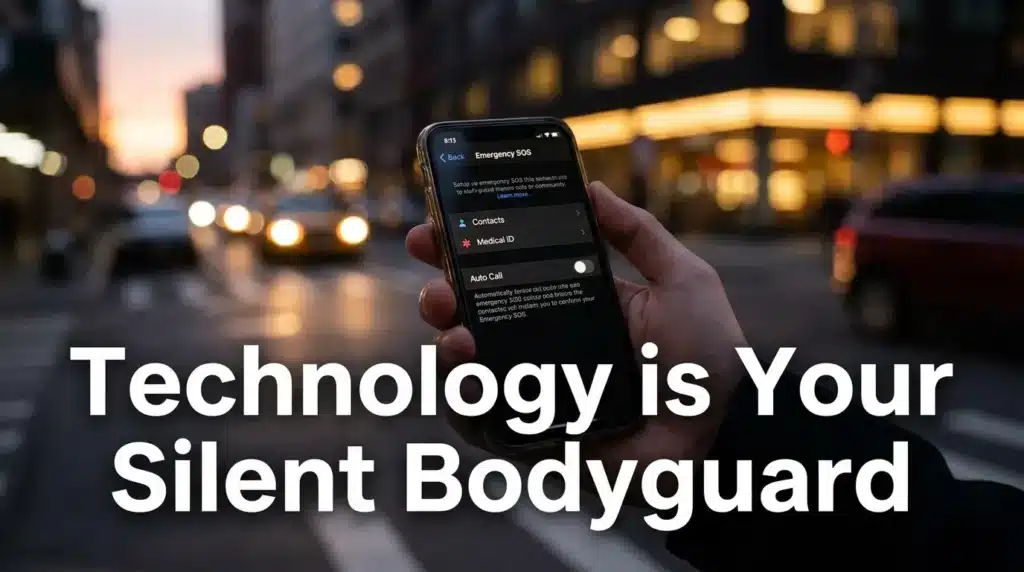
While your voice and body language are vital, technology can act as a powerful silent partner. Most smartphones now come with built-in emergency features that many people never activate.
You should take five minutes today to set up your “Emergency SOS” shortcut. On most phones, pressing the power button five times quickly will call local emergency services and send your GPS location to your chosen contacts.
This is an expert secret because it allows you to call for help without even looking at your screen. You can keep your phone in your pocket and still alert your family that you are in a difficult situation.
Sharing your “Live Location” through messaging apps is another pro-level habit. If you are walking through an area that makes you feel uneasy, send your live map to a trusted friend.
Tell them, “I’m walking home now, please watch my icon for the next ten minutes.” Knowing that someone is virtually walking with you provides an incredible boost to your mental strength. It also ensures that if you stop moving or go off-course, someone will notice immediately and can take action. This proactive approach turns your phone from a distraction into a high-tech shield.
The Art of Verbal De-escalation and Mental Reframing
Handling harassment isn’t just about what you say, but how your brain processes the threat. When someone targets you, they are trying to steal your power.
An advanced secret is to realize that the harasser is often looking for a specific emotional reaction. They want you to look scared, or they want you to get into a shouting match. By staying calm, you disrupt their script. Use a technique called “The Broken Record.” If someone is bothering you, pick one short, firm phrase like “Do not talk to me.”
No matter what they say next, repeat that exact same phrase with the same tone. Do not explain, do not argue, and do not get creative. This makes you a very “boring” target. It signals that you are in total control of your emotions and cannot be manipulated into a fight.
Mentally reframing the situation also helps long-term. Instead of thinking “I am a victim of this person,” think “I am a person managing a difficult interaction.”
This small shift in language keeps your mind in a logical state rather than a fearful one. It allows you to make better decisions about which way to turn or when to enter a shop for safety.
Building a Long-term Safety Mindset
To keep yourself safe over the years, you need more than just one-time tips. You need a community and a routine.
Start by connecting with others in your neighborhood. When you know the shopkeepers on your route or the neighbors who are usually outside, you create a “safety web.” These people become natural allies who will notice if something seems wrong.
Another great long-term strategy is to join a basic self-defense class that focuses on “boundary setting.” You don’t need to become a martial arts expert. You just need to learn how to stand your ground and use your voice under pressure.
Practicing these skills once a month with a friend can keep your instincts sharp. Also, remember to check in with your mental health. If you have had a bad experience, talk to a professional or a support group. Keeping the trauma inside can make you more anxious in the future. True safety comes from a balance of being prepared and being at peace with your environment. You deserve to live your life with joy, not just survival.

Avoiding Safety Pitfalls That Make Situations Worse
Even with the best intentions, we can sometimes make mistakes that escalate a situation. Being aware of these pitfalls is half the battle.
- The Trap of Trying to Educate the Harasser: In the heat of the moment, you might want to tell the person why their behavior is wrong or sexist. While your feelings are valid, the street is not a classroom. Trying to debate a harasser often keeps you near them for too long. It can also make an aggressive person even angrier. Save the education for safe spaces and focus on getting yourself to safety first.
- Using Aggressive Physical Gestures Too Early: Sometimes, showing “toughness” can backfire. Making aggressive hand gestures or getting in someone’s face can be seen as a challenge. If the harasser is looking for a physical fight, you might be giving them exactly what they want. Keep your hands visible and in a defensive but non-threatening posture, like holding them up near your chest with palms open.
- Apologizing for Your Boundaries: Never say “I’m sorry, but I don’t want to talk.” When you apologize, you suggest that you are doing something wrong. You have every right to walk in peace. Using “sorry” makes your boundary seem weak and negotiable. Be direct and skip the apology entirely.
- Walking Faster Into Isolated Areas: When we feel scared, our instinct is to run. But if you run into a dark alley or an empty park to get away, you might be putting yourself in more danger. Always move toward light and people, even if it means walking a slightly longer way. Your goal is to be seen by others who can help if things get worse.
- Neglecting to Document the Incident: Many people want to forget the event as soon as it’s over. However, if the same person is harassing others in the area, your information is valuable. Once you are safe, write down what the person looked like and where it happened. This doesn’t mean you have to call the police every time, but having a record helps if you decide to report it later or warn your community.
Common Questions About Handling Street Harassment
Should I always respond to someone who catcalls me?
Not necessarily. Your safety is the priority. If you feel that responding will lead to violence or if you are in a deserted area, it is often better to keep moving toward safety without saying a word.
Is it a good idea to film my harasser on my phone?
Filming can be a double-edged sword. It provides evidence, but it can also make a harasser very angry and lead to a physical attack. Only film if you are at a safe distance or in a very crowded place where others are watching.
What should I do if I am being harassed while on a bus or train?
On public transport, move closer to the driver or the conductor. If there are other passengers, sit near a group. Don’t be afraid to speak loudly so others can hear that you are being bothered. Most transit systems also have emergency buttons you can use.
How can I support someone else if I see them being harassed?
Use the “Distraction” technique. Walk up to the person being harassed and pretend you know them. Say something like, “Hey! I’ve been looking for you, let’s go!” This gives them a safe way to walk away without directly confronting the harasser.
Do self-defense tools like pepper spray really work?
They can be effective, but only if you know how to use them correctly. Many people forget to unlock the safety or end up spraying themselves if the wind is blowing the wrong way. If you carry a tool, you must practice with it regularly in a safe environment.
Reclaiming Your Right to the Streets
Walking through your city or neighborhood should be a source of freedom, not a source of fear. You have learned that your voice is a tool and your awareness is a shield.
By setting firm boundaries and using technology to your advantage, you are taking back control of your public life. It is important to remember that you are not responsible for the bad behavior of others.
Your only job is to stay safe and keep your peace. Every step you take with confidence is a victory over the culture of harassment.
Start practicing these tips today, perhaps by just walking with better posture or checking your phone’s SOS settings. Share these ideas with your friends and family so we can all look out for one another.
The world becomes safer when we all decide to be aware and supportive. You are strong, you are prepared, and you have every right to be exactly where you are.
Keep moving forward with your head held high. You have the tools to handle whatever comes your way, and you are never truly alone in this journey.