Every time your child steps out of the door, a small part of you feels a tiny knot of worry. You want them to explore, play, and be independent, but the world feels different now than when we were young.
We often find ourselves repeating the same old phrases our parents told us. We tell them, “Don’t talk to strangers,” thinking this simple rule will keep them out of harm’s way.
However, deep down, we know that the world is more complex than just avoiding people we don’t know. The reality is that children are often more confused by these rules than protected by them.
According to historical child safety studies on Wikipedia, relying solely on outdated warnings can create a heavy burden for parents who just want to keep their little ones safe. You worry if they will know what to do if you aren’t there to guide them.
To prepare your family for real-world scenarios, it is equally important to focus on general awareness, such as learning how to avoid common tourist scams abroad during family vacations.
Why Common Safety Advice Doesn’t Always Work for Modern Families
- The “Scary” Myth: Children often think “bad people” look like monsters or villains from movies, which makes them ignore well-dressed or friendly people who might mean harm.
- Mixed Messages: We tell kids not to talk to strangers, but then we force them to say hello to a person they don’t know at the grocery store.
- Help is Often a Stranger: If a child gets lost, their best hope is often finding a “safe stranger” like a mom with kids or a store worker.
- The Digital Gap: Many old-school safety rules only focus on physical spaces and completely ignore the threats identified in modern Forbes parenting tech reports regarding online gaming and browsing.
- The Compliance Trap: We teach kids to always obey adults, but this makes it harder for them to say “no” to an adult who is acting inappropriately.
How This Uncertainty Impacts Your Family’s Peace of Mind
Constant anxiety might make you feel like you can never let your child out of your sight, leading to “helicopter parenting” that exhausts everyone.
Instead of feeling brave, kids can become overly fearful of every person they pass on the street, which seriously hurts their social growth.
When children don’t have clear, logical rules, they feel unsure of themselves in new situations. If a child feels scared or confused by an interaction, they might not tell you because they think they did something wrong.
The truth is, we need to change how we talk about safety. We must move away from fear-based warnings and move toward empowerment-based skills. It is not about making the world seem like a dark place.
When we focus only on the word “stranger,” we miss the bigger picture. Most people in the world are good, but some people are “tricky.” Teaching your child how to spot “tricky” behavior is much more effective than telling them to avoid everyone they don’t know.
A Smart Guide to Modern Child Safety
Teaching safety is a journey, not a one-time talk. It requires us to use simple language and clear examples. Here are the most effective steps you can take today to build a foundation of safety for your child.
Step 1: Replace “Stranger Danger” with “Tricky People”
The old “stranger danger” phrase is outdated because most strangers are actually helpful people. If your child is lost at a park, they need to talk to a stranger to get help. If we tell them all strangers are bad, they might hide when they should be asking for a phone.
Instead, teach them about “Tricky People.” A tricky person is someone who asks a child for help. Most adults will never ask a child for help; they will ask another adult.
“Explain to your child that adults do not ask kids for help. This is a simple, non-negotiable rule that is easy for a child to remember.”
It doesn’t matter if the person looks nice or has a puppy. If they are asking a child for help, they are being “tricky,” and the child should get away immediately.
Step 2: Define the “Safety Circle”
Help your child understand who is in their inner circle. This is a group of people they can always trust and go to without asking permission. This usually includes parents, grandparents, or a very close family friend.
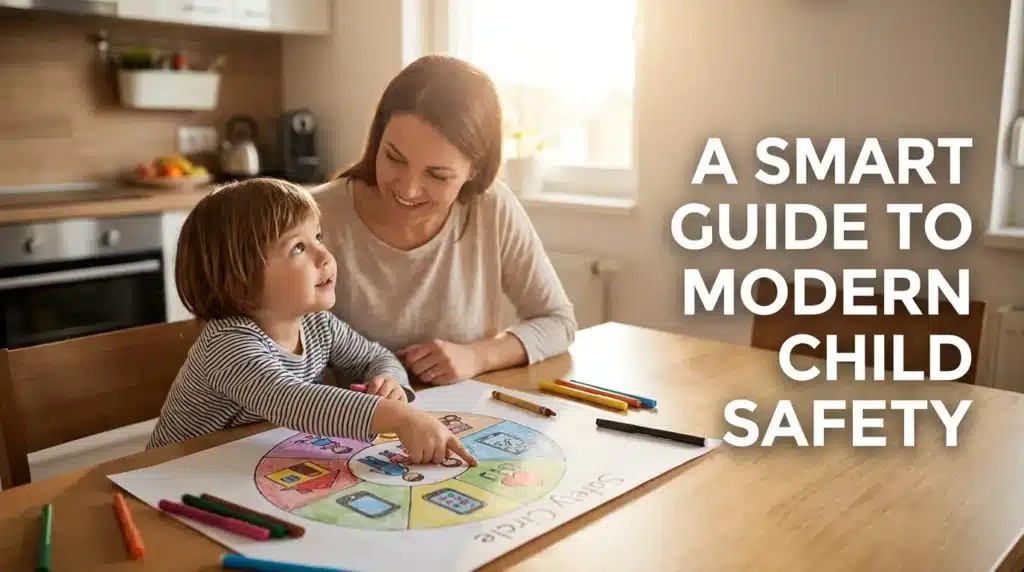
Draw a circle on a piece of paper. Put your child’s name in the middle. Then, ask them who they feel safest with. These people go inside the circle. Anyone outside that circle is someone they should check with you before going anywhere with them.
This teaches children the concept of boundaries. It also helps them identify “Safe Strangers.” Tell them that if they are lost and can’t find anyone in their circle, they should look for a “Mom with kids” or a person behind a cash register.
Step 3: Listen to the “Uh-Oh” Feeling
We all have a natural instinct when something feels wrong. We often call it a “gut feeling.” Kids have this too, but they often don’t know what it is. We need to teach them to recognize and trust their “Uh-Oh” feeling.
Ask your child, “Have you ever felt butterflies in your tummy or felt shaky when something didn’t feel right?” Explain that this is their body’s way of telling them to be careful.
If someone makes them feel uncomfortable, they don’t have to be polite. They can easily implement actionable tips from our comprehensive street harassment safety guide to firmly say “No”, walk away, or make noise without feeling guilty.
Empowering them to trust their instincts is one of the greatest gifts you can give. It builds a sense of self-awareness that will protect them throughout their entire lives.
Step 4: Create a Secret Family Password
This is a very practical tool that kids actually enjoy. Choose a word that is easy to remember but not something others could guess. It could be something funny like “BlueBanana” or “PizzaCat.”
The rule is simple: If someone says they were sent by you to pick them up, they must know the secret password. If the person doesn’t know it, your child should not go with them, no matter what the person says.
Sometimes, people who mean harm will tell a child, “Your mom had an accident, and she sent me to get you.” This is terrifying for a child. But if they have a password, they have a way to verify the truth.
To add an extra layer of protection alongside a password, parents can also set up digital backups using the best personal safety apps for loved ones to track real-time locations.
Step 5: The “No, Go, Tell” Rule
When a child feels they are in a “tricky” situation, they need a clear action plan. The “No, Go, Tell” method is a classic for a reason—it is simple and effective.
NO: Tell the person a loud and firm “NO.”
GO:Run away as fast as possible toward a safe place or a group of people.
TELL: Find a trusted adult and tell them exactly what happened right away.
Make sure your child knows that they will never be in trouble for telling you about something that made them feel weird. Sometimes kids stay silent because they think they did something wrong by talking to the person. Reassure them constantly that your job is to keep them safe.
Step 6: Understanding Body Autonomy
Safety isn’t just about people on the street. It is also about how people interact with your child’s body. Teaching body autonomy means your child knows they are the boss of their own body.
You should teach them the correct names for their body parts. This removes the “shame” or “secrecy” that bad people often rely on. Explain the difference between a “good secret” and a “bad secret.”
A good secret is something like a surprise birthday present that makes everyone happy later. A bad secret is something that makes you feel worried. Tell them that no adult should ever ask a child to keep a secret from their parents. This one rule can prevent a vast majority of dangerous situations.
Step 7: Safety in Public Places
When you are at a mall, a park, or a crowded event, it is easy to get separated. Instead of just saying “Stay close,” give them a specific plan.
Before you enter a busy place, point out the workers. “Look at that person in the blue vest. They work here. If you lose me, go to someone in that vest.” This gives them a visual target to look for.
Teach them to stay where they are if they realize they are lost. Often, children start running to find their parents, which makes it harder to find them. Tell them to stay in one spot and use their “big voice” to call out your real name, not just “Mom” or “Dad.”
Step 8: Practicing Through Play
Kids learn best through play and practice, not just lectures. You can use “What If” games to help them think through different scenarios.
Ask them, “What if we were at the park and a lady asked you to help her find her keys?” Let them answer and then guide them toward the right response. “Remember, adults ask other adults for help, not kids. So you would say no and come find me.”
Keep these games light and positive. The goal is to make them feel prepared, not scared. Use their favorite toys or dolls to act out these scenes. Repetition is key to making these habits stick for the long term.
Taking Safety to the Next Level: The Digital Frontier
As we move deeper into protecting our children, we must look at where they spend a lot of their time. The physical world is just one part of the story. Today, our children are also growing up in a digital space that has no walls or fences.
Teaching Digital Boundaries is a major part of modern safety. For a deeper look into protecting your kids online, read our comprehensive child online safety guide to secure their gaming and browsing environments.
We need to teach them that a stranger online is still a stranger. Just because someone has a friendly avatar or sends “free items” in a game doesn’t mean they are a friend. Tell your child that they should never share their real name, school, or where they live with anyone online.
Watch out for “Social Engineering.” This is a fancy term for how tricky people use emotions to get what they want. They might tell your child, “You are so good at this game, let’s talk on a private app.” Or they might say, “I have a secret gift for you, but don’t tell your parents.”
Explain to your child that secrets in the digital world are red flags. If an online “friend” asks them to hide anything from you, that person is being tricky. We want our kids to feel that they can always show us their screen without getting in trouble.
Establishing the “Check-First” Rule for Devices. Before downloading a new app or joining a new game, they must ask you. This isn’t about being a strict parent; it’s about being a safety partner.
Building Long-Term Safety Habits
Safety isn’t a lesson you teach once and then forget. It is a set of habits that you build over time. To keep these results strong, you need a plan that grows with your child.
The “Sunday Safety Minute.” Once a week, perhaps during dinner, bring up a quick safety scenario. You can ask, “What would you do if someone sent you a message saying they knew me?” This keeps the information fresh in their minds without making it a scary or long lecture.
Update your secret password regularly. Just like you change your computer passwords, change your family safety word every few months. This makes it a fun game for the kids.
Monitor their “Safety Circle” as they grow. A child’s circle of trust changes as they get older. They might add a new teacher, a coach, or a friend’s parent. Sit down and update that list together.
Empower them to be observant. Developing these habits aligns perfectly with mastering situational awareness personal safety guide principles, which teach kids to stay alert and aware of surroundings without feeling anxious.
Keep the door of communication wide open. The best safety tool is a child who feels safe talking to their parents. If they make a mistake or talk to a stranger, don’t get angry. Instead, thank them for being honest.
If a child is afraid of being punished, they will hide things from you. This is exactly what tricky people want. By staying calm and supportive, you ensure that you are the first person they come to when something feels “off.”
Avoid These Common Safety Mistakes
Even with the best intentions, parents often make mistakes that can confuse their children. Being aware of these pitfalls will help you give clearer and more effective advice.
- Mistake 1: Focusing only on “Scary” looking people. Many parents still describe bad people as looking mean or “creepy.” In reality, people who mean harm often try to look very nice, professional, or friendly. If you only warn them about “scary” people, they might trust a well-dressed person who is actually being tricky.
- Mistake 2: Forcing physical affection. When we force kids to touch people they don’t want to, we teach them to ignore their own boundaries. It is better to let them give a high-five or a wave if they don’t feel comfortable with a hug.
- Mistake 3: Relying on “Stranger Danger” alone. As we discussed, the word “stranger” is too broad. It can make kids afraid of the very people who might need to help them, like police officers or store staff. Use the “Tricky People” concept instead to give them a much better mental filter.
- Mistake 4: Not practicing the “Big Voice.” Many children are taught to be quiet and polite. In a dangerous situation, they might be too shy to scream. You must practice “screaming for safety” with them. Let them know that in an emergency, it is perfectly okay to be as loud as possible.
- Mistake 5: Putting names on personal items. Avoid putting your child’s name on the outside of their backpack, lunchbox, or t-shirt. If a tricky person knows a child’s name, they can use it to build fake trust. A child is much more likely to trust someone who calls them by their name.
The consequences of these mistakes can be serious. If a child doesn’t trust their own boundaries, they may not speak up when someone crosses the line. Most importantly, a lack of clear rules can lead to a breakdown in communication between you and your child.
Common Questions About Child Safety
How do I explain tricky people to a very young child?
Keep it very simple. Tell them that adults don’t ask kids for help. Use examples like “An adult won’t ask you to help find a cat.” If they do, that person is being tricky, and the child should run to you.
Is it okay to put my child’s name on their clothes?
It is better to put the name on the inside tag where it can’t be seen. If a person sees your child’s name on a backpack, they can act like they know them. Keeping the name hidden adds an extra layer of protection.
What should my child do if they get lost in a store?
Tell them to stay exactly where they are at first. Then, look for a “Safe Stranger.” A great tip is to look for a woman with other children or a person who works at the store. They should tell that person, “I am lost, and I need to find my mom.”
At what age should I start talking about safety?
You can start as soon as your child is old enough to have simple conversations. Start with basic ideas like “Always stay where you can see me.” As they grow, you can add more details about tricky people and online safety.
How can I teach safety without making my child scared?
Treat it like any other safety rule, like wearing a seatbelt or a bike helmet. We don’t wear helmets because we expect to crash; we wear them so we can play safely. Present safety as a way to be “super smart” and “brave.”
Your Path to a Safer, Confident Family
Protecting your child in today’s world doesn’t have to be a source of constant fear. By moving away from old, confusing rules and using modern strategies, you are giving your child a powerful gift. You are teaching them how to think, not just what to fear.
The goal is to build a child who is aware, confident, and prepared. When they know how to spot a tricky person, they don’t have to be afraid of every stranger they meet. When they trust their “Uh-Oh” feeling, they carry a built-in alarm system wherever they go.
Start today by having a small talk with your little ones. Pick your family password. Play a quick “What If” game. These small steps build a wall of safety around your family that grows stronger every day.
You are doing a great job by being proactive about your child’s safety. Stay positive, keep talking, and remember that knowledge is the best protection. Your child can enjoy the world and all its wonders while staying safe and secure under your guidance.
Disclaimer: The information provided in this article is for educational and informational purposes only. It is not a substitute for professional advice or specialized safety training. Every child and family situation is unique, so please adapt these tips to fit your specific needs and local environment. Always prioritize your child’s immediate safety and consult with local law enforcement or child safety experts for specific concerns.