Walking down a quiet street at night can make anyone feel uneasy. You might hear a sudden noise behind you or see a shadow that looks out of place. Your heart starts beating faster, and you find yourself looking for an exit or a safe place to go.
This feeling of being unsafe is a heavy burden that many people carry every single day. It is not just about physical danger; it is about the constant worry that shadows your daily life. You deserve to feel confident and secure when you leave your home to go to work or meet friends.
According to global safety statistics on Wikipedia, proactively preparing for personal safety reduces vulnerability significantly. Unfortunately, many people do not know how to protect themselves properly.
This lack of knowledge creates a cycle of fear that is hard to break. Understanding a comprehensive situational awareness personal safety guide can change your entire outlook on personal safety and freedom.
Why Finding the Right Safety Solution Is So Hard
Many people want to protect themselves, but they run into walls of confusion and bad advice. Reports from top security analysts at Forbes show that misinformation is the biggest barrier to personal defense. Here are some reasons why finding a real solution feels like a struggle:
- Confusing Local Laws: People often worry that carrying a tool for protection might get them into legal trouble with the police.
- Too Much Misinformation: The internet is full of “hero” videos that show unrealistic moves which do not work in real-life stress.
- Bulky or Heavy Gear: Many safety items are too big to carry in a pocket or a small bag, so people leave them at home.
- Fear of Accidents: There is a huge worry that a self-defense tool might be used against the owner or go off by mistake.
- Lack of Simple Training: Most people do not have months to spend in a gym learning complex martial arts.
How Lack of Protection Damages Your Mental Peace
The stress of feeling vulnerable does more than just make you jump at noises. It affects your mind and your lifestyle in deep ways:
- Loss of Personal Freedom: You might stop going to the park or visiting friends because you are scared of the walk back home.
- Constant High Stress: Your body stays in a state of “high alert,” which can lead to exhaustion and long-term health issues.
- Low Self-Confidence: Feeling like you cannot defend yourself can make you feel small and weak in other parts of your life.
- Social Isolation: You may turn down invitations to night events, which hurts your relationships and your social life.
- A World of Fear: Instead of seeing the beauty in your city, you start seeing every stranger as a potential threat.
The Reality of Personal Safety and Why You Need a Plan
We live in a world where we hope for the best but must prepare for the unexpected. Relying on luck is not a solid strategy for your well-being. Many people think that “it won’t happen to me,” but that mindset leaves you completely unprepared if a situation arises.
Having legal self-defense tools is not about looking for a fight or being aggressive. It is actually about the exact opposite. It is about having a safety net that gives you the calm mind to avoid trouble in the first place. When you know you have a backup plan, you project more confidence.
Criminals often look for people who seem distracted or scared. If you walk with purpose and know you have a tool to help you, your body language changes. This shift in energy can often stop a problem before it even starts.
You also need to realize that not all tools are equal. Some are designed to stop an attacker from a distance, while others are meant to create a loud noise to call for help. Understanding the difference is the first step toward a safer life, which is especially important when setting up practical night shift worker safety commuting tips.
Step 1: Start with Non-Lethal Awareness and Distance Tools
The best way to stay safe is to keep a safe distance between you and a threat. You should never want to get close to someone who intends to harm you. This is where long-range legal tools become very helpful.
The Power of Pepper Spray
Pepper spray is one of the most popular tools for a good reason. It is easy to use and very effective at stopping an attacker from several feet away. It causes temporary blindness and breathing difficulty, giving you time to run away.
Make sure you choose a “stream” or “gel” version instead of a “fog” version. A fog can blow back into your own face if there is wind. A gel stays on the target and is much safer for you to use in a panic.
Using a Tactical Flashlight
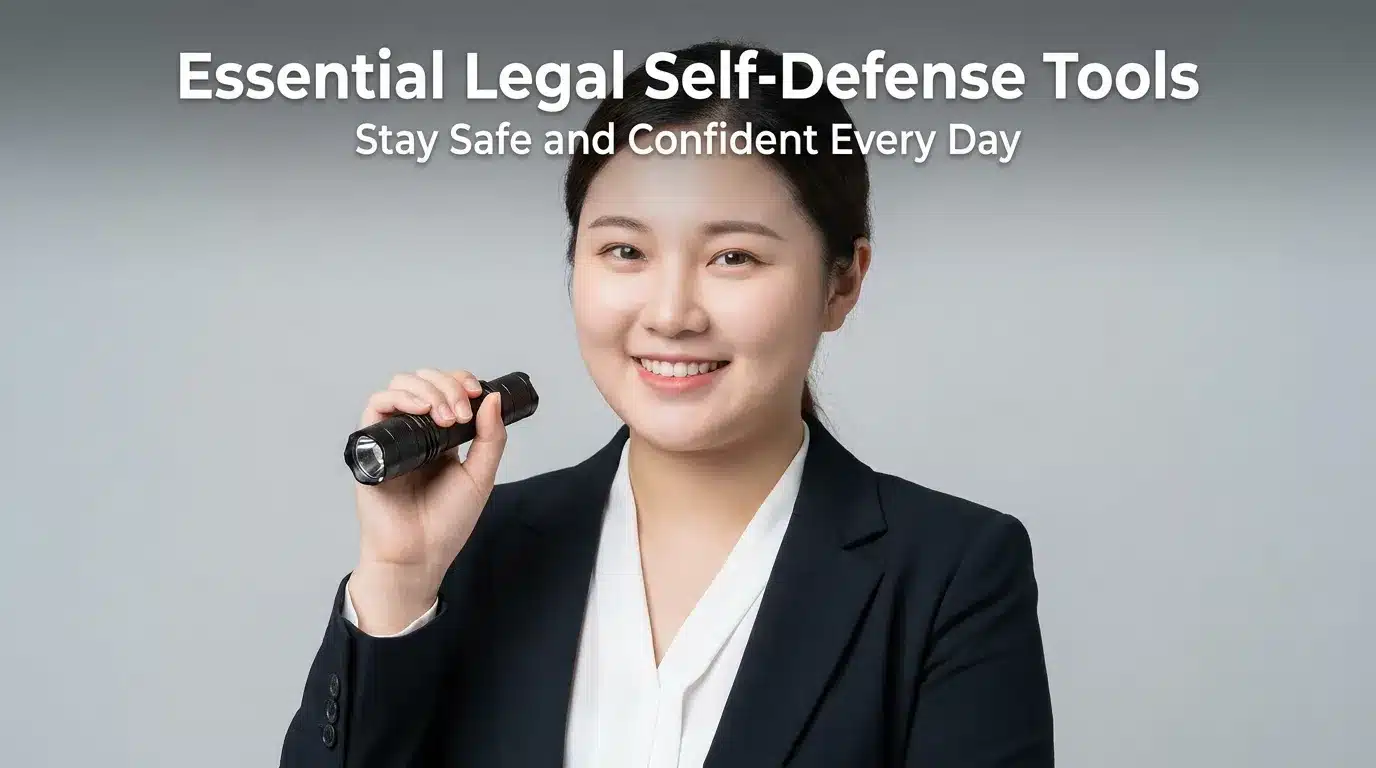
A high-quality flashlight is a tool that many people overlook. A light that has at least 500 to 1000 lumens can temporarily blind an attacker at night. This gives you a few precious seconds to change your direction or get to a safe spot.
Flashlights are legal everywhere, including airports and government buildings. They are the perfect “hidden in plain sight” tool. You can hold it in your hand while walking, and no one will think twice about it.
Step 2: Incorporate Sound and Light to Alert Others
Sometimes, the best defense is simply making sure everyone knows something is wrong. Attackers hate attention and loud noises. They want to finish their task in silence and get away quickly.
Personal Safety Alarms
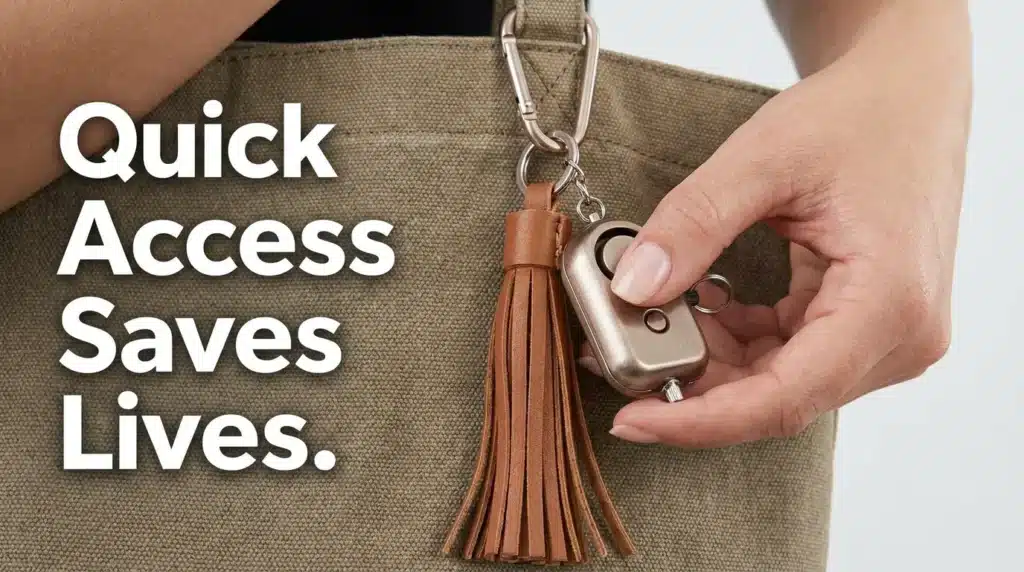
A personal alarm is a small device that makes a very loud, ear-piercing sound when you pull a pin. The sound is often louder than a car horn. It is designed to shock an attacker and draw the attention of anyone nearby.
These devices are great because they cannot be used against you. They are purely for signaling for help. You can attach one to your keychain or your bag strap for easy access. Parents also combine these with the best personal safety apps for loved ones for layered digital security.
Why Visual Signals Matter
In some situations, a strobe light feature on a flashlight or a bright LED on your alarm can help. If you are in a dark area, a flashing light helps people find your exact location. It also makes it harder for an attacker to see what you are doing.
Step 3: Learn the Legal Boundaries in Your Area
Before you carry any tool, you must know what is allowed in your city or state. Laws vary greatly from one place to another. What is legal in one town might be restricted in the next.
Check Your Local Rules
Always look up the specific laws regarding pepper spray or small pocket tools. Some places have limits on the size of the container or the strength of the chemicals inside. Staying within the law ensures that you are protected both physically and legally.
Defensive Mindset vs. Offensive Action
The law usually protects people who use force to escape or stop an attack. It does not protect people who use tools to start a fight. Your goal should always be to use your tool only to create a window of time so you can escape to safety.
Step 4: Practice Until It Becomes Natural
Owning a tool is only half the battle. You must know how to use it without thinking. In a scary situation, your brain might freeze, and you will rely on what is called “muscle memory.”
Simple Drills at Home
Take your safety tool (like an empty pepper spray trainer or your flashlight) and practice pulling it out of your pocket or bag. Do this while walking or standing still. The faster you can get it into your hand, the safer you will be.
Visualizing Scenarios
Spend a few minutes thinking about different situations. What would you do if someone followed you in a parking lot? How would you use your alarm if someone blocked your path? Thinking about these things now means you won’t have to think about them during a crisis.
Building Your Personal Safety Kit
You do not need a bag full of weapons to be safe. A few well-chosen items are much better than a bunch of things you don’t know how to use. Think about your daily routine and what fits your lifestyle best.
If you take the bus, a personal alarm might be your best friend. If you walk your dog in a dark park, a tactical flashlight is a must-have. Tailor your tools to the specific risks you face every day, and make sure you read a detailed how to safely handle street harassment guide to know exactly how to react.
Remember, the most powerful tool you have is your brain. Your intuition is your first line of defense. If a situation feels wrong, trust that feeling and use your tools to help you get away as fast as possible.
Staying Consistent with Your Safety Habits
Personal safety is not a one-time event. It is a habit that you build over time. Check your tools regularly to make sure the batteries are working and the spray hasn’t expired.
Keep your tools in the same spot every day so you always know where they are. If you move them around, you might not find them when you need them most. Consistency creates a sense of readiness that builds your overall confidence.
By taking these small steps, you are taking control of your life. You are moving from a place of fear to a place of power. You deserve to walk the world with your head held high, knowing you have the tools to stay safe.
Master Your Surroundings with Advanced Safety Strategies
Knowing which tools to carry is only the beginning of your journey. To truly stay safe, you need to know how to use your environment as a shield. This is what experts call “Situational Awareness,” and it is your most powerful weapon.
You should always try to see a threat before it sees you. When you enter a new place, take a quick look around for the exits. Always know at least two ways out of any room or building you are in.
This habit sounds simple, but it can save your life in a panic. If one path is blocked, your brain will already know where the other one is. This stops the “freezing” feeling that happens when people get scared.
The Secret of the OODA Loop for Personal Safety
Professional security experts use a system called the OODA Loop. This stands for Observe, Orient, Decide, and Act. You can use this same system to stay one step ahead of trouble.
- Observe: First, you observe everything happening around you. This means looking at people’s hands and their eyes. Are they looking at you or are they looking for cameras?
- Orient: Next, you orient yourself by thinking about what is normal for that area. If someone is wearing a heavy coat in the middle of summer, that is not normal. Your brain should flag this as something to watch.
- Decide: Then, you decide what you will do if that person moves toward you. Will you cross the street? Will you go into a nearby shop? Having a plan ready means you won’t hesitate.
- Act: Finally, you act on your decision. Do not wait for things to get bad before you move. Trust your gut feeling and leave the area as soon as you feel uneasy.
How to Keep Your Safety Skills Sharp for Years
Safety is not something you learn once and then forget. It is a lifestyle that you need to maintain so it works when you need it. You can do this without spending hours in a gym or reading heavy books.
- Weekly Gear Checks: Once a week, take your tools out. Check the batteries in your flashlight and your alarm. Make sure your pepper spray nozzle is clean and not clogged with lint from your pocket.
- The “What If” Game: While you are waiting for a bus or walking, play a quick game in your head. Ask yourself, “What if someone tried to grab my bag right now?” This keeps your mind sharp and ready.
- Practice Your Grip: Take your safety tool in your hand while you are at home. Practice getting a firm, comfortable grip on it quickly. You want your hand to know exactly where the buttons are without you looking.
- Stay Informed on Local Laws: Laws can change, so it is a good idea to check your local government website once or twice a year. This keeps you on the right side of the law.
- Physical Health: You don’t need to be an athlete, but being able to run for a minute or two is a great self-defense tool. Basic fitness helps you move faster when you need to escape.

Mistakes That Can Put Your Safety at Risk
Even people with the best intentions make mistakes that can be dangerous. Knowing these pitfalls will help you stay much safer than the average person.
Carrying Your Tools in the Wrong Place
The biggest mistake is keeping your safety gear at the bottom of a backpack or purse. If someone approaches you, you will not have time to dig through your keys and wallet. Your tools must be reachable in two seconds or less.
If you have to unzip three pockets to find your alarm, it is useless. Keep your gear in your jacket pocket or attached to the outside of your bag. In high-risk areas, you should have your tool in your hand, ready to use.
Buying Cheap or Untested Gear
It is tempting to buy the cheapest pepper spray or alarm you find online. However, your life might depend on this tool. Cheap items often fail when you need them most.
They might leak, the batteries might die quickly, or the sound might not be loud enough. Invest in high-quality brands that have good reviews and a history of reliability. It is better to have one good tool than five bad ones.
Having a False Sense of Security
Just because you are carrying a tool does not mean you are invincible. Some people take more risks because they think their spray or alarm will save them from anything. This is a very dangerous mindset.
Your goal is always to avoid a fight, not to win one. The best self-defense is not being there when the trouble happens. Never use your tools as an excuse to go into dangerous areas or stay out too late in unsafe places.
Not Knowing How Your Tool Works
Many people buy a safety device and never even take it out of the box until an emergency happens. This is a recipe for disaster. In a high-stress situation, you will forget how to flip a safety switch or pull a pin.
You must test your gear in a safe environment. If you have pepper spray, buy a “trainer” canister that only sprays water. Practice using it so you know exactly how the trigger feels.
Ignoring Your Surroundings
Using your phone while walking is the easiest way to become a target. When your head is down, you cannot see who is coming toward you. You also look distracted and weak to a potential attacker.
Keep your phone in your pocket and your head up. Looking around makes you look confident and aware. Most attackers will choose a different person if they see that you are watching them.
Common Questions About Staying Safe and Legal
Can I carry pepper spray on an airplane?
You cannot carry pepper spray in your pocket or carry-on bag on a plane. However, most airlines allow you to put one small container in your checked luggage. Always check with the TSA (Transportation Security Administration) or your specific airline before you go to the airport.
Are tactical pens legal in most places?
Tactical pens are usually legal because they look like regular writing pens. They are great for self-defense and can be used to break glass in an emergency. Since they have a real use, they are rarely seen as a weapon by the law.
Do personal alarms really stop attackers?
Yes, personal alarms are very effective. Attackers want to stay hidden and quiet. A 130-decibel alarm creates a lot of noise and draws unwanted attention to the criminal. This usually makes them run away immediately.
What is the best tool for someone who isn’t very strong?
For those who lack physical strength, distance tools are best. Pepper spray or a personal alarm allows you to stop a threat without needing to use your own strength. These tools do the hard work for you.
How often should I replace my self-defense spray?
Most sprays have an expiration date printed on the bottle, usually every two to three years. Over time, the pressure in the bottle can drop. It is best to replace it every two years just to be safe.
Taking Your Power Back Today
You have the right to feel safe and secure wherever you go. By choosing the right legal tools and learning how to use them, you are taking a huge step toward peace of mind. Safety is not about being afraid; it is about being prepared.
When you are prepared, the world feels like a much smaller and friend裂 Place. You no longer have to live in fear of the “what ifs.” You have a plan, you have the tools, and you have the knowledge to protect yourself.
Start today by checking your surroundings and thinking about which tool fits your life. Maybe it is a bright flashlight or a loud personal alarm. Whatever you choose, make it a part of your daily routine.
Your safety is your responsibility, and you are now ready to handle it like a professional. Stay aware, stay prepared, and most importantly, stay confident. You have the power to protect yourself and live your life without limits.
Disclaimer: The information in this article is for educational purposes only. Laws regarding self-defense tools vary by location and can change over time. Always check your local, state, and national laws before purchasing or carrying any safety device. The author and website are not responsible for any legal issues or injuries that may occur from the use or misuse of these tools.