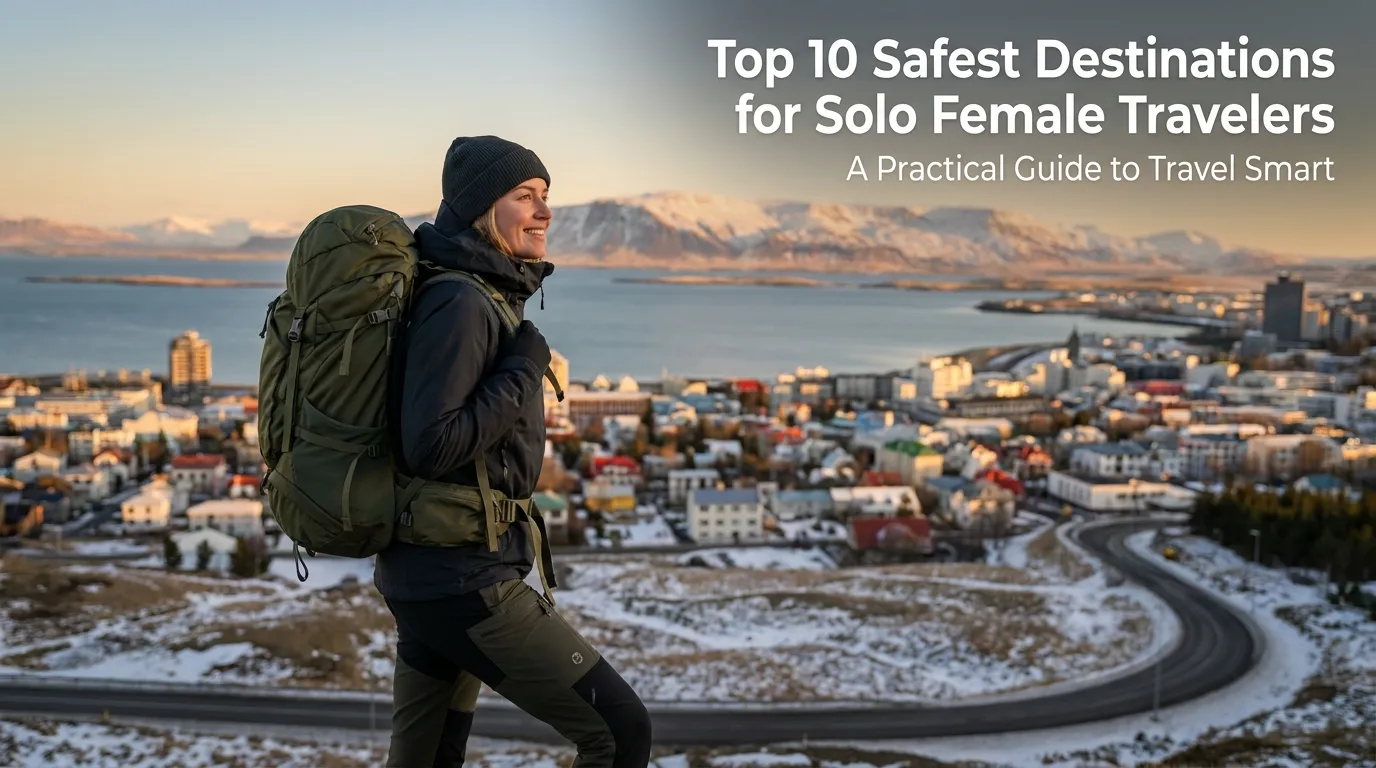
I remember sitting on my bed at midnight, suitcase half-packed, googling “is it safe for a woman to travel alone” for the tenth time that week. My hands were actually shaking a little. I kept picturing every worst-case scenario my brain could invent, and none of them were pretty.
My mom had called me twice that day, gently trying to talk me out of it. My best friend sent me three articles about scams targeting tourists. By the time I turned off my phone, I had almost convinced myself to just stay home.
But I didn’t stay home. I went. And that trip changed how I think about safety, fear, and what it actually means to travel smart instead of scared.
If you’re reading this with that same knot in your stomach, I want you to know something: you’re not overreacting, and you’re not alone in feeling this way.
So many women feel this exact pressure before their first solo trip. It’s not really about the destination. It’s about the fear of the unknown, and nobody hands you a manual for that.
Here’s what that fear actually looks like day to day:
- Lying awake replaying every “what if” scenario before a trip
- Feeling guilty for wanting to travel alone in the first place
- Constantly checking your phone battery because losing signal feels like losing safety
- Avoiding certain destinations entirely, even ones you’ve dreamed about for years
- Second-guessing every friendly local, every taxi, every hostel review
That last one is the one that gets people the most. You start treating every stranger like a threat, and that’s exhausting. It steals the joy right out of the trip before you’ve even left your house.
Your family means well, but their worry can become your worry, and pretty soon a dream trip feels like a risk assessment spreadsheet. That’s not living. That’s just managing fear.
The good news is that safety and solo travel are not opposites. Some of the most rewarding trips happen in places built around exactly the kind of comfort a nervous first-timer needs.
Picking a Destination That Actually Matches Your Comfort Level
Before you even open a map, it helps to understand what makes a place genuinely safe for a woman traveling alone, not just “pretty” or “popular on Instagram.”
Start With the Data, Not the Vibes
A destination can look magical in photos and still have real safety concerns underneath. This is where actual numbers help more than gut feeling.
The Global Peace Index ranks countries by low crime, political stability, and safety, and it’s a solid starting point before you fall in love with a destination based on photos alone.
Countries like Iceland, Finland, Denmark, and Norway consistently score near the top. They combine low violent crime with strong public trust, which means locals are generally used to helping lost tourists rather than ignoring or exploiting them.
Pro Tip: I made the mistake early on of choosing a destination purely because it was cheap. I saved money on flights and then spent the whole trip anxious about where I was walking after dark. Now I check safety data first and budget second, and honestly, my trips got both cheaper and calmer once I stopped picking places out of fear of missing out.
Our Top 10 Safest Destinations for Solo Female Travelers
If you’re looking for a place to start, these ten countries offer the best combination of low crime, high safety ratings, and welcoming cultures for women traveling alone:
- Iceland: Consistently ranked as the safest country in the world with a very high level of gender equality.
- Japan: Famous for its incredibly low crime rate and female-only train cars for extra comfort.
- Switzerland: Offers world-class public transport and a high sense of order and safety in every city.
- New Zealand: Perfect for nature lovers and known for its very friendly, helpful locals.
- Portugal: A safe, sunny, and affordable European destination that is very welcoming to solo visitors.
- Norway: Known for being exceptionally safe even at night, with a very high standard of living.
- Finland: Ranked as one of the happiest and safest countries, with great infrastructure for tourists.
- Denmark: A very walking-friendly country built on social trust, making it easy to navigate alone.
- Canada: One of the safest spots in North America with diverse, inclusive, and friendly cities.
- Thailand: An ideal choice for first-time solo travelers in Asia due to its well-established traveler community and respectful culture.
Check Government Travel Advisories Before You Book
This step takes five minutes and can save you a lot of stress later. The U.S. Department of State travel advisories break countries down by risk level and explain exactly why, which is far more useful than a vague “be careful” warning from a random blog.
Japan, Switzerland, Portugal, and New Zealand consistently show up as lower-risk options with active tourist infrastructure, meaning help is easy to find if something goes wrong.
If you’re still building your travel routine from the ground up, our solo travel safety guide for beginners walks through the basics before you even choose a country.
Public Transit Tells You a Lot About a City
Here’s something people don’t talk about enough: the quality of public transportation is one of the clearest safety signals a city can give you.
Cities with well-lit, reliable, and well-used public transit tend to have more people around at all hours, which naturally reduces risk. Tokyo, Vienna, and Copenhagen are good examples of this. Empty, poorly lit stations late at night are a red flag no matter how charming the city looks in daylight.
A quick way to check before you go:
- Search “[city name] metro safety at night” and read recent traveler comments
- Look up whether the city has women-only train cars during rush hour, like parts of Japan do
- Check if ride-sharing apps operate there, since local taxis without meters can be a common scam target
If ride-sharing coverage is thin in your destination, our breakdown of ride-sharing apps versus local taxis explains how to tell which option is actually safer on the ground.
Understand the Local Attitude Toward Solo Women
Safety isn’t only about crime statistics. It’s also about culture, and how comfortable a solo woman actually feels walking around.
Some destinations have low crime rates on paper but a culture where a woman traveling alone draws constant unwanted attention. That’s exhausting even if nothing dangerous technically happens.
Thailand, Portugal, and Canada tend to score well here because solo female travelers are common enough that locals barely notice, which honestly is the goal. You want to blend in, not stand out.
For Your YouTube Break: Watching real footage of a city at night tells you more than any article can. Here’s a solo female traveler walking through one of these top-ranked cities after dark, which is worth watching before you commit to a destination.
Protect the Basics Before You Even Land
Once you’ve picked a destination, the safety work isn’t over. A huge number of solo travel problems come down to a few preventable mistakes, not the destination itself.
These small habits prevent most common problems:
- Split your cash and cards between two separate bags instead of one wallet
- Screenshot your hotel address and emergency numbers before you land, in case you lose signal
- Check your hotel’s door lock and window security the moment you check in
- Share your daily location with one trusted person back home
If you want a deeper walkthrough on protecting your valuables while moving between cities, our guide on safely hiding cash and passports while traveling covers this in more detail than most packing lists do.
And once you’re actually in your room, our hotel room security and locking guide is worth five minutes before you unpack, especially in destinations where door locks aren’t as standardized as you’d expect.
Know Your Emergency Plan Before You Need It
This part sounds obvious, but almost nobody actually does it. You need a plan before something goes wrong, not while it’s happening.
The CDC’s Travelers’ Health resources list destination-specific health risks and emergency contacts, which pairs well with a simple personal safety checklist of your own.
Our international travel security protocol breaks this down step by step, including what to do if you lose your passport or need urgent medical help far from home. If a medical issue does come up abroad, our 6 steps for a medical emergency abroad is worth bookmarking before you fly, not after.
Common scams are another thing worth studying ahead of time rather than learning the hard way. Our guide on avoiding common tourist scams abroad covers the tricks that show up again and again in exactly these top-ranked “safe” destinations, because even safe places aren’t scam-free.
I’ll be honest, my biggest early mistake was assuming that a country’s overall safety ranking meant every neighborhood, every train, and every stranger was automatically fine. It’s not that simple, but it’s also not as scary as it sounds once you build a few simple habits into your routine.
Trust Your Gut More Than Any List
No ranking, guide, or article can replace the instinct you already carry with you. If a street feels wrong, if a person feels off, if a hostel review pattern feels strange, that feeling is data too.
I’ve walked away from “perfectly safe” situations because something felt slightly wrong, and I’ve never once regretted trusting that instinct. The safest destinations in the world still require you to stay present and aware, not just relaxed because a ranking told you to be.
Think of these rankings as a starting filter, not a guarantee. They narrow your options down to places where the odds are already in your favor, so your own good judgment has less working against it.
That combination, smart destination choices plus your own awareness, is really what keeps solo female travelers safe. Not luck, and not just a good ranking on a list somewhere.
Little Habits That Separate Nervous Tourists From Confident Solo Travelers
Once you’ve picked a safe destination, the next layer is how you actually carry yourself once you land. This is the part most articles skip, and it’s honestly the part that matters most day to day.
Blend in instead of standing out. Locals can usually spot a tourist from a block away, not because of the camera around their neck, but because of body language. Walking with purpose, even when you’re lost, makes you look like someone who belongs there.
I learned this the hard way in a city I won’t name. I stood on a corner staring at my phone with my map open, and within two minutes, someone offered to “help” me who clearly wasn’t trying to help at all. Now I check my route before I leave the hotel, glance at my phone quickly if needed, and keep walking with confidence even when I’m not totally sure.
Split your valuables the smart way. Keep a decoy wallet with a small amount of cash in an easy-to-reach pocket, and your real cards and cash somewhere harder to access. If anything ever goes wrong, you hand over the decoy and walk away with everything that actually matters.
Scout your neighborhood before you land. A five-minute look at your hotel’s street view can tell you if it’s on a busy, walkable road or tucked into a quiet alley you’d rather not enter alone at night. This one habit alone has saved me from booking places that looked great in photos but felt off in person.
Get a local SIM card on arrival. Relying only on hotel wifi means you’re offline the moment you step outside, which is exactly when you need maps and translation tools the most. A cheap local SIM keeps you connected and able to call for help anywhere.
Set a simple check-in rhythm with someone back home. It doesn’t need to be dramatic. A quick “landed safe, heading to the hotel now” message, and another one before bed, gives someone a timeline to work with if anything ever felt wrong.
Learn five phrases, not fluent language. You don’t need to speak the local language. You need “help,” “police,” “hospital,” “where is,” and “thank you.” Those five words open more doors than you’d expect, and locals notice the effort.
Join women-only travel communities before you go. Online groups made up of women who’ve already been to your destination are full of real, current details, like which neighborhoods felt off recently or which hostel had a broken lock last month. This kind of fresh, local intel beats any general ranking.
Dress with the destination in mind, not just the weather. In some places, blending in with local dress norms reduces attention in a way that has nothing to do with modesty and everything to do with simply not standing out as an obvious visitor.
None of these habits are complicated. But together, they’re the difference between walking through a city feeling like an easy target and walking through it feeling like you actually live there for the week.
Where Even Careful Travelers Slip Up
Here’s something nobody wants to admit: most solo travel problems don’t happen because someone picked a dangerous destination. They happen because a careful, smart traveler let their guard down in a small, easy-to-miss way.
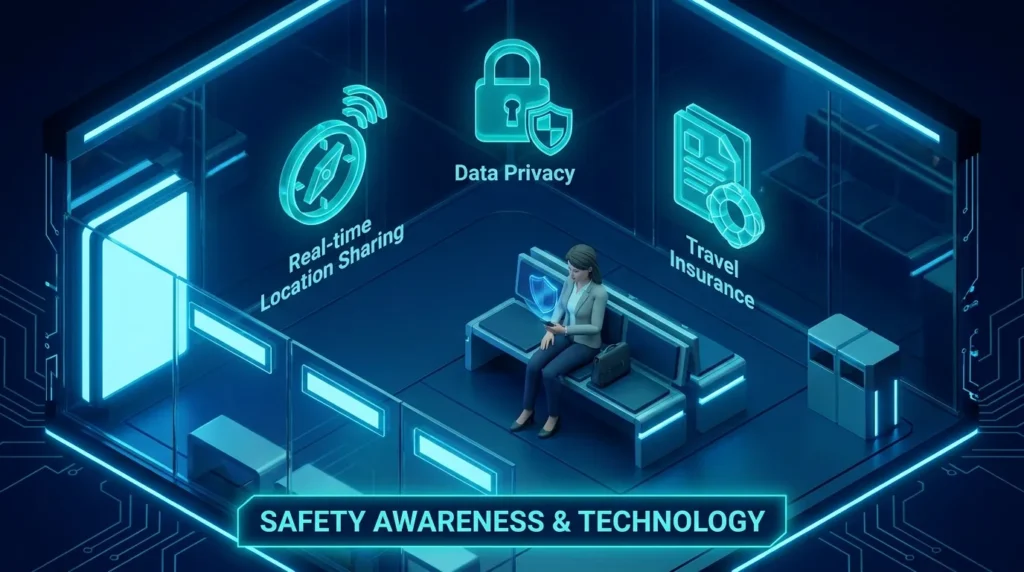
Posting your exact location in real time is one of the biggest ones. A “here right now” story with a geotag tells anyone watching exactly where you are and, more importantly, where your hotel room is sitting empty. Post your favorite photos after you’ve already left, not while you’re standing there.
Ignoring your gut because you don’t want to seem rude is another quiet danger. So many women describe a moment where something felt slightly wrong, but they stayed polite instead of walking away. That instinct is not rudeness. It’s information your brain picked up faster than your conscious mind could explain.
Booking a place last-minute in an unfamiliar area, just because it was cheap, causes more stress than it saves. You end up arriving late at night in a neighborhood you’ve never researched, tired and disoriented, which is exactly the moment you’re least able to make sharp decisions.
Skipping travel insurance to save a small amount of money is a gamble that rarely pays off. A minor injury or a stolen bag abroad can cost far more out of pocket than the insurance would have, and it adds a layer of stress to an already stressful situation.
Drinking more than usual in an unfamiliar setting lowers your awareness at the exact moment you need it most. This isn’t about judgment. It’s simply that a new city, new faces, and new customs already ask a lot of your attention, and alcohol makes that harder to keep up with.
Assuming a “safe” country means every single neighborhood and situation is automatically safe is probably the most common mistake of all. A destination’s overall ranking is a helpful filter, not a personal guarantee, and treating it like a guarantee is where people get caught off guard.
A quick do’s and don’ts to keep in your back pocket:
- Do share your itinerary with someone at home. Don’t post your live location publicly.
- Do trust a “something feels off” moment. Don’t stay somewhere out of politeness.
- Do book accommodation in advance with real reviews. Don’t book blind, last-minute stays in unfamiliar areas.
- Do carry a copy of your documents separately. Don’t keep everything important in one bag.
None of these mistakes are about being careless. They’re about being human, tired, distracted, or in a hurry. Recognizing them ahead of time is what actually prevents them.
Quick Answers Before You Book Your Ticket
Is it safe to travel alone as a woman?
Yes, in the right destinations, with the right habits. Millions of women travel solo every year without incident, and choosing a well-ranked, tourist-friendly destination makes the odds even better.
What is the safest country for a female solo traveler?
Countries like Iceland, Japan, and Finland consistently rank near the top for low crime, strong public trust, and reliable infrastructure. That said, “safest” always depends a bit on your comfort level and travel style too.
What should I pack for a safe solo trip?
Beyond the basics, pack a portable door lock or wedge alarm, a cross-body bag you can wear in front of you, and a printed copy of your documents in case your phone dies. Small items, big peace of mind.
How do I stay safe on public transport at night?
Sit near the driver or conductor when possible, keep your bag on your lap instead of beside you, and avoid empty train cars if you can wait for one with more people. If a station feels unsafe, a short ride-share is worth the extra cost.
Should I share my location on social media while traveling?
Not in real time. Post your trip highlights after you’ve moved on from that location, not while you’re still standing there, so nobody can track your current whereabouts from your own posts.
What’s the biggest mistake first-time solo female travelers make?
Overplanning the destination and underplanning the daily habits. People spend hours picking the “perfect” country but skip small things like checking hotel door locks or sharing a simple check-in schedule with family.
Your Next Trip Starts With One Decision
You don’t need to eliminate every fear before you book a ticket. You just need enough information to travel smart instead of scared, and that’s exactly what a good destination ranking, a few solid habits, and a little self-trust give you.
I think back to that nervous night before my first solo trip, and I wish I could tell that version of myself how much good was waiting on the other side of that fear. I still get a little nervous before every new destination, honestly, and I’ve learned that’s not a sign to stay home. It’s just part of doing something that matters.
If you’ve been sitting on a trip you keep talking yourself out of, let this be the nudge you needed. Pick a destination from a list like this one, build a few simple safety habits into your plan, and go see the place you’ve been dreaming about.
You don’t need a perfect plan or a fearless personality to start. You just need one booked flight, a few smart habits, and a willingness to trust yourself a little more than the worry in your head. That’s really all it ever takes to begin.
Disclaimer: This article is for general informational purposes only and does not replace official government travel advisories, professional security consulting, or personal judgment based on your own circumstances. Safety rankings, crime rates, and travel conditions can change, so always check current official advisories, such as your government’s travel advisory page, before booking or departing for any destination.