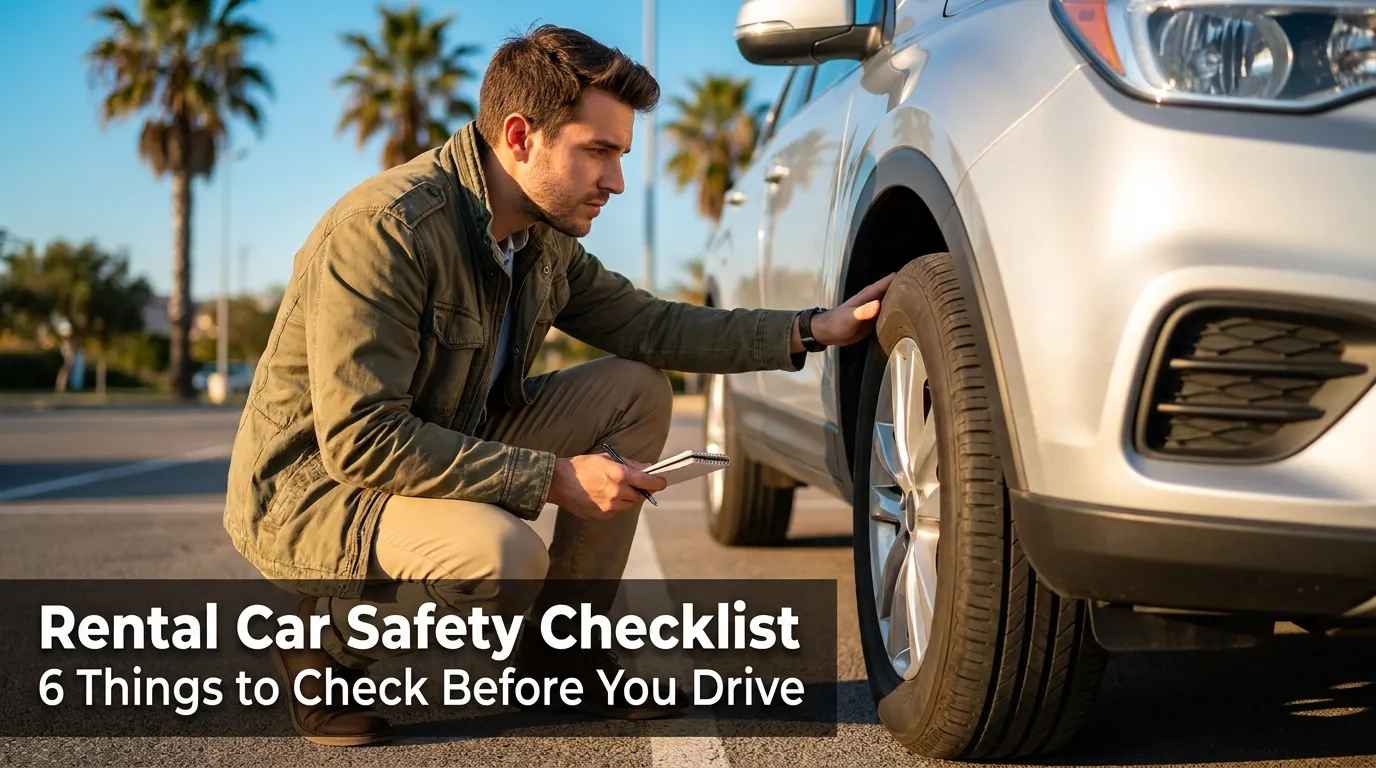
I still remember standing in that rental car parking lot, keys in my hand, watching my family already buckled into the back seat. I was tired from the flight, hungry, and honestly just wanted to get to the hotel. So I almost just started the car and drove off.
I didn’t check the tires. I didn’t look at the dashboard. I just wanted to be done with the airport part of the trip. About twenty minutes later, a tire pressure warning light popped on, and my stomach dropped.
We pulled into a gas station, and I found a tire that was noticeably low, with a slow leak that the rental counter never mentioned. That was the moment I realized something simple: a rental car is not “ready” just because someone handed you the keys. It’s ready when you say it’s ready.
That one mistake taught me more about car rental safety than any article ever could.
Why This Small Habit Wrecks So Many Trips
Skipping the inspection step doesn’t just risk a flat tire. It risks your whole trip.
People show up excited for a vacation, a business trip, or a family visit, and within the first hour, things go wrong in ways that could have been avoided:
- You get blamed (and charged) for scratches or dents that were already there before you touched the car.
- You drive for hours before noticing a warning light, brake issue, or worn-down tire.
- You realize too late that the last renter’s phone data, home address, or contacts are still saved in the car’s system.
- You lose an hour of your trip standing at a service desk trying to prove damage wasn’t your fault.
None of that stress is necessary. A short walk-around before you leave the lot protects your wallet, your schedule, and honestly, your peace of mind for the whole trip. This is the same mindset we talk about across our international travel security protocol — most travel problems are avoidable with a few minutes of preparation.
Your Pre-Drive Rental Car Checklist, Step by Step
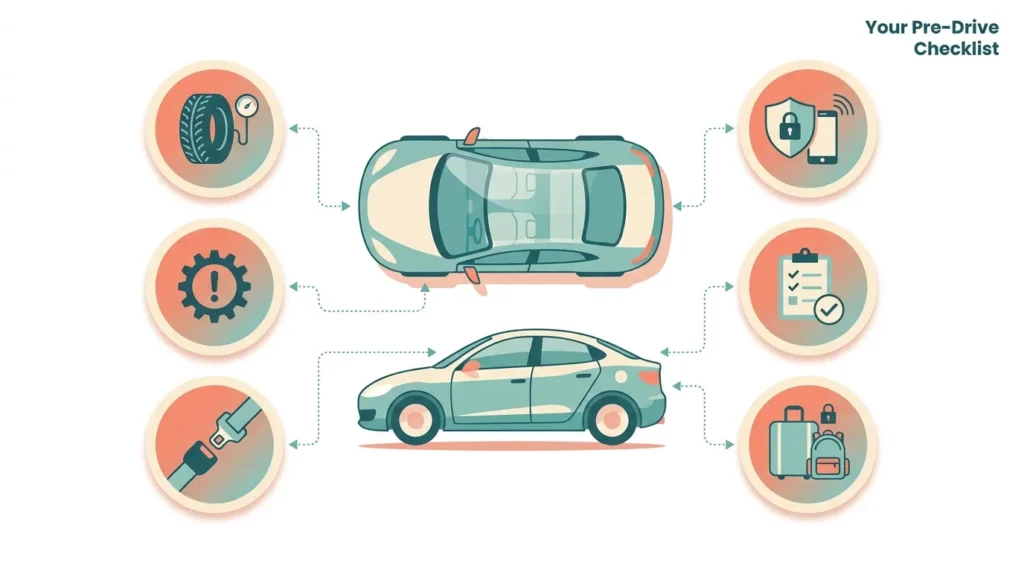
Here’s the good news. You don’t need to be a mechanic to do this well. Here are the 6 things every renter should check before driving off the lot — plus the mistakes that cost people the most.
1. Walk Around the Car Like You’re Inspecting a Rental Apartment
Start outside, before you even get in.
Walk slowly around the car and look at the body panels, bumpers, and doors. Snap photos or a short video of any dent, scratch, or scuff you see, even small ones.
This single habit protects you from being charged for damage that existed long before you touched the car. Take your time here. Nobody at the counter is timing you.
Check the tires next. Tire problems are one of the most common (and most avoidable) causes of rental car breakdowns. Look at the tread depth on all four tires, not just the two you can see from the driver’s seat.
The National Highway Traffic Safety Administration recommends checking tread depth monthly, and that advice matters even more in a car you didn’t personally maintain. If the tread looks low or uneven, ask for a different vehicle before you leave.
2. Sit Inside and Test Everything Before You Shift Into Drive
Once you’re satisfied with the outside, get in and turn the key (or press start) without pulling away yet.
Watch the dashboard. Every warning light should turn off after a few seconds. If one stays lit, don’t guess what it means. Ask the counter to explain it or swap the car.
Test the basics one by one:
- Headlights, brake lights, and turn signals
- Air conditioning or heat
- Seatbelts (pull them out fully to check for fraying)
- Mirrors, adjusted before you start driving, not while merging onto a highway
Pro Tip: I used to skip testing the brakes gently in the parking lot before driving on a real road, and one time that habit almost cost me. The rental brakes felt noticeably softer than my own car, and I didn’t notice until I was already in traffic. Now I always press the brake pedal slowly while still parked, just to get a feel for it before I’m surrounded by other cars.
A short list like a state travel program’s rental safety checklist can be a genuinely helpful reference if you want a printable version to keep on your phone.
3. Protect Your Personal Data, Not Just Your Body
This is the part most travelers never think about, and it fits right into what we cover under Digital Safety on this site.
Modern rental cars often have Bluetooth and USB systems that store data from every phone that’s ever connected to them. That can include:
- Call logs and text messages
- Saved home and work addresses from GPS history
- Contacts synced through Bluetooth
Before you connect your own phone, check whether the previous renter’s information is still stored in the system. If it is, that’s a sign your data could be visible to the next person too.
According to consumer guidance from the Federal Trade Commission, it’s safer to avoid connecting your phone to the infotainment system just for charging, and to always delete your paired device from the car’s settings menu before you return it. Cybersecurity researchers have also documented how personal data can linger inside connected vehicles long after a rental is returned, so this isn’t a small or rare issue.
See how it’s done in action. Watching someone walk through a real inspection makes this checklist much easier to remember on your own trip.
4. Handle the Paperwork Like a Pro, Not a Guest
Before you drive off, get your documentation in order.
Confirm the fuel policy in writing, not just from what the agent tells you verbally. Fuel charges are one of the most common surprise fees travelers report.
Check your rental agreement lists the pre-existing damage you photographed. If it doesn’t, ask them to add it before you sign anything else.
If you’re renting in an unfamiliar country or city, it also helps to know the common tricks scammers use around rental counters and parking lots, which we break down more fully in our guide on avoiding common tourist scams abroad.
5. Plan for the Unexpected Before You Even Start the Engine
A little planning here saves a lot of panic later.
Decide where you’ll keep your passport, extra cash, and valuables while the car is parked, especially if you’re stepping away from it during your trip. Our guide on how to safely hide cash and passports while traveling covers this in more depth.
If you’re traveling by yourself, a rental car adds a layer of independence, but also a layer of responsibility. Our solo travel safety guide for beginners has more on staying alert on the road alone.
And if something ever goes wrong health-wise during your trip, whether it’s a minor accident or something more serious, knowing the steps in advance matters. We walk through exactly what to do in our guide on handling a medical emergency abroad.
6. Know Your Alternatives Once the Car Is Parked for the Night
Your rental car doesn’t need to be your only way around once you’ve reached your destination.
If you’re going somewhere at night, or somewhere you’re unfamiliar with, it’s worth comparing whether driving yourself is actually the safest option or whether a ride-sharing app might be the smarter local choice for that particular trip.
And once you’re back at your hotel for the night, don’t forget that vehicle safety is only half the picture. Pairing this checklist with our hotel room security and locking guide rounds out a full day of travel safety, from the moment you land to the moment you’re back in your room.
The Habit That Actually Matters Most
None of these steps take very long. Together, they add up to maybe ten or fifteen minutes.
But that short window is the difference between starting your trip calm and starting it stressed, blamed for damage you didn’t cause, or stuck on the side of a highway with a tire that was never safe to begin with.
You booked this trip to enjoy it. A few minutes of checking the car first is what protects that.
Turning This Into a Habit You Actually Keep Using
Checking a car once is easy. Doing it every single time, even when you’re tired or in a hurry, is where most people fall off.
I’ve noticed something interesting after renting cars for work trips and vacations for years. The people who never have rental car problems aren’t lucky. They just built a small routine and never skipped it.
Here’s how you keep that routine alive long after this article.
Build a Two-Minute Mental Script
Instead of trying to remember a long list every time, shrink it down to a script you can run in your head in under two minutes.
Something like: outside, inside, paperwork, data. Walk around the car, sit and test the basics, check your agreement, then check the infotainment system.
Your brain holds onto short scripts far better than long checklists, especially when you’re jet-lagged or distracted by kids in the back seat.
Choose Your Rental Location With Safety in Mind
Not every rental counter or lot is equal, even within the same company.
Airport locations tend to have better lighting, more staff, and more security cameras than small off-airport branches. If you’re arriving late at night, that difference actually matters.
If you have a choice, and your flight lands after dark, an airport pickup is usually the safer option over a distant off-site lot in an unfamiliar area.
Match the Car to the Actual Trip
A common mistake is booking based on price alone, without thinking about where you’ll actually be driving.
If you’re heading into mountains, snow, or rural back roads, a low-clearance economy car isn’t the smart choice, no matter how good the daily rate looks. If you’ll be doing long highway stretches with a family, extra trunk space and a comfortable ride matter more than saving a few dollars.
Think about your actual route before you book, not just your budget.
Keep a Small Emergency Kit With You
You don’t need to pack heavy. A phone charger, a flashlight, a basic first-aid kit, and a paper copy of your rental agreement can make a real difference if something goes wrong on the road.
Pro Tip: I now keep a small pouch in my carry-on with a portable phone charger and a printed copy of my travel insurance details. It weighs almost nothing, but it’s saved me twice when my phone died right when I needed the rental company’s number.
Ask About Roadside Assistance Before You Need It
Most people never ask this question until they’re already stuck on the shoulder of a highway.
Before you drive off, confirm the roadside assistance number and save it directly in your phone contacts. Don’t rely on finding it later inside a glovebox pamphlet you never actually read.
Trust Your Senses, Not Just the Paperwork
If a car smells strongly of smoke, cleaning chemicals, or anything unusual, say something before you drive away.
The same goes for strange noises during your short test drive around the lot. A rental agent handing you keys is not the same as a mechanic confirming the car is genuinely road-ready.
Take Loyalty Programs Seriously, Even for One Trip
Signing up for a rental company’s free loyalty program before your trip sounds like a small thing, but it usually means faster counter service and sometimes a better vehicle selection.
Faster service matters more than people realize, because it’s the rushed, five-minute counter visits that lead to skipped inspections. A calmer pickup experience gives you the time and mental space to actually run through your checklist properly.
It costs nothing to sign up, and it often pays off the very first time you use it.
Where Smart Travelers Still Slip Up
Even careful people make mistakes with rental cars, and it’s usually not because they didn’t care. It’s because of pressure, timing, or just plain assumption.
The biggest one I see is rushing at the counter. Lines are long, flights are delayed, kids are cranky, and by the time you reach the desk, you just want to sign and go. That rush is exactly when people skip the walk-around and skip reading the fuel policy carefully.
That single rushed decision is often where the surprise charges come from later. Not because the company is trying to trick you, but because nothing was documented in the moment.
Another quiet mistake is assuming all locations of the same brand are identical. A well-known name on the sign doesn’t guarantee the same maintenance standards at every branch. Cars get moved between locations, seasons get busy, and inspection quality can vary more than people expect.
People also trust verbal promises too much. If an agent tells you “don’t worry about that little mark, we won’t charge you,” get it written into the contract anyway. Verbal reassurances at a busy counter are easy to forget, and they won’t help you months later when a charge shows up on your card.
A subtler mistake is ignoring your gut feeling about a car. Maybe the steering feels loose, or the brakes feel spongy during your parking lot test. Some people talk themselves out of raising it because they don’t want to seem difficult or cause a delay.
Speaking up costs you a few minutes. Driving hundreds of miles in a car that doesn’t feel right could cost you far more than that.
Finally, people forget that a rental car is not a private space. Previous renters’ data, smells, and even small habits (like a dash cam still recording) can carry over if you don’t check. Treating the car like a blank slate, without actually confirming it, is how avoidable problems slip through.
None of these mistakes make you careless. They just show how easy it is to let a good habit slide when you’re tired, rushed, or trying not to inconvenience anyone. Building the small script from earlier is what keeps that from happening again.
Common Questions About Renting a Car Safely
Is it worth getting rental car insurance if I already have my own car insurance?
It depends on your existing policy and your credit card’s coverage, so it’s worth a quick call to your insurer before your trip. Many personal auto policies do extend to rental cars, but rules change by state and by company, so confirming ahead of time avoids a surprise decision under pressure at the counter.
What car rental company should I avoid?
There isn’t one universal company to avoid, since experiences vary by location and season more than by brand name. A better approach is checking recent reviews for the specific branch you’re booking, not just the company’s overall reputation.
Do rental cars record or track you while you drive?
Some rental cars do include GPS tracking for company use, especially with newer connected vehicles, and this is usually disclosed in the rental agreement. It’s worth a quick read of that section if you’re concerned about privacy during your trip.
What should I do if I get into an accident in a rental car?
Stay calm, check for injuries first, and move to a safe area if the car is still drivable. Then contact local emergency services if needed, document everything with photos, and call the rental company’s roadside or claims number right away.
What’s the smartest way to rent a car for a trip?
Book through the official company website or app instead of unfamiliar third-party listings, and always read the fuel and mileage policy before confirming. Comparing the total cost, not just the daily rate, usually prevents the biggest surprise fees.
Should I clean the rental car before returning it?
A light clean, like removing your trash and personal items, is a good idea and often expected. You don’t need to deep-clean it though, since rental companies generally handle that as part of their standard turnover process.
Your Next Trip Starts With One Small Habit
Here’s the truth about car rental safety. It’s not really about being an expert driver or a car expert.
It’s about giving yourself ten quiet minutes before you pull out of that lot. That’s it. That’s the whole secret.
I think back to that trip with the slow tire leak often. It wasn’t a huge disaster, but it taught me that a rental car deserves the same quick check I’d give any tool I’m about to trust with my family’s safety.
My honest advice for your next trip: don’t let tiredness or a long line talk you out of those ten minutes. Walk around the car, sit and test it, read the paperwork, and check the data.
I promise it feels awkward the first time you do it slowly while an agent watches. After that, it just becomes part of how you travel, and you’ll never quite go back to skipping it again.
Disclaimer: This article is for general informational and educational purposes only and does not replace professional legal, mechanical, medical, or insurance advice. Rental car policies, safety standards, and local laws vary by company, location, and country, so always confirm current terms directly with your rental provider and consult a qualified professional for advice specific to your situation.